Monday, April 20, 2026
101 F
Lagos
More
    Home Blog Page 496

    Jihadist Attack Claims Three UN Peacekeepers and 12 civilians in Central Mali.

    0
    Mali UN Jihadists
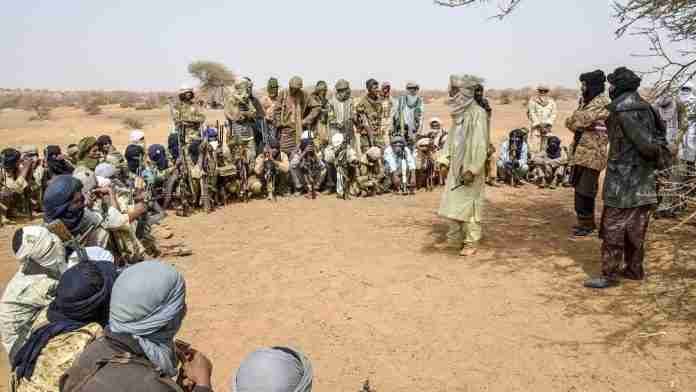
    jihadists stormed Kani-Bonzon village in central Mali
    Read Time:2 Minute, 59 Second

    Bamako, Mali – 2/27/2023 (African Boulevard News) On Tuesday of last week, a convoy of the United Nations Multidimensional Integrated Stabilization Mission in Mali (MINUSMA) was hit by an improvised explosive device (IED) in central Mali, killing three peacekeepers and injuring five others. The mission confirmed the attack in a tweet, describing the area as “jihadist-torn.” The incident marks another setback for the ongoing operation, which has faced recurrent violence and casualties.

    Mali hosts one of the largest UN peacekeeping missions, with over 13,500 military personnel and police deployed to support the country’s fragile security and political transition. However, the mission has also become one of the deadliest, with frequent attacks by Islamist militants targeting UN and Malian forces. IEDs are a common weapon used by the jihadists, who have gained ground and support in the central and northern regions of the country.

    According to a report by the UN Secretary-General Antonio Guterres in January, 165 peacekeepers had lost their lives and 687 others were wounded in hostile acts since the inception of the mission in July 2013. The report called for stronger and more coordinated efforts by the UN and its partners to counter the persistent security challenges in Mali and the wider Sahel region.

    Also read: https://africanboulevard.com/withdrawal-of-french-forces-from-burkina-faso-a-controversial-decision-in-a-context-of-deteriorating-security-in-the-region/ Also read: https://africanboulevard.com/mali-and-eritreas-shocking-refusal-to-condemn-russias-invasion-of-ukraine-a-perplexing-move-by-two-african-nations-with-global-implications/

    The Malian government has struggled to curb the insurgency in the north and center of the country, despite the deployment of thousands of foreign and domestic troops, including French and Russian forces. This has left the civilian population to bear the brunt of the violence. Although the Malian government has expressed condolences to the families of the victims and vowed to fight terrorism, the security situation in Mali remains precarious.

    In a separate incident in central Mali, at least 12 people were killed and several others wounded in an attack on Kani-Bonzon village on Thursday. Local officials and witnesses attribute the attack to suspected jihadists who rode into the village on motorcycles and opened fire on the inhabitants, most of whom were farmers and traders. Among the victims were women and children, whose relatives gathered to mourn them in a mass funeral on Friday.

    The bereaved families have expressed their anger and sadness at the recurrent attacks and the lack of protection from the authorities. “We are tired of burying our loved ones. We demand justice and security. We want to live in peace,” said Amadou Diallo, a relative of one of the victims. The Malian authorities have yet to comment on the latest attack, but President Assimi Goïta, who took power in a military coup last year, has pledged to restore stability and hold elections in 2024.

    Many Malians and observers are skeptical, however, that a military-led transition can address the root causes of the conflict, which include ethnic tensions, political grievances, poverty, and the spread of extremist ideology. The jihadist groups, which have expanded their activities to neighboring countries such as Burkina Faso and Niger, seek to impose their version of Islamic law and undermine the authority of the state. The UN and other international actors have warned that the situation in Mali and the Sahel region, which spans much of sub-Saharan Africa, could deteriorate further if more efforts are not made to tackle the drivers of terrorism and instability.

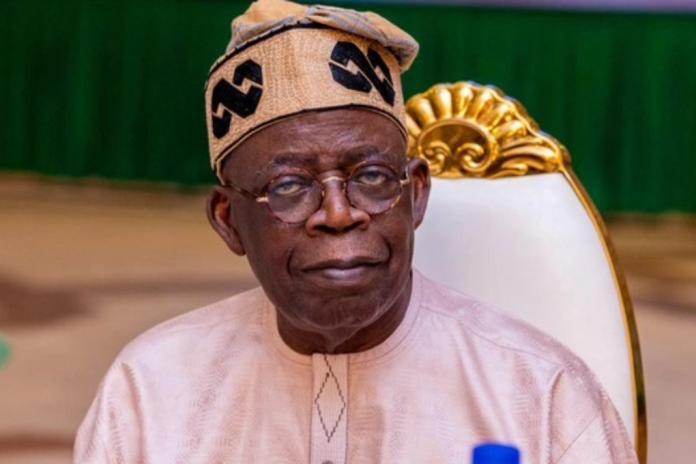
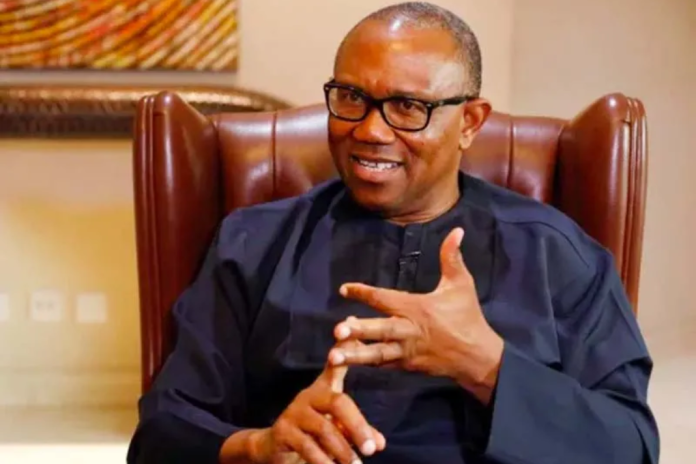
    Peter Obi Victoire surprise dans l’élection très disputée de l’État de Lagos au Nigeria, un bastion du candidat du parti au pouvoir, l’APC, Bola Tinubu.

    0
    Read Time:2 Minute, 9 Second

    Dans une victoire historique, le candidat de la troisième force du Nigeria, Peter Obi, a remporté l’État de Lagos, un bastion du candidat du parti APC au pouvoir, Bola Tinubu. Cette victoire inattendue est importante car le système bipartite qui domine la politique nigériane depuis 1999 est confronté à une menace sans précédent avec le parti travailliste d’Obi. Cette victoire met en évidence la popularité croissante d’Obi, en particulier parmi les jeunes électeurs qui s’appellent eux-mêmes “Obidients”. Mais pourrait-il reproduire cette victoire dans d’autres États ?

    L’élection de l’État de Lagos, l’une des compétitions les plus âprement disputées du Nigeria, n’a pas été sans controverse. Les rapports faisant état d’intimidations, de tentatives de suppression des votes et d’agressions physiques dans les bureaux de vote étaient nombreux. Par exemple, dans une unité de vote de Lekki, à Lagos, des voyous ont attaqué des électeurs, et certaines femmes ont été battues, notamment une femme enceinte qui a été renversée au sol et dont le téléphone a été brisé.

    L’analyste politique Remi Adekoya considère la victoire d’Obi comme “le plus grand choc de la carrière politique de Tinubu” et le signe que le parrainage dans la politique nigériane est en voie de disparition. Cependant, Michael Famoroti, responsable de l’intelligence chez Stears, une société de données basée à Lagos, prévient qu’Obi pourrait avoir du mal à reproduire sa victoire dans tout le pays, car le mouvement Obidient reste concentré dans une classe économique supérieure. Si la victoire à Lagos renforce l’idée que de nombreux Nigérians souhaitent un nouveau type de politique, les données recueillies jusqu’à présent suggèrent qu’Obi a encore une tâche difficile à accomplir pour obtenir les votes nécessaires dans les États critiques.

    Le processus électoral a également déçu les groupes civiques à but non lucratif, tels que Yiaga Africa, qui a déployé 3 836 observateurs dans tout le pays. Le groupe a invoqué de longs retards et le fait que certains électeurs n’ont pas pu voter parce que les fonctionnaires ne se sont pas présentés. Bien que l’élection ait été le plus grand exercice démocratique d’Afrique, les défis logistiques rencontrés continuent d’entraver le processus démocratique au Nigeria.

    La victoire de Peter Obi dans l’État de Lagos marque un moment historique pour la politique nigériane. S’il signale la popularité croissante de son parti travailliste et la fin potentielle du parrainage en politique, il reste à voir si Obi peut reproduire son succès dans tout le pays. Les défis rencontrés au cours du processus électoral soulignent également la nécessité de relever les défis logistiques et de veiller à ce que chaque vote compte.

    Peter Obi Surprise win in Nigeria’s Fiercely Contested Lagos State Election, a stronghold of the ruling APC party candidate Bola Tinubu

    0
    Peter Obi
    Peter Obi
    Read Time:2 Minute, 49 Second

    Lagos, Nigeria – February 27, 2023 – (African Boulevard News) In a stunning upset, Peter Obi, the Labor Party candidate, has made history by winning the fiercely contested election in Lagos State, Nigeria. Obi defeated Bola Tinubu, the ruling party candidate, and became the first non-APC candidate to win Lagos State in over two decades. This victory challenges the long-standing two-party system that has dominated Nigerian politics since 1999 and signals a potential shift in the country’s political landscape.

    Obi’s Growing Popularity Among Young Voters

    One of the most significant takeaways from the Lagos State election is the growing popularity of Peter Obi, especially among young voters who refer to themselves as ‘Obidients.’ This group of young people has been instrumental in securing Obi’s victory in Lagos State, and their support could prove to be a game-changer in Nigerian politics.

    The Challenges of Replicating Obi’s Success in Other States

    Despite Obi’s historic victory in Lagos State, it remains to be seen whether he can replicate this success in other states. Michael Famoroti, head of intelligence at Lagos-based data company Stears, warns that the Obidient movement is still concentrated among a higher economic class, which could pose a significant challenge in garnering broad-based support across the country. Moreover, the logistical challenges faced during the election process could make it difficult for Obi to repeat his success in other states.

    The Need to Address the Country’s Election Infrastructure

    The election in Lagos State was marred by reports of violence, voter intimidation, and attempts to suppress votes. Non-profit civic groups, such as Yiaga Africa, cited long delays and some voters not being able to vote due to officials failing to show up. These logistical challenges highlight the need to address the country’s election infrastructure to ensure that every vote counts. Despite being Africa’s largest democratic exercise, the challenges faced during the election process continue to hinder the democratic process in Nigeria.

    The End of Godfatherism in Nigerian Politics?

    Also read: The Nigerian Presidential Elections: Overcoming Insecurity and Enabling Full Participation in the Democratic Process on Saturday, February 25, 2023
    Also read: The Dark Histories of Nigeria’s Presidential Hopefuls: Choosing the Lesser of Three Evils

    Obi’s victory in Lagos State is being viewed by some political analysts as a sign that godfatherism in Nigerian politics is on its way out. It is seen as the biggest shock of Tinubu’s political career, and it could signal a potential end to the grip that political godfathers have had on Nigerian politics. If Obi can replicate his success in other states, it could herald a new era of Nigerian politics, where merit, not patronage, is the basis for political power.

    Final Thoughts

    Peter Obi’s victory in Lagos State is a significant moment for Nigerian politics. It challenges the long-standing two-party system and highlights the growing popularity of Obi, especially among young voters. However, it remains to be seen whether Obi can replicate his success in other states and whether the Obidient movement can garner broad-based support across the country. The logistical challenges faced during the election process also highlight the need to address the country’s election infrastructure to ensure that every vote counts. Overall, Obi’s victory in Lagos State signals a potential shift in Nigerian politics, and it will be interesting to see how his political career unfolds in the coming years.

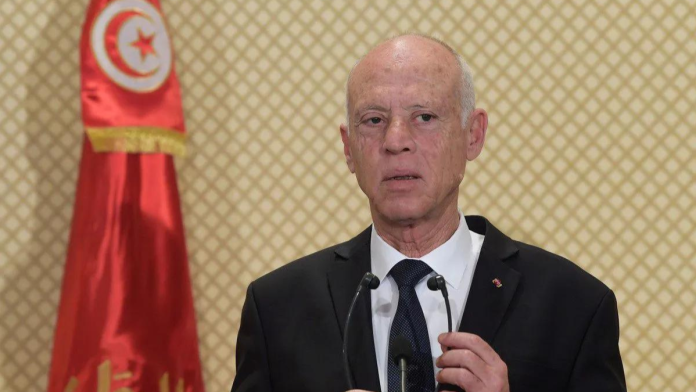
    Condemning Tunisian President Saied’s absurd racist and Xenophobic Remarks about african migrants trying to africanize Tunisia.

    0
    President Saied of Tunisia
    African Deeply Shocked by Tunisia's President absurd Racist Remarks
    Read Time:1 Minute, 12 Second

    Tunis, Tunisia (African Boulevard News) Tunisian President Kais Saied’s recent racist and hateful remarks against African migrants who are seeking refuge in his country on their way to Europe have caused shock and dismay in neighboring Morocco. The president’s comments not only criticized African immigrants but also blamed them for most of Tunisia’s problems, claiming they were trying to “Africanize” the country and distance it from its “Arabness.”

    These remarks have rightly sparked outrage accross the world and among many in Morocco, where African migrants are welcomed and integrated into the Kingdom’s social fabric. The Tunisian president’s comments reveal a lack of understanding of the reality of migration and the benefits it can bring to host societies.

    Furthermore, the president’s claim that migrants seek to “Africanize” Tunisia is an absurdity, as the country is already located on the African continent and is as African as any other African nation.

    It is unacceptable to remain silent in the face of such xenophobic remarks made by a university professor and head of state. Migration should be viewed as an opportunity for enrichment rather than a problem, and African citizens seeking a better future for themselves and their families should be treated with respect and dignity.

    Therefore, it is crucial to reject the hateful and racist comments made by President Saied and to continue to support the integration of migrants into their host societies, including Tunisia. Let us stand together against discrimination and prejudice.

    French president Emmanuel Macro to visit four central African countries amidst Chinese and Russian growing influence in Africa.

    0
    Emmanuel Macron
    Emmanuel Macron to visit 4 central African nations
    Read Time:2 Minute, 6 Second

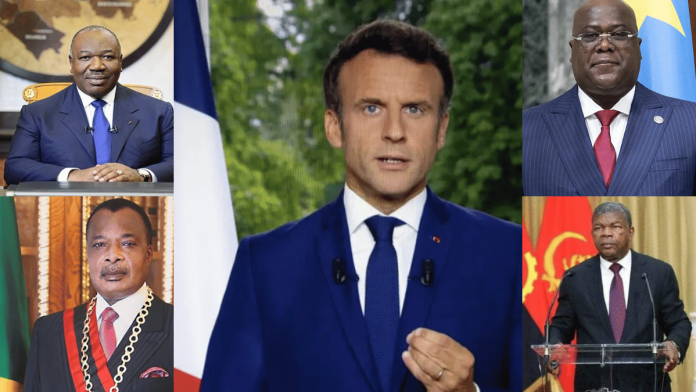
    Luanda, Angola (African Boulevard News) – February 26 – French President Emmanuel Macron is scheduled to commence a four-nation expedition to Central Africa this March, 2023. The visit will begin in Gabon on the first day of the month, after which he will travel to Angola, the Republic of Congo, and the Democratic Republic of Congo

    Macron’s tour comes at a time when the Central African region faces a plethora of obstacles, such as political instability, insecurity, and economic decline. The French President is expected to converse with the leaders of the nations he visits concerning several issues, including security, economic collaboration, and cultural exchange.

    The visit to Gabon will be the initial stop for the French President. The nation, which has been governed by President Ali Bongo since 2009, has had a tumultuous political history in recent years, with allegations of election rigging and power struggles within the ruling elite. Macron is anticipated to hold discussions with President Bongo and other political leaders to talk about the country’s political circumstances

    .

    In Angola, Macron is expected to meet with President João Lourenço, who assumed office in 2017. The visit comes at a time when Angola is attempting to broaden its economy, which has been excessively reliant on oil. Macron is expected to converse about economic collaboration between France and Angola and discover new possibilities for trade and investment

    .

    The Republic of Congo, which has been governed by President Denis Sassou Nguesso for the majority of the past four decades, has also undergone political turmoil in recent years. Macron is expected to chat about the political situation in the country and find ways in which France can support stability and democracy in the country. He is also anticipated to talk about economic collaboration and cultural exchange between the two countries

    .

    Lastly, in the Democratic Republic of Congo (DRC), Macron is expected to meet with President Félix Tshisekedi, who took office in 2019. The visit comes at a time when the DRC faces a variety of challenges, including armed conflict, political instability, and economic crisis. Macron is expected to chat about security and stability in the country, as well as economic collaboration and cultural exchange between France and the DRC

    .

    Macron’s tour to Central Africa is expected to enhance relations between France and the countries he will visit. The visit comes at a time when the region faces numerous challenges, and Macron’s discussions with the leaders of the countries he visits are anticipated to include issues such as security, economic collaboration, and cultural exchange.

    Tragedy at Mount Cameroon Race of Hope Leaves 19 Injured after bomb blast.

    0
    Mount Cameroon race of Hope
    19 people injured in blast at Cameroon sports event
    Read Time:1 Minute, 34 Second

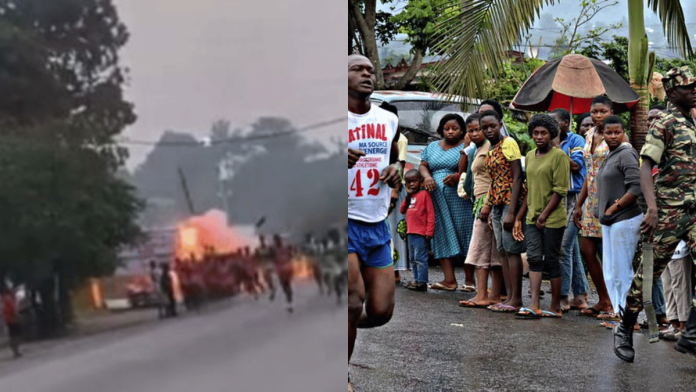
    Yaounde, Cameroon (African Boulevard News) – On February 25, 2023, tragedy struck the Mount Cameroon Race of Hope in Buea town, Cameroon, when an explosion occurred, leaving at least 19 people injured, including nine athletes and ten civilians, including a baby. This senseless act of violence has left the country in mourning, and the authorities are still investigating the cause of the explosion [1].

    According to local reports, the explosion occurred during a sports event, causing widespread panic and chaos. Some sources have suggested that it may have been caused by an explosive device, but the authorities have not yet confirmed the cause of the explosion.

    The Mount Cameroon Race of Hope is an annual event that draws athletes from all over the world to Mount Cameroon, the highest peak in West Africa. It is seen as a symbol of hope and unity for the people of Cameroon, but this year’s event was marred by tragedy. The nine injured athletes suffered from shrapnel wounds and burns, according to several reports from eye-witnesses. The injured civilians were taken to local hospitals for treatment, and their condition is still unknown.

    In the aftermath of the explosion, many have expressed their condolences to the victims and their families. The Minister of Sports and Physical Education, Narcisse Mouelle Kombi, issued a statement expressing his sympathy. The African Union has also condemned the attack and has pledged to work with the Cameroonian government to ensure that those responsible are brought to justice.

    The people of Cameroon are in mourning, and the country has been plunged into a state of shock and disbelief. The Mount Cameroon Race of Hope has always been a symbol of hope and unity, and it is a tragedy that it has been marred by this senseless act of violence. We send our heartfelt condolences to the victims and their families during this difficult time.

    Ukwenqaba Okushaqisayo kwe-Mali ne-Eritrea Ukugxeka Ukuhlasela KweRussia E-Ukraine: Umnyakazo Odidayo Wezizwe Ezimbili Zase-Afrika Ezinomthelela Womhlaba Wonke.

    0
    UN Vote against Russia
    The U.N. General Assembly passed a resolution on Feb. 23 urging Russia to withdraw from Ukraine, signifying a step towards peace
    Read Time:1 Minute, 18 Second

    New York – (African Boulevard News) – Amazwe angu-23 ase-Afrika anqabile ukugxeka ukuhlasela kweRussia e-Ukraine, nokuqale esikhathini esingangonyaka odlule, ngesikhathi kuvotwa i-United Nations General Assembly ngoLwesine. Lesi sinqumo, esasithi akumiswe ukulwa kanye nokuhoxiswa kwamasosha aseMoscow, sithole ukwesekwa emazweni angu-141. Kodwa-ke, amazwe angama-32 awazange avote, kwathi amanye ayisikhombisa, okuhlanganisa iRussia, North Korea, neSyria, avota ngokumelene nalo. Phakathi kwamazwe aphikisanayo bekukhona amazwe amabili ase-Afrika, iMali ne-Eritrea. Amazwe angu-15 ase-Afrika azile, kwathi amanye ayisithupha ale ukuvota.

    #img%#

    Ivoti le-UN ngokumelene neRussia
    I-UN General Assembly yaphasisa isinqumo ngoFebhuwari 23 inxusa iRussia ukuthi ihoxe e-Ukraine, okubonisa isinyathelo sokuthula

    Ezimweni ezidumazayo, iMali isibuyisele emuva isikhundla sayo ukuze ivotele ngokumelene nesinqumo se-UN mayelana ne-Ukraine, ithembisa ukwethembeka eRussia. Naphezu kokugodla ukuvota izikhathi ezimbili ezedlule, iMali manje isithathe igxathu lokuvuma izenzo ezidabukisayo zaseRussia e-Ukraine. Lesi sinqumo ngokungangabazeki sizoba nomthelela omubi emhlabeni wonke, okuholela ekwenyukeni kwezingxabano kanye nokudicilela phansi okuqhubekayo.

    UNgqongqoshe Wezangaphandle wase-Uganda u-Abubaker Jeje Odongo ukungabaze ukulunga kokucelwa ukuba alahle iRussia, izwe elingakaze libuse isizwe sakhe. Khonamanjalo, isekela lenxusa laseChina le-UN uDai Bing uzwakalise ukweseka iRussia ne-Ukraine ukuthi ziqhubekele phambili ezingxoxweni zokuthula. IPhini lenxusa laseVenezuela uJoaquin Perez Ayestaran unxuse wonke amazwe ukuthi ahambisane ngokuqinile ne-United Nations Charter, abheke ukubuswa yi-US kanye ne-Europe ohlelweni lwamazwe ngamazwe.

    Umongameli wase-Ukraine, uVolodymyr Zelensky, usamukele lesi sinqumo, wasincoma njengesignali enamandla yokusekelwa komhlaba wonke. Umeluleki Wezokuphepha Kuzwelonke wase-US u-Jake Sullivan uchaze ivoti “njengokukhombisa okukhulu ukweseka i-Ukraine,” naphezu kokuthi i-US iwashaya indiva amavoti omhlangano omkhulu agxeka ukuvinjelwa kwayo kweCuba iminyaka engu-31 edlule.

    Mali and Eritrea’s Shocking Refusal to Condemn Russia’s Invasion of Ukraine: A Perplexing Move by Two African Nations with Global Implications.

    0
    In a surprising move, 32 countries, including China and India, abstained from voting on the resolution, which received support from 141 countries. Seven countries, including Russia, voted against it
    Read Time:1 Minute, 31 Second

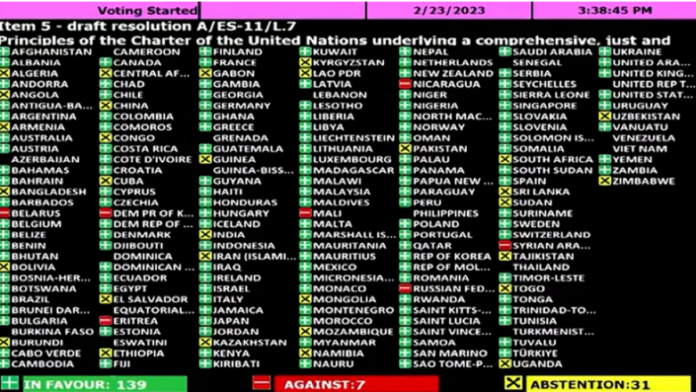
    New York – (African Boulevard News) – Twenty-three African nations have refused to condemn Russia’s invasion of Ukraine, which began a year ago, in a United Nations General Assembly vote on Thursday. The resolution, which called for a halt to fighting and the withdrawal of Moscow’s forces, received support from 141 countries. However, 32 countries abstained from voting, while seven others, including Russia, North Korea, and Syria, voted against it. Among the opposing nations were two African states, Mali and Eritrea. Fifteen African nations abstained, while six others declined to take part in the vote.

    UN Vote against Russia
    The U.N. General Assembly passed a resolution on Feb. 23 urging Russia to withdraw from Ukraine, signifying a step towards peace

    In a disheartening turn of events, Mali has reversed its position yet again to vote against the U.N. resolution on Ukraine, pledging allegiance to Russia. Despite abstaining from voting on two previous occasions, Mali has now taken a step towards endorsing Russia’s deplorable actions in Ukraine. This decision will undoubtedly have severe global implications, leading to heightened tensions and further destabilization.

    Ugandan Foreign Minister Abubaker Jeje Odongo questioned the fairness of being asked to condemn Russia, a country that never colonized his nation. Meanwhile, the Chinese deputy UN ambassador Dai Bing expressed support for Russia and Ukraine to move towards peace talks. Venezuelan deputy ambassador Joaquin Perez Ayestaran called for all countries to comply strictly with the United Nations Charter, taking a dig at the US and Europe’s domination of the international order.

    The Ukrainian president, Volodymyr Zelensky, welcomed the resolution, hailing it as a powerful signal of global support. The US National Security Adviser Jake Sullivan described the vote as “an overwhelming demonstration of support for Ukraine,” despite the US ignoring general assembly votes condemning its blockade of Cuba for the past 31 years.

    Barr Oyibo Chukwu, LP Senate Candidate for Enugu East, Assassinated Days Before Elections.

    0
    Oyibo Chukwu
    Labour Party Senatorial Candidate, Oyibo Chukwu, Killed in Enugu on February 23, 2023
    Read Time:2 Minute, 48 Second

    Nigeria, Abuja – African Boulevard News

    The recent assassination of a senatorial candidate in Nigeria has once again brought the issue of political violence to the forefront. The killing of Oyibo Chukwu, a well-known lawyer in Enugu state, reportedly by operatives of the separatist group IPOB and its militant wing ESN, highlights the need for greater security measures to protect political figures in the country. In this article, we will explore the issue of political violence in Nigeria, the reasons behind it, and the urgent need for a comprehensive strategy to address it.

    On Thursday, Peter Obi, the presidential candidate of the Labor Party, expressed his sadness and shock in a tweet after learning of the brutal murder of his party’s senate candidate, Barr Oyibo Chukwu. Obi condemned the killing and called for Nigerians to be able to exercise their civic duties without fear of intimidation. He described the death of Barr Chukwu as a painful loss and conveyed his sympathies to the family and friends of the deceased.

    The Vulnerability of Political Figures in Nigeria

    The killing of Oyibo Chukwu has once again exposed the vulnerability of political figures in Nigeria. Political violence has been a longstanding issue in the country, and it has had a detrimental effect on its democracy and economic development. Nigeria has seen the rise of violent attacks against politicians, resulting in the loss of many lives. This highlights the urgent need for greater security measures to protect political figures and prevent further violence.

    Also read: The Nigerian Presidential Elections: Overcoming Insecurity and Enabling Full Participation in the Democratic Process on Saturday, February 25, 2023
    Also read: The Dark Histories of Nigeria’s Presidential Hopefuls: Choosing the Lesser of Three Evils

    Reasons Behind Political Violence in Nigeria

    The Nigerian government has been criticized for its inability to effectively address political violence in the country. The proliferation of small arms and light weapons has made it easier for individuals and groups to carry out violent attacks. Poverty, lack of opportunities, and a weak justice system have also contributed to the rise in political violence. This situation has allowed for the proliferation of various separatist groups and militant wings that carry out attacks against political figures.

    The Need for a Comprehensive Strategy

    In the aftermath of the assassination of Oyibo Chukwu, it is essential that the Nigerian government takes a more proactive approach to address political violence. A comprehensive strategy that includes improving intelligence gathering and increasing security measures to prevent violent attacks is needed. It is also crucial that those responsible for political violence are held accountable and brought to justice. Such actions will send a strong message that political violence will not be tolerated in Nigeria.

    The killing of this senatorial candidate is a tragic reminder of the need for a comprehensive strategy to address political violence in Nigeria. Failure to do so could result in further instability and hinder the country’s progress towards democracy and development. It is time for the Nigerian government to take concrete steps to tackle this issue, promote a more inclusive and democratic society, and ensure that politicians can safely participate in the democratic process without fear of violence or harm. By prioritizing the safety of political figures and working towards a more stable and secure democratic society, Nigeria can address the issue of political violence and move towards a brighter future.