Tragic Assassination of Cameroon Journalist Martinez Zogo
The Cameroonian journalist community has been rocked by the tragic news of the death of Martinez Zogo, a well-known and respected reporter. According to reports, Zogo was abducted on January 22nd and his body was found the next day, showing signs of brutal torture. The shocking and brutal nature of Zogo’s death has sent shockwaves throughout the country and the world, as people mourn the loss of a brave and dedicated journalist.
Arrests Made in Connection with Zogo’s Murder
In the aftermath of Zogo’s death, the Cameroonian authorities have made arrests in connection with the journalist’s murder. While the exact details of the arrests have not been made public, it is hoped that these developments will bring some measure of comfort and closure to Zogo’s family and friends.
Zogo’s Commitment to Truth and Justice
Martinez Zogo was known for his tireless work uncovering corruption and injustices in Cameroon. He was a passionate journalist who believed in the power of the press to bring about positive change, and he was never afraid to speak out against those who sought to silence him. Through his reporting, Zogo helped to shed light on the issues that matter most to the people of Cameroon, and his death is a devastating loss for the country and for journalism as a whole.
Outpouring of Support for Zogo and Press Freedom
In the wake of Zogo’s death, people from all over the world have come together to pay their respects and show their support for press freedom. Candlelight vigils have been held in cities across Cameroon, and people have taken to social media to share their memories of the journalist and to call for justice in his name. Zogo’s death serves as a powerful reminder of the dangers faced by journalists everywhere, and of the importance of protecting the freedom of the press.
Remembering Martinez Zogo
Martinez Zogo will be remembered as a courageous and dedicated journalist who gave his life in pursuit of the truth. His work will live on, inspiring future generations of journalists to continue his legacy of uncovering corruption and exposing injustices. Zogo’s death is a profound loss, but his spirit will continue to live on through the important work that he did and the impact that he had on the world.
Cameroon & Africa Daily Briefing — August 31, 2026
There is no new Cameroon development this morning of sufficient national significance to outrank the continent’s biggest breaking stories, so today’s briefing does not recycle the Biya or Cameroon-flagged ship stories from previous editions.
Today’s news is led by a grim milestone in the Democratic Republic of Congo’s Ebola epidemic, followed by new evidence of Russia’s growing security role in Niger, major aviation disruption in Kenya, a striking financial turnaround at South Africa’s Eskom, and a significant shift in Africa’s diesel supply chain.
1. 🇨🇩 Congo Ebola Infections Cross 6,000 as Death Toll Reaches 2,911
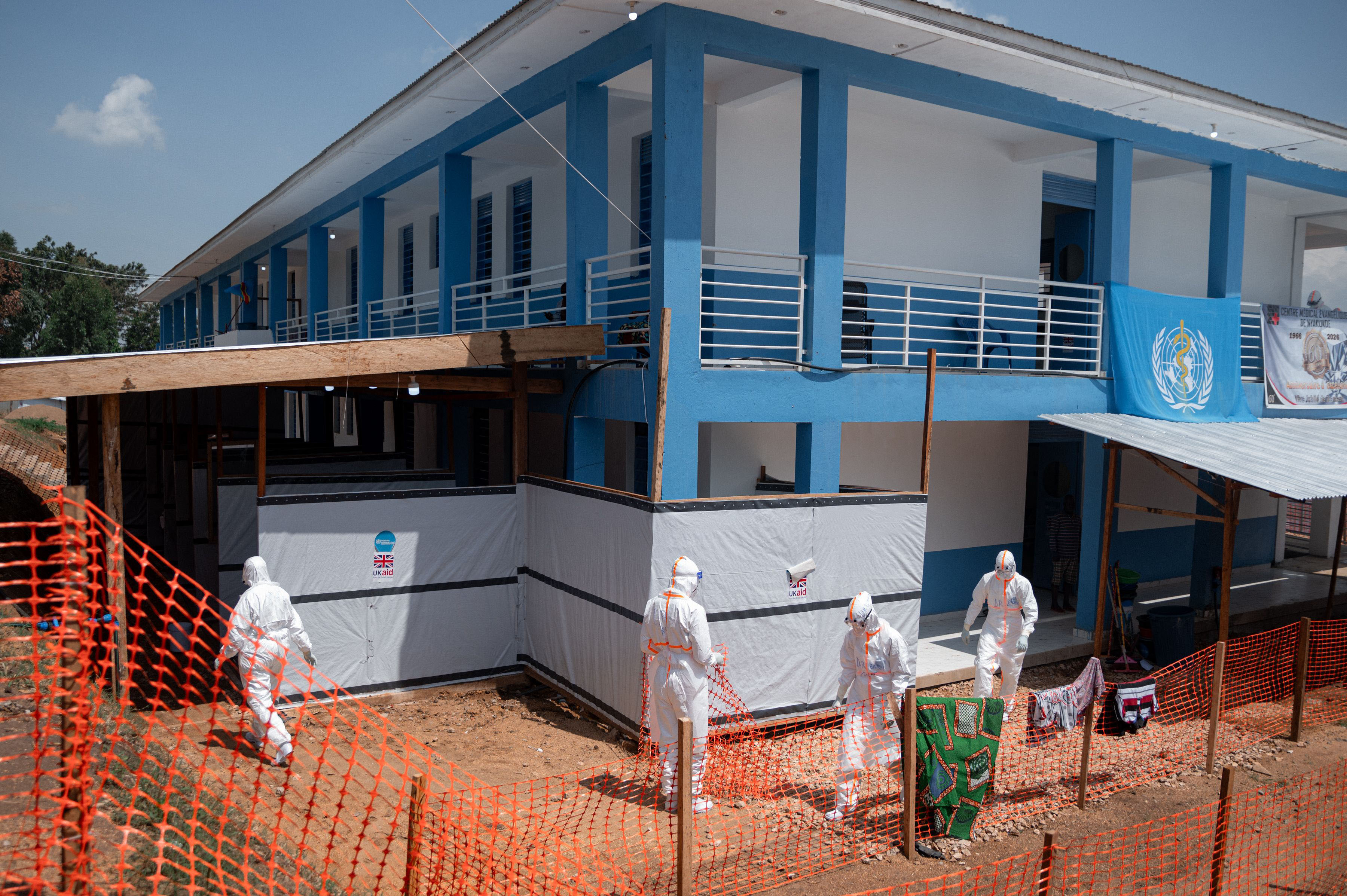
The Democratic Republic of Congo has now recorded 6,041 confirmed Ebola infections and 2,911 deaths, according to government figures released Monday, making this the largest Ebola epidemic in the country’s history.
The outbreak is being driven by the Bundibugyo strain of Ebola, for which there is no specifically approved vaccine or treatment. Insecurity, population displacement and severely strained health services are making containment exceptionally difficult across six affected provinces.
Why it matters: This is no longer simply another Congolese Ebola outbreak. It has become a major Central African health-security emergency. Continued geographic expansion raises concerns for neighboring countries while placing extraordinary pressure on health systems already weakened by conflict and displacement.
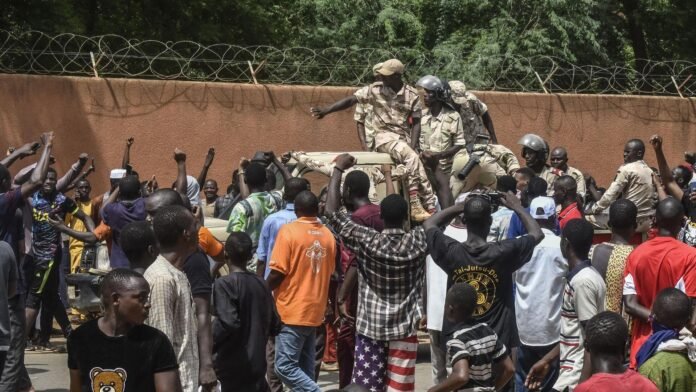
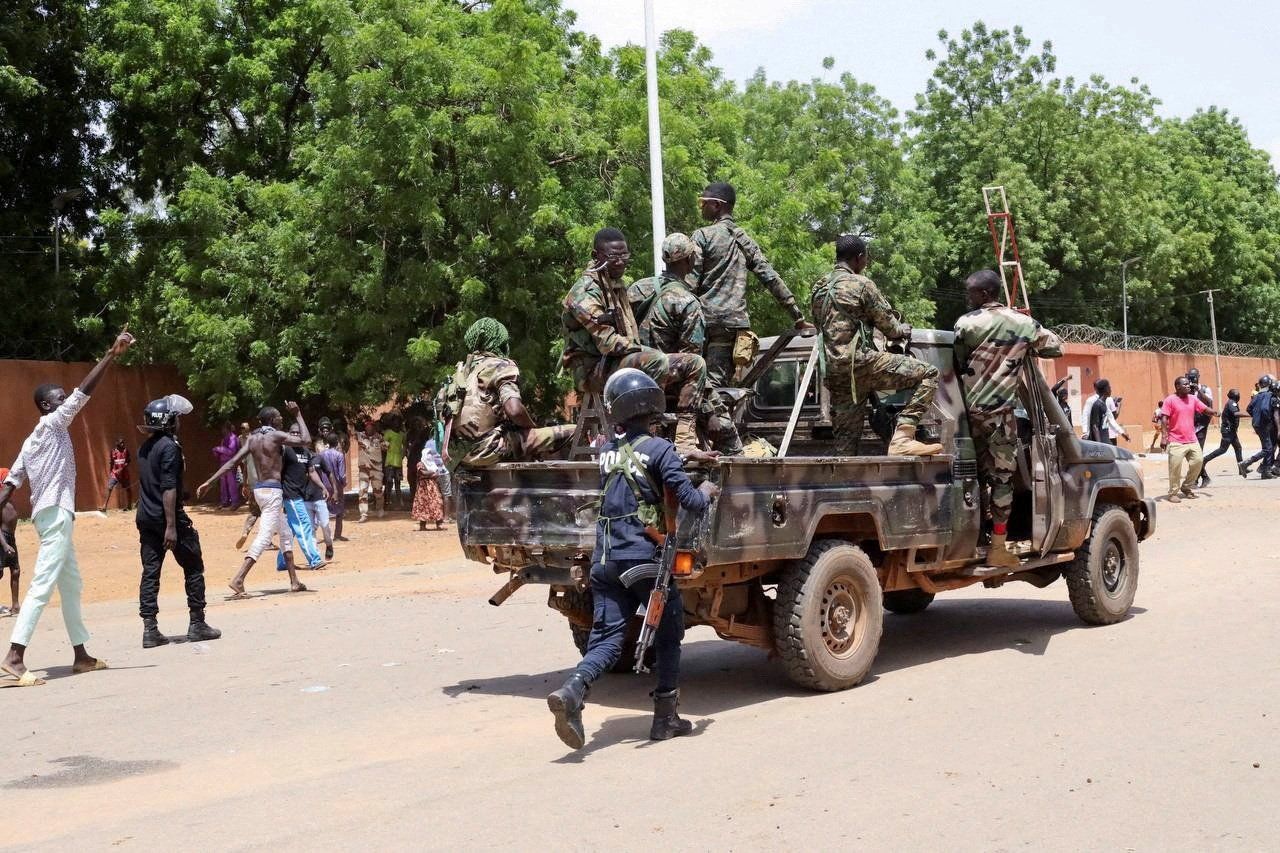
New reporting is providing a clearer picture of how Niger’s government survived the weekend military uprising. Forces associated with Russia’s Africa Corps reportedly helped loyalist troops retake the strategic Niamey airbase, with Russian forces also reported to have used drones during the operation.
The mutiny represented one of the most serious internal challenges to military ruler Abdourahamane Tiani since he seized power in the July 2023 coup. Reports of discontent among troops over heavy battlefield losses to al-Qaeda- and Islamic State-linked insurgents are particularly significant because the junta originally justified its takeover partly on its promise to restore security.
Why it matters: Niger, Mali and Burkina Faso have sharply reduced their reliance on Western security partners while deepening relations with Moscow. Russian forces helping defend Niger’s military government illustrates how central Russia has become to the security architecture of parts of the Sahel—and how dependent some governments may now be on that relationship.
3. 🇰🇪 Thousands Hit by Flight Disruptions as Strike Grips Kenya’s Main International Airport
Development: August 30–31, 2026 — DEVELOPING
Passengers at Jomo Kenyatta International Airport during an earlier aviation workers’ strike. Archival image used for context. Original image source: Mint.
Thousands of passengers are facing delays and cancellations at Jomo Kenyatta International Airport in Nairobi as airport workers’ go-slow strike action continues.
The Kenya Aviation Workers’ Union says its grievances include an unresolved collective bargaining agreement and disputes involving aviation authorities and airline operator Jambojet. RwandAir has also cancelled flights because of air-traffic-control problems in Nairobi, while some travelers have reported waiting at the airport for many hours.
Why it matters: JKIA is one of Africa’s most important aviation hubs. Prolonged disruption affects not only Kenya but regional passenger connections, business travel, tourism and air cargo throughout East Africa.
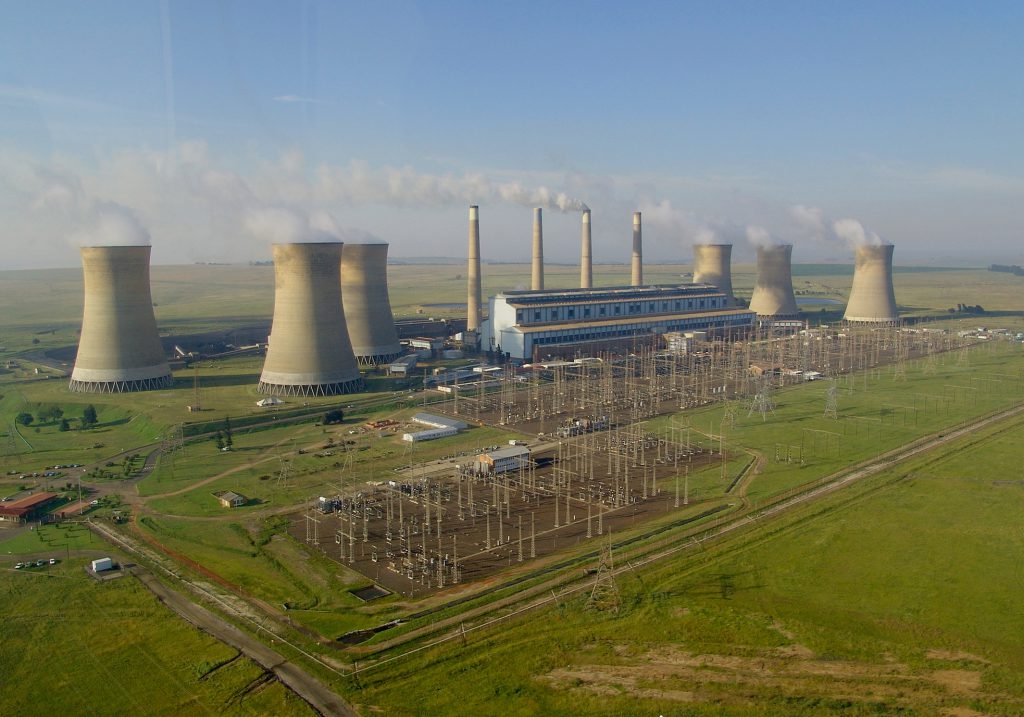
South African state electricity utility Eskom reported annual net profit of 30.3 billion rand, approximately $1.9 billion, more than double the previous year’s 14 billion rand and marking its second consecutive profitable year after nearly a decade of losses.
Operational performance has also improved dramatically. South Africa experienced only four days of load shedding during the reporting period, compared with 329 days in 2024.
Why it matters: Eskom’s recovery is one of the most important structural developments in Africa’s most industrialized economy. Chronic electricity shortages had constrained investment, manufacturing and economic growth for years. The turnaround remains vulnerable, however: electricity sales declined, debt remains substantial and municipalities owe Eskom more than 111 billion rand.
5. 🌍 Africa’s Diesel Supply Map Is Being Redrawn as Middle East Disruptions Force a Pivot Toward Asia
Development: August 31, 2026
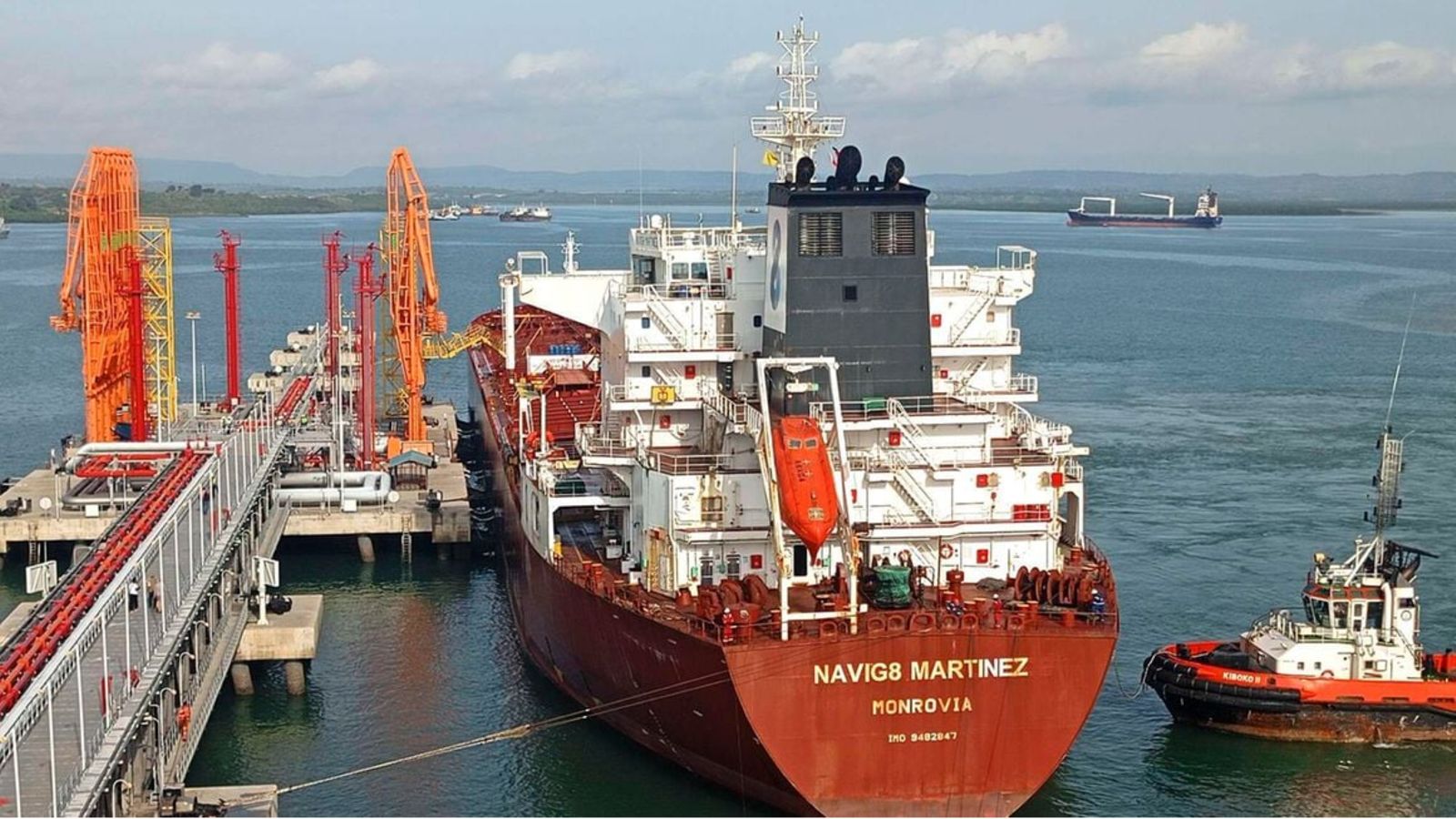
An oil-products tanker at the New Kipevu Oil Terminal in Mombasa, Kenya. File image illustrating East African fuel imports. Original image source: The Citizen.
Asian diesel exports to Africa surged to their highest level in roughly 4½ years during August as conflict-related disruption in the Middle East, Red Sea insecurity and problems at Saudi Arabia’s Jazan refinery reduced traditional supplies.
Trade estimates put Asian diesel exports to Africa at roughly 1.8 million to 2 million metric tons, while Middle Eastern shipments fell to approximately 600,000–800,000 tons—their lowest level in nearly nine years.
Why it matters: Africa has historically sourced a large proportion of its imported diesel from the Middle East. If security and shipping disruptions persist, African importers could become increasingly dependent on longer routes from India, China and other Asian refining centers, potentially affecting freight costs, fuel security and consumer prices.
Congo is the highest-priority sustained emergency. Crossing 6,000 confirmed Ebola infections is significant, but the more important question is whether the rate of transmission begins slowing as vaccination, treatment capacity and surveillance expand.
Niger deserves equally close political attention. The immediate military challenge appears to have been contained, but the combination of dissatisfaction inside the armed forces, continuing jihadist violence and growing Russian involvement suggests the crisis exposed vulnerabilities rather than resolving them.
Kenya’s airport dispute is the fastest-moving infrastructure story today. A prolonged shutdown or escalation would have wider consequences for regional aviation, tourism and trade.
African Boulevard will continue monitoring these developing stories. Figures and operational details in fast-moving events may change as governments, international organizations and independent news agencies release new information.
Cameroon & Africa Daily Briefing — August 26, 2026
Today’s strongest African news cycle is led by fresh political pressure in Cameroon after Paul Biya’s return, Nigeria’s massive kidnapping crisis, and the sudden resignation of Tanzania’s vice president. Two major economic stories—Dangote’s planned record IPO and South African miners’ accelerating move away from Eskom—round out today’s five.
1. 🇨🇲 Pressure Builds on Biya After His Return From a 73-Day Absence
Development: August 26, 2026
Political parties and civil-society voices are pressing President Paul Biya to address economic hardship, youth unemployment and governance concerns following his return from an unusually long stay abroad.
Biya, 93, returned to Yaoundé on August 20 after more than ten weeks away. Reporting from AP and Reuters said the prolonged absence renewed concerns about continuity of government and presidential succession, particularly because Cameroon still has no appointed vice president.
Relevant image: President Paul Biya in Cameroon following his return to Yaoundé.
Why it matters: Biya’s physical return has not ended the political controversy—it has shifted attention toward what he actually does next. Significant appointments, economic measures or movement on the vacant vice presidency could become signals of how the government intends to address the institutional weaknesses exposed by his absence.
Read more: Channel Africa — Cameroon opposition demands governance reforms after Biya’s return.
2. 🇳🇬 Tinubu Orders Immediate Rescue Operation After Potentially Enormous Mass Kidnapping
Development: August 25–26, 2026
President Bola Tinubu has ordered Nigeria’s military and security agencies to launch an immediate rescue operation after gunmen abducted scores of people in Niger State.
Residents who identified relatives in a video released by the attackers estimate that roughly 600 women, children and older people may have been taken. Reuters reports that the precise number remains unverified.
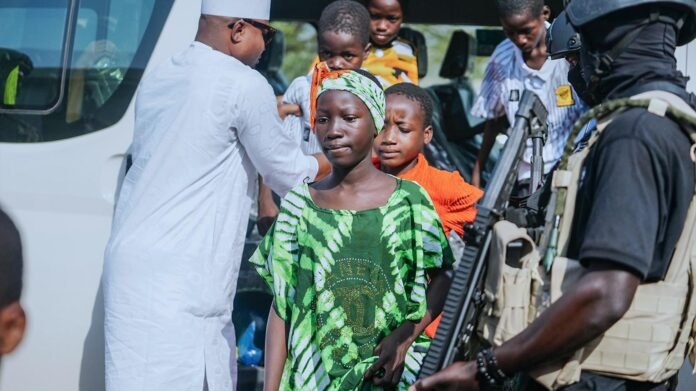
Relevant image: Nigerian security forces responding to the kidnapping crisis in Niger State.
Why it matters: The presidential intervention confirms that this has escalated into a national security crisis, even though the figure of 600 captives should still be treated as an estimate rather than an established count. If anything close to that number is ultimately verified, the attack would rank among Nigeria’s most consequential mass abductions and expose serious weaknesses in the government’s ability to secure remote communities.
Source: Reuters — Tinubu orders rescue operation.
3. 🇹🇿 Tanzania’s Vice President Abruptly Resigns Less Than a Year Into Office
Development: August 26, 2026
Tanzanian Vice President Emmanuel John Nchimbi has resigned less than a year after taking office.
President Samia Suluhu Hassan accepted the resignation, effective September 4. The government gave no reason for the departure, although Nchimbi had recently attracted attention within the ruling CCM after publicly advocating constitutional reform.
The resignation comes against a sensitive political backdrop. Hassan won re-election last year in a vote from which major opposition candidates were excluded, followed by violence in which a government-appointed inquiry said at least 518 people died. Constitutional procedures will now begin to select a replacement.
Relevant image: Tanzanian Vice President Emmanuel John Nchimbi and President Samia Suluhu Hassan.
Why it matters: An unexplained vice-presidential resignation would be notable anywhere; in Tanzania’s current political environment it immediately raises questions about internal CCM dynamics, constitutional reform and the balance of power around President Hassan.
Source: Reuters — Tanzania vice president resigns.
4. 🇳🇬 Dangote Prepares What Could Become Africa’s Biggest-Ever IPO
Development: August 26, 2026
Dangote Petroleum Refinery is preparing an October stock-market listing that aims to raise roughly $5 billion, potentially making it the largest initial public offering in African history.
The 650,000-barrel-per-day refinery is now operating around its initial full capacity and has tested production as high as 700,000 barrels per day, while management ultimately plans to double capacity.
The principal investor concern is crude supply. Despite being located in Africa’s largest oil-producing country, the refinery currently imports roughly 30%–40% of its crude, partly because Nigerian production is tied up in existing commitments and oil-backed financing arrangements.
Relevant image: Dangote Petroleum Refinery in Lagos, Nigeria.
Why it matters: Dangote is no longer simply a Nigerian industrial project. Its scale is reshaping African fuel flows—Nigeria’s seaborne petroleum-product exports have risen sevenfold since 2023—and a successful $5 billion listing could become a landmark event for African capital markets.
Source: Reuters — Dangote refinery approaches record IPO.
5. 🇿🇦 South African Mining Giants Accelerate Their Break From Eskom
Development: August 26, 2026
South Africa’s major mining companies are accelerating investments in solar, wind and other renewable power as they reduce their longstanding dependence on state electricity utility Eskom.
Reuters reports that the shift is being driven simultaneously by electricity costs, energy-security concerns and corporate decarbonisation targets.
For an industry that historically depended heavily on Eskom, privately developed generation represents a structural change in how one of Africa’s largest industrial economies powers its mines.
Relevant image: Renewable-energy infrastructure supporting South Africa’s mining sector.
Why it matters: Mining remains central to South Africa’s export economy. Reliable and cheaper electricity can improve mine competitiveness and investment while also reducing pressure on Eskom—and the model could influence other electricity-constrained African economies considering greater private participation in power generation.
Source: Reuters — South African miners accelerate renewable-power shift.
What to Watch Today
Nigeria is the most urgent developing story. The key questions are whether security forces locate the abductees, whether authorities establish a credible number of captives, and whether the attackers issue ransom or political demands.
In Cameroon, the more consequential medium-term signal will be whether Biya’s return is followed by substantive government action rather than simply renewed public appearances.
This briefing distinguishes confirmed reporting from developing claims. Details surrounding the Nigeria mass abduction, particularly the total number of people taken, remain subject to official verification.
Africa on Edge: Biya Returns After 73 Days as Hundreds Are Feared Abducted in Nigeria
From Yaoundé to Niger State, eastern Congo, Guinea-Bissau and Liberia, a wave of fast-moving developments is exposing some of Africa’s deepest fault lines: political succession, mass insecurity, fragile peace agreements and the growing reach of foreign powers.
Cameroon’s 93-year-old president has returned home after the longest recorded foreign absence of his four-decade rule. In Nigeria, families are scanning a disturbing video for missing relatives after residents said hundreds of people were carried away in coordinated raids. Farther east, ceasefire monitors have entered one of the Democratic Republic of Congo’s most volatile conflict zones.
Meanwhile, Guinea-Bissau is moving toward a fiercely disputed constitutional referendum, while Liberia has become part of an expanding U.S. policy of deporting migrants to countries that are not their homelands.
Here are five major developments shaping Africa right now.
1. Cameroon: Biya Returns After 73 Days — but the Succession Question Is Now Impossible to Ignore
Cameroon President Paul Biya pictured during the opening ceremony of the Africa Cup of Nations in Yaoundé in January 2022. File photo: Happi Raphael/Wikimedia Commons, CC BY-SA 4.0.
President Paul Biya returned to Cameroon on August 20 after spending more than 10 weeks abroad, ending an absence that had fueled intense speculation about his health, his ability to govern and the machinery of power in one of Central Africa’s most politically centralized states.
Biya left Cameroon on June 7 for what the presidency described as a brief private stay in Europe. He ultimately returned from Geneva, Switzerland, landing at Yaoundé-Nsimalen International Airport before traveling to the presidential palace.
Reuters described the trip as Biya’s longest recorded stay abroad since taking power in 1982.
The president’s return ends the immediate uncertainty over his whereabouts, but it does not resolve the deeper constitutional questions his absence exposed.
Cameroon restored the office of vice president earlier this year, but Biya has not appointed anyone to the position. During his absence, opposition politicians called on the Constitutional Council to consider whether someone should temporarily exercise presidential authority. The council did not act.
The government maintained that state institutions continued functioning normally throughout the president’s absence.
Why it matters: Biya is 93 and has governed Cameroon for more than four decades. His prolonged absence demonstrated how quickly questions surrounding one man’s health can become questions about national continuity. With the vice presidency still vacant, succession remains one of the most consequential unresolved issues in Cameroonian politics.
2. Nigeria: A Terrifying Video Raises Fears That Hundreds Were Abducted
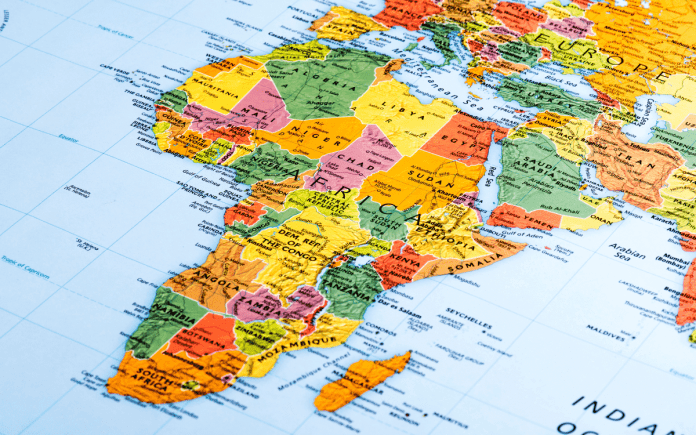
Locator map showing Niger State in Nigeria. This is an illustrative map and not an image of the kidnapping. Image: Himalayan Explorer, based on work by Uwe Dedering/Wikimedia Commons, CC BY-SA 3.0.
A disturbing video posted by an armed group has intensified fears that one of Nigeria’s largest recent mass kidnappings may have taken place in north-central Niger State.
The footage shows large groups of people sitting in a forested area under the watch of armed men. Residents who viewed the recording told Reuters they believed about 600 women, children and elderly people had been taken during attacks around the Dekara area.
Several residents said they recognized relatives among those shown.
But the number must be treated carefully.
Nigerian authorities have not confirmed that 600 people were abducted. Police had previously confirmed an attack on worshippers in the area but said they could not verify the number taken. Reuters also said it could not independently establish the exact location or date on which the video was recorded.
The attack occurred during Friday prayers, with residents describing coordinated raids on several communities around Dekara in Borgu Local Government Area.
Mass kidnapping for ransom has become a persistent security crisis across parts of northern and north-central Nigeria. Armed gangs have attacked villages, schools, highways and religious gatherings, often taking captives into remote terrain and demanding large ransom payments.
Why it matters: Even if the final number proves lower than residents’ estimate, the footage and eyewitness accounts point to an abduction on a potentially extraordinary scale. The incident will intensify pressure on President Bola Tinubu’s government and Nigeria’s security forces to locate and rescue the captives.
3. Democratic Republic of Congo: Ceasefire Monitors Enter the Field as a Fragile Peace Faces Its Real Test
Congolese troops pictured during an earlier phase of the M23 conflict in North Kivu. Archival image, November 2012. Photo: MONUSCO Photos/Wikimedia Commons, CC BY-SA 2.0.
After months of negotiations, a mission to monitor a ceasefire in eastern Democratic Republic of Congo began operating on August 24, marking the first field deployment under a mechanism created through a Qatar-mediated peace process.
The monitors are tasked with observing compliance between Congolese forces and the Rwanda-backed AFC/M23 rebellion.
The deployment represents an important shift from diplomatic declarations to an actual verification mechanism on the ground.
That distinction matters because ceasefire agreements in eastern Congo have repeatedly collapsed amid accusations and counter-accusations over which side fired first.
The latest peace effort follows negotiations involving Congo, AFC/M23, Qatar and other international actors seeking to contain a conflict that has displaced huge numbers of civilians and heightened tensions between Congo and neighboring Rwanda.
Why it matters: Eastern Congo remains one of Africa’s most dangerous regional flashpoints. The deployment of monitors creates a mechanism for documenting violations rather than relying solely on claims from the opposing sides. Whether the monitors can actually help restrain fighting will now become a critical test of the peace process.
4. Guinea-Bissau: Opposition Calls for Referendum Boycott as Political Fear Deepens
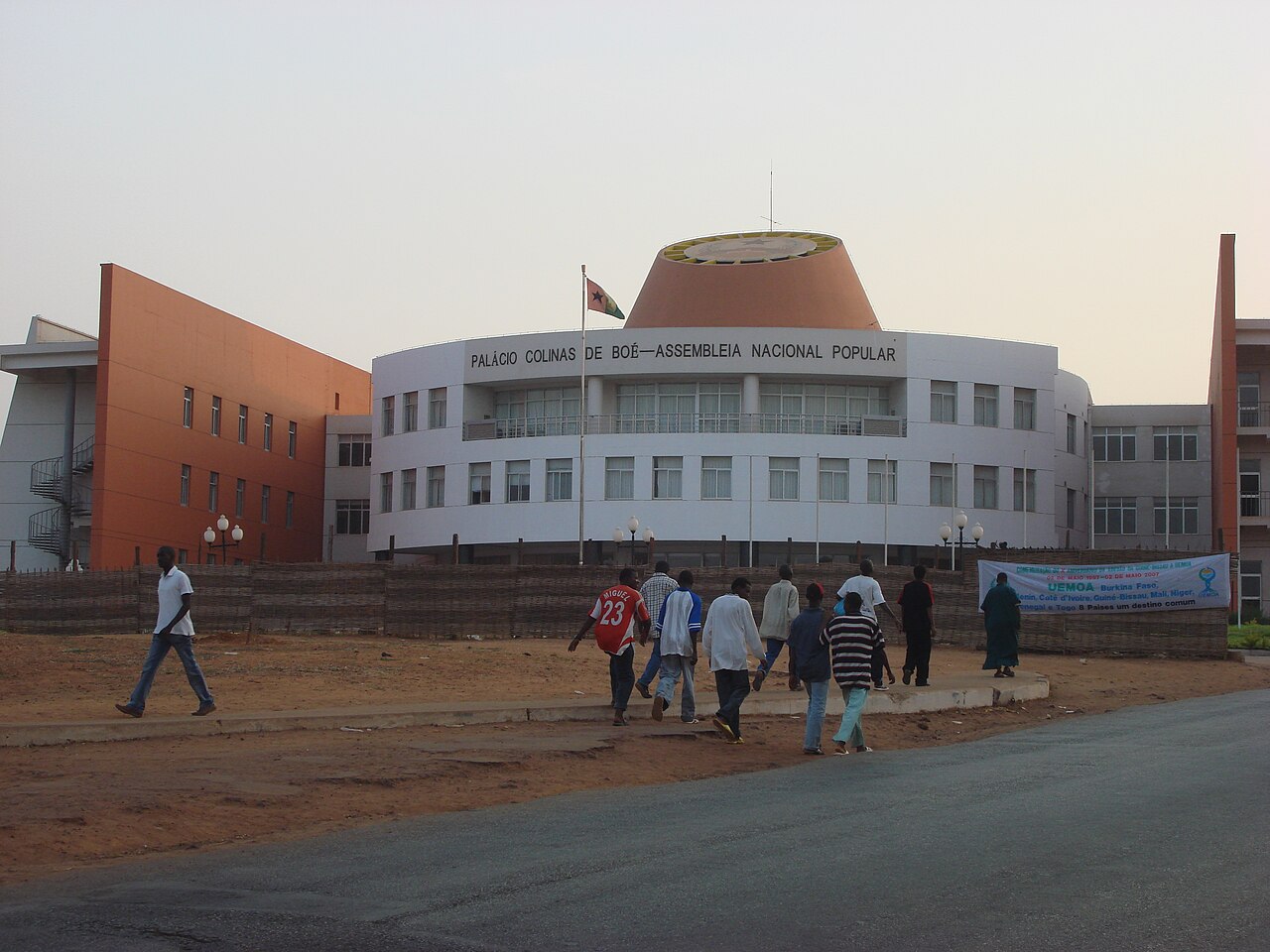
The National People’s Assembly building in Bissau. Archival image. Photo: Colleen Taugher/Wikimedia Commons, CC BY 2.0.
Guinea-Bissau is heading toward an August 30 constitutional referendum under conditions that the country’s principal historic opposition party says lack democratic legitimacy.
The African Party for the Independence of Guinea and Cape Verde, or PAIGC, has called on citizens to boycott the vote.
The referendum will determine whether a new constitution approved by the National Transitional Council enters into force following the military takeover of November 2025, which interrupted the country’s electoral process.
The political environment surrounding the referendum has grown increasingly tense.
Reuters reported on August 21 that the killing of rapper and opposition activist Vigario Luis Balanta has driven some government critics underground. Balanta, a vocal critic of the military authorities, was found beaten to death earlier this year outside the capital.
The government condemned the killing, and the case remains under investigation.
Military authorities say a constitutional referendum will be followed by general elections scheduled for December.
Why it matters: Guinea-Bissau has endured repeated coups, attempted coups and constitutional crises since independence. A new constitution could theoretically create stability, but a referendum rejected by major opposition forces risks deepening rather than resolving the country’s political divisions.
5. Liberia: U.S. Deportation Deal Expands — and a Cameroonian Woman Is Caught in a Disturbing New Twist
Roberts International Airport near Monrovia, where the first U.S. deportation flight under the new agreement arrived. Archival image from 2010. Photo: Popo le Chien/Wikimedia Commons, public domain.
Liberia has begun receiving migrants deported from the United States even when those migrants are not Liberian citizens, placing the West African country at the center of an increasingly controversial U.S. immigration strategy.
Under the agreement, Liberia has said it can receive as many as 1,200 third-country deportees over 12 months. The first U.S. flight arrived at Roberts International Airport on August 20 carrying 20 people.
The arrangement became even more controversial when a group of passengers refused to leave the aircraft.
According to an updated Associated Press report published August 25, six deportees — four Cuban men, one Brazilian man and one Cameroonian woman — refused to disembark in Liberia, saying the country was not their home and that they feared being placed there.
They were subsequently flown to Equatorial Guinea, another African country participating in third-country deportation arrangements with Washington.
The Associated Press reported that the six are being held in Equatorial Guinea alongside other deported migrants. Immigration advocates have raised concerns about detention conditions, access to legal assistance and the treatment of asylum seekers moved through third countries.
U.S. authorities defend the policy as a lawful mechanism for removing people who have no legal right to remain in the United States. Rights groups argue that the practice can place migrants in countries with which they have no meaningful connection.
Why it matters: The policy is becoming a new dimension of U.S.–Africa relations. African governments are no longer dealing with Washington only through traditional questions of aid, trade and security; some are now becoming partners in U.S. immigration enforcement. The presence of a Cameroonian woman among those transferred from Liberia to Equatorial Guinea gives the issue particular resonance in Central Africa.
A Continent Confronting Questions of Power, Security and Sovereignty
Across all five stories, one theme stands out: African states are confronting profound questions about who exercises power, who guarantees security and how much influence outside actors should have over domestic and regional affairs.
For Cameroon, Biya’s return may have ended 73 days of uncertainty, but it has not ended the succession debate.
For Nigeria, families are waiting for answers about loved ones whose faces may now be visible in a captors’ video.
For Congo, an international peace effort has finally moved from diplomatic conference rooms into a real conflict zone.
And in Guinea-Bissau and Liberia, decisions being made today could reshape the relationship between sovereignty, democracy and international pressure for years to come.
African Boulevard is following these developing stories. Some details — particularly the estimated number of people abducted in Nigeria — remain subject to official confirmation and may change as new information becomes available.
The United States political landscape is currently being shaken by three major developing stories involving the African American and Diaspora community: a controversial incident involving Don Lemon at a church, a ban impacting the Nick Shirley investigation into alleged fraud, and escalating tensions between the U.S. and Iran. These events, seemingly disparate, intersect at critical junctures of religious freedom, investigative journalism, government accountability, and international relations. Understanding these issues is paramount for Americans and anyone concerned with global stability. This article delves into each of these complex situations, providing a comprehensive analysis supported by the latest research and insights.
The Don Lemon Church Incident: Religious Freedom Under Fire
The incident involving Don Lemon at Cities Church in St. Paul, Minnesota, has ignited a firestorm of controversy surrounding religious freedom and the boundaries of protest.
Background of the Cities Church Controversy
In January 2026, Don Lemon livestreamed a news report from Cities Church, where anti-ICE protesters disrupted a Sunday service. The protest was sparked by the shooting of Renee Good by ICE agent Jonathan Ross and alleged ties between the church and ICE. This disruption has led to significant backlash and accusations of violating religious freedom.
Key Talking Points:
The protest was in response to the shooting of Renee Good.
The church was targeted due to its alleged connection with ICE.
The incident was livestreamed by Don Lemon, amplifying the controversy.
High-Profile Reactions and Fallout
The incident quickly garnered national attention, triggering strong reactions from various public figures and organizations.
Nicki Minaj’s Response: Nicki Minaj responded to the incident by calling Don Lemon a homophobic slur on X, demanding the protester be jailed, while Lemon dismissed her as not understanding journalism.
Christian Leaders’ Condemnation: Christian leaders condemned Lemon and the activists for storming the church, labeling it “unspeakably evil.”
DOJ Investigation: Trump White House Press Secretary Karoline Leavitt announced a DOJ investigation into the harassment of Christians.
Legal Implications: The incident raises questions about the legality of disrupting religious services and the potential for charges related to harassment and violation of religious freedom.
The fallout from the incident continues to unfold, with potential legal and social ramifications for all parties involved.
Nick Shirley Investigation: Exposing Alleged Fraud
The investigation led by Nick Shirley into alleged fraud in Minnesota’s daycare centers and non-emergency medical transportation (NEMT) companies has been a lightning rod of controversy, now further complicated by a reported ban impacting his investigative work.
Background of the Investigation
Nick Shirley, a 23-year-old conservative YouTuber, sparked controversy in December 2025 with videos alleging massive fraud in Minnesota’s Somali-run daycare centers and NEMT companies. He claimed that billions of taxpayer funds were being stolen, though state investigations found no evidence of fraud at sites he visited.
Scale of Alleged Fraud: Shirley’s initial video on December 26, 2025, showed empty daycare facilities billing the state for non-existent children. A follow-up video alleged $16 million in NEMT fraud by companies at dubious addresses, often Somali-owned (up to 90%), with no actual services.
Connection to Feeding Our Future Scandal: The investigation draws parallels to the previous Feeding Our Future scandal, raising questions about oversight and accountability in state-funded programs.
Investigation Impact and Controversy
The investigation has had a significant impact, triggering federal probes and sparking heated debates about bias and fairness.
Viral Reach: Shirley’s initial video gained over 135 million views on X, highlighting the public’s interest in the allegations.
Federal Probes: The videos prompted federal probes by the DHS and FBI, indicating the seriousness of the claims.
Community Backlash: Shirley faced accusations of anti-Muslim/Somali bias, with community backlash during his visits.
Political Implications: Tim Walz’s decision not to seek re-election has been linked by some to the scandal, though this remains speculative.
Current Developments
The investigation faces a new challenge with a reported ban, the details of which are still emerging. Shirley is also preparing to testify before Congress, and promising more exposures.
The ban raises concerns about transparency and the ability of independent journalists to investigate potential fraud.
Iran Crisis: Escalating Tensions with the US
The relationship between the U.S. and Iran has been fraught with tension for decades, but recent developments suggest a significant escalation, with the potential for far-reaching consequences.
Current State of US-Iran Relations
Under the Trump administration, relations between the U.S. and Iran have deteriorated significantly.
Trump Administration’s Approach: Trump’s return to office has been marked by stalled nuclear negotiations and heightened diplomatic tensions.
Nuclear Program Disputes: The U.S. has expressed concerns about Iran’s nuclear program, leading to renewed sanctions and increased military presence in the region.
Military Preparations: Both the U.S. and Iran have engaged in military preparations, raising the specter of direct conflict.
Key Developments
A series of events have contributed to the escalating tensions.
Timeline of Escalating Events: Key developments include five rounds of indirect nuclear talks from April-May 2025 (sixth scheduled but postponed), Trump’s March 2025 ultimatum letter threatening strikes, renewed ‘maximum pressure’ sanctions, and US/Israeli air campaigns in June 2025 damaging but not destroying Iran’s nuclear sites and capabilities.
Military Strikes and Responses: The U.S. and Israel have conducted air campaigns targeting Iran’s nuclear sites, while Iran has threatened to retaliate against U.S. bases in the region.
Diplomatic Efforts and Failures: Despite some diplomatic efforts, direct negotiations have been hampered by deep mistrust and conflicting demands.
Regional Impact and Global Implications
The escalating tensions between the U.S. and Iran have significant implications for the Middle East and the world.
Effect on Middle East Stability: The conflict has weakened Iran’s ‘axis of resistance’ and increased the risk of broader regional conflict.
International Community Response: The international community is divided, with some countries urging restraint and others supporting the U.S. or Iran.
Potential Outcomes and Risks: The potential outcomes range from a limited military engagement to a full-scale war, with devastating consequences for the region and the global economy.
Analysis: Connecting the Threads
While the Don Lemon church incident, the Nick Shirley investigation ban, and the Iran crisis may seem unrelated, they share common themes that shed light on broader societal and political trends.
Common Themes
Religious and Cultural Tensions: The church incident highlights the growing tensions between religious groups and political activists.
Government Accountability: The Nick Shirley investigation raises questions about government oversight and the potential for fraud in state-funded programs.
Media’s Role in Modern Politics: All three stories underscore the power of media to shape public opinion and influence political outcomes.
Broader Implications
Impact on American Society: These events have the potential to further divide American society and erode trust in institutions.
International Relations: The Iran crisis could destabilize the Middle East and lead to a broader global conflict.
Future Policy Considerations: These events call for a reevaluation of policies related to religious freedom, government accountability, and international relations.
Conclusion
The Don Lemon church controversy, the Nick Shirley investigation ban, and the escalating tensions between the U.S. and Iran represent critical challenges that demand our attention. By understanding the complexities of these issues and engaging in informed civic discourse, we can work towards a more just and stable world. The information presented in this article is based on the latest research and insights, providing a reliable foundation for further exploration and action.
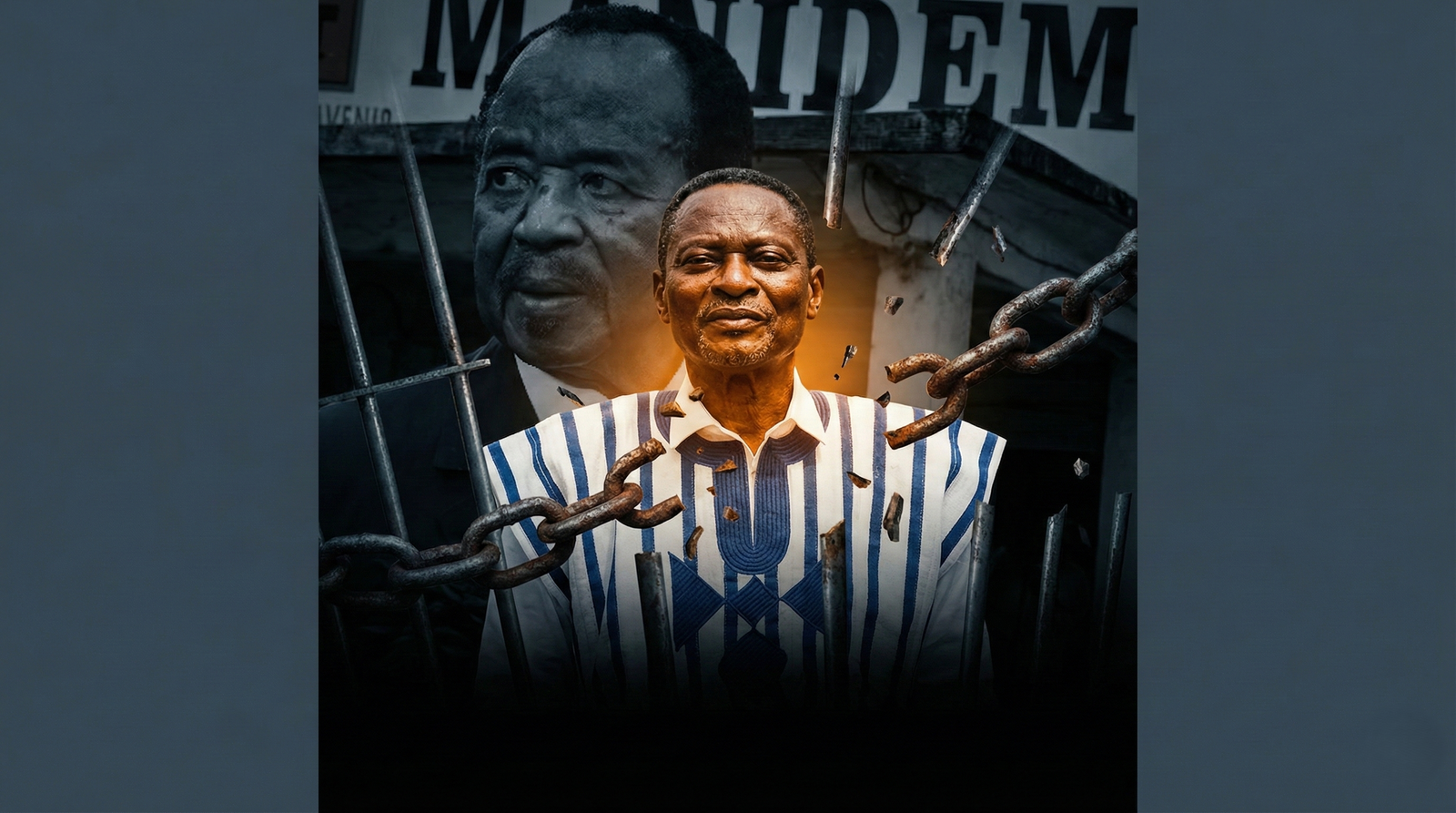
A martyr of democracy, illuminated but imprisoned, under the shadow of the dictator.
Read Time:2 Minute, 47 Second
Une lumière a été brutalement éteinte. Une voix a été violemment réduite au silence. Anicet Ekane, un homme qui osait rêver d’un Cameroun meilleur, un leader qui se tenait aux côtés du peuple, est mort. Il n’est pas mort dans un lit d’hôpital entouré des siens. Il n’est pas mort dans un sommeil paisible. Il est mort dans une cellule de détention sombre et sinistre, brisé par un régime qui redoute la vérité plus que tout.
Son crime ? Croire en la démocratie. Son péché ? Avoir soutenu un candidat qui a défié le dictateur, Paul Biya.
Soyons clairs et disons-le haut et fort, pour que le monde entier entende : la responsabilité de cette mort cruelle et odieuse repose entièrement sur les épaules d’un seul homme et de sa machine corrompue : le président Paul Biya. Ce n’est pas seulement une mort ; c’est un assassinat politique. Un message calculé à quiconque ose s’opposer.
Paul Biya a perdu la dernière élection. Le peuple a parlé, et il a dit : « Assez ! » Mais un homme ivre de pouvoir depuis plus de 40 ans n’écoute pas. Il a volé cette victoire en plein jour par des fraudes massives, s’est déclaré vainqueur, et continue de s’accrocher au trône comme une sangsue, aspirant la vie de notre nation.
Anicet Ekane s’est dressé contre ce vol. Il s’est tenu du côté de la vraie volonté du peuple. Et pour cela, il a été jeté dans une « cellule de la mort » – un endroit connu pour ses conditions difficiles et inhumaines conçues pour briser le corps et l’esprit. Ils l’ont arrêté, ils l’ont enfermé, et ils l’ont tué. Lentement. Délibérément.
C’est ce que font les dictateurs. Quand ils ne peuvent pas gagner loyalement, ils utilisent la force. Quand ils ne peuvent pas convaincre par les idées, ils utilisent la terreur. Ils emprisonnent, ils torturent, ils tuent. Le régime Biya n’est pas un gouvernement ; c’est une machine à tuer dirigée contre son propre peuple. Le certificat de décès d’Anicet Ekane devrait porter la mention : Cause du décès : Dictature de Paul Biya.
Regardez ce qu’ils ont fait ! Un père, un leader, une voix d’espoir, a disparu. Sa famille est en deuil. Le Cameroun est en deuil. Et le vieil homme du palais, qui a oublié à quoi ressemble le peuple, croit que son pouvoir est assuré.
Mais le sang des martyrs tache le sol, et cette tache ne s’efface pas. Le cri d’Anicet Ekane sorti de cette cellule sombre rejoint les cris de milliers d’autres qui ont souffert sous ce régime pervers. C’est un cri pour la justice. C’est un cri pour la liberté.
Ils pensent qu’en tuant le rêveur, ils tuent le rêve. Ils ont tort. Le rêve d’un Cameroun libre, démocratique et juste brûle désormais plus fort, alimenté par cette douleur insupportable et cette colère juste.
Anicet Ekane, ta mort ne sera pas vaine. Nous voyons tes bourreaux. Nous les nommons. Le monde regarde. Le régime pervers de Paul Biya, un perdant qui refuse de partir, a ton sang sur les mains. Et un jour, bientôt, le peuple nettoiera ces mains et reprendra son pays.
Repose en Puissance, Anicet. Ton combat est désormais le nôtre.
A martyr of democracy, illuminated but imprisoned, under the shadow of the dictator.
Read Time:2 Minute, 31 Second
A light has been brutally snuffed out. A voice has been violently silenced. Anicet Ekane, a man who dared to dream of a better Cameroon, a leader who stood with the people, is dead. He didn’t die in a hospital bed surrounded by family. He didn’t die in a peaceful sleep. He died in a dark, grim detention cell, broken by a regime that fears truth more than anything.
His crime? Believing in democracy. His sin? Supporting a candidate who challenged the dictator, Paul Biya.
Let’s be clear and say it loud, for the whole world to hear: The responsibility for this cruel, wicked death rests squarely on the shoulders of one man and his corrupt machine: President Paul Biya. This is not just a death; it is a political murder. A calculated message to anyone who dares to oppose.
Paul Biya lost the last election. The people spoke, and they said, “Enough!” But a man drunk on power for over 40 years does not listen. He stole that victory in broad daylight through massive fraud, declared himself the winner, and continues to cling to the throne like a leech, sucking the life out of our nation.
Anicet Ekane stood against this theft. He stood for the true will of the people. And for that, he was thrown into a “cell of death” – a place known for its harsh, inhuman conditions designed to break the body and the spirit. They arrested him, they caged him, and they killed him. Slowly. Deliberately.
This is what dictators do. When they cannot win fairly, they use force. When they cannot convince with ideas, they use terror. They jail, they torture, they kill. The Biya regime is not a government; it is a killing machine aimed at its own people. The death certificate of Anicet Ekane should read: Cause of Death: Paul Biya’s Dictatorship.
Look at what they have done! A father, a leader, a voice of hope, is gone. His family is in mourning. Cameroon is in mourning. And the old man in the palace, who has forgotten what the people look like, thinks his power is secure.
But the blood of martyrs stains the ground, and that stain does not wash away. The cry of Anicet Ekane from that dark cell joins the cries of thousands who have suffered under this wicked regime. It is a cry for justice. It is a cry for freedom.
They think that by killing the dreamer, they kill the dream. They are wrong. The dream of a free, democratic, and just Cameroon is now burning brighter, fueled by this unbearable pain and righteous anger.
Anicet Ekane, your death will not be in vain. We see your killers. We name them. The world is watching. The wicked regime of Paul Biya, a loser who refuses to leave, has your blood on its hands. And one day, soon, the people will wash those hands clean and take back their country.
Cameroon stands at a critical juncture in 2025. After 43 years under the leadership of President Paul Biya, the nation faces mounting political, economic, and social challenges. This article delves into the complexities of Biya’s enduring rule, the growing discontent among the populace, and the failed attempts at negotiation that underscore a deep-seated leadership crisis. From economic decline and infrastructure woes to regional conflicts and a fractured Anglophone region, we examine the factors fueling the push for change in Cameroon. This analysis is for anyone seeking a comprehensive understanding of the current turmoil and the potential paths forward for this Central African nation.
The Legacy of Paul Biya’s Leadership (1982-2025)
Paul Biya’s presidency, beginning in 1982, has been marked by centralized, authoritarian rule. While he introduced multiparty politics in the early 1990s under national and international pressure, elections under his leadership have consistently been marred by allegations of fraud and irregularities. This has led to a legacy of economic decline, infrastructure crises, and escalating security challenges.
Economic Decline
Under Biya’s leadership, Cameroon, once facing an economic boom, experienced a significant downturn. Key events include:
IMF Intervention: Cameroon was taken to the International Monetary Fund (IMF), a move that often leads to economic hardship for nations. As the video points out, countries that go to the IMF often “come out like an oversucked cow.”
Currency Devaluation: The country’s currency was devalued, leading to a reduction in purchasing power and economic instability.
Privatization Failures: Actions taken under Biya’s administration led to privatization, putting Cameroonians “on their knees.” Many buoyant companies and institutions disappeared.
Highly Indebted Poor Country (HIPC) Status: Cameroon became a member of the Highly Indebted Poor Countries, further highlighting its economic struggles.
In 2023, Cameroon’s GDP growth was just 3.3%, falling short of the National Development Strategy target. Inflation rose to 7.4%, driven by food prices and transport costs, eroding the nation’s price competitiveness.
Infrastructure and Basic Services Crisis
Cameroon faces significant challenges in providing basic services to its citizens. The video highlights critical issues:
Water Scarcity: Access to water is a persistent problem throughout Cameroon.
Electricity Supply: The electricity supply is described as “a living hell,” characterized by frequent outages.
Healthcare System Deterioration: The healthcare system lacks adequate infrastructure, equipment, and personnel.
A stark example of these failures is the water distribution during the African Cup of Nations (AFCON). Water was diverted from the rest of the city to the areas where games were taking place and players were lodged, showcasing a government prioritizing appearances over the needs of its citizens.
Job creation has also been a major failure under Biya’s administration. The industries and institutions that once created jobs have disappeared, making job creation “the tears of a dog – hard to find.”
Security Challenges Under Biya’s Administration
Cameroon faces numerous security threats that undermine its stability and regional security.
Multiple Regional Conflicts
Boko Haram in the Far North: The Boko Haram insurgency has caused havoc, leading to population displacement and insecurity.
Seleka Movement in the East: The country was infiltrated by the Seleka movement, causing widespread fear and instability.
Nine-Year Anglophone Crisis: The Northwest and Southwest regions have been engulfed in a crisis that has taken thousands of lives and severely impacted the economy.
The Anglophone Crisis alone has resulted in over 6,500 deaths since 2016, with at least 334,000 internally displaced and 76,000 refugees in Nigeria.
The Anglophone Crisis (2016-2025)
The Anglophone Crisis, rooted in the marginalization of English-speaking regions, has escalated into a violent conflict. Key points include:
Origins and Escalation: The crisis began with peaceful protests by Anglophone lawyers and teachers, which were met with violent state repression.
Death Toll and Displacement: The conflict has resulted in thousands of deaths and widespread displacement, creating a humanitarian crisis.
Failed Negotiation Attempts: Attempts at mediation and dialogue have repeatedly failed, further complicating the situation.
The government’s response has been largely military, leading to human rights violations and a lack of meaningful progress. Separatist groups have also committed serious abuses, exacerbating the crisis.
Government Response and Negotiation Attempts
The government’s attempts to address the crises have been largely ineffective, marked by failed negotiations and administrative challenges.
Current Negotiation Failures
Recent attempts to negotiate with Tchiroma have failed, with Tchiroma demanding that Biya concede defeat in the election. This condition is unlikely to be accepted by the government, leading to a stalemate.
Administrative Challenges
Key Figures: Figures like Atangji Paul and Bruno Bjang play controversial roles in the administration, with Atangji known for his bullying tactics and Bruno Bjang seen as a staunch supporter of Biya.
Government Communication Strategy: The government’s communication strategy is often seen as out of touch with the realities on the ground, with officials making statements that are mindboggling and detached from the people’s struggles.
Civil Disobedience Impact: Civil disobedience, such as citizens refusing to open their shops, is a form of protest against the government’s policies.
Economic Implications of Protests: Protests have disrupted trade and economic activity, further exacerbating the country’s economic woes.
The Path Forward: Transition and Change
The path forward for Cameroon involves addressing the underlying issues driving the crisis and implementing meaningful reforms.
Opposition Demands
Electoral Reform: The opposition demands electoral reform to ensure fair and transparent elections.
Constitutional Council Role: The Constitutional Council plays a crucial role in ensuring a fair electoral process.
Peaceful Transition Proposals: Proposals for a peaceful transition of power are essential to avoid further conflict.
International Mediation Possibilities: International mediation could play a role in facilitating dialogue and finding a resolution to the crisis.
Economic and Social Impact
Business Disruptions: The ongoing crisis has disrupted business activity and economic growth.
Regional Trade Effects: The crisis has impacted regional trade, affecting neighboring countries.
Civil Society Response: Civil society organizations are playing a role in advocating for change and providing assistance to those affected by the crisis.
Youth Unemployment Crisis: High youth unemployment is a major challenge, contributing to social unrest and instability.
Conclusion
Cameroon stands at a crossroads, with Paul Biya’s 43-year rule facing unprecedented challenges. The failed attempts at negotiation, coupled with economic decline, infrastructure crises, and regional conflicts, underscore the urgent need for change. Whether the path forward involves electoral reform, international mediation, or a more comprehensive approach to addressing the root causes of the crisis, the future of Cameroon hinges on the ability to find a peaceful and sustainable resolution. The international community, civil society, and the people of Cameroon all have a role to play in shaping that future.
Crise au Sommet de l’État : Le Président Critiqué pour son Absence et sa Gouvernance
Un ancien collaborateur démissionne et exprime ses inquiétudes sur la gestion du pays
Un article de [Nom du Journaliste] | [Ville, Pays]
L’avenir politique du président de la République est remis en question par un ancien collaborateur, qui pointe du doigt son âge avancé et son absence de pouvoir physique pour gouverner efficacement. “Le président n’organise plus de conseils de ministres depuis 14 ans”, a-t-il déclaré, ajoutant que le chef de l’État semble “distant” et “autiste” face aux responsabilités de son poste.
Des révélations troublantes émergent alors que quatre ministres décédés n’ont pas été remplacés et que l’assassinat brutal d’un journaliste reste sans réponse. “Les populations s’interrogent”, a souligné l’ancien collaborateur, mettant en avant le manque de réaction du gouvernement face à ces événements.
Le gouvernement, selon lui, est désormais un “instrument au service des puissances occultes”, divisé en deux clans familiaux qui luttent pour leurs propres intérêts. Ce climat de division et d’inaccessibilité a conduit l’ancien partisan à retirer son soutien au président, après avoir constaté des “symptômes de fin de règne”.
Les militants et sympathisants de son parti, autrefois fidèles au président, expriment désormais une volonté de changement. “On ne gouverne pas une nation par procuration”, a-t-il affirmé, soulignant la nécessité d’un pouvoir exercé par le peuple et pour le peuple.
La décision de démissionner du gouvernement n’a pas été prise à la légère. Elle résulte d’une “très longue observation” et d’une “réflexion mûrie” avec les membres de son parti, qui aspirent à une nouvelle dynamique politique. “Les Camerounais veulent le changement”, a-t-il déclaré, appelant à l’union des partis politiques pour présenter un candidat unique contre le président sortant.
En conclusion, il a insisté sur l’importance de se souvenir que “l’immense majorité des Camerounais aspire au changement”, appelant à une réévaluation des stratégies politiques pour répondre aux attentes du peuple.
Les Alliances Politiques au Cameroun : Un Tournant Historique ?
Des figures du Nord remettent en question leur soutien au régime de Yaoundé, à l’approche de la présidentielle de 2025.
L’horizon politique du Cameroun semble s’obscurcir à mesure que la présidentielle de 2025 approche. Deux personnalités influentes du Nord, Isairoma Bakari et Belloboua Maigari, ont récemment ébranlé leurs alliances avec le président Paul Biya, remettant en cause des décennies de soutien inébranlable.
Isairoma Bakari, ministre de l’Emploi et de la Formation Professionnelle, a surpris lors d’une rencontre publique en dénonçant les 43 années de pouvoir de Biya. “Il est temps pour la jeunesse de tourner la page,” a-t-il déclaré, laissant entendre sa possible candidature pour la présidence. Cette prise de position marque une rupture significative pour celui qui fut un défenseur acharné du régime.
Simultanément, l’Union Nationale pour la Démocratie et le Progrès (UNDP), dirigée par Belloboua Maigari, a convoqué une réunion d’urgence pour décider du maintien de leur alliance avec le Rassemblement Démocratique du Peuple Camerounais (RDPC). Cette région, représentant 40 % de l’électorat, pourrait voir son influence peser lourdement sur le scrutin à venir.
Les critiques ne se sont pas fait attendre. Un discours virulent accuse ces deux responsables d’avoir “livré la jeunesse du Nord à la dictature de Paul Biya,” les exhortant à “assumer leur complicité” dans la pauvreté persistante de la région.
Cette agitation politique révèle une fracture potentielle dans le soutien traditionnel à Biya, qui pourrait redéfinir l’équilibre des pouvoirs au Cameroun. Tandis que la nation se prépare pour 2025, l’avenir reste incertain, et le Nord pourrait bien jouer un rôle déterminant dans ce tournant historique.
Prophétie Alarmante pour le Cameroun : Un Appel à la Vigilance
Prédiction du Prophète Samuel Fombang sur une menace pesant sur le président camerounais
Douala, Cameroun – Le prophète Samuel Fombang a récemment partagé une prophétie inquiétante concernant le président du Cameroun, soulignant un complot visant à attenter à sa vie. Selon lui, cette menace émanerait de l’intérieur même du gouvernement.
Dans une vision, Fombang a décrit avoir vu “un plan pour assassiner” le président, impliquant ses propres gardes du corps. “J’ai vu qu’ils laissaient une certaine distance, exposant le président à un danger imminent”, a-t-il affirmé.
Le prophète a également évoqué des conspirations antérieures, affirmant avoir entendu une conversation entre un haut fonctionnaire et un membre de la garde présidentielle planifiant une faille dans la sécurité du président.
Face à cette situation, Fombang appelle à la prière pour la protection du président et pour que “le changement dans la nation se fasse dans la paix”. Il met en garde contre les conséquences désastreuses qu’un assassinat pourrait engendrer, notamment une guerre civile.
Dans un message adressé aux fidèles, Fombang a également prêché la rédemption et la foi en Jésus-Christ, invitant ceux qui cherchent à se rapprocher de Dieu à se tourner vers lui. “Vous pouvez l’accepter tout de suite dans votre cœur comme votre seigneur et sauveur”, a-t-il encouragé.
Il conclut par un appel à renforcer la foi et à rester vigilant face aux événements à venir, insistant sur l’importance de prier pour la paix et la prospérité du Cameroun.
Pour plus d’informations, contactez notre rédaction à Douala.