Thursday, April 23, 2026
81.7 F
Lagos
More
    Home Blog Page 62

    Sudan: Hunger Crisis Doubles as War Chaos Ravages Nation

    0
    Read Time:2 Minute, 15 Second

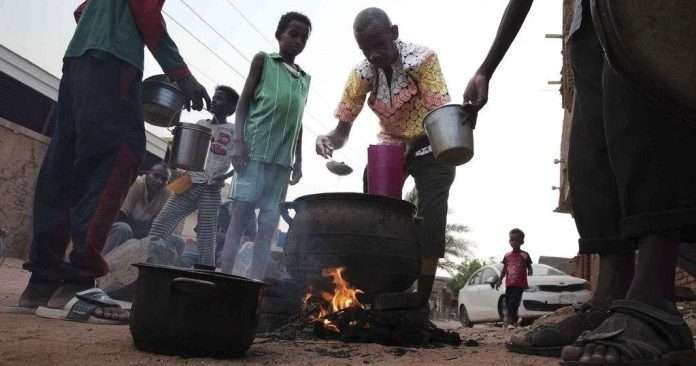
    Khartoum, Sudan – (African Boulevard News) – The number of families suffering from hunger in Sudan has nearly doubled in the past year, according to a joint report by the World Health Organization (WHO) and the United Nations Children’s Fund (UNICEF). The country, engulfed in a war between generals for the past six months, has been plunged into chaos, exacerbating an already dire humanitarian crisis.

    The report, which highlights the alarming increase in food insecurity, sheds light on the devastating impact of the ongoing conflict on Sudanese families. It reveals that the number of families struggling to secure adequate food has risen by nearly 100% since last year.

    “Food insecurity has reached alarming levels in Sudan, with nearly twice as many families suffering from hunger now compared to the previous year,” said Dr. Ahmed Khair, a senior official at WHO. “This is a clear indication of the severe humanitarian crisis gripping the country.”

    The war between generals has disrupted agricultural activities, destroyed infrastructure, and forced many families to flee their homes. As a result, access to food and clean water has become extremely limited, leaving vulnerable populations in a state of extreme vulnerability.

    “The ongoing conflict has disrupted the lives of millions of Sudanese people, pushing them further into poverty and food insecurity,” said Maria Santos, a UNICEF spokesperson. “Children are particularly vulnerable to the devastating effects of malnutrition, which can have lifelong consequences on their health and well-being.”

    The report also reveals the urgent need for increased humanitarian assistance to alleviate the suffering of families affected by hunger. It calls on the international community to provide immediate support to ensure access to food, clean water, and healthcare services.

    “The situation in Sudan is dire, and immediate action is required to prevent further deterioration,” urged Dr. Khair. “We cannot stand idly by while families suffer from hunger and children’s lives hang in the balance.”

    International organizations and aid agencies have been working tirelessly to address the crisis, but the scale of the problem remains immense. Efforts to secure a ceasefire and promote peace talks between the warring factions are underway, but progress has been slow.

    As the conflict continues, the number of families suffering from hunger in Sudan is expected to rise further unless urgent measures are taken. The plight of the Sudanese people serves as a stark reminder of the devastating consequences of war on vulnerable populations.

    In the face of this humanitarian crisis, it is crucial for the international community to come together and provide the necessary support to alleviate the suffering of Sudanese families. Only through cooperative efforts can we hope to address the root causes of hunger and ensure a brighter future for the people of Sudan.
    Rwanda: Survivors and Activists Outraged as French Army’s Role in Genocide is Dismissed, Erasing Victims’ Suffering and Undermining Justice

    0
    Read Time:2 Minute, 11 Second

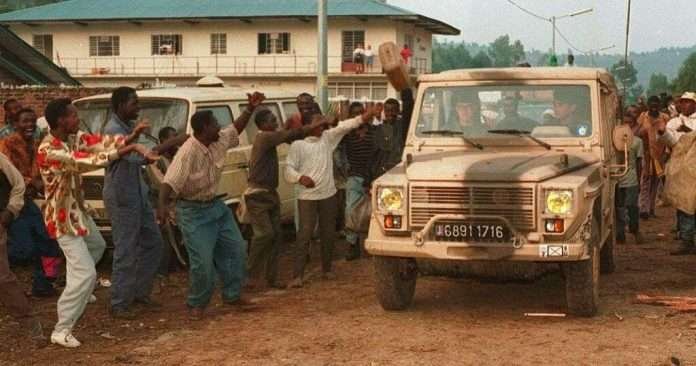
    Kigali, Rwanda – (African Boulevard News) – The role of the French army during the Rwandan genocide in 1994 has once again come under scrutiny. Parisian investigating judges responsible for the investigations into the alleged inaction of the French army during the Bisesero massacres have issued a new order of general dismissal. This order has sparked widespread outrage among survivors and activists who have long sought justice and accountability.

    The Bisesero massacres were a series of killings that took place in the Bisesero region of Rwanda during the genocide. It is estimated that thousands of Tutsis sought refuge in the hills of Bisesero, where they were besieged by Hutu militias. Despite numerous pleas for help, the survivors were left to fend for themselves, resulting in the loss of many innocent lives.

    The French army’s role in the Rwandan genocide has been a contentious issue for years. Critics argue that France, which had a close relationship with the Hutu-led government at the time, turned a blind eye to the atrocities being committed against the Tutsis. Some even allege that French forces were complicit in the violence.

    However, the new order of general dismissal by the Parisian investigating judges has caused shock and disappointment among survivors and activists. They believe that this decision erases the suffering and trauma endured by the victims and undermines efforts to bring those responsible to justice.

    Etienne Nsanzimana, a survivor of the Bisesero massacres, expressed his frustration, saying, “We were counting on the investigation to finally shed light on what happened and hold those responsible accountable. The dismissal feels like a slap in the face.”

    Human rights organizations have also criticized the decision. Amnesty International issued a statement calling for a thorough and impartial investigation into the role of the French army during the Rwandan genocide. They argue that justice and accountability are essential to prevent similar atrocities from happening in the future.

    This recent development further highlights the need for a comprehensive examination of France’s role in the Rwandan genocide. While some progress has been made in recent years, there is still much work to be done to ensure that the truth is uncovered and justice is served.

    The dismissal of the role of the French army by the Parisian investigating judges is a setback in the pursuit of justice for the victims of the Rwandan genocide. It is essential that survivors’ voices are heard, and a thorough investigation is conducted to uncover the truth. Only then can the wounds of the past begin to heal, and meaningful reconciliation can take place.

    Link: Genocide in Rwanda: New Dismissal of the Role of the French Army

    Egypt: Mo Salah’s Heartfelt Plea for Peace Amid Israel-Gaza Conflict Ignites Global Support and Hope

    0
    Read Time:2 Minute, 28 Second

    Cairo, Egypt – (African Boulevard News) – Plea from Liverpool forward Mo Salah amid Israel-Gaza conflict

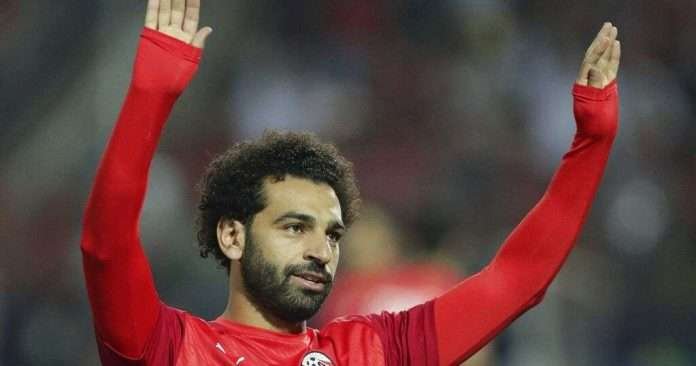
    Liverpool forward and Egyptian football star, Mohamed Salah, has made a heartfelt plea for peace amid the ongoing Israeli-Palestinian conflict. In a statement released on his social media accounts, Salah expressed his concern for the escalating violence and called for an immediate end to the hostilities.

    The latest wave of violence between Israel and Gaza has led to an overwhelming loss of life and destruction. Salah, who is known for his immense popularity and influence, took to social media to voice his concern and offer his support to the people affected by the conflict.

    Salah had already made what was described as a “significant” undisclosed donation, via his agent, to the Egyptian Red Crescent Society, a humanitarian organization supporting the people of Gaza. His gesture of solidarity aims to provide much-needed aid to those affected by the conflict, including medical supplies, food, and shelter.

    With millions of followers on social media, Salah’s plea for peace has reached a global audience. His message resonates with many who believe in the power of unity and dialogue to resolve conflicts. The football star’s involvement in humanitarian efforts adds weight to his statement, as he has consistently used his platform for positive change.

    Experts and commentators from various fields have commended Salah for speaking out on such a contentious issue. Dr. Rania Al-Mashat, the Egyptian Minister of International Cooperation, praised Salah’s commitment to philanthropy and expressed her gratitude for his support. She emphasized that Salah’s actions shine a light on the importance of international solidarity in times of crisis.

    Salah’s plea for peace comes at a critical moment when tensions are high. The international community has been closely monitoring the situation, with many calling for an immediate ceasefire and diplomatic negotiations to prevent further escalation.

    The conflict has seen both sides suffer devastating consequences, with innocent civilians bearing the brunt of the violence. As the situation continues to deteriorate, Salah’s plea for peace serves as a reminder that unity and understanding are crucial to achieving lasting solutions.

    In his statement, Salah called on all parties involved to prioritize the well-being of civilians and work towards a peaceful resolution. His words struck a chord with his supporters, who admire him not only for his exceptional football skills but also for his compassion and empathy.

    It remains to be seen how Salah’s plea will influence the ongoing conflict, but his advocacy for peace has undoubtedly raised awareness and sparked important conversations. Salah’s actions highlight the power of sports figures and celebrities to use their influence for the greater good.

    In these times of uncertainty, Salah’s plea for peace serves as a beacon of hope, reminding us all of the importance of humanity, compassion, and the pursuit of peace in resolving disputes. Together, we can work towards a future where conflicts are resolved through dialogue and understanding, rather than violence and destruction.

    Nigeria: Economic Crisis Deepens as Naira Plummets to Record Low – Citizens Struggle to Survive

    0
    Read Time:2 Minute, 16 Second

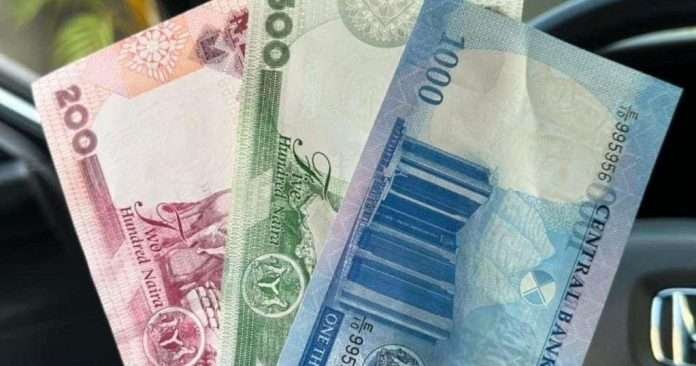
    Abuja, Nigeria – (African Boulevard News) – The Nigerian naira, the country’s currency, has hit a record black market low of 1,100 naira per dollar, according to abokiFx, a platform that tracks currency exchange rates. This significant depreciation comes just a day after the official market also recorded a new low due to ongoing dollar shortages, with the naira dropping to 980 naira per dollar.

    The record drop in the value of the Nigerian naira has sparked concerns and raised questions about the state of the country’s economy. The decline is attributed to a number of factors, including limited dollar supply, rising inflation, and weak investor confidence. With the continuous depreciation, Nigerians are finding it increasingly difficult to meet their financial needs, as the costs of imported goods and services skyrocket.

    The naira’s continuous decline against the dollar has been a long-standing issue in Nigeria. Experts have called for urgent action to address the underlying issues causing the depreciation and restore stability to the currency. According to economic analysts, one of the key factors contributing to this depreciation is the limited availability of dollars in the country.

    “Investors and businesses need access to a reliable supply of foreign exchange to carry out their operations effectively. The current scarcity of dollars is hampering economic growth and negatively impacting the value of the naira,” said Johnson Oluwasegun, an economist at a leading financial institution.

    The Central Bank of Nigeria (CBN) has implemented various measures to stabilize the value of the naira, including restricting access to foreign exchange for certain imports and promoting local production. However, these measures have not yielded the desired results, and the black market continues to dictate the exchange rate.

    To address the ongoing depreciation, experts emphasize the need for broader economic reforms, such as diversifying the economy away from oil dependence, improving infrastructure, attracting foreign direct investment, and boosting exports.

    “As a country heavily reliant on oil revenues, Nigeria is highly susceptible to fluctuations in global oil prices. Diversifying the economy and creating alternative sources of revenue will help reduce the impact of such shocks,” said Aisha Ahmed, a financial analyst.

    Nigerians hope that the government will take swift action to address the economic challenges facing the country. The depreciation of the naira has far-reaching implications for the average citizen, affecting their purchasing power and increasing the cost of living. The government needs to prioritize economic stability and implement effective policies to restore confidence in the currency.

    As the Nigerian naira hits a record black market low of 1,100 per dollar, there is an urgent need for comprehensive economic reform. By addressing the underlying issues contributing to the currency’s depreciation, Nigeria can work towards a more stable and prosperous future.

    Kenya: Mounting Debt Crisis Threatens Prosperity as President Ruto Presses for Risky $1 Billion Chinese Loan

    0
    Read Time:2 Minute, 9 Second

    Nairobi, Kenya – (African Boulevard News) – In a move that has raised concerns among analysts, Kenyan President William Ruto is pushing for an additional $1 billion in loans from China, despite Kenya’s public debt already reaching a staggering $70 billion. Experts argue that this might not be a sustainable solution for the country’s economic woes.

    The request for more Chinese loans comes at a time when Kenya is grappling with a debt crisis. The country’s debt-to-GDP ratio has breached 70%, which is well above the threshold set by the International Monetary Fund (IMF) for debt sustainability. This has led to growing concerns about the country’s ability to service its debt obligations in the long run.

    Financial analyst, John Kamau, expressed his reservations about Kenya’s decision to seek additional Chinese loans. He pointed out that the country’s debt burden is already too high, and taking on more loans could further exacerbate the situation. “Kenya needs to explore alternative avenues for financing its development projects to avoid becoming overly reliant on Chinese loans,” Kamau cautioned.

    China has been a key lender to Kenya in recent years, financing major infrastructure projects such as the Standard Gauge Railway and the Lamu Port. However, critics argue that these loans come with high interest rates and stringent repayment terms, putting a strain on the country’s finances.

    According to a report by the African Development Bank, Kenya spends about 30% of its revenue on servicing its debts. This leaves little room for investment in critical sectors such as health, education, and social welfare. The heavy debt burden has also limited the government’s ability to respond effectively to economic shocks, such as the COVID-19 pandemic.

    Some experts believe that diversifying sources of funding and reducing reliance on Chinese loans could be the solution for Kenya’s debt crisis. They argue that seeking loans from multilateral institutions, such as the World Bank and the African Development Bank, could offer more favorable terms and conditions.

    While Chinese loans have played a significant role in Kenya’s infrastructure development, experts warn that the country must exercise caution to prevent future economic challenges. It is crucial for the Kenyan government to prioritize debt sustainability and explore alternative financing options to ensure a more stable and prosperous future.

    As the debate over Kenya’s debt situation escalates, it is evident that the country needs to find a balance between financing development projects and managing its growing debt burden. Only by seeking sustainable and diverse sources of funding can Kenya secure its economic future and avoid being trapped in a cycle of debt dependency with China.

    Liberia: Nail-Biting Presidential Election Results Spark Runoff Possibility, Nation Holds Breath

    0
    Read Time:2 Minute, 14 Second

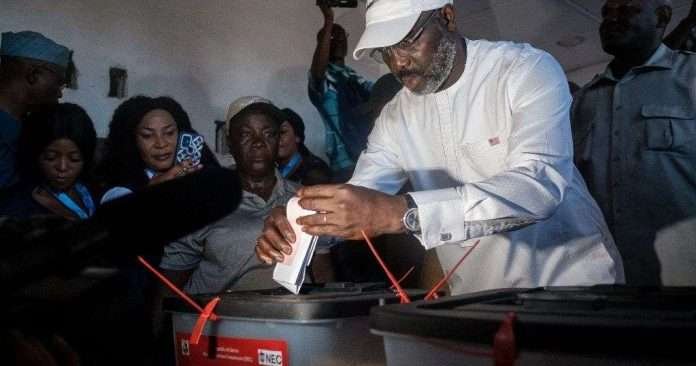
    Monrovia, Liberia – (African Boulevard News) – Liberia is on the edge of its seat as the results of the presidential election show a tight race between incumbent President George Weah and his main opponent, Joseph Boakai. With both candidates receiving almost an equal share of the vote, it appears that a second round of voting may be necessary to determine the country’s next leader.

    According to the National Electoral Commission, President George Weah secured 43.8% of the vote, while Joseph Boakai closely followed with 43.4%. However, to be declared the winner, a candidate must obtain more than 50% of the votes. With such a narrow margin separating the two frontrunners, it seems likely that a runoff election will be required.

    The outcome of this election is crucial for Liberia’s future. President George Weah, a former international football star, has been in power since 2018 and is seeking a second term to continue his agenda of change and development. On the other hand, Joseph Boakai, a veteran politician who served as vice president under former President Ellen Johnson Sirleaf, is running on a platform of experience and stability.

    The candidates have been crisscrossing the country, tirelessly rallying their supporters and outlining their plans for Liberia’s future. The election campaign has been marked by passionate speeches, colorful rallies, and intense debates, reflecting the high stakes involved.

    “The fact that the race is so close is a testament to the strength of our democracy,” says political analyst James Kollie. “Liberians are engaged, and they understand the importance of their vote. This election will shape the next chapter of our nation’s history.”

    The possibility of a second round of voting has generated both excitement and anxiety among the Liberian population. While some view it as an opportunity to have their voices heard again and make a more informed decision, others worry about the potential for political tension and unrest.

    The National Electoral Commission is now tasked with preparing for the second round of voting, should it be necessary. The commission has a big responsibility in ensuring a free, fair, and transparent election process that reflects the will of the people.

    As the country waits for the final results to be announced and preparations for a possible runoff get underway, Liberia stands at a critical juncture. The outcome of this election will shape the future of the nation, and the people’s choice will determine who will lead them for the next term.

    In the coming weeks, the candidates will continue to campaign vigorously, hoping to sway undecided voters and consolidate their support. Liberians will be watching closely, knowing that their votes carry immense weight in shaping the destiny of their beloved country.

    Nigeria: France and Nigeria Stand United Against Pirates, Sending a Powerful Message for Maritime Security

    0
    Read Time:2 Minute, 16 Second

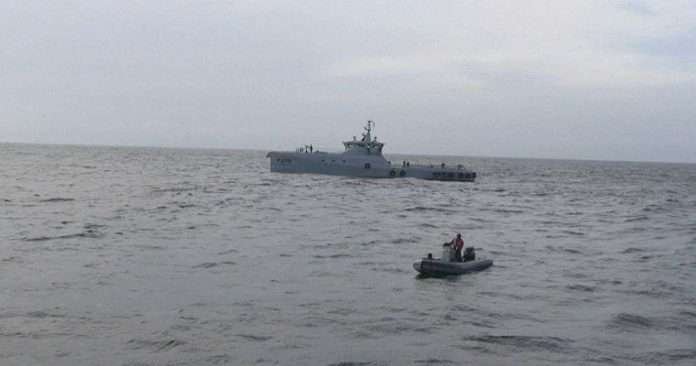
    Abuja, Nigeria – (African Boulevard News) – France and Nigeria have recently conducted joint naval exercises in the Gulf of Guinea, aimed at combating piracy and trafficking. The collaboration between the two countries marks a significant step in enhancing maritime security in the region.

    The naval exercises, which took place in October, saw the participation of French and Nigerian naval forces, working together to improve their interoperability and coordination in maritime operations. The Gulf of Guinea has been plagued by piracy and illegal activities, posing a threat to both regional and international maritime trade.

    The joint exercises included a range of simulated scenarios, such as search and rescue operations, maritime patrols, and anti-piracy drills. The exercises were designed to test the capabilities of both navies and enhance their capacity to respond effectively to maritime threats.

    Rear Admiral Awwal Gambo, the Chief of the Nigerian Naval Staff, emphasized the importance of the collaboration, stating, “These joint exercises demonstrate our commitment to ensuring the safety and security of our maritime domain, and our determination to tackle piracy and other criminal activities in the Gulf of Guinea.”

    The Gulf of Guinea has become one of the most dangerous regions for maritime activities, with incidents of piracy increasing in recent years. According to the International Maritime Bureau, the Gulf of Guinea accounted for over 95% of global kidnappings at sea in 2020.

    France, as a maritime power with extensive experience in combating piracy, has been actively supporting the efforts to improve maritime security in the Gulf of Guinea. The collaboration with Nigeria, a regional power in West Africa, is a testament to the commitment of both countries to address the challenges in the region.

    The joint exercises not only enhance the capabilities of the Nigerian Navy but also foster closer ties between France and Nigeria. The sharing of knowledge and expertise in maritime security will undoubtedly strengthen the partnership between the two countries and contribute to the overall security and stability of the Gulf of Guinea.

    The collaboration between France and Nigeria is also expected to have a positive impact on regional cooperation in tackling piracy and trafficking. It sends a strong message to criminal networks operating in the region that their activities will not be tolerated and that concerted efforts will be made to ensure the safety of maritime trade.

    The joint naval exercises in the Gulf of Guinea represent a significant milestone in the ongoing efforts to combat piracy and trafficking. The collaboration between France and Nigeria sets an example for other countries in the region to work together in addressing common security challenges. With continued cooperation and joint exercises, it is hoped that the Gulf of Guinea will become a safer and more secure maritime domain.

    Gabon: Junta Leader Sacrifices Presidential Salary to Save Deteriorating Nation

    0
    Read Time:2 Minute, 19 Second

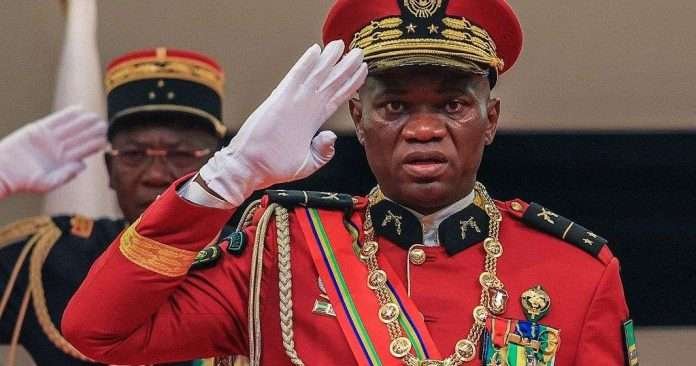
    Libreville, Gabon – (African Boulevard News) – In a surprising move that has captured the attention of the nation, the leader of Gabon’s junta, General Jean-Bernard Gaillard, has announced that he will not be accepting a salary as interim president. This decision comes as the country grapples with economic challenges and a deteriorating financial situation.

    General Gaillard’s refusal to take a presidential salary has been hailed as a noble gesture by many. It sends a powerful message that he is more focused on addressing the pressing issues facing Gabon than on personal gain. The junta leader is already receiving a military salary, and he believes that it is his duty to prioritize the needs of the country over his own financial well-being.

    “Each day that passes allows the [junta] to become more aware of the general state of deterioration of the country and of public finances in particular,” said General Gaillard during a press conference. His statement highlights the dire situation that Gabon finds itself in, with a struggling economy and mounting debt.

    The decision to decline a presidential salary reflects General Gaillard’s commitment to leading by example and taking responsibility for the country’s future. It sets a precedent of selflessness and sacrifice, which is crucial at a time when Gabonians are facing economic hardships.

    Experts believe that General Gaillard’s gesture will help rebuild trust and confidence in the leadership of the junta. Dr. Marie Mboumba, a political analyst, stated, “This move shows that the junta leader is genuine in his intentions to steer the country towards stability and prosperity. It demonstrates his dedication to public service and his willingness to put the interests of the nation first.”

    This decision is also expected to have positive implications for international investors and donors. By refusing a presidential salary, General Gaillard is signaling that Gabon is committed to addressing its financial challenges and implementing necessary reforms.

    The junta leader’s refusal to accept a salary is a clear statement against corruption and misuse of public funds. It serves as a reminder that leaders should prioritize the welfare of their citizens above personal gain. General Gaillard’s action has resonated with the people of Gabon, who are hopeful that this marks the beginning of a new era of transparency and accountability in their country.

    As the junta leader continues to navigate the challenges of leading Gabon during this transitional period, his decision to forego a presidential salary remains a testament to his dedication to serving the nation. It is a move that exemplifies leadership and integrity, and one that will undoubtedly shape the future of Gabon for the better.

    For more information, please visit:
    – https://www.africanews.com/2023/10/19/gabon-junta-leader-turns-down-presidential-salary/
    – https://www.google.com/search?q=Gabon+junta+leader+turns+down+presidential+salary

    Uganda: Climate Warriors Fight Against Catastrophic Oil Project, Demanding Action Now

    0
    Read Time:2 Minute, 12 Second

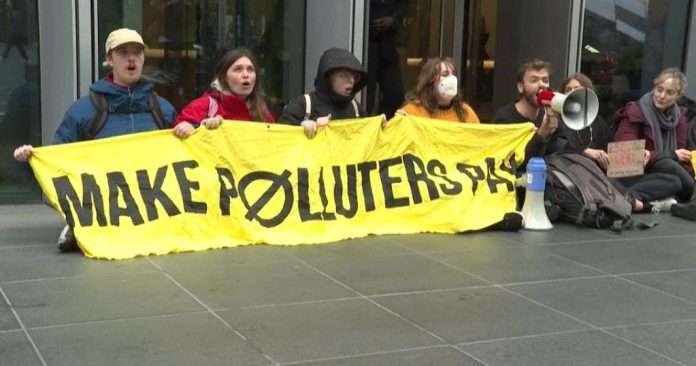
    Kampala, Uganda – (African Boulevard News) – Climate protesters took to the streets of London on Wednesday, rallying outside the UK headquarters of French energy company TotalEnergies to voice their opposition against a controversial oil project in Uganda and Tanzania. The demonstration aimed to raise awareness about the detrimental environmental impacts of the proposed East African pipeline project.

    The project, which is a joint venture between TotalEnergies, the China National Offshore Oil Corporation (CNOOC), and the Uganda National Oil Company, seeks to transport crude oil from Uganda’s Albertine region to the Tanzanian port of Tanga for export. It is estimated that the pipeline will cover a distance of approximately 1,445 kilometers, cutting through areas of rich biodiversity, including national parks and wildlife reserves.

    Environmental activists argue that the pipeline poses a significant threat to the fragile ecosystems of both Uganda and Tanzania. They fear that construction activities, such as deforestation and habitat destruction, will disrupt wildlife migration routes and lead to the permanent loss of crucial habitats for endangered species.

    “The East African pipeline project represents a blatant disregard for the environment and the future well-being of our planet,” said Jane Stevens, a spokesperson for the climate advocacy group Green Earth. “We cannot continue to prioritize short-term economic gains over the long-term sustainability of our ecosystems.”

    In addition to the environmental concerns, protesters also raised issues related to climate change and the project’s contribution to greenhouse gas emissions. The extraction and burning of fossil fuels, such as oil, significantly contribute to global warming and climate change.

    “We are in a critical moment for the future of our planet, and it is unacceptable to invest in fossil fuel infrastructure projects like the East African pipeline,” remarked Dr. David White, a climate scientist at the University of Oxford. “We need to transition to clean and renewable energy sources to mitigate the impacts of climate change.”

    The protest in London echoed similar demonstrations that have taken place in Uganda and Tanzania, where local communities have voiced concerns about land rights, displacement, and the potential negative social and economic impacts of the pipeline project.

    While TotalEnergies has committed to minimizing the project’s environmental impact, pledging to adhere to international standards and engage in environmental and social impact assessments, critics argue that the risks are too great to justify its continuation.

    As the debate around the East African pipeline project continues, it remains to be seen how the concerns raised by climate protesters and environmental activists will be addressed. The outcome of this project will undoubtedly have far-reaching implications not only for the affected regions but also for the global fight against climate change.

    Tunisia: President’s Shocking Move Sends Economic Crisis into Chaos and Hope

    0
    Read Time:2 Minute, 12 Second

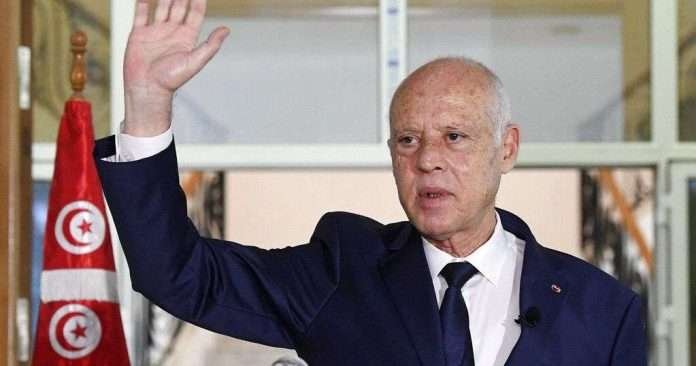
    Tunis, Tunisia – (African Boulevard News) – Tunisian President Kais Saied has shaken up his cabinet once again, dismissing the Minister of Economy and Planning and appointing the Minister of Finance, Adel Azizi, as the interim head of the ministry. The Presidency of the Republic announced the sudden decision on Tuesday, sending shockwaves through the country’s political and economic landscape.

    The dismissal comes at a crucial time for Tunisia, as the government grapples with an ongoing economic crisis worsened by the COVID-19 pandemic. Tunisian citizens have been hit hard by rising inflation, unemployment, and a sharp decline in the purchasing power of the national currency, the Tunisian dinar.

    President Saied’s decision to remove the Minister of Economy and Planning, whose name has not been released, is seen as a bold move to address the economic challenges facing the country. However, it has raised questions about the government’s ability to stabilize the economy and implement much-needed reforms.

    Experts and industry stakeholders have mixed opinions about the president’s decision. While some see the dismissal as a necessary step to inject new energy and fresh ideas into the Ministry of Economy and Planning, others express concerns about the lack of continuity and stability in the government’s economic policies.

    “The dismissal of the Economy Minister could be interpreted as a sign of President Saied’s commitment to addressing the economic crisis head-on,” said economist Samir Hamdi. “However, it also raises concerns about the inconsistency of the government’s approach to economic reforms.”

    President Saied has previously taken unconventional measures to address Tunisia’s economic challenges. In July, he dismissed the prime minister and suspended parliament, taking on executive powers. This move was met with both criticism and support from Tunisian citizens, who are desperate for a solution to the country’s economic woes.

    The appointment of Adel Azizi, the Minister of Finance, as the interim head of the Ministry of Economy and Planning, has been met with cautious optimism. Azizi, who has previously served as the Head of the Tunisian Investment Authority, is well-respected in financial circles and has a track record of implementing reforms.

    However, it remains to be seen whether Azizi will be able to navigate the complex challenges facing Tunisia’s economy and bring about much-needed stability. The country’s future prosperity hinges on effective economic policies, increased investment, and job creation.

    President Saied’s decision to dismiss the Economy Minister demonstrates his determination to tackle Tunisia’s economic crisis. However, it also highlights the need for a comprehensive and sustainable plan to revive the country’s economy. Tunisians now wait with bated breath to see the impact of this latest shake-up in the government’s economic team.