Thursday, April 23, 2026
86.5 F
Lagos
More
    Home Blog Page 446

    Mozambique poised for economic boost as TotalEnergies gears up to resume LNG project after insurgency forced suspension

    0
    Read Time:1 Minute, 53 Second

    Maputo, Mozambique – (African Boulevard News) – TotalEnergies, the French oil and gas company, is reportedly getting ready to resume its operations in Mozambique’s Cabo Delgado province after being forced to abandon the area following an insurgency in 2020. The company is said to be discreetly preparing to resume the Mozambique LNG mega-complex, which is expected to produce approximately 13 million tonnes of liquefied natural gas per year.

    According to African Intelligence, TotalEnergies has taken several measures to ensure the security of its employees and facilities, including reinforcing its safety procedures and working closely with the Mozambican authorities. The company has also reportedly been in talks with the local communities to address their concerns and expectations.

    The resumption of the Mozambique LNG project comes after TotalEnergies suspended its operations in the area in April 2020, following a series of attacks by Islamist militants. The insurgency has since escalated, leading to the displacement of hundreds of thousands of people and causing significant damage to the local economy.

    Despite the challenges, industry experts believe that the Mozambique LNG project remains a promising opportunity for TotalEnergies. “The natural gas reserves in Mozambique are among the largest in the world, and the market for liquefied natural gas is expected to grow significantly in the coming years,” said a spokesperson for the company.

    The Mozambique LNG project is a joint venture between TotalEnergies, ExxonMobil, and several other partners, and is estimated to cost around $20 billion. The project involves the construction of an LNG plant, as well as the development of offshore gas fields in the Rovuma Basin.

    The resumption of the Mozambique LNG project is expected to have a positive impact on the local economy, providing much-needed jobs and revenue for the region. “We are looking forward to the resumption of operations by TotalEnergies, which will help to boost economic growth and development in Cabo Delgado province,” said a spokesperson for the Mozambican government.

    In conclusion, TotalEnergies’ preparations to resume the Mozambique LNG project are a positive sign for the region, as it represents a significant investment in the country’s future. However, the company and its partners must continue to work closely with the local communities and authorities to ensure that the project is implemented in a way that benefits everyone involved.

    Algeria To Introduce “Green Circuit” In Effort to Boost Economy and Attract Investment

    0
    Read Time:1 Minute, 54 Second

    Algiers, Algeria – (African Boulevard News) – Algeria is planning to reintroduce the “green circuit” for major importers and exporters. The circuit, which was in operation between 2014 and 2019, enabled major companies, often those close to the authorities, to obtain substantial reductions in customs duties. The Algerian government aims to reintroduce this circuit to incentivize large-scale companies to continue their trade and investment activities in the country.

    The “green circuit” system involves the Ministry of Trade and the General Directorate of Customs offering preferential treatment to major companies. In exchange for this treatment, these companies pledge to increase their supply of goods to the local market and increase their exports. The system would also allow for the quick release of goods at customs checkpoints, thereby reducing the waiting period for importers and exporters.

    According to a source close to the Algerian Ministry of Trade, “The reintroduction of the ‘green circuit’ is part of the government’s ongoing efforts to improve the country’s economic performance and attract foreign investment. This system will provide a level of predictability and stability necessary for companies to plan their investments and trade activities in the long-term.”

    The reintroduction of the “green circuit” is a positive development for the Algerian economy, which has been struggling in recent years due to a slump in oil prices. The system is expected to benefit large companies that have invested in the country and help them to remain competitive in the global market.

    The Algerian government has been working to improve the country’s business climate and streamline administrative procedures to attract foreign investment. This move also signals the government’s willingness to create a more business-friendly environment and promote economic growth.

    However, critics of the system argue that it favors large companies with close ties to the government and could result in unfair competition that could stifle smaller businesses. To avoid this, the Algerian government should ensure that the “green circuit” is transparent and accessible to all businesses.

    In conclusion, the reintroduction of the “green circuit” is a welcome development for the Algerian economy. It will help to attract foreign investment, promote economic growth and create a more business-friendly environment. However, the government must ensure that the system is transparent and accessible to all businesses to prevent unfair competition.

    Internal dispute over oil company puts Cameroon’s economy at risk

    0
    Read Time:2 Minute, 4 Second

    Yaounde, Cameroon – (African Boulevard News) – Ferdinand Ngoh Ngoh, the Secretary General of the Presidency of Cameroon, and Adolphe Moudiki, the Managing Director of the National Hydrocarbons Company (SNH), are embroiled in a dispute over Savannah Energy, the company running the oil pipeline between Doba and Kribi. This conflict has seen the Cameroonian government at the center of an internal crisis as they try to resolve the matter.

    The disagreement between the two men was first revealed in a series of letters seen by African Intelligence. The letters showed that Ngoh Ngoh was trying to push out key personnel from Savannah Energy, including the Chief Executive, Andrew Knott. Moudiki, on the other hand, was in favor of keeping the personnel in place and felt that Ngoh Ngoh’s actions were unwarranted.

    The dispute has also highlighted the difference in opinion between the key players in the Cameroonian government, with some supporting Ngoh Ngoh while others back Moudiki. The SNH is an important player in the country’s oil industry, and its success is vital to the country’s economy. This is why the dispute has garnered significant attention.

    Industry experts have expressed their concerns about the ongoing crisis, stating that it could have a negative impact on the country’s oil industry. “The SNH is a critical player in the oil sector, and any internal conflict within the company could have far-reaching consequences,” said one analyst.

    Ngoh Ngoh’s motives behind trying to push out key personnel from Savannah Energy are not entirely clear. However, it is believed that he may be trying to assert his authority and gain control over the country’s oil industry. Moudiki, on the other hand, has remained steadfast in his support for the personnel, stating that they are crucial to the success of the company.

    The Cameroonian government is yet to make an official statement on the matter. However, it is clear that the dispute is far from over and may take some time to resolve. In the meantime, the country’s oil industry hangs in the balance.

    In conclusion, the dispute between Ferdinand Ngoh Ngoh and Adolphe Moudiki over Savannah Energy is causing an internal crisis in Cameroon. The disagreement has put the country’s oil industry at risk and has highlighted the difference in opinion between key players in the government. It remains to be seen how this conflict will be resolved, but one thing is certain, the stakes are high, and the outcome will have far-reaching consequences for the country’s economy.

    Cameroon: EU Launching African Anti-Disinformation Unit to Protect Democracy and Human Rights

    0
    Read Time:1 Minute, 45 Second

    Yaounde, Cameroon – (African Boulevard News) – The European Union has recently announced plans to launch an African anti-disinformation task force to counter the spread of inaccurate and misleading information across the continent. The new unit will be managed by the European External Action Service (EEAS) and will work in collaboration with relevant authorities and organizations in Africa.

    According to reliable sources, this new initiative is part of the EU’s broader strategic approach to combat disinformation globally and protect democracy and human rights. Disinformation campaigns have become a significant problem in Africa in recent years, and this new task force is expected to provide critical support to local media organizations and civil society groups that are most affected.

    “The EU is committed to protecting democratic values, and this includes countering disinformation that undermines public trust in institutions, exacerbates social tensions, and threatens regional and international security,” said a senior EU official in a statement.

    The task force will focus on analyzing disinformation trends and sources, building capacity and raising awareness among local journalists and media organizations, promoting media literacy and fact-checking, and developing partnerships with academic institutions and civil society organizations.

    “The anti-disinformation task force is a welcome development that will help to protect the integrity of the information space in Africa. It is our hope that this initiative will help to build the capacity of local journalists and strengthen independent media organizations that play a vital role in holding governments and institutions accountable,” said Aisha Abdullahi, a media rights activist, in an interview.

    While the EU task force is still in the planning stages, the initiative has already received support from several African governments and media organizations. The task force is expected to be operational by the end of the year.

    In conclusion, the EU’s anti-disinformation task force is a welcome development that will help to counter the growing problem of inaccurate and misleading information in Africa. The task force is expected to provide vital support to local media organizations and civil society groups that are most affected and strengthen the integrity of the information space.

    Cameroon: DRC turns to SADC for help after disappointment with EAC regional force’s ineffectiveness.

    0
    Read Time:2 Minute, 8 Second

    Yaounde, Cameroon – (African Boulevard News) – The Democratic Republic of Congo (DRC) is turning to the Southern African Development Community (SADC) for help after being left disappointed by the regional force deployed by the East African Community (EAC). Kinshasa seeks to regain control of the volatile eastern provinces of North and South Kivu, where various armed groups have been terrorizing the population for years.

    According to intelligence reports, the Congolese government has grown disillusioned with the EAC regional force and is now turning to SADC for assistance. The EAC’s force was deployed in May 2022 to help stabilize the region and allow for the safe repatriation of Congolese refugees and IDPs. However, the force has been unable to make a significant impact on the security situation in the region.

    The DRC has historically looked to SADC for military support. In 1998, Angola, Namibia, and Zimbabwe aided Congolese forces in fighting off rebels backed by Rwanda and Uganda. In 2013, South Africa provided troops to the United Nations peacekeeping mission in the DRC. The DRC’s decision to turn to SADC again underscores the lack of confidence in regional security forces.

    Experts believe that the EAC force’s inability to make headway is due to a combination of factors, including a lack of resources, unclear mandate, and the complexity of the situation on the ground. The DRC’s military is also viewed as ill-equipped and corrupt, making it difficult to work alongside regional forces.

    “The EAC force has been ineffective in dealing with the security situation in the region. It is clear that the DRC government needs to explore other options, and SADC is the logical choice,” said Dr. Ismail Rashid, an African security expert.

    SADC is a regional intergovernmental organization comprising 16 southern African countries. It has a standby force of around 22,000 troops that can be deployed in times of crisis. The organization also has a reputation for being more effective than other regional security initiatives.

    The DRC’s desire to regain control of the eastern provinces is driven by economic and strategic considerations. The region is rich in minerals, and controlling it would help boost the country’s economy. It is also strategically important as it borders Rwanda, Uganda, and Burundi.

    In conclusion, with the EAC regional force failing to make an impact, Kinshasa’s decision to turn to SADC for help is not surprising. The DRC’s longstanding relationship with SADC and the organization’s reputation for effectiveness make it a logical choice. However, the situation on the ground is complex, and a lasting solution will require political and military action.

    Morocco’s Mojazine wins contract for crucial expressway project, boosting economy and job opportunities

    0
    Read Time:2 Minute, 1 Second

    Rabat, Morocco – (African Boulevard News) – Moroccan construction group Mojazine, led by Brahim Mojahid, former PAM president of the Béni Mellal-Khenifra regional council, has won another contract for the vast Tiznit-Dakhla expressway project.

    This new development comes after Mojazine had to abandon the project’s first phase, causing a six-month delay. Now, the construction group will take over the work for the second phase of the Tiznit-Laâyoune-Dakhla expressway project, which promises to connect Dakhla to Tiznit, and eventually to Agadir. The project is part of a broader plan to improve Morocco’s infrastructure, with an estimated cost of up to 12.5 billion dollars.

    Brahim Mojahid, who is known for his expertise in public works, expressed his joy at being back on the project. “We are honored to participate in such a significant project that will help link different regions of the country and improve the transportation landscape of Morocco. We are confident in our team and our ability to deliver the work on time and to the highest standards,” he said.

    As a significant player in the Moroccan economy, Mojazine has a portfolio of construction projects that focus on roads, highways, bridges, and tunnels. The company has been involved in major public infrastructure works, including the construction of the second bridge of Mohammedia, the development of the Benslimane airport, and several other projects in the North and South of the country.

    With this new contract, Mojazine will create more job opportunities for Moroccan citizens and boost the national economy. The project will also strengthen Morocco’s relationships with international partners, particularly the EU and African countries, which are looking to expand their cooperation with the Kingdom in multiple fields.

    The Tiznit-Laâyoune-Dakhla expressway is an ambitious project that will have a positive impact on the lives of thousands of Moroccans. It will facilitate the flow of goods and services, reduce transportation costs, and promote tourism in the southern regions of the country. The second phase of the project is expected to be completed by 2025, and it will undoubtedly be a catalyst for further economic growth and development.

    In conclusion, the return of Brahim Mojahid to the Tiznit-Laâyoune-Dakhla expressway project is a significant development that will boost the Moroccan construction industry and contribute to the Kingdom’s economic growth. With an experienced and dedicated team, Mojazine is well-positioned to deliver the project on time and to the highest standards.

    Ivory Coast’s President proposes to name new bridge after controversial former leader in bold move towards reconciliation

    0
    Read Time:1 Minute, 46 Second

    Yamoussoukro, Ivory Coast – (African Boulevard News) – In a historic move of national reconciliation, Ivorian President Alassane Ouattara has proposed to name Abidjan’s fourth bridge after the country’s former president, Laurent Gbagbo. This announcement comes as a gesture to bridge the divide between the two political rivals and foster unity in the country.

    The decision to name the bridge after Gbagbo is seen as a significant step towards reconciliation, as the former president remains a controversial figure in Ivorian politics. Gbagbo was ousted from power in 2011 after a bloody conflict that claimed thousands of lives. The conflict was sparked when Gbagbo refused to concede defeat in an election that Ouattara had won.

    Now, amid the ongoing political tension, Ouattara’s decision to honor Gbagbo’s legacy is a significant sign of the Ivorian president’s efforts to heal the wounds of the past and unite the country. The gesture is also seen as a step towards the rehabilitation of Gbagbo’s image and a signal that he remains a notable figure in the country’s political landscape.

    Commenting on Ouattara’s decision, political analyst Kofi Amoah said, “This is a bold move by President Ouattara. It shows his commitment to reconciliation and unity in the country. It is a significant step towards healing the wounds of the past and moving forward as a nation.”

    The proposal to name Abidjan’s fourth bridge after Gbagbo is set to be presented at the next council meeting. The bridge is part of a broader infrastructure development plan that aims to improve connectivity and spur economic growth in the country.

    The move comes as part of Ouattara’s efforts to promote unity and reconciliation in Ivory Coast, following decades of conflict that have left deep scars in the country’s social and political fabric.

    In conclusion, Ouattara’s decision to name the bridge after Gbagbo is a welcome step towards national reconciliation in Ivory Coast. It will help unite the country and promote a sense of shared identity, moving beyond the divisions of the past. The gesture is a tribute to Gbagbo’s legacy and serves as a reminder that political differences must not be allowed to divide a nation.

    Nigeria: Golden Eaglets Head Coach Expresses Fears Ahead of Crucial Clash Against Morocco at U-17 Africa Cup of Nations

    0
    Read Time:2 Minute, 8 Second

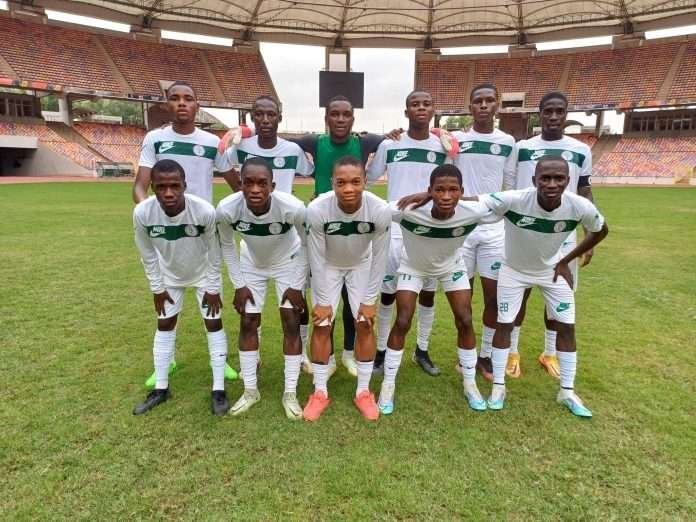
    Abuja, Nigeria – (African Boulevard News) – Nigeria’s Golden Eaglets head coach Nduka Ugbade has expressed his fears ahead of Nigeria’s crucial Group B clash against Morocco’s Atlas Cubs at the ongoing 2023 U-17 Africa Cup of Nations.

    With both teams having won their opening matches, a win for Nigeria will virtually guarantee qualification from the group, but a defeat will mean they have to win their final game against Ghana to progress to the knockout stage.

    Ugbade, a former Nigerian international, has predicted that the upcoming showdown against Morocco will be a tactical battle. He believes the North Africans are a well-structured team, and his side will have to be at their best to secure the win.

    “Morocco is a very good team. They have a good organization, and they are very tactical,” Ugbade said. “We know that it will be a tactical battle. We are going to try our best to win the match and qualify from the group.”

    Morocco defeated Ghana 2-1 in their opening match, while the Nigerians secured a hard-fought 1-0 victory against Congo. Nigeria will need to be careful against the Moroccans, who possess a potent attacking threat that’s capable of causing an upset.

    The key to Nigeria’s success in this encounter will be their defense, which performed admirably in the opening match. The defensive partnership of Maryam Abubakar and Musa Haruna will have to be at their best to keep out the Moroccan attackers.

    In the midfield, the Golden Eaglets will rely on the duo of Usman Bala and Ibrahim Ahmed to control the pace of the game and provide a solid platform for the Nigerian attackers to thrive.

    “We need to be very careful in the midfield and defense. We have to stay focused and disciplined throughout the game,” Ugbade said.

    Nigeria has a rich history in the U-17 African Cup of Nations, having won the tournament five times. They will be hoping that they can add a sixth title to their collection, but they will need to overcome a gritty Moroccan team to do so.

    The Golden Eaglets will face Morocco on May 19 at the Stade Municipal in Nouakchott, Mauritania. It promises to be an epic encounter that will test the mettle of both teams and could be decided by tactical nous.

    As the tournament progresses, fans around the world will be keeping a close eye on Nigeria’s performances, and they will be hoping that the Golden Eaglets can replicate their past glories and make the nation proud.

    Sudan: Arab League, African Union and United Nations pledge intensified efforts to bring lasting peace to the country

    0
    Read Time:1 Minute, 57 Second

    Khartoum, Sudan – (African Boulevard News) – The Arab League, African Union, and United Nations have intensified their efforts to bring lasting peace to Sudan, after years of conflict between the Sudanese government and rebel groups.

    In a meeting between a representative of Sudanese military leader General Abdel Fattah Burhan and the head of the Arab League in Cairo on Tuesday, the two discussed ongoing efforts to resolve the crisis in the country, which has seen a wave of protests and violence in recent years.

    The meeting was seen as a positive development in Sudan’s quest for peace, given the role the Arab League plays in the region and the international community’s interest in a peaceful resolution of the conflict.

    Speaking to reporters after the meeting, Arab League Secretary-General Ahmed Aboul Gheit stated that the organization remains committed to finding a solution to the crisis in Sudan, adding that the league is working closely with other international organizations to achieve this goal.

    “We are working with the African Union and the United Nations to help the Sudanese people find a peaceful and sustainable solution to their problems,” Aboul Gheit said.

    The African Union and the United Nations have also been working with the Sudanese government and opposition groups to bring an end to the conflict in the country. The two organizations have been supporting a peace process that includes negotiations between the government and rebel groups, as well as efforts to address the root causes of the conflict.

    In a recent statement, the African Union reiterated its commitment to helping Sudan achieve lasting peace, saying that it will continue to work with all parties to find a solution to the crisis.

    “The African Union remains committed to supporting the people of Sudan in their quest for peace, democracy, and development,” the statement read.

    The United Nations has also been closely monitoring the situation in Sudan, with Secretary-General Antonio Guterres calling on all parties to “engage constructively” in the peace process.

    As Sudan continues its efforts to achieve lasting peace, the role of international organizations like the Arab League, African Union, and United Nations will be crucial in helping the country overcome the challenges it faces. With the ongoing support of the international community, Sudan can overcome its current crisis and build a more stable and prosperous future for its people.

    African Countries Face Ongoing Challenges: Sudan Violence, Rwanda Flooding, COVID-19 Impacts, and More as Kenya and Egypt Show Signs of Economic Improvement.

    0
    Read Time:4 Minute, 35 Second

    Sudan

    Air strikes were heard in Sudan’s capital, Khartoum, on Wednesday, a Reuters witness said, even as warring factions agreed to a new seven-day ceasefire from Thursday. This outbreak of violence undermines the fragile chances of achieving a lasting truce that could help ease the deepening humanitarian crisis in the country. The ongoing conflict has forced thousands of people to flee, and an estimated 18.7 million people are in urgent need of humanitarian assistance, according to the UN.

    Rwanda

    Heavy rain that triggered flooding and landslides in western and northern Rwanda have killed at least 55 people, according to state-run broadcaster. Search and rescue operations are ongoing as authorities try to help people trapped in their homes. The country has recently experienced unprecedented levels of rain that have caused damage to homes, infrastructure, and crops. In recent years, Africa has been hit by a series of natural disasters that have led to a growing need for more effective disaster risk reduction strategies.

    Morocco

    Morocco’s unemployment rate rose slightly to 12.9% in the first quarter of 2023, according to the country’s planning agency. The increase is a reflection of the impact of the COVID-19 pandemic on the country’s economy and labor market. Morocco has been hit hard by the pandemic, with a decline in tourism and other sectors that have left many people unemployed. The government has implemented several measures to support businesses and workers, but the economic recovery remains fragile.

    Kenya

    Two senior economic advisers to Kenya’s president are among a shortlist of six who will be interviewed for the job of central bank governor, which will become vacant in June. The move comes as the current governor’s term is set to expire, and the government seeks to fill the position with someone who can navigate the country’s economy through a period of uncertainty. The advisers are seen as experienced in macroeconomic management, which is a key skill required for the role, and their selection is seen as a positive development for the country’s economy.

    Meanwhile, Kenyan police fired tear gas as anti-government protests resumed in the country. Protesters are calling for an end to government corruption and an improvement in living conditions. The country has faced a series of protests in recent years, and tensions in the country have been exacerbated by the economic impact of the COVID-19 pandemic.

    Egypt

    Egypt’s current account moved into surplus for the first time since 2010, recording a surplus of $4.4 billion during the October-December 2022 period. The improvement was driven by a sharp rise in revenue from the Suez Canal, an increase in remittances from Egyptians working abroad and a decline in imports. The improvement is a welcome development for the country’s economy, which has been impacted by the pandemic.

    However, the country’s non-oil business activity contracted for the 29th consecutive month in April, according to a survey. The pandemic has hit the country hard, with the tourism industry, a major driver of the economy, suffering due to travel restrictions and other measures. The decline in business activity is a reflection of the challenges facing the country as it seeks to recover from the pandemic.

    South Africa

    The South African rand gained ground against the US dollar as jobs data dented the dollar ahead of the Federal Reserve’s meeting. The rand has been volatile in recent years, reflecting the challenges facing the country’s economy. South Africa has been hit hard by the pandemic, with high levels of unemployment and poverty, and the country is seeking to revive its economy through a series of reforms and measures to support businesses and workers.

    Global Markets

    Global stocks climbed out of the red as traders awaited the results of the US Federal Reserve’s meeting. Investors are bracing for more interest rate hikes and other measures that could impact markets. The pandemic has led to increased volatility in global markets, with investors seeking to navigate the uncertain economic environment.

    Oil prices extended losses on Monday amid concerns about the impact of expected interest rate hikes. The decline in oil prices reflects the challenges facing the global economy as it seeks to recover from the pandemic. The oil industry has been hit hard by the pandemic, with a decline in demand and other challenges facing the sector. Investors are seeking to navigate the uncertain environment, and the decline in oil prices reflects the ongoing challenges that markets face.

    Sierra Leone

    The president of Sierra Leone has been approved to run for a second term in office. The president, who was first elected in 2018, has faced a series of challenges during his time in office, including a decline in the country’s economy, high levels of poverty and unemployment, and the impact of the pandemic. Sierra Leone is seeking to revive its economy and improve the quality of life for its citizens through a series of reforms and measures to support businesses and workers.

    Overall, African countries continue to face a series of challenges as they seek to navigate the uncertain economic environment created by the pandemic. The ongoing conflict in Sudan, natural disasters in Rwanda, and the impact of the pandemic on economies across the continent highlight the ongoing challenges that Africa faces. However, there are also signs of hope, with countries like Kenya and Egypt seeing improvements in their economic outlook, while South Africa is seeking to revive its economy through a series of measures and reforms.
    African Boulevard News – (2023-05-03)