Thursday, April 30, 2026
83.7 F
Lagos
More
    Home Blog Page 394

    Senegal: Thousands Demand President Sall’s Resignation Amidst Allegations of Human Rights Violations and Economic Uncertainty

    0
    Read Time:1 Minute, 56 Second

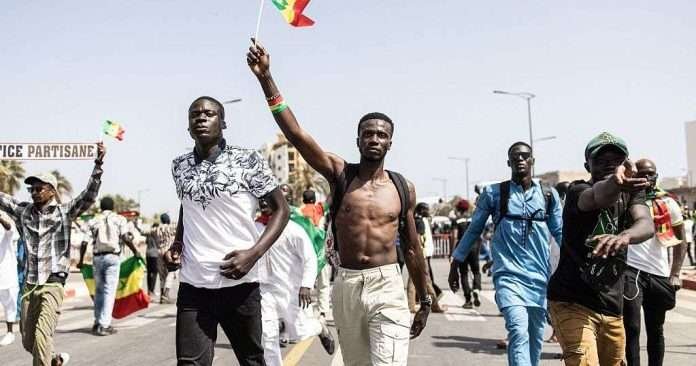
    Dakar, Senegal – (African Boulevard News) – Thousands of people took to the streets of Dakar, the Senegalese capital, to demand the resignation of the country’s President Macky Sall, ahead of next year’s elections. Protesters marched through the streets holding banners and chanting slogans, calling on President Sall to step down.

    The supporters of opposition leader and former prime minister, Idrissa Seck, were amongst those who took part in the demonstration. The protesters accused President Sall of threatening democracy, suppressing opposition leaders, and ignoring human rights. They also criticized his handling of the economy, which they claim has resulted in high levels of unemployment and poverty.

    The protest was largely peaceful, but there were reports of clashes between the police and the protesters. The police used tear gas and water cannons to disperse the crowds. Despite this, the protesters remained defiant and continued with their demonstration.

    The protest comes at a time when there is growing dissatisfaction with President Sall’s government. His handling of the COVID-19 crisis has been criticized, and there have been concerns about his government’s human rights record. Some opposition leaders have also accused him of trying to undermine the independence of the judiciary.

    Despite the growing unrest, President Sall has so far refused to step down. In a statement, his government said that the protest was led by a small group of people who were seeking to destabilize the country. The government also said that it would protect the rights of those who wish to protest peacefully but would not tolerate any violence or destruction of property.

    The protest has received support from some international organizations, including Amnesty International and Human Rights Watch. In a joint statement, they called on the Senegalese government to respect the right to peaceful protest and to ensure that those who take part in demonstrations are not subjected to harassment or violence.

    In conclusion, the protest against President Sall shows that there is growing dissatisfaction with his government. Despite the government’s insistence that the protest was led by a small group of people, the sheer number of people who took part in the demonstration shows that there are significant concerns about the direction that the country is heading. It remains to be seen whether President Sall will listen to the concerns of the protesters and take steps to address them.
    Rwanda: President Kagame’s Visit to Flooded Areas Brings Support and Urgent Call for Action on Climate Change

    0
    Read Time:2 Minute, 4 Second

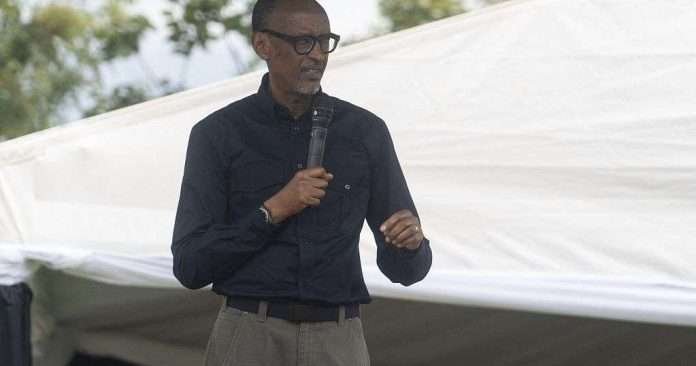
    Kigali, Rwanda – (African Boulevard News) – Rwandan President, Paul Kagame, visited several regions of the country affected by the recent floods that have claimed the lives of 131 people since last week. The President toured the affected areas including the districts of Kicukiro, Burera, Gakenke, Musanze, Gasabo, and Nyabihu.

    During his visit, President Kagame interacted with the affected residents and expressed his sympathy to the families who lost their loved ones and properties. He also appreciated the efforts of the local authorities, emergency response teams, and other stakeholders who have been working around the clock to rescue and provide support to the affected citizens.

    “The tragedy that has befallen us is a reminder that we must continue to invest in disaster preparedness and response mechanisms. We must also take measures to mitigate against the effects of climate change which is causing severe weather patterns,” said President Kagame.

    According to the Ministry of Emergency Management, the floods were caused by heavy rainfall which resulted in the overflow of several rivers, causing widespread destruction of property, infrastructure, and displacement of people. The government’s disaster response team has been working to provide shelter, food, and medical assistance to the affected people.

    The government has also set up an emergency response fund to support the affected communities. The President called on Rwandans to contribute to the fund and assist in any way possible to help those in need.

    In a statement, the Ministry of Emergency Management assured the public that they will continue to monitor the situation and provide support to the affected communities until they fully recover.

    As the world grapples with the effects of climate change, the Rwandan government has been taking steps to mitigate its effects by investing in renewable energy, afforestation, and promoting green initiatives.

    “We must all embrace sustainable practices and take care of our environment to prevent disasters like this from happening again. We owe this to ourselves and future generations,” President Kagame emphasized.

    The President’s visit to the affected regions and his message of hope and support to the citizens has been received positively by many. It is hoped that the government’s efforts will help the affected communities recover and rebuild their lives after the tragedy.

    In conclusion, the President’s visit to the flood-hit regions highlights the government’s commitment to supporting its citizens during times of crisis. The call for action on climate change is a timely reminder of the importance of sustainable practices and the need to protect our environment.

    Ghana: Chocolate Makers Rake in Billions While Cocoa Farmers Earn Less Than $2 a Day

    0
    Read Time:2 Minute, 0 Second

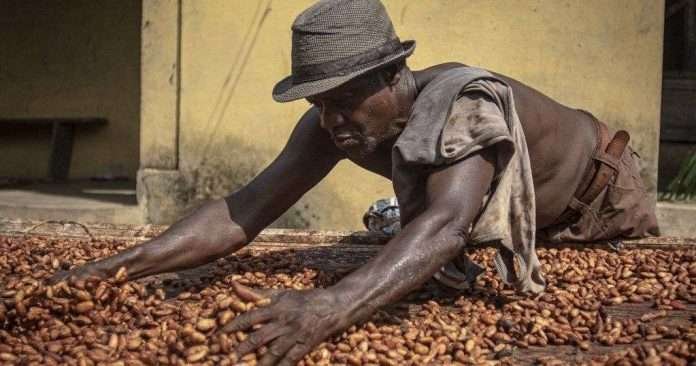
    Accra, Ghana – (African Boulevard News) – As Ghana continues to be one of the largest cocoa-producing countries in the world, it’s unfortunate that the cocoa producers who contribute to the country’s success do not earn enough to make a living. Oxfam International’s interim executive director once said, “There’s big money in chocolate — but definitely not for farmers.” This statement rings true as Ghana’s chocolate makers are steadily recording profits, while cocoa producers barely earn a living.

    The world’s four largest public chocolate corporations, Mars, Mondelēz, Nestlé, and Ferrero, have together made a whopping $37 billion in net profits in 2020. On the contrary, Ghanaian cocoa farmers, who grow the cocoa that these corporations use to make their profits, only earn around $1.25 per day, which is below the $2 per day poverty line standard set by the UN.

    Ghana’s cocoa industry dates back to the 19th century and continues to be the country’s largest foreign exchange earner, providing a livelihood for around 800,000 farming families. The Ghana Cocoa Board (COCOBOD) is responsible for regulating and overseeing the cocoa industry, but cocoa farmers have often expressed concerns about being left out of the conversation when it comes to decision-making and receiving fair prices for their produce.

    As Ghana’s cocoa production has increased over the years, the country has also seen a rise in local chocolate producers. Companies like Koa Ghana and ’57 Chocolate have gained local and international recognition. While these companies source their cocoa from Ghanaian farmers, they pay them better than the international market rate. In doing so, they maintain a sustainable relationship with their suppliers and empower local communities.

    To bridge the gap between cocoa producers and chocolate makers, the Ghanaian government and the COCOBOD have launched various initiatives, including the Cocoa Management System, which aims to ensure traceability across the cocoa value chain, and the Cocoa Marketing Company’s Living Income Differential (LID), which is aimed at supporting cocoa farmers by increasing the price paid for cocoa beans.

    As we enjoy our chocolate, it’s crucial to recognize the efforts of cocoa producers who make it all possible. Ghana’s cocoa industry is a significant contributor to the country’s economy, and it’s about time that cocoa farmers receive the recognition and compensation they deserve. With increased regulations and the support of local and international chocolate makers, there is hope for a brighter future for Ghana’s cocoa industry.

    Latest News from Africa: Sudan talks resume amid heavy fighting, Kenya cult murders shock, Congo flooding kills dozens, US accuses South Africa, Senegal opposition rallies & North Africa debt troubles.

    0
    Read Time:2 Minute, 39 Second

    Sudan: Warring Parties to Resume Talks Amid Heavy Fighting

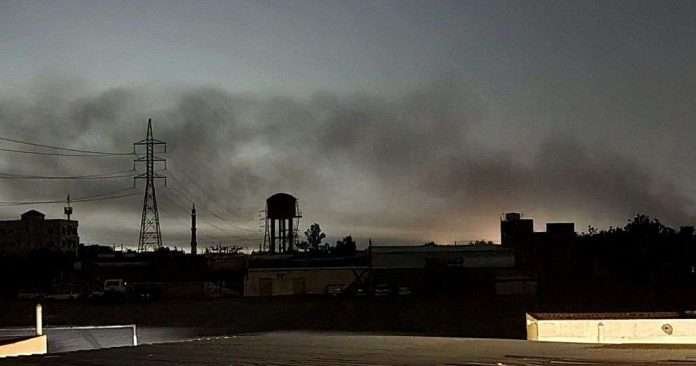
    Sudan’s warring army and Rapid Support Forces (RSF) paramilitary will resume talks on Sunday, according to a senior Saudi diplomat, despite air strikes and heavy fighting around Khartoum on Friday night. Although both sides have agreed to protect civilians, there is no ceasefire in place. Since the ousting of President Omar al-Bashir in 2019, Sudan has been in a state of political turmoil and violence. The current situation in the country remains tense, and it is uncertain whether the talks will lead to any progress in the peace process.

    Kenya: More Bodies Found in Search for Death Cult Followers

    Authorities in Kenya have uncovered additional bodies in the search for followers of a suspected death cult. The group is believed to have been responsible for a series of murders and gruesome rituals in recent months. The bodies were discovered in a remote area of the country, and authorities are continuing their investigations into the cult’s activities. The discovery has sent shockwaves throughout Kenya and raised concerns about the rise of extremist groups in the region.

    Congo: Volunteers Search for Bodies After Deadly Floods

    Volunteers have been digging through debris in Congo following deadly floods that killed dozens of people and displaced thousands more. The floods were caused by heavy rains that swept through the country, causing landslides and flooding in several areas. The government has since declared a state of emergency and has called for international assistance to help with the relief efforts. The situation in Congo remains dire, and many are still in need of aid and support.

    South Africa: U.S. Accuses Government of Arms Shipment to Russia

    The United States has accused South Africa of violating international sanctions by allowing an arms shipment destined for Russia to pass through its territory. South Africa has denied the allegations, saying that it has followed all relevant laws and regulations. The incident has heightened tensions between the two countries and has raised concerns about South Africa’s relationship with Russia. It remains unclear how the situation will be resolved.

    Senegal: Opposition Rallies Against President’s Possible Third Term Ambition

    Opposition groups in Senegal have held rallies against President Macky Sall’s possible third term ambition. The protests come amid concerns that the president is seeking to extend his rule beyond the two-term limit set by the country’s constitution. Sall, who has been in power since 2012, has not yet announced his candidacy for the upcoming elections, but many believe that he is preparing to do so. The situation in Senegal remains tense, and there are fears that the protests could escalate into violence.

    North Africa: Debt Troubles Continue to Plague the Region

    North Africa is facing mounting debt troubles, with several countries struggling to service their debts amid declining economic conditions. Moody’s has cut Kenya’s debt and currency ratings, while Tunisia has raised the purchase price of durum wheat from local farmers amid expectations of a disastrous grain season due to severe drought. The international community is closely monitoring the situation in the region, with many calling for increased support to help countries weather the economic storm.
    African Boulevard News – (2023-05-13)

    Africa: Ivory Coast and France unite to combat rising jihadist threat

    0
    Read Time:2 Minute, 1 Second

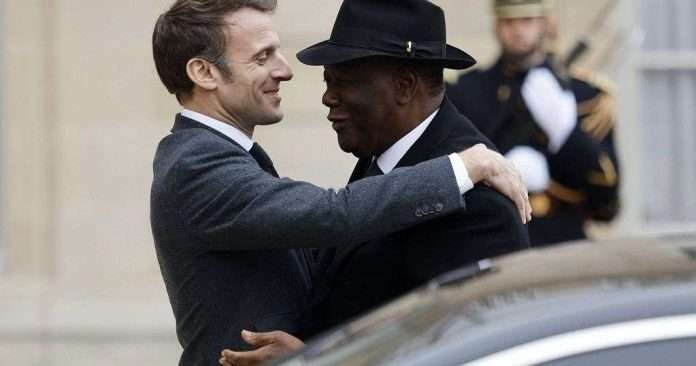
    Diaspora, Africa – (African Boulevard News) – Ivory Coast and France have joined hands in reaffirming their commitment to fighting terrorism and jihadism. The country has been facing an increase in extremist activity that has been causing fear and concern among its citizens and the international community. The two countries have partnered to bring this issue under control and restore peace in the region.

    On Thursday 11 May, the Ivorian Minister of Defence and the French Secretary of State for Development held a joint press conference at the International Academy for Combating Terrorism (AILCT). During the conference, Ivory Coast’s Minister of Defence, Téné Birahima Ouattara, spoke of the partnership between the two governments, saying: “Ivory Coast and France are united by friendship, duty, and the fight against terrorism and jihadism.”

    The French Secretary of State for Development, Jean-Baptiste Lemoyne, also emphasized France’s unwavering support, saying: “France is committed to supporting Ivory Coast in its fight against terrorism and has already provided support and training to the country’s armed forces.”

    This collaboration is timely as Ivory Coast has recently witnessed several jihadist attacks in the northern part of the country. These attacks have left many dead, and the country has been struggling to contain the situation. Recently, the US embassy in Ivory Coast issued a warning to US citizens in the country advising them to be vigilant and avoid crowded areas due to the growing risk of attacks.

    The partnership between Ivory Coast and France has been a long-standing one, and France has been providing military support to the country for many years. The French government has trained Ivorian soldiers and provided them with equipment and expertise to help them improve their counter-terrorism strategies.

    Ivory Coast has become a hot spot for jihadist activity in West Africa, and the collaboration between the Ivorian and French governments is crucial in addressing this issue. The region is a major hub for the transnational drug trade and has become a breeding ground for Islamic extremist groups.

    In conclusion, the partnership between Ivory Coast and France is a significant step in the fight against terrorism and jihadism. The two countries have reaffirmed their commitment to the cause, and this will go a long way in addressing the growing threat. It is hoped that the collaboration will help bring peace and stability to the region, and unite the people of Ivory Coast in their fight against terrorism.

    Morocco: Prime Ministers of Portugal and Morocco Strengthen Bilateral Ties with New Agreements on Cooperation, Environment, Education and Science

    0
    Read Time:1 Minute, 41 Second

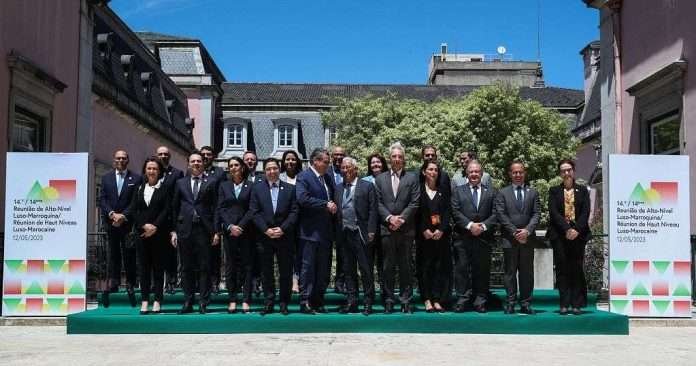
    Rabat, Morocco – (African Boulevard News) – The prime ministers of Portugal and Morocco met in Lisbon on Friday to strengthen their bilateral ties. The two nations signed several agreements on cooperation, environment, education, and science, during the meeting.

    The Moroccan Prime Minister, Saad Dine El Otmani, and his Portuguese counterpart, António Costa, expressed their commitment to strengthening ties between their two countries in a joint press conference.

    “We are determined to develop and strengthen the already excellent relations between our two countries,” said El Otmani.

    The two leaders discussed the potential for increased economic cooperation, especially in the areas of tourism, renewable energy, and agriculture.

    “We believe there is great potential for cooperation in the areas of tourism, renewable energy, and agriculture, which can bring mutual benefits to the people of both nations,” said Costa.

    The Moroccan Prime Minister also expressed his gratitude to Portugal for its support in Morocco’s quest to retain its sovereignty over the Western Sahara region, which is currently contested by rebel groups.

    “We appreciate Portugal’s support for Morocco’s territorial integrity and national sovereignty, which is crucial for stability and progress in our region,” said El Otmani.

    The two countries also agreed to cooperate on climate change and environmental issues, with Portugal offering to assist Morocco in developing its renewable energy sector.

    “We share a common vision for a greener and more sustainable future, and we are committed to working together to achieve this goal,” said Costa.

    The agreement on education and science aims to promote academic and scientific cooperation between the two countries, with a focus on research, innovation, and student exchange programs.

    “Our educational and scientific cooperation will help our two nations build knowledge economies that can tackle the challenges of the future,” said El Otmani.

    In conclusion, the meeting between the two prime ministers was a significant step towards enhancing the already strong bond between Portugal and Morocco. With agreements on cooperation, environment, education, and science signed, the two nations can look forward to a brighter future of mutual benefits and progress.

    South Africa: Wydad Casablanca Change Coach Ahead of Nail-Biting Semi-Final Clash in CAF Champions League

    0
    Read Time:2 Minute, 0 Second

    Pretoria, South Africa – (African Boulevard News) – The CAF Champions League final is upon us as Wydad Casablanca and the Mamelodi Sundowns meet in a nail-biting semi-final clash on Saturday, May 13th. The Moroccans of Wydad Casablanca have decided to make a crucial change in their coaching staff before the match. It’s bound to be a dramatic encounter as two African giants go head-to-head at the Mohamed V Stadium in Casablanca.

    Wydad Casablanca, popularly known as the Reds, are set to take on the Brazilians, nicknamed Mamelodi Sundowns, in a match that is expected to draw massive viewership from across the African continent and beyond. The match is scheduled to kick-off at 10:00 PM (CAT).

    The Moroccans will be hoping to get past the Brazilians, who are the current titleholders, and book a place in the final. Head Coach Faouzi Benzarti was sacked earlier this week and has been replaced by Houcine Amouta, who has been tasked with leading the Reds to victory.

    The Mamelodi Sundowns, coached by Rulani Mokwena, who recently took over the reins from Rhulani Mokwena, have been in impressive form this season, finishing top of Group B. They are yet to lose a game in the tournament so far.

    The South Africans will be without their captain, Hlompho Kekana, who is suspended for the match. On the other hand, Wydad Casablanca will be boosted by the return of their talisman, Ayoub El Kaabi, who missed the second leg of their quarter-final clash against Esperance.

    In a press conference ahead of the match, Sundowns’ assistant coach, Manqoba Mnqithi said, “We are not underestimating Wydad, they are a strong team, and we know it will be tough. But we are going into the match with confidence and hope to get a win.”

    Wydad’s new coach, Amouta, expressed his delight at the opportunity to lead the team in the semi-final clash against the Mamelodi Sundowns. He said, “I’m happy to be here and take charge of one of the best teams in Africa. It’s a tough game, but we’ve prepared well and should be ready for the challenge.”

    The match promises to be a thrilling encounter with both teams expected to give it their all. African football fans are in for a treat as they watch the two giants battle it out for a place in the final of the prestigious CAF Champions League.

    Sudan: Hope and Skepticism as New Humanitarian Deal Aimed at Ending Violence in Darfur is Signed

    0
    Read Time:1 Minute, 53 Second

    Khartoum, Sudan – (African Boulevard News) – Sudanese residents have expressed mixed reactions to the new humanitarian deal announced by the government and rebel groups. The deal was signed to end violence in Sudan’s Darfur region, which has been ongoing for years.

    According to sources, the deal aims to improve the humanitarian situation in the area, including providing aid to those in need and ensuring the return of displaced people to their homes. Both sides also agreed to refrain from attacks that are likely to harm civilians. The violence has already killed over 600 people, including civilians, according to the U.N. health agency.

    The new deal has brought some hope to the residents of Darfur, who have been caught in the crossfire for years. “This is a positive step towards lasting peace in our region. We have been living in fear for too long, and it is time for things to change,” said Mariam Ahmed, a resident of the region.

    However, some residents remain skeptical, saying that they have seen similar agreements in the past that did not lead to any real change. “I am cautiously optimistic about this deal. We have been disappointed before, and it is hard to trust that things will be different this time,” said Abdalla Ibrahim, another resident.

    In addition to skepticism, some residents are also urging the government to do more to improve the situation in the region. “The government needs to do more than just sign a piece of paper. They need to take real action and help us rebuild our communities,” said Salah Hassan, a Darfur resident.

    The new deal has also received praise from international organizations, including the United Nations and the African Union. “This is a significant step towards lasting peace in Darfur. We urge both sides to honor their commitments and work towards a better future for all the people of Sudan,” said UN Secretary-General António Guterres.

    In conclusion, while the new humanitarian deal has brought hope to many residents of Darfur, there is still a long road ahead. It is important for both the government and rebel groups to honor their commitments and work together towards a better future for the region. Only then can we truly say that lasting peace has been achieved.

    Somalia: Floods Devastate Beledwayne, Displace Thousands and Raise Fears of Disease Outbreaks and Food Insecurity

    0
    Read Time:1 Minute, 52 Second

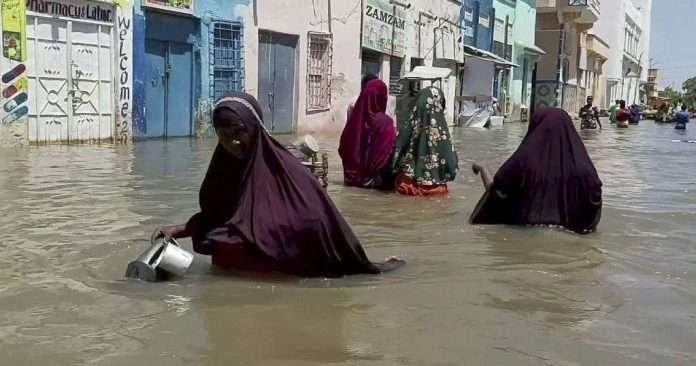
    Mogadishu, Somalia – (African Boulevard News) – Floods have left a trail of destruction in Somalia’s central city of Beledwayne. Entire neighborhoods have been submerged and displaced residents are in desperate need of assistance. This comes on the back of almost three years of the worst drought conditions in history in the Horn of Africa.

    According to the Somali government, the region has not seen such heavy rains in more than 50 years. The flooding has damaged buildings, roads, and bridges, making it difficult for aid agencies to reach affected areas.

    The United Nations has warned that the flooding may lead to an outbreak of water-borne diseases and exacerbate food insecurity in the region. The UN estimates that over 100,000 people have been displaced, and the situation is likely to worsen as the rains continue.

    Ahmed Ibrahim, a Beledwayne resident, recounted his experience, saying “We woke up to find our homes submerged, and we had to flee in the middle of the night with nothing but the clothes on our back. Our farms are destroyed, and we have nothing to eat. We need help urgently.”

    Aid agencies are working to deliver food, water, and shelter to those affected by the flooding. However, the scale of the disaster is overwhelming, and resources are limited. The Somali government has appealed for international assistance, but relief efforts have been hampered by insecurity and limited access to the affected areas.

    The floods have also disrupted businesses and transport, exacerbating the economic challenges faced by the region. The impact of the flooding on the already fragile region is expected to be long-lasting, with recovery likely to take months, if not years.

    As the region struggles to deal with the aftermath of the floods, climate experts warn that extreme weather events will continue to occur as a result of global warming. They urge governments and businesses to take urgent action to address the root causes of climate change.

    In conclusion, the flooding in Somalia has caused significant devastation and displacement. The situation is dire, and urgent assistance is needed to help those affected by the floods. The disaster highlights the need for continued efforts to address the root causes of climate change and to develop more resilient communities.

    South Africa denies arms shipment to Russia, Sudan exports halt, Mali’s human rights record raises concerns, Kenya’s shilling slides, and more.

    0
    Read Time:2 Minute, 21 Second

    South Africa: No Arms Shipment to Russia, Rand Hits Record Low

    The Minister of South Africa’s National Conventional Arms Control Committee, Mr. Mondli Gungubele has denied approving any shipment of arms to Russia, stating that no such request has been received. Meanwhile, the South African rand continues to hit record lows, with JPMorgan predicting a decline in the country’s GDP in 2023, citing deeper power cuts as the reason for the decline.

    Sudan: Exports Halt and Fighting Continues

    Sudan has been facing a widening humanitarian crisis as its export of goods grinds to a halt. Despite meetings between warring factions that led to an agreement to protect civilians and the movement of humanitarian aid, fighting continues in the country. There has been no agreement on a ceasefire yet.

    Mali: Troops and Foreign Forces Executed 500 People in Village in 2022

    A latest report from the U.N. Human Rights Office revealed that Malian troops and unidentified foreign military personnel likely executed at least 500 people during a five-day operation in the village of Moura in central Mali in March 2022. This raises concern about the country’s human rights record, particularly in light of the ongoing coup crisis with political implications.

    Kenya: Manufacturers and Oil Importers Demand FX, Denial of Bail for Suspected Death Cult Leader

    The Kenyan shilling continues to slide on account of the high demand for foreign exchange by manufacturers and oil importers. At the same time, a court in the country has denied bail to a suspected death cult leader, who is alleged to have killed several people in a ritualistic manner.

    Advisory Firm Ankura Acquires Newstate Partners

    Advisory and forensic accounting firm Ankura Consulting has acquired sovereign restructuring advisory Newstate Partners amidst growing demand from governments amid economic uncertainty.

    IMF Staff Reaches Agreement with Senegal on $1.9 Billion Funding Package

    IMF staff and Senegal have reached an agreement on a $1.9 billion funding package to help the country manage its debts and foster economic growth. The funding is expected to support projects that will benefit the country and help it to meet its development goals.

    Global Markets and Commodities

    The U.S. dollar continues to gain, with traders betting on a possible pause by the Federal Reserve. Meanwhile, oil prices have fallen for the fourth week in a row on the back of fears of reduced demand. AngloGold Ashanti, a mining company, has announced plans to shift its primary listing to the New York Stock Exchange.

    In conclusion, Africa continues to face numerous political, economic and social challenges, particularly as many countries grapple with ongoing conflicts and instability. The role of international organizations such as the IMF remains pivotal in providing support to many of these countries as they navigate through uncertainties and strive for economic growth.
    African Boulevard News – (2023-05-12)