Tuesday, April 21, 2026
89.2 F
Lagos
More
    Home Blog Page 474

    Deadly Explosion at Kenyan Goldmine Raises Suspicion of Sabotage and Political Tensions

    0
    Read Time:2 Minute, 6 Second

    A deadly explosion at Kenya’s most productive goldmine has raised political concerns in the country as it occurred in a key stronghold of Deputy President William Ruto. The blast took place on January 23 at the Karebe goldmine located in the Chemase Hills of Kenya’s Nandi County. The accident resulted in the collapse of a significant part of the mine, causing the loss of several lives and leaving many miners trapped underground.

    The Karebe goldmine is operated by a British company and has been the centre of a long-standing dispute between the firm and the local community. The conflict revolves around complaints of environmental damage and lack of compensation. The mine employs thousands of locals and is a significant source of revenue for the region, but the current disagreement has led to tensions between the company and residents.

    The explosion at the mine has raised suspicions of foul play, with many accusing rival factions within Ruto’s inner circle of being behind the blast. Others believe the explosion was caused by a group trying to sabotage the company’s operations. The incident is also being seen as an attempt to cause tension and unrest among the residents who depend on the mine for their livelihood.

    Ruto’s political fortunes have been on the rise in recent months, with the deputy president positioning himself as the frontrunner to succeed President Kenyatta in the 2022 elections. However, the blast highlights the fragility of Ruto’s support in the region and the potential for political rivals to use such incidents to weaken his position.

    The government has launched an investigation into the explosion, and several suspects have been arrested in connection with the incident. However, it remains unclear if the investigation will uncover any concrete evidence of sabotage.

    The incident has also led to renewed calls for the government to address the longstanding grievances of the local community and ensure that the benefits of the goldmine are shared equitably. The current dispute is symptomatic of a broader problem of resource exploitation in Africa, where foreign firms often extract resources but fail to adequately compensate and empower the local population.

    The explosion at the Karebe goldmine is a tragic reminder of the need for greater transparency and accountability in the extractive industries. It is also a stark warning of the potential consequences of ignoring community grievances and the role of resource exploitation in driving societal tensions. The government and companies operating in Kenya must work together to address these issues to avoid further tragedy and instability.

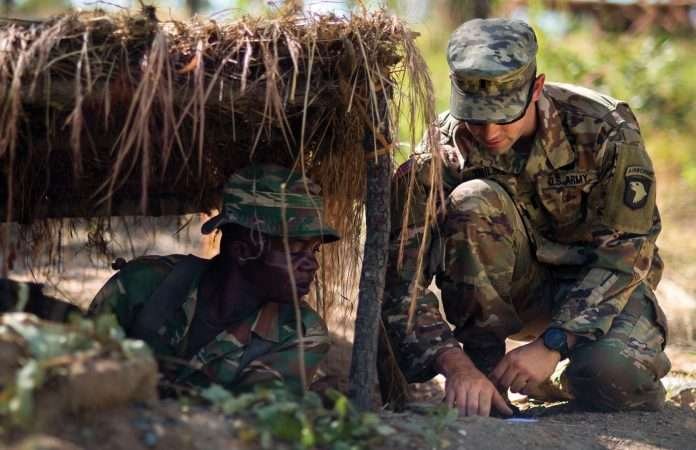
    Sudan Crisis Escalates as UK Forces Coordinate Airlift of Diplomats Amidst Violence and Unrest – French Convoy Ambushed, US Embassy Closed.

    0
    Read Time:2 Minute, 17 Second

    Khartoum, Sudan- (African Boulevard News) – As violence and unrest escalate in Sudan, the UK’s armed forces, along with the US, France, and other allies have coordinated a diplomatic airlift of British diplomats and their families from the capital, Khartoum. Escorted by military personnel, the operation was called “complex and rapid” by Prime Minister Rishi Sunak.

    UK Forces Coordinate Airlift

    In a statement released earlier today, Prime Minister Rishi Sunak acknowledged the hard work and dedication of the diplomats and military personnel involved in the operation. The evacuation was carried out by over 1,200 service personnel from the 16th Air Assault Brigade, the Royal Marines and the Royal Air Force. UK Defence Secretary Ben Wallace expressed his gratitude towards the evacuation effort and the UK’s allies.

    Priority to Evacuate Diplomats

    Foreign Secretary James Cleverly made it clear that the specific threats and violence directed towards diplomats meant their evacuation was prioritized. However, some British citizens still stuck in Sudan have lost confidence in the UK government. They cite their feelings of abandonment and the lack of information provided about evacuation plans.

    Appeal for Humanitarian Ceasefire

    Prime Minister Sunak has appealed to the parties involved to lay down their arms and implement an immediate humanitarian ceasefire. He also said that the UK government is pursuing every avenue to end the bloodshed in Sudan and ensure the safety of British nationals. However, the situation remains precarious and unpredictable.

    French Convoy Ambushed

    According to the BBC, a French convoy was ambushed in Khartoum while trying to leave the embassy, forcing them to turn back. The situation is volatile and unpredictable, with reports of gunfire and explosions being heard throughout the capital.

    Other Countries Follow Suit

    Several other countries, including Belgium, Turkey, Japan, France, the Netherlands, and Italy have also coordinated evacuation efforts to get their citizens out of Sudan. The US diplomats were evacuated using an airborne rescue operation that flew fewer than 100 people with Chinook helicopters. The operation took less than an hour, and 100 US troops from the Navy Seals and Army Special Forces flew from Djibouti to Ethiopia and then into Sudan.

    Embassy Closed, Not Safe Enough to Evacuate

    The US Embassy has closed and, in a tweet, has made it clear that it is currently not safe enough to evacuate “private citizens”. The situation in Sudan is tense and precarious, with no clear end in sight.

    As the crisis in Sudan continues, the international community must come together to end the bloodshed and ensure the safety of those affected. It is critical that all parties involved in the conflict lay down their arms and implement a ceasefire to protect civilians and allow for the safe passage of diplomats and citizens out of the country.

    US Invests $10 Million to Boost Military Operations in Central African Republic and Counter Russian Influence.

    0
    Read Time:2 Minute, 6 Second

    The Central African Republic (CAR) has received a boost to its military operations with a recent infusion of $10 million from the United States government towards the construction of military camps. The move comes as European nations reduce their military cooperation, largely due to Russia’s growing presence in the region.

    The funds are specifically intended to support the construction of facilities for the Forces Armées Centrafricaines (FACA), the military forces of the CAR. The military camps will be located across the country and will help provide much-needed infrastructure for the FACA, including barracks, training facilities, and other necessary equipment.

    The FACA has long struggled with limited resources and a lack of infrastructure, which has hindered its ability to effectively carry out its mandate of maintaining security and stability in the country. However, with this timely investment from the US, the FACA is expected to receive a major boost to its capabilities.

    While the European nations have been gradually decreasing their military cooperation with the CAR, the US appears to be stepping up its involvement. This move is welcomed by many in the CAR, especially those who have been critical of the diminishing support from Europe.

    The US assistance comes at a time when the CAR is currently experiencing a rise in violence, with armed groups regularly clashing with the military and each other. It is hoped that this investment will help bolster the capacity of the FACA, and stem the tide of violence and instability that has plagued the country for many years.

    The move is also seen as a strategic decision by the US to counter the growing influence of Russia in the region. Moscow has been strengthening its presence in the CAR over the past few years, providing military equipment and training to the FACA, as well as sending in mercenaries to provide security.

    This investment by the US is a clear indication that they are not willing to cede ground to Moscow in terms of military influence in the region, and that they are committed to the stability and security of the CAR.

    In conclusion, the $10 million investment by the US into the FACA signals a renewed commitment to the CAR’s security and stability. It is hoped that this investment will provide much-needed infrastructure and support to the military forces, and help them to better carry out their mandate. As the CAR continues to face challenges in maintaining peace and security, the US’s involvement in the region will be pivotal to the country’s future.

    Equatorial Guinea Tightens Local Content Rules in Oil and Gas Industry, Welcomed by Major Players Schlumberger and Subsea 7.

    0
    Read Time:1 Minute, 48 Second

    In a recent development, the hydrocarbons ministry of Equatorial Guinea has tightened the rules regarding local content in the oil and gas industry. This move has been welcomed by Schlumberger and Subsea 7, two major players in the sector.

    The change in local content rules has been attributed to the efforts of Jacinto Nguema Owono, who had been serving as the director general of the hydrocarbons ministry since 2018. However, Owono has now been replaced following a change in minister.

    The move towards greater local content is part of a broader trend in many African countries, which are seeking to boost economic development and create jobs by ensuring that a greater proportion of the value generated by extractive industries remains within the country.

    For companies like Schlumberger and Subsea 7, the change in rules represents a challenge, as they will need to ensure that they are compliant with the new regulations. However, both companies have welcomed the move, stating that they are committed to supporting the development of local industry and talent.

    Schlumberger, which has been operating in Equatorial Guinea since 1982, has already made significant investments in local content, including the establishment of a local training center for oil and gas professionals. The company has also worked with the government to develop policies and regulations that promote local content.

    Subsea 7, for its part, has also been involved in efforts to build local capacity and expertise, including through local partnerships and investments in training and development programs.

    The move towards greater local content in Equatorial Guinea is expected to create new opportunities for local businesses and entrepreneurs, while also helping to develop the country’s workforce and economy more broadly. However, it also represents a significant challenge for foreign companies operating in the country, who will need to balance the demands of compliance with the need to remain competitive and profitable.

    For now, stakeholders are waiting to see how the new rules will be implemented and what impact they will have on the industry. However, it is clear that the move towards greater local content represents an important step in the ongoing development of Equatorial Guinea’s oil and gas sector.

    Foreign Affairs Minister Tete António to Visit Comoros to Tackle Conflict in Great Lakes Region

    0
    Read Time:2 Minute, 4 Second

    Foreign Affairs Minister Tete António is set to visit the Comoros at the end of this month to discuss the ongoing conflict in the Great Lakes region. This visit comes as unrest persists in eastern Democratic Republic of the Congo (DRC), where ethnic and political tensions have led to a surge of violence.

    The Great Lakes region of Africa encompasses Burundi, Rwanda, Tanzania, Uganda, and the DRC. It has a long history of instability, with numerous armed groups operating within the area. Over the years, this instability has resulted in displacement, violence, and deaths of millions of people.

    The ongoing conflict in the DRC has been a major source of instability in the region. The conflict has been fueled by ethnic and political tensions, with numerous armed groups operating within the eastern part of the country. The situation has been further exacerbated by the involvement of neighboring countries, such as Uganda and Rwanda, in the conflict.

    According to sources, Mr. António is expected to meet with Comorian officials to discuss the situation in the DRC and explore ways to bring a lasting solution to the conflict. The visit is also expected to strengthen relations between the Comoros and Angola, which have long been allies in the region.

    Angola has been playing an active role in trying to resolve the conflict in the DRC. Earlier this year, it hosted a meeting between the presidents of the DRC and Rwanda aimed at resolving tensions between the two countries. It has also been involved in peace talks between the various armed groups in the DRC.

    The visit by Mr. António is expected to build on these efforts and help bring a lasting solution to the conflict in the Great Lakes region. It is also expected to help ease tensions between Angola and its neighbor, the DRC, which have been strained in recent years.

    The conflict in the Great Lakes region has had a devastating impact on the lives of millions of people. It has led to displacement, violence, and death. The visit by Mr. António is an important step towards resolving this crisis and bringing peace to the region.

    In conclusion, Mr. António’s visit to the Comoros is an important development in the quest for peace in the Great Lakes region. It is hoped that the discussions during the visit will lead to concrete steps towards a lasting solution to the conflict in the DRC and bring peace to the lives of millions of people in the region.

    Tunisian President Considered Reviving Information Ministry, Raising Press Freedom Concerns

    0
    Read Time:1 Minute, 52 Second

    Tunisian President Kais Saied is said to be considering the revival of the country’s Information Ministry as part of his efforts to overhaul the governance model that has been in place since the 2011 revolution. The potential move has raised concerns over the country’s press freedom, which has been a major issue in Tunisia, especially since the rise of social media.

    According to reports, the Information Ministry was abolished in 2011 as part of a broader reform plan aimed at dismantling the state apparatus that had been under the control of former president Zine El Abidine Ben Ali. However, Saied believes that the lack of a centralized government communication system has led to misinformation, disinformation, and chaos in the media landscape.

    The potential move has been met with mixed reactions. Some argue that the revival of the Information Ministry could lead to censorship and a restriction of press freedom in the country. Others point out that the media landscape in Tunisia is already plagued with problems and that a centralized system could lead to better regulation and a more professional media.

    Saied’s move to overhaul Tunisia’s governance model comes amidst growing frustration from the Tunisian population over the lack of progress made since the 2011 revolution. The country has been struggling with high unemployment, a struggling economy, and a political crisis that has left the government paralyzed for months.

    Saied, who was elected as president in a landslide victory in 2019, has been pushing for a complete restructuring of the government and the political system. He has argued that the current system is too bureaucratic and inefficient and has proposed a more decentralized approach to governance.

    Critics, however, argue that Saied’s plans could lead to a consolidation of power and a potential return to authoritarianism in Tunisia. The potential revival of the Information Ministry is seen as a major test of Saied’s commitment to press freedom and his willingness to work with journalists and media outlets in the country.

    It remains to be seen whether Saied will move forward with his plans to revive the Information Ministry. The potential move is sure to spark further debate and controversy in Tunisia, as the country grapples with a range of challenges and uncertainties in the years ahead.

    Moroccan King’s Adviser Resurfaces: Fouad Ali el-Himma Attends Inauguration Ceremony After Years of Absence, Cementing Influence in Politics.

    0
    Read Time:1 Minute, 54 Second

    Moroccan King Mohammed VI’s chief adviser, Fouad Ali el-Himma, has resurfaced and is expected to attend an inauguration ceremony today in North Africa. This marks the first public appearance of the king’s longtime confidant in several years.

    El-Himma is a former interior minister and is widely regarded as one of the most influential figures in Moroccan politics. He has long been considered a key adviser to the king and a powerful behind-the-scenes player in the country’s politics.

    El-Himma’s absence from public view in recent years has fueled speculation about his health and political fortunes. Some observers have suggested that he has fallen out of favor with the king or become a target of political opponents.

    However, his appearance at today’s ceremony suggests that he remains an important figure in Moroccan politics and enjoys the trust and support of the king.

    The ceremony that El-Himma is attending has not been publicly announced, but sources suggest that it may be related to infrastructure or development projects in the region.

    Morocco has been working to boost its economy and attract foreign investment in recent years, with a particular focus on expanding its infrastructure and developing new industries. The country has also been dealing with a range of security challenges, including terrorism and organized crime.

    El-Himma is expected to play a key role in shaping Morocco’s response to these challenges and advancing the country’s economic and political interests.

    The king’s adviser has a long history of involvement in Morocco’s security and intelligence services, and he is known for his tough stance on terrorism and other security threats.

    El-Himma’s return to public view is likely to be seen as a positive development by many in Morocco, who value his experience and expertise in dealing with the country’s challenges.

    However, his reemergence may also fuel concerns about his role in politics and his relationship with the king. Some observers have criticized El-Himma for his perceived influence over the monarch, arguing that he wields too much power behind the scenes.

    Despite these concerns, however, it seems clear that El-Himma remains an important and influential figure in Moroccan politics. His participation in today’s ceremony suggests that he will continue to play a key role in shaping the country’s future.

    Kenyan President Ruto aims to position Kenya as gateway to Africa’s largest trade bloc, the Tripartite Free Trade Area, for economic growth.

    0
    Read Time:2 Minute, 19 Second

    Kenyan President William Ruto has taken up an ambitious agenda to position Kenya at the heart of the Tripartite Free Trade Area, a future trade bloc that spans the entire length of Africa from Cape Town to Cairo. The Tripartite Free Trade Area is a proposed treaty among three regional economic communities–the East African Community (EAC), the Common Market for Eastern and Southern Africa (COMESA), and the Southern African Development Community (SADC)–which would establish a free trade area among their collective 26 member states.

    Ruto has wasted no time in advocating for Kenya to take a lead role in the development of this new trade zone. He has argued that Kenya should use its geographical location, infrastructure, and political stability to attract investment and commerce from other parts of the continent. Speaking at a recent meeting of the EAC heads of state in Arusha, Tanzania, Ruto said, “Kenya is strategically placed at the crossroads of the Tripartite Free Trade Area. We stand to benefit greatly from closer economic ties with our neighbors, and we can serve as a gateway to the wider African market.”

    The Tripartite Free Trade Area, if implemented, would be the largest trade bloc in the world by number of member countries. It would cover a population of over 800 million people and a combined GDP of more than $1.3 trillion. For Kenya, the potential benefits of closer integration with other African economies are significant. The country has a robust and diversified economy, with the tourism, agriculture, and technology sectors being among its most dynamic. However, Kenya’s economic growth has been uneven in recent years, with high levels of inequality and unemployment persisting.

    To realize his vision of Kenya at the heart of the Tripartite Free Trade Area, Ruto has laid out an ambitious agenda centered on infrastructure development, trade liberalization, and regional cooperation. He has called for increased investment in transport and energy infrastructure to improve connectivity between Kenyan cities and countries in the wider African market. He has also pushed for the elimination of trade barriers and the harmonization of regulations among Tripartite member states. In addition, Ruto has emphasized the need for greater cooperation among regional bodies like the EAC, COMESA, and SADC to ensure that the Tripartite Free Trade Area is implemented smoothly and effectively.

    Some experts have expressed skepticism about the feasibility of the Tripartite Free Trade Area, given the many political, economic, and logistical challenges involved in creating a seamless market across such a vast and diverse region. However, Ruto remains optimistic that Kenya can play a leading role in shaping the future of African trade. “We have the resources, the talent, and the vision to make this happen,” he said. “Let us work together to turn this dream into a reality.”

    Uncertainty Surrounds Boughezoul City Project, Investors Wary of Lack of Transparency and Direction

    0
    Read Time:1 Minute, 50 Second

    Boughezoul, a new urban center in southwest Algeria, has been shrouded in uncertainty as the tender submission date for its real estate component approaches. The city, which is expected to house over 100,000 residents, has been touted as a major development project for the Algerian government. However, there have been concerns about the progress and management of the project.

    According to sources, the tender submission date for the real estate component of the city is fast approaching, yet there have been no clear indications of progress in terms of infrastructure and planning. This has caused concern among investors, who are wary of investing in a project that seems to lack a clear roadmap.

    The Boughezoul city project is aimed at transforming the region into a modern urban center, complete with residential areas, commercial centers, healthcare facilities, educational institutions, and recreational spaces. The government has invested heavily in the project to boost economic growth, create jobs, and increase the standard of living of the people in the area.

    However, the lack of transparency and communication surrounding the project has raised concerns. It is unclear who is responsible for the management of the project, and there have been reports of corruption and mismanagement.

    Investors have expressed concern about these issues, saying that they need a clear understanding of how the project will be managed to feel confident in investing. Without a clear roadmap and management plan, investors may be hesitant to commit funds to the project.

    Despite these concerns, there is still optimism surrounding the Boughezoul city project. The development of a new urban center in the region will undoubtedly bring economic benefits and improve the lives of the people in the area. However, it is important for the government to address concerns about transparency and management to ensure that the project is successful and provides the anticipated benefits.

    In conclusion, the Boughezoul city project in southwest Algeria has sparked excitement, but concerns around its management and progress have left investors uneasy. The government must provide clear communication and transparency to address these concerns and ensure that the project progresses smoothly. The successful completion of the project will benefit Algeria’s economy and improve the lives of its people.

    Angola’s Infrastructure Boom: Egyptian Construction Firms Cash in on €146m Investment Opportunities

    0
    Read Time:1 Minute, 49 Second

    Egyptian construction firms are increasingly viewing Angola as a lucrative market, thanks to a recent €146m decree issued by Angolan President João Lourenço. The decree, issued on February 28, authorizes the spending of this amount to cover 85% of Angola’s infrastructure development projects.

    With such significant financing available, Egyptian firms are eager to capitalize on the opportunity to establish themselves in the Angolan market. In addition to the initial funds, President Lourenço has also emphasized the importance of developing Angola’s infrastructure in order to attract foreign investment and generate job opportunities for its citizens.

    Egyptian companies have already begun securing contracts for various projects across Angola. One such company, Construction and Engineering Projects (CEP), is undertaking a $60m project to build a hospital in the city of Luanda, Angola’s capital. CEP has also secured contracts to build roads connecting various towns and cities and a new airport terminal building.

    Another firm, Hassan Allam Construction, has been awarded a $200m contract to build a water treatment plant in Luanda. The project is part of Angola’s efforts to provide clean drinking water to its citizens, which has been an ongoing challenge for the country.

    The Angolan government’s commitment to investing in infrastructure development is aligned with the United Nations’ Sustainable Development Goals, particularly Goal 9 which seeks to “build resilient infrastructure, promote inclusive and sustainable industrialization and foster innovation”. By investing in such projects, Angola is positioning itself for sustainable economic development and growth.

    The investment from Egyptian construction firms in Angola is also expected to create job opportunities for Angolan citizens. These projects will require a significant amount of labor and materials, which will provide employment and income for many Angolans. As such, the partnership between Angolan leadership and Egyptian construction firms could be a great development for both countries.

    Overall, the investment in Angola’s infrastructure development by Egyptian construction firms is promising for the future of the Angolan economy. With the right investments, Angola can continue to develop its infrastructure, attract foreign investment, and generate job opportunities for its citizens. In the long term, this could lead to significant economic growth and development opportunities for Angola, making it a desirable business location for foreign investors.