Saturday, May 2, 2026
82.5 F
Lagos
More
    Home Blog Page 338

    Africa: Rolls-Royce Set to Power East Africa’s Growth with Renewable Energy Engines and More

    0
    Read Time:2 Minute, 13 Second

    Diaspora, Africa – (African Boulevard News) – Rolls-Royce, one of the world’s leading industrial technology companies, is setting up shop in East Africa with the opening of its first office in the region. This move is being driven by the heightened demand for engines to generate electricity from renewable sources, as well as to power locomotives and ships.

    East Africa is a region that is experiencing tremendous growth, and Rolls-Royce has decided to take advantage of this by establishing a strong presence there. The company believes that its expertise and experience in developing and manufacturing engines will help it capitalize on the many opportunities that the African continent presents.

    “The opening of this office is a significant milestone for Rolls-Royce as we deepen our presence in Africa,” said Kevan Mehta, the Executive Vice President of Rolls-Royce’s Power Systems business unit. “East Africa is a dynamic and rapidly evolving market, and we believe that our advanced technology and engineering capabilities will enable us to make a significant contribution to the region’s growth.”

    The company’s primary focus will be on developing engines that can generate electricity from renewable sources, including wind, solar, and hydropower. Rolls-Royce has been at the forefront of developing these engines for many years and has a wealth of expertise and experience in this area.

    In addition to renewable energy, the company will also focus on providing engines to power locomotives and ships. This will include developing engines that can run on alternative fuels such as hydrogen and biofuels.

    “We are excited about the opportunities that East Africa presents, and we believe that our expertise and experience will enable us to help drive growth and development in the region,” said Mehta.

    The decision by Rolls-Royce to set up an office in East Africa has been welcomed by industry experts, who believe that it will help to further enhance the region’s reputation as an attractive destination for investment.

    “This is a significant move by Rolls-Royce, and it sends a clear message to other businesses that East Africa is a region that is open for business,” said Paul Gicheru, an economist based in Nairobi. “It is an exciting time for the region, and we look forward to seeing the many positive impacts that this move will have.”

    In conclusion, Rolls-Royce’s decision to set up an office in East Africa is a significant development that is expected to provide many opportunities for the region’s growth and development. With its expertise and experience in developing engines for renewable energy and powering locomotives and ships, the company is well-placed to take advantage of the many opportunities that this exciting region presents.
    South Africa: Tragedy Strikes as 30 Suspected Illegal Miners Found Dead in Disused Mine

    0
    Read Time:2 Minute, 16 Second

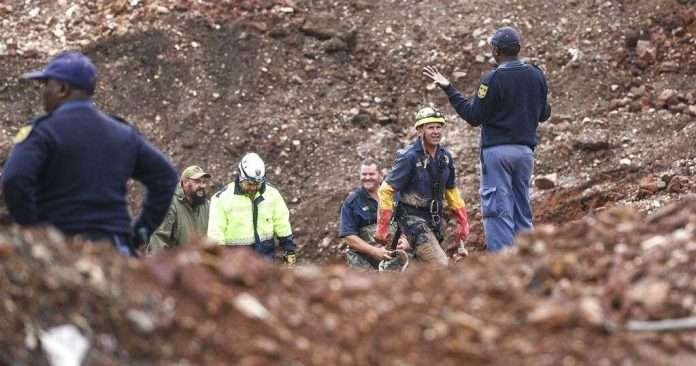
    Pretoria, South Africa – (African Boulevard News) – In a tragic incident that has left the mining community in South Africa reeling, some thirty suspected illegal miners were found dead at the bottom of a disused mine, in Welkom, a small gold-mining town located 250 km south of Johannesburg. The discovery was made a month after a probable accident, and the shocking news has sent shockwaves through the region.

    The South African Police Service (SAPS) confirmed that the dead were illegal miners, also known as zama-zamas, who had entered the mine illegally, without the consent of the owner. SAPS spokesperson, Motantsi Makhele, noted that the “bodies were found with head injuries, consistent with rock falls. It is suspected that they were working underground with no safety equipment, and the mine was unstable with rock falls happening regularly.”

    The incident highlights the dangers that illegal miners face across South Africa. The country has a long history of illegal mining, with many people, including foreigners, entering the industry to make a living. However, their activities often occur without any formal safety measures and are therefore prone to accidents, such as collapses, toxic gas leaks, and fires.

    Illegal mining is a significant issue in South Africa, and it is estimated that over 30,000 people are involved in this activity. The country, which is also the world’s largest producer of gold, has a large number of abandoned and disused mines that are exploited by illegal miners. These operations can be dangerous, with miners often using hazardous chemicals to extract the gold, leading to environmental damage and pollution.

    Illegal mining has also been linked to criminal activities globally, including drug trafficking and human trafficking. The South African government has launched several measures, including a crackdown on illegal mining and the creation of a formalized artisanal mining sector, to regulate and formalize illegal mining. However, these measures have often been ineffective, and the problem persists.

    The deaths of these illegal miners are a heartbreaking tragedy that underscores the need for effective measures to protect those working in illegal mines. The African Mining Vision, a continental framework for resource governance, calls for the formalization of artisanal and small-scale mining as a way to ensure decent work environments and safe practices. However, the implementation of this vision requires cooperation from all stakeholders, including governments, mining companies, workers, and communities.

    In summary, the death of thirty illegal miners in Welkom highlights the dangers of illegal mining and the need to regulate and formalize the sector to prevent such accidents. The South African government must continue to work with all stakeholders to ensure that mining activities are conducted safely and sustainably, with the welfare of workers and communities at the forefront.

    Morocco: Celebrating the Resilience of Slavery Descendants Through Gnaoua Music at the 20th Festival in Essaouira

    0
    Read Time:1 Minute, 50 Second

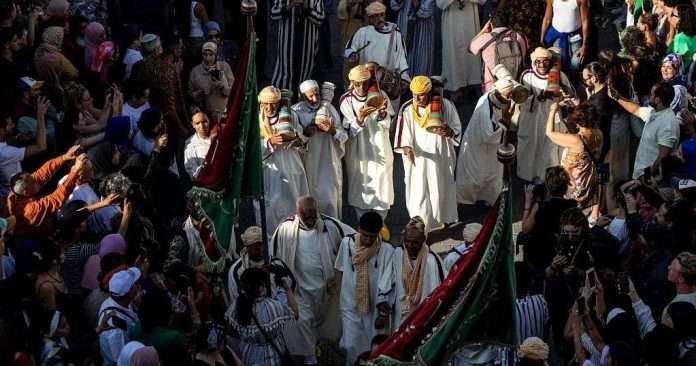
    Rabat, Morocco – (African Boulevard News) – For over twenty years now, Morocco has celebrated the Gnaoua festival, a vibrant showcase of traditional music, dance, and culture. Originating from the descendants of slaves in the Maghreb, Gnaoua music is a spiritual experience that blends African rhythms with Islamic mysticism.

    This year’s festival, held in the coastal town of Essaouira, was an unforgettable event. Featuring a range of international acts, it attracted thousands of visitors from around the world who came to experience the unique blend of Gnaoua music with jazz, blues, reggae, and hip hop.

    The Gnaoua festival is not just about music; it is also an opportunity for people to come together and celebrate humanity. As Ahmed Qassimi, the festival’s director, explained: “Music is a language that transcends borders and brings people together. It’s a way of expressing ourselves and sharing our culture with others.”

    Indeed, the festival is a melting pot of cultures, with artists from different corners of the globe coming together to celebrate their love for music. And it’s not just the music that’s special – the vibrant colors of the costumes, the energy of the dancers, and the warmth of the people create an atmosphere that is uniquely Moroccan.

    It’s no surprise that Gnaoua music was inscribed on UNESCO’s list of intangible heritage in 2019. The music is not just a cultural treasure, but also a way of preserving the dignity and humanity of those who have suffered under slavery and oppression.

    “The Gnaoua festival is more than just a celebration of music. It’s a celebration of humanity, of the resilience of people in the face of adversity, and of the power of culture to unite us all,” said Qassimi.

    As the festival came to a close, the streets of Essaouira were filled with the sounds of Gnaoua music, the air heavy with the scent of spices and incense. Visitors left with a sense of awe and wonder, having been transported to a different time and place.

    For anyone who wants to experience the magic of Gnaoua music, the festival is an absolute must-see. It’s a celebration of culture, diversity, and humanity, and a reminder of the power of music to unite us all.

    Angola: Billionaire Daughter of Former President Convicted of Embezzling 52 Million Euros in Landmark Corruption Case

    0
    Read Time:2 Minute, 12 Second

    Luanda, Angola – (African Boulevard News) – Isabel dos Santos, the billionaire daughter of Angola’s former president, has been convicted of embezzling 52 million euros from Angola’s state oil company, according to a Dutch court.

    The verdict was delivered by a court in The Netherlands, where dos Santos reportedly held her shares in the Portuguese oil company, Galp Energia. She was found guilty of fraud and money laundering and ordered to pay the amount back to the Angolan government.

    The case is part of a broader investigation into corruption allegations against the former president’s family, which has spanned several countries and has triggered an international manhunt for the accused.

    Dos Santos, who was once considered the richest woman in Africa, has always denied the allegations. She has maintained that the charges are politically motivated and aimed at tarnishing her father’s legacy.

    However, the court found that she used her position as the head of Angola’s state oil company, Sonangol, to transfer the funds to a Dubai-based company that she owned with her husband. They reportedly used the funds to buy luxury properties in Dubai and Portugal.

    The court’s verdict has been hailed as a victory for Angola’s anti-corruption campaign. President Joao Lourenco, who succeeded dos Santos’ father in 2017, has made the fight against corruption a top priority of his administration.

    “The justice system has demonstrated that no one is above the law,” the president’s office said in a statement.

    Experts say the conviction will have far-reaching implications for both Angola and Portugal, where dos Santos owned stakes in several major companies.

    “This is a landmark case and sends a strong message to other corrupt officials that the days of impunity are over,” said Rafael Marques, an Angolan investigative journalist who has been reporting on corruption in the country for decades.

    The case has also put a spotlight on the role of Western financial institutions and consulting firms in facilitating corruption in Africa. Dos Santos reportedly used banks and law firms in Europe to move the funds out of Angola.

    “The role of Western institutions in enabling corruption cannot be ignored,” said Femi Oke, a journalist and African affairs analyst. “This is an opportunity for them to take a hard look at their own practices and start taking responsibility for their role in the problem.”

    As dos Santos prepares to appeal the verdict, the case is likely to continue to dominate headlines in Angola and beyond. It is a reminder that the fight against corruption is far from over and that there are still many challenges ahead for those trying to clean up the continent’s politics and economies.

    Africa: President Macron Accuses Russia of Destabilizing the Continent

    0
    Read Time:1 Minute, 43 Second

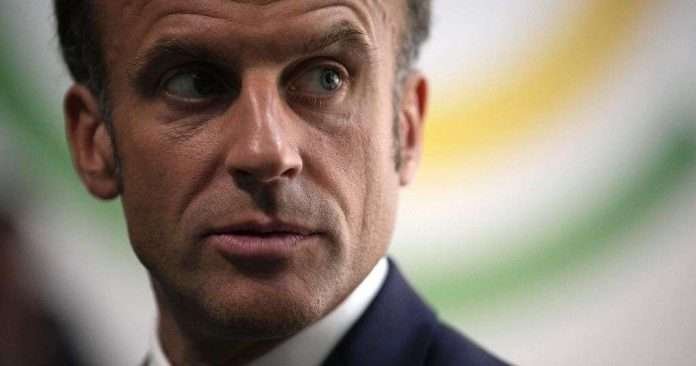
    Diaspora, Africa – (African Boulevard News) – In an interview with Franceinfo/RFI/France 24 on the sidelines of the Paris summit, French President, Emmanuel Macron, accused Russia of being “a power destabilising Africa”. He alleged that Russian actions in Africa, especially its efforts to create a military presence, were exacerbating conflicts and exacerbating tensions between countries.

    The Franco-African summit brought together French and African leaders to discuss various topics of mutual interest. During the summit, Macron expressed his concerns about the growing Russian influence in Africa, which he views as a potential threat to the continent’s stability.

    Macron’s comments came amid reports of Russian troops’ deployment to several African countries, including Libya, Mozambique, Sudan, and the Central African Republic. The Kremlin has denied the allegations, noting that its dispatch of military advisers to African countries is part of its ongoing cooperation agreements.

    The French president, however, is not alone in his concerns, as many African leaders share his sentiments. Some African analysts believe that Russia’s presence in Africa is not solely focused on bilateral cooperation but also aims to challenge Western powers’ influence in the region.

    Moreover, Russian involvement in Africa has also been linked to several arms deals, offering weapons to the highest bidders without much consideration for potential consequences. This has led to the arming of various insurgent groups and warlords, leading to increased violence and instability in the region.

    The growing Russian influence in Africa has garnered international attention, with many experts warning about the potential dangers this could pose to African countries’ stability. The USA and other Western countries have also raised concerns over the matter, warning African countries of Russian influence’s potential negative impacts.

    In conclusion, Macron’s comments on Russia’s destabilizing power in Africa have raised many valid concerns about the country’s motives in the region. The African leaders’ joint voice against Russian infiltration in the continent could lead to a more stable and peaceful future. However, it is essential to continue monitoring and addressing Russian influence in Africa to ensure lasting peace and stability in the region.

    Ethiopia: Millions face catastrophic famine amidst violent conflict and aid suspension

    0
    Read Time:2 Minute, 9 Second

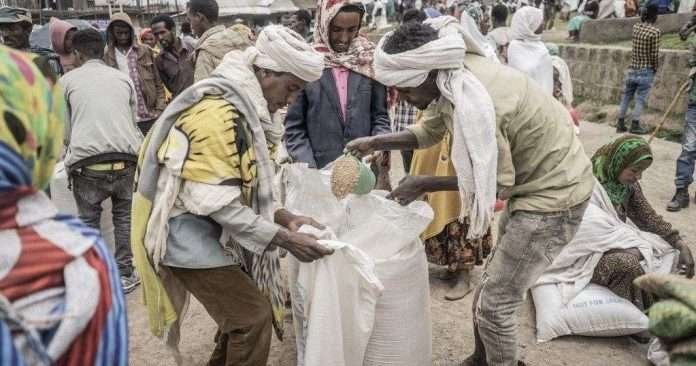
    Addis Ababa, Ethiopia – (African Boulevard News) – Tigray, a region in northern Ethiopia, is facing its worst famine in decades after food aid has been suspended for almost a year. The crisis is unfolding in the midst of a violent conflict between the Ethiopian government and the Tigray People’s Liberation Front (TPLF) that has displaced millions of people and left over 350,000 in famine-like conditions.

    Desta Hailu, a university lecturer in the town of Adigrat, a few kilometers from the Eritrean border, said he had not eaten for two days. His last meal consisted of a slice of bread with tea. “We have no food, no water, no electricity, no phone network,” he said.

    The situation is dire, and aid organizations are warning of a catastrophic humanitarian crisis if the situation doesn’t improve soon. The United Nations has already declared Tigray as a level 5 catastrophe, its highest level of emergency.

    The Ethiopian government has been accused of blocking aid to the region and impeding humanitarian access, which they have denied. However, aid agencies say that access has been restricted, and aid convoys have been blocked from entering Tigray.

    According to the World Food Programme (WFP), over 4.5 million people in Tigray urgently need food assistance, with 33,000 of them already in famine-like conditions. The WFP has been able to deliver food assistance to some parts of Tigray but has recently suspended operations due to insecurity and logistical challenges.

    “The situation in Tigray is dire, and people are dying,” said a spokesperson for the WFP. “We urgently need access to the region, and we need it now.”

    The famine in Tigray has been exacerbated by the conflict, which has destroyed crops, prevented farmers from planting, and disrupted food supply chains. The situation has been worsened by the expulsion of aid agencies and the suspension of operations by the WFP, which has been the main supplier of food assistance in the region.

    The Ethiopian government has promised to provide aid to Tigray and has recently allowed some aid agencies to operate in the region. However, humanitarian organizations say that the aid being provided is insufficient, and more needs to be done to address the crisis.

    The situation in Tigray is a human tragedy, and urgent action is needed to prevent the situation from getting worse. The international community must come together to provide aid and to pressure the Ethiopian government to allow humanitarian access to the region. Failure to act now could lead to a catastrophic humanitarian crisis that will have devastating consequences for the people of Tigray.

    Kenya Launches Largest School Feeding Program in Africa to Combat Malnutrition and Boost Education

    0
    Read Time:1 Minute, 56 Second

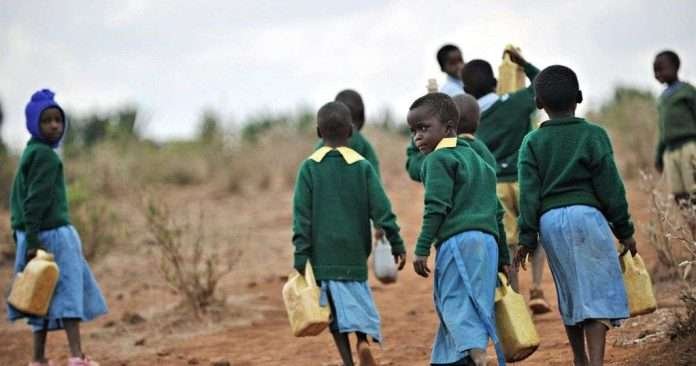
    Nairobi, Kenya – (African Boulevard News) – In a bid to combat malnutrition and enhance access to education, Kenya has launched the largest school feeding program in Africa. The initiative was kicked off on Tuesday by President William Ruto, who indicated the need to address the issue comprehensively. According to Save The Children, about one in four Kenyan children suffers stunted growth due to malnutrition.

    The program is aimed at ensuring all Kenyan children can access healthy and nutritious meals while at school. The government has set aside KES 4.3 billion ($39 million) to kick off the initiative, which will prioritize vulnerable children in arid and semi-arid areas.

    Speaking at the launch, President Ruto said that the government was committed to ensuring that no child is left behind in accessing basic needs, including nutrition and education. He added that the program would not only contribute to reducing malnutrition but would also help boost educational outcomes and ensure that children can concentrate in class.

    The initiative is part of Kenya’s School Feeding Policy, which has been in place since 2017. The policy seeks to ensure that all primary school children receive one meal per day while at school. Since its introduction, the policy has managed to reach 3.4 million children in over 23,000 schools across the country.

    Dr. John Mugo, CEO of the Millennium Promise Alliance – Kenya, welcomed the program, describing it as a game-changer in the country’s efforts to address malnutrition. Dr. Mugo noted that poor nutrition can lead to a range of health and educational challenges, including poor cognitive development and low academic performance.

    Meanwhile, Save The Children has called on the government to ensure that the program reaches all vulnerable children, including those in informal settlements and urban areas. The organization noted that malnutrition remains a significant challenge in the country, with nearly half of all child deaths being linked to poor nutrition.

    In conclusion, the launch of the largest school feeding program in Africa is a significant milestone for Kenya’s efforts to enhance education and reduce malnutrition. The program is expected to benefit millions of children and to contribute to overall health and academic outcomes. The government and development partners must work together to ensure that the program reaches all vulnerable children and that it is sustainable in the long term.

    Africa: San Antonio Spurs Make History Selecting French Teen Superstar Victor Wembanyama As No.1 NBA Draft Pick

    0
    Read Time:2 Minute, 11 Second

    Diaspora, Africa – (African Boulevard News) – The San Antonio Spurs have selected France’s Victor Wembanyama as the first overall pick in the NBA Draft. The Texas club’s decision to take the extremely gifted teenager has caused widespread excitement among fans and analysts alike.

    At 7’3, Wembanyama, has been touted as the next big thing in basketball. The young Frenchman possesses remarkable skills for someone his size, including the ability to shoot from long range, terrific ball-handling, and incredible defensive prowess. Many experts and scouts have compared him to legendary players such as Kevin Durant and Anthony Davis.

    “Victor is an incredibly talented young player, with all the tools to be a force in the NBA. He has a unique combination of size and skill that is very rare in the game today. I think he has the potential to be one of the best players in the league in the coming years”, said ESPN analyst, Jay Williams.

    Wembanyama, who has been playing professionally in France, has already shown his prowess on the world stage. He led the French under-18 team to the FIBA ​​European Championship earlier this year, where he was named the tournament’s Most Valuable Player.

    The San Antonio Spurs, a team with a rich history of success in the NBA, are no strangers to drafting and developing young talent. The franchise had the foresight to draft legends such as Tim Duncan and Kawhi Leonard early in their careers, and both went on to become NBA champions with the Spurs.

    With the selection of Wembanyama, the Spurs are showing that they are looking towards the future once again. The teenager will join a young and talented Spurs team, led by exciting guard Dejounte Murray. The combination of Wembanyama and Murray has the potential to be one of the most formidable in the league.

    “This is a great day for the Spurs organization and our fans. Victor is a special talent, and we are thrilled to have him as part of our team. We believe he has the potential to be a franchise-changing player, and we can’t wait to see him in action”, said Spurs general manager, Brian Wright.

    The selection of Wembanyama is sure to be a hot topic of conversation for months to come. Many are already predicting that he will become a superstar in the league, and there is no doubt that he has the skills and talent to back up those claims. The San Antonio Spurs have made a bold, but calculated, move in drafting the young Frenchman, and it will be exciting to see how he develops in the coming years.

    Zimbabwe: Presidential Election to See Eleven Candidates; Country Braces for Heightened Political Tension

    0
    Read Time:1 Minute, 43 Second

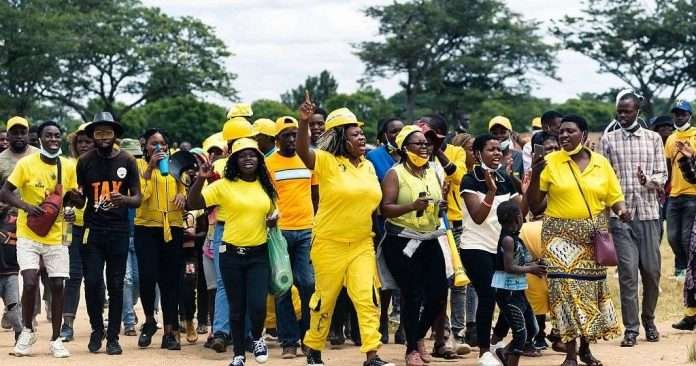
    Harare, Zimbabwe – (African Boulevard News) – The Zimbabwe Electoral Commission (ZEC) announced on Thursday that eleven candidates will run in the presidential elections scheduled for August this year. The announcement comes amid heightened political tensions in the country, with opposition parties calling for fair and transparent elections.

    The list of candidates includes the incumbent President Emmerson Mnangagwa of the ruling ZANU-PF party and his main rival, Nelson Chamisa, leader of the Movement for Democratic Change (MDC) Alliance. Other candidates include Thokozani Khupe of the MDC-T party, Joseph Busha of the Free Zimbabwe Congress, and many more.

    The presidential candidates were required to submit their nomination papers and pay a $1,000 fee to the electoral commission. The ZEC received a total of 23 nomination papers, but 12 were rejected due to irregularities such as missing signatures or incorrect information.

    The announcement of the final list of candidates has been met with mixed reactions. Some Zimbabweans have expressed their excitement to have so many options, while others are skeptical about the credibility of the electoral process.

    Political analyst, Dr. Pedzisai Ruhanya, noted that the number of candidates is a positive development, but he said: “The challenge is whether the election will be transparent and free from violence. The electoral commission must ensure that there is level playing field for all candidates.”

    Meanwhile, the opposition parties have raised concerns about the process of printing ballot papers, which they say is not transparent. They have also called for international observers to monitor the election process to ensure fairness.

    The ZEC chairperson, Justice Priscilla Chigumba, assured the public that the electoral commission is committed to holding free and fair elections. She added: “All political parties will participate in these elections on equal footing. The commission will not hesitate to take action against any political party or candidate who perpetrates any form of electoral malpractice or violence.”

    With just a few months to go before the elections, all eyes will be on Zimbabwe to see if they will be able to deliver free, fair, and transparent elections.

    South Africa: Fighting Corruption Remains an Uphill Battle, Says Judge Zondo

    0
    Read Time:2 Minute, 3 Second

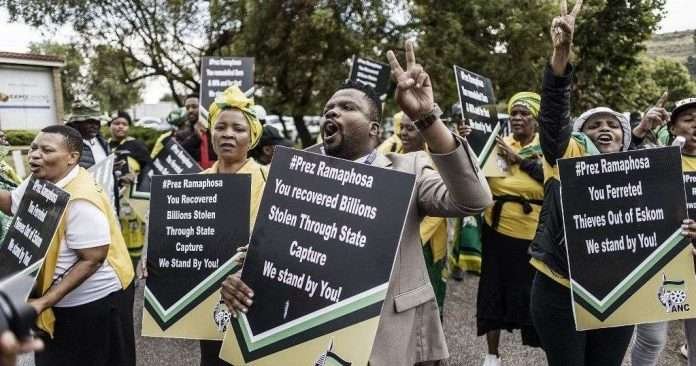
    Pretoria, South Africa – (African Boulevard News) – It has been over a year since the submission of a report detailing the extent of state corruption in South Africa, and unfortunately, it seems like “too little has been done” to fight the issue since then. This is the opinion of Judge Raymond Zondo, the head of the country’s judicial inquiry into corruption, who recently deplored the lack of progress.

    Despite numerous high-level investigations and promises from leaders to tackle corruption head-on, it appears that tangible results remain elusive. The ongoing judicial inquiry has highlighted numerous cases of bribery, embezzlement, and other corrupt practices, but many feel that there has yet to be any real accountability.

    “The fact that some people have been charged and some have been found guilty is not enough,” bemoaned Zondo during a recent interview. “I think that too little has been done, and we need to do more, particularly in terms of holding the people who are responsible for the corruption accountable.”

    Zondo’s comments echo the sentiments of many South Africans who have grown tired of the seemingly endless cycle of corruption scandals and impunity. The issue has not only eroded public trust in the government but has also posed a significant threat to the country’s economic stability.

    “The scourge of corruption continues to undermine the rule of law, our democratic institutions, and the public’s trust in government,” said Cas Coovadia, CEO of Business Unity South Africa. “We need to see more action to hold those responsible accountable and ensure that corrupt practices are not allowed to persist.”

    There is no question that the fight against corruption in South Africa is an uphill battle. However, experts agree that progress can be made by improving transparency and accountability, investing in anti-corruption measures, and ensuring that the rule of law is upheld.

    “South Africa has a long road ahead in terms of tackling corruption, but it’s a journey worth taking,” said Nombeko Mbatha, a legal expert. “By working together, we can ensure that our country is one that is governed by the principles of justice, fairness, and transparency.”

    In conclusion, while Judge Zondo’s comments are certainly disheartening, they serve as a reminder that the fight against corruption is far from over. As South Africa continues to grapple with this issue, it is crucial that leaders take decisive action to hold those responsible accountable and ensure that corruption does not continue to threaten the country’s stability and its people’s livelihoods.