
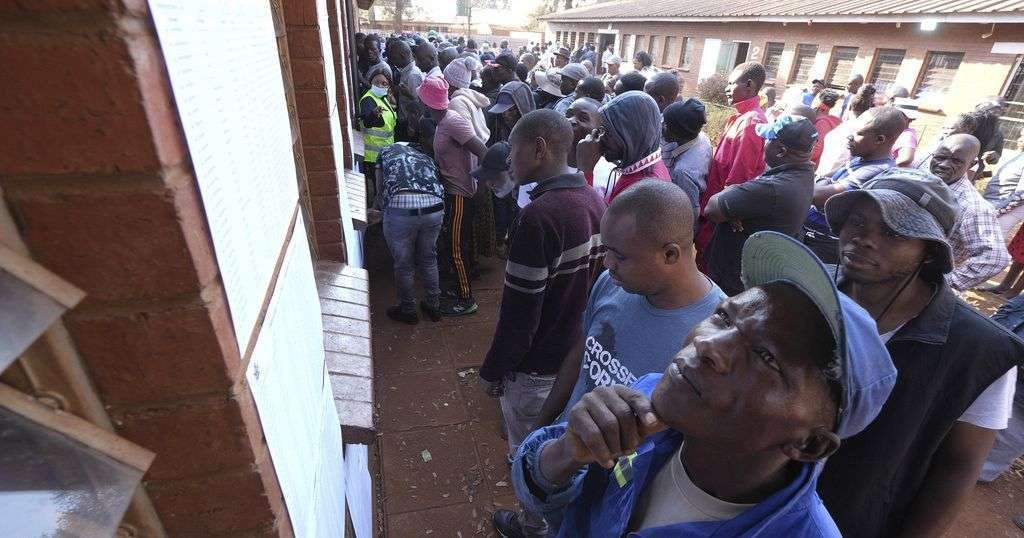


Harare, Zimbabwe – (African Boulevard News) – Zimbabweans are eagerly casting their votes today in what is only the second election since the military coup that ousted former President Robert Mugabe in 2017. Mugabe had been in power since the country gained independence in 1980. As the nation braces for a new chapter in its political history, here are some key facts about the ongoing Zimbabwe elections.
- Presidential Candidates:
The main contenders for the presidency are incumbent President Emmerson Mnangagwa of the ruling ZANU-PF party and Nelson Chamisa of the opposition MDC Alliance. Mnangagwa, who took over after Mugabe’s resignation, is seeking a fresh mandate to continue his reform agenda, while Chamisa promises to bring change and revive the struggling economy. -
Voting System:
Zimbabwe follows a two-round system, where the winning candidate must secure more than 50% of the total votes. If no candidate reaches this threshold, a run-off election will be held between the top two contenders. -
Registered Voters:
According to the Zimbabwe Electoral Commission (ZEC), there are approximately 5.6 million registered voters in the country. The youth vote is expected to play a crucial role, as nearly 60% of the population is under the age of 40. -
Election Observers:
International and local observers have been deployed to monitor the electoral process and ensure transparency. The African Union, Southern African Development Community (SADC), and the European Union are among the organizations providing oversight. -
Economic Challenges:
Zimbabwe’s economy has been marred by hyperinflation, unemployment, and a shortage of foreign currency. Both candidates have promised to address these pressing issues, with Mnangagwa emphasizing his reform efforts and Chamisa pledging to attract foreign investment and create jobs.
Political analyst, Dr. Chipo Dube, believes these elections are critical for Zimbabwe’s future: “The outcome will determine the direction the country will take in terms of its economy, democracy, and international relations. It is crucial for the winner to unite the nation and focus on delivering tangible results.”
As Zimbabweans head to the polls, the world watches with anticipation, hoping for peaceful and credible elections that will pave the way for a brighter future. The results of the elections are expected to be announced within a few days, and the newly elected president will face the daunting task of addressing the country’s challenges and fulfilling the aspirations of the Zimbabwean people.
In this pivotal moment, the citizens of Zimbabwe are exercising their democratic right to shape their own destiny. The outcome of the elections will steer the nation’s path, offering hope for a prosperous future and signaling a new era for Zimbabwean politics.
