Monday, April 27, 2026
81.7 F
Lagos
More
    Home Blog Page 92

    Africa’s Burgeoning Economies Captivate Qatar’s Sovereign Wealth Fund’s Investment Strategy

    0
    Read Time:2 Minute, 27 Second

    Diaspora, Africa – (African Boulevard News) – Qatar’s sovereign wealth fund, known for its extensive investments in Europe and the United States, is now honing its strategy to navigate the African market. With its eye on the continent’s potential, the Qatari sovereign fund seeks to leverage the untapped opportunities in Africa’s growing economies.

    The Qatar Investment Authority (QIA) has faced challenges in finding its footing in Africa, but recent developments show the fund’s determination to establish a stronger presence. The QIA is now intensifying its efforts to identify lucrative sectors and forge partnerships with local businesses and governments.

    According to industry experts, one of the key hurdles for the Qatari sovereign fund has been the lack of reliable data and information on investment opportunities in Africa. However, the fund is taking proactive steps to overcome this obstacle by forming partnerships with regional financial institutions and engaging local experts to gain better insights into potential investments.

    In an interview with African Boulevard News, Dr. Amina Jibril, an economist specializing in African markets, shared her perspective on Qatar’s Africa strategy. She emphasized the importance of understanding the diverse cultures, regulatory frameworks, and business environments across the continent. Dr. Jibril noted, “Investing in Africa requires a nuanced approach. It’s crucial to build strong relationships with local stakeholders and take into account the unique challenges and opportunities in each country.”

    The QIA’s interest in Africa stems from the continent’s vast natural resources and its emerging consumer markets. African economies are experiencing rapid growth, presenting attractive opportunities for international investors. The fund aims to diversify its portfolio and create mutually beneficial partnerships that contribute to Africa’s sustainable development.

    In recent years, Qatar has increased its investments in Africa, with notable ventures in sectors such as infrastructure, real estate, and agriculture. The QIA’s investments have the potential to boost economic growth, create jobs, and address the continent’s developmental gaps.

    The Qatari sovereign fund’s focus on Africa is aligned with Qatar’s broader strategy to strengthen diplomatic and economic ties with the continent. This move is in line with Qatar’s vision of enhancing cooperation and leveraging Africa’s potential for both parties’ mutual benefit.

    As the Qatari sovereign fund refines its Africa strategy, it is evident that the fund recognizes the importance of adapting its investment approach to the unique characteristics of the continent. With the right partnerships, local expertise, and a commitment to long-term engagement, the QIA has the potential to unlock significant opportunities in Africa’s promising markets.

    In conclusion, Qatar’s sovereign wealth fund is honing its Africa strategy to tap into the continent’s burgeoning economies. By overcoming challenges and leveraging partnerships, the QIA aims to contribute to Africa’s development while securing financial returns for Qatar. As Africa continues its upward trajectory, the Qatari sovereign fund’s interest in the continent signifies the vast potential it holds for global investors.

    Sources:
    – Africaintelligence.com (“Qatari sovereign fund hones its Africa strategy”)
    – Google Search (Qatar Qatari sovereign fund hones its Africa strategy)
    Guinea’s Mining Gamechanger: Sale of SBG to Kouroussa Mining Ignites Economic Transformation

    0
    Read Time:2 Minute, 27 Second

    Conakry, Guinea – (African Boulevard News) – In a significant development for Guinea’s mining sector, Minister of Mines Moussa Magassouba has granted approval for the sale of Société des Bauxites de Guinée (SBG) to Kouroussa Mining, which is owned by Mamady Nabé. This decision marks a critical milestone in the country’s efforts to attract foreign investment and boost its mining industry.

    The sale of SBG, one of Guinea’s leading bauxite mining companies, to Kouroussa Mining has been met with enthusiasm by industry experts. The move is expected to have a positive impact on the country’s economy and further solidify Guinea’s position as a major player in the global bauxite market.

    According to Minister Magassouba, the approval of the sale is aligned with the government’s vision to attract investment and promote sustainable development in the mining sector. He stated, “This agreement is a testament to our commitment to creating an enabling environment for investors and ensuring the responsible exploitation of our mineral resources. We believe that this partnership will bring long-term benefits for the people of Guinea.”

    The sale of SBG is also a reflection of Guinea’s efforts to diversify its economy and reduce its dependence on the mining sector. By encouraging local and international investors to participate in the development of various industries, the government aims to create new job opportunities and foster economic growth.

    Industry experts have expressed optimism regarding the sale, highlighting the potential for increased production and improved efficiency. Mamady Nabé, owner of Kouroussa Mining, emphasized the company’s commitment to responsible mining practices, stating, “We are fully aware of the social and environmental responsibilities that come with operating in Guinea. We will work closely with local communities and stakeholders to ensure that our operations have a positive impact on the surrounding areas.”

    The approval of the SBG sale comes at a time when Guinea’s mining sector is experiencing significant growth. With vast reserves of bauxite, gold, and other minerals, the country has attracted the attention of major international mining companies. The government’s ongoing efforts to streamline regulations and improve infrastructure have further enhanced Guinea’s appeal as an investment destination.

    As the sale of SBG moves forward, stakeholders will closely monitor the progress and its impact on Guinea’s mining landscape. The successful completion of this transaction is expected to encourage other investors to explore opportunities in the country and contribute to its economic development.

    In conclusion, the approval of the sale of SBG to Kouroussa Mining marks an important milestone for Guinea’s mining sector. The government’s commitment to attracting investment and promoting sustainable development is expected to yield significant benefits for the country’s economy and its people. This decision underscores Guinea’s potential as a leading player in the global mining industry and sets the stage for further growth and prosperity.

    Keywords: Guinea, Ministry of Mines, SBG, sale, Kouroussa Mining, Mamady Nabé, bauxite mining, investment, sustainable development, economic growth, responsible mining practices, stakeholders, regulations, infrastructure, international investment, mining sector.

    Cameroon’s Iron Ore Project Hangs by a Thread: Can Alexandre Mbiam Fulfill His Grand Promises?

    0
    Read Time:2 Minute, 21 Second

    Yaounde, Cameroon – (African Boulevard News) – In the realm of the Mbalam-Nabeba iron ore project, Alexandre Mbiam is finding himself in a precarious position as he attempts to fulfill his promises. The Cameroonian businessman, known for his influential connections with authorities in Yaounde and Brazzaville, is attempting to portray a facade of victory in his ongoing legal battle with Sundance Resources, a leading player in the iron ore industry.

    Mbiam has been championing his role as the savior of the Mbalam-Nabeba project, asserting that he has the ability to overcome any obstacles and ensure its success. However, industry experts are skeptical of his ability to deliver on these grandiose claims.

    According to African Intelligence, Mbiam will face significant challenges in keeping his promises. The legal battle with Sundance Resources, which resulted in the Australian company being stripped of its rights to the iron ore deposit, has left the project in a state of uncertainty. Mbiam may have won the battle, but winning the war is a different matter altogether.

    Critics argue that Mbiam’s connections with the authorities have played a significant role in his ability to maneuver through the legal system, but that does not guarantee the successful implementation of the project. The Mbalam-Nabeba project requires significant investment, expertise, and technological resources to bring it to fruition. It is not simply a matter of winning legal battles.

    Furthermore, doubts linger regarding Mbiam’s track record in successfully executing large-scale projects. While he may boast of his connections and influence, it remains to be seen whether he possesses the necessary skills and experience to navigate the complex challenges that lie ahead.

    In light of these concerns, industry experts are urging caution and skepticism when it comes to Mbiam’s promises. They highlight the need for transparency, accountability, and a thorough assessment of the project’s viability before any further commitments are made.

    As one industry expert stated, “Promises are not enough. We need concrete actions and a comprehensive plan that addresses the numerous obstacles facing the Mbalam-Nabeba project.”

    The future of the Mbalam-Nabeba iron ore project hangs in the balance, dependent on the ability of Alexandre Mbiam to deliver on his promises. While he may have won the legal battle with Sundance Resources, his true test lies in overcoming the formidable challenges that lie ahead. The success of this project will not be determined by connections and rhetoric alone but by the ability to execute effectively and transparently throughout the entire process. Only time will tell whether Mbiam can live up to the expectations and ensure the realization of the Mbalam-Nabeba project.

    As the iron ore industry and stakeholders closely watch developments, it is clear that Mbiam’s promises will be closely scrutinized, and any missteps along the way could have far-reaching consequences for the future of the project.

    Uganda Paves Path to Prosperity: Land Lending Initiative with UAE Investors Promises Economic Transformation and Bilateral Growth

    0
    Read Time:2 Minute, 31 Second

    Kampala, Uganda – (African Boulevard News) – Uganda is making strategic moves to position itself as a regional hub for Emirati trade by allocating vast tracts of farmland to investors from the United Arab Emirates (UAE). This bold initiative is part of Kampala’s plan to leverage the ongoing civil war in neighboring Sudan and strengthen economic ties with the UAE.

    Under the leadership of President Yoweri Museveni, Uganda has been actively courting UAE investors to boost trade and investment in the country. This latest move aims to harness the Emirates’ substantial financial resources and expertise to transform Uganda into a thriving trade and business center in East Africa.

    The allocation of land to Emirati investors is part of a broader strategy to capitalize on the opportunities presented by the instability in Sudan. As the civil war continues to plague Sudan, neighboring countries like Uganda are keen to leverage their stability and security to attract foreign investors seeking new business ventures.

    By lending land to Emirati investors, Uganda aims to establish a strong foundation for a thriving trade ecosystem. The government hopes that this move will not only contribute to job creation and economic growth but also facilitate technology transfer and knowledge sharing between the two nations.

    This initiative has garnered support from industry experts who believe that it will have significant long-term benefits for both Uganda and the UAE. John Opondo, an economic analyst, stated, “Uganda’s decision to lend land to Emirati investors is a strategic move that will help diversify our economy and open up new avenues for trade and investment. This partnership has the potential to create mutually beneficial opportunities and strengthen bilateral relations.”

    The collaboration between Uganda and the UAE goes beyond land allocation. The two nations have also been exploring various sectors for potential investment, including agriculture, tourism, infrastructure, and renewable energy. This comprehensive approach reflects Uganda’s commitment to creating a favorable business environment for Emirati investors.

    While some critics have raised concerns about the potential risks associated with large-scale land acquisitions, the Ugandan government assures that they have put in place stringent regulations to ensure responsible and sustainable land use. This includes safeguarding the rights of local communities and promoting transparent and accountable land management practices.

    As Uganda continues to make strides towards becoming a regional hub for Emirati trade, the government remains focused on attracting foreign direct investment, fostering economic growth, and creating employment opportunities for its citizens. By capitalizing on the UAE’s economic strength and expertise, Uganda aims to accelerate its development and position itself at the forefront of East Africa’s business landscape.

    In conclusion, Uganda’s decision to lend land to Emirati investors is a strategic move aimed at turning the country into a vibrant regional trade hub. By capitalizing on the civil war in Sudan and leveraging the UAE’s resources, Uganda is aiming to attract foreign investment, stimulate economic growth, and enhance bilateral relations. This initiative marks a significant step towards diversifying Uganda’s economy and positioning it as a key player in East Africa’s business scene.

    “Niger’s Minister of Petroleum Makes Bold Move to Revive Oil Sector, Igniting Global Interest”

    0
    Read Time:2 Minute, 28 Second

    Niamey, Niger – (African Boulevard News) – In an effort to restore confidence among potential investors following the recent coup, Mahaman Moustapha Barké, Niger’s newly appointed Minister of Petroleum, has announced his plans to attend the Africa Energy Week (AEW) in Cape Town next week. This move is seen as a strategic step towards attracting foreign investment and showcasing Niger’s vast oil potential.

    The decision to send Barké, a highly respected industry expert, to the prestigious energy event is not only a testament to the government’s commitment to revitalizing the oil sector but also a signal of stability and openness to international collaboration.

    With Niger being a key player in Africa’s oil and gas industry, Barké’s presence at AEW is expected to generate significant interest among global investors. The country is known for its rich reserves of crude oil, natural gas, and other valuable minerals, making it an attractive destination for exploration and production companies.

    According to industry experts, Barké’s participation in the event will provide an excellent opportunity for Niger to showcase its immense potential and forge vital partnerships with international oil companies. This move is expected to pave the way for increased foreign direct investment, which is crucial for the country’s economic growth and development.

    Barké’s attendance at AEW comes at a time when Niger is aiming to diversify its energy sector beyond traditional oil and gas production. The government is actively exploring renewable energy sources, such as solar and wind, to meet the increasing demand for power in the country. This strategic shift aligns with global efforts to transition towards cleaner and more sustainable energy solutions.

    In a recent interview, Barké expressed his optimism about Niger’s energy future, stating, “We have a clear vision to transform Niger’s energy sector and position the country as a regional powerhouse. Our participation at AEW is a crucial step towards achieving this goal.”

    AEW, a leading energy event in Africa, brings together policymakers, industry leaders, and investors from around the world to discuss key issues and explore opportunities in the energy sector. The conference provides a platform for dialogue, knowledge-sharing, and deal-making, making it an ideal environment for Niger to showcase its potential and attract investments.

    As Niger’s new Minister of Petroleum, Barké’s presence at AEW sends a powerful message: Niger is open for business and ready to collaborate with global partners to drive energy sector growth. This move is expected to bolster investor confidence and set the stage for a new era of sustainable development in Niger’s energy industry.

    In conclusion, Niger’s participation at AEW through the presence of Mahaman Moustapha Barké is a significant step towards promoting the country’s oil sector and attracting foreign investment. With its vast reserves and the government’s commitment to diversification, Niger is poised to play a key role in Africa’s energy landscape. By attending AEW, Barké is demonstrating Niger’s determination to harness its potential and establish strategic partnerships that will drive economic growth and sustainable development in the country.

    Africa’s Trailblazers: Celebrating the Visionaries Shaping the Continent’s Future

    0
    Read Time:2 Minute, 3 Second

    Diaspora, Africa – (African Boulevard News) – Intrigues big and small: every Tuesday, Africa Intelligence takes a peek into the corridors of power in Africa and beyond. Today, we delve into the lives and accomplishments of three influential figures: Denis Sassou-Nguesso, Brice Oligui Nguema, and Tidjane Thiam.

    Denis Sassou-Nguesso, the long-serving President of the Republic of Congo, has been a prominent figure on the African political stage for decades. With a career spanning over four decades, Sassou-Nguesso has been at the helm of the country since 1979. Known for his leadership prowess, he has played a crucial role in stabilizing the Republic of Congo’s economy and maintaining peace within the nation. Despite facing criticism for alleged human rights abuses and corruption, his administration has achieved impressive economic growth and infrastructure development.

    Brice Oligui Nguema, on the other hand, is emerging as a rising star in the political landscape of Equatorial Guinea. As a young and dynamic politician, Nguema has proven himself to be a progressive force for change. He has been instrumental in promoting education and technological advancements in Equatorial Guinea, with a special focus on empowering the youth. Nguema’s dedication to building a better future has earned him the respect and admiration of many.

    Tidjane Thiam, the former Chief Executive Officer of Credit Suisse, is a trailblazer in the world of finance. Born in Ivory Coast, Thiam has made his mark globally, becoming the first African CEO of a major international bank. Under Thiam’s leadership, Credit Suisse experienced a significant transformation, focusing on sustainable investments and emerging markets. His achievements have not only solidified his reputation as a visionary leader but have also paved the way for other Africans in the finance industry.

    These three individuals are just a glimpse into the diverse and dynamic leadership landscape of Africa. The continent is home to a multitude of talented individuals who are driving change and making a difference in various sectors. Their stories serve as an inspiration for the younger generation, showing that with determination and perseverance, anything is possible.

    In conclusion, Denis Sassou-Nguesso, Brice Oligui Nguema, and Tidjane Thiam are three individuals who have left an indelible mark on their respective fields. They have demonstrated exceptional leadership, resilience, and dedication to improving the lives of Africans. As Africa continues to forge its path towards progress and prosperity, it is crucial to celebrate the achievements of these remarkable individuals who have contributed to shaping the continent’s future.

    Ethiopia Betrayed: EU Backtracks on Tigray Rights Probe, Leaving Victims Denied Justice and Perpetrators Unaccountable

    0
    Read Time:2 Minute, 16 Second

    Addis Ababa, Ethiopia – (African Boulevard News) – In a surprising turn of events, the European Union (EU) seems to have backtracked on its support for a rights probe into the alleged human rights violations committed during the war in Tigray, Ethiopia. This sudden change in stance has left many questioning the credibility and commitment of the EU to hold Ethiopia accountable for its actions.

    For months, the EU had been at the forefront of efforts to ensure justice for the victims and to shed light on the atrocities committed in Tigray. However, it now appears that the deliberate inaction of France and Germany has influenced the EU’s decision to backtrack on its support for a rights probe.

    This development has sparked widespread outrage among human rights advocates and Tigrayan communities around the world. Many argue that without a comprehensive investigation, the victims will be denied justice and the perpetrators will escape accountability.

    According to an article published by Africa Intelligence, the EU’s decision to backtrack on its support for a rights probe raises concerns about the integrity of the organization and its commitment to human rights. The article highlights that France and Germany, two influential EU member states, played a significant role in undermining the efforts to hold Ethiopia accountable.

    The EU’s change in stance comes at a time when the international community is increasingly demanding transparency and accountability in relation to the conflict in Tigray. Human rights organizations have documented numerous cases of extrajudicial killings, sexual violence, and forced displacement during the conflict.

    Ethiopian activists and advocates have expressed their disappointment and disbelief at the EU’s decision. They argue that this move undermines the credibility of the EU as a champion of human rights and sets a dangerous precedent for other countries facing similar crises.

    In response to the EU’s backtrack, Tigrayan activist, Ayana Berhe, stated, “This is a betrayal to the people of Tigray who have suffered unimaginable atrocities during the war. The EU cannot turn its back on human rights and justice.”

    The EU’s decision not only undermines the pursuit of justice for the victims of the conflict but also risks further exacerbating tensions and deepening divisions within Ethiopia. It sends a message to other countries that they can act with impunity, knowing that international accountability efforts may not be as strong as initially anticipated.

    As the international community watches closely, the EU’s backtrack on its support for a rights probe in Ethiopia raises critical questions about the organization’s commitment to human rights and its role in promoting justice and accountability on the global stage. Only time will tell if the EU will reconsider its position and stand firmly on the side of justice for the victims of the Tigray conflict.

    Nigeria’s Agricultural Crisis: Farmers’ Livelihoods at Risk as Russian Fertilizer Shipment Delayed

    0
    Read Time:2 Minute, 12 Second

    Abuja, Nigeria – (African Boulevard News) – A shipment of Russian potash, promised to Nigeria months ago, has been plagued by delays, and it seems that Vice President Shettima may be to blame. Moscow has attempted to shift the blame onto Europe, but evidence suggests that the delay lies closer to home.

    The Nigerian government had eagerly awaited the arrival of the Russian fertiliser, as it was seen as a crucial component in boosting agricultural productivity across the country. However, the delivery has been repeatedly postponed, causing frustration and concern among farmers and government officials alike.

    Industry insiders have pointed fingers at Vice President Shettima, accusing him of mismanaging the procurement process. According to sources, Shettima failed to establish clear communication channels with the Russian authorities, resulting in a lack of coordination and delays in the shipment.

    “Vice President Shettima’s lack of attention to detail and failure to stay on top of the situation has cost us valuable time and resources,” said an industry expert, who wished to remain anonymous. “His negligence has affected the livelihoods of countless farmers and the overall agricultural production of the country.”

    The Russian fertiliser delay has had far-reaching consequences for Nigeria, a country heavily reliant on agriculture. With each passing day, the shortage of potash threatens to reduce crop yields, impacting food security and exacerbating the nation’s economic challenges.

    The Nigerian government had initially attempted to divert attention from its own missteps, with Moscow declaring that the delay was due to tensions between Russia and Europe. However, evidence now suggests that the issue stems from internal mismanagement.

    Farmers across the country are growing increasingly frustrated with the situation. Many have already invested heavily in preparing their fields for the planting season in anticipation of the fertiliser’s arrival. Now, they are left with uncertainty and mounting financial losses.

    “While we understand that unforeseen circumstances can arise, it is disappointing to see our government fail to deliver on its promises,” said a farmers’ representative. “We need immediate action to resolve this delay and ensure that the fertiliser reaches us as soon as possible.”

    As Nigeria grapples with the Russian fertiliser delay, Vice President Shettima finds himself under scrutiny. His alleged mishandling of the procurement process has put him in the firing line, as farmers and industry experts demand answers and accountability.

    With food security and economic stability hanging in the balance, all eyes are now on the Nigerian government to rectify the situation swiftly and ensure that the much-needed Russian fertiliser reaches the country without further delay. Failure to do so could have long-lasting and detrimental effects on Nigeria’s agricultural sector and its people.

    Africa’s Burgeoning Economies Captivate Qatar’s Sovereign Wealth Fund’s Investment Strategy

    0
    Read Time:2 Minute, 27 Second

    Diaspora, Africa – (African Boulevard News) – Qatar’s sovereign wealth fund, known for its extensive investments in Europe and the United States, is now honing its strategy to navigate the African market. With its eye on the continent’s potential, the Qatari sovereign fund seeks to leverage the untapped opportunities in Africa’s growing economies.

    The Qatar Investment Authority (QIA) has faced challenges in finding its footing in Africa, but recent developments show the fund’s determination to establish a stronger presence. The QIA is now intensifying its efforts to identify lucrative sectors and forge partnerships with local businesses and governments.

    According to industry experts, one of the key hurdles for the Qatari sovereign fund has been the lack of reliable data and information on investment opportunities in Africa. However, the fund is taking proactive steps to overcome this obstacle by forming partnerships with regional financial institutions and engaging local experts to gain better insights into potential investments.

    In an interview with African Boulevard News, Dr. Amina Jibril, an economist specializing in African markets, shared her perspective on Qatar’s Africa strategy. She emphasized the importance of understanding the diverse cultures, regulatory frameworks, and business environments across the continent. Dr. Jibril noted, “Investing in Africa requires a nuanced approach. It’s crucial to build strong relationships with local stakeholders and take into account the unique challenges and opportunities in each country.”

    The QIA’s interest in Africa stems from the continent’s vast natural resources and its emerging consumer markets. African economies are experiencing rapid growth, presenting attractive opportunities for international investors. The fund aims to diversify its portfolio and create mutually beneficial partnerships that contribute to Africa’s sustainable development.

    In recent years, Qatar has increased its investments in Africa, with notable ventures in sectors such as infrastructure, real estate, and agriculture. The QIA’s investments have the potential to boost economic growth, create jobs, and address the continent’s developmental gaps.

    The Qatari sovereign fund’s focus on Africa is aligned with Qatar’s broader strategy to strengthen diplomatic and economic ties with the continent. This move is in line with Qatar’s vision of enhancing cooperation and leveraging Africa’s potential for both parties’ mutual benefit.

    As the Qatari sovereign fund refines its Africa strategy, it is evident that the fund recognizes the importance of adapting its investment approach to the unique characteristics of the continent. With the right partnerships, local expertise, and a commitment to long-term engagement, the QIA has the potential to unlock significant opportunities in Africa’s promising markets.

    In conclusion, Qatar’s sovereign wealth fund is honing its Africa strategy to tap into the continent’s burgeoning economies. By overcoming challenges and leveraging partnerships, the QIA aims to contribute to Africa’s development while securing financial returns for Qatar. As Africa continues its upward trajectory, the Qatari sovereign fund’s interest in the continent signifies the vast potential it holds for global investors.

    Sources:
    – Africaintelligence.com (“Qatari sovereign fund hones its Africa strategy”)
    – Google Search (Qatar Qatari sovereign fund hones its Africa strategy)

    Morocco: A Nation Rises From the Ruins, Promising Aid and Hope to Earthquake-Stricken Communities

    0
    Read Time:2 Minute, 30 Second

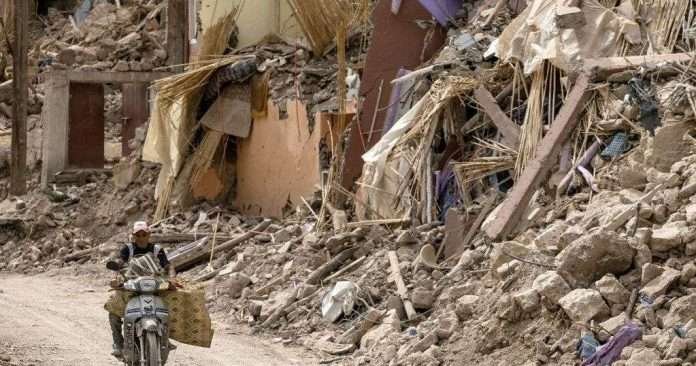
    Rabat, Morocco – (African Boulevard News) – Morocco is facing numerous challenges in the aftermath of a devastating earthquake that struck the country, leaving a trail of destruction and despair. The government, however, has promised to provide support and assistance to those affected, as the nation rallies together to rebuild and recover.

    After a commission, appointed by King Mohammed VI, convened earlier this week to oversee recovery efforts, the government announced that initial monthly payments of 2,500 Moroccan dirhams ($242) would be disbursed to help affected families. This crucial financial aid aims to provide immediate relief and ensure that basic needs are met in this time of crisis.

    The earthquake, which registered a magnitude of 6.0, struck several regions in Morocco, resulting in the loss of life, injuries, and significant damage to infrastructure. The impact has been particularly severe in remote and marginalized areas, where resources and services are already limited.

    One of the major challenges facing the country is the task of rebuilding damaged infrastructure. This includes homes, schools, hospitals, and other vital facilities. The government has emphasized the importance of swift and efficient reconstruction efforts to ensure that affected communities can resume their normal lives as soon as possible.

    Furthermore, the earthquake has disrupted essential services such as electricity, water, and telecommunications. Restoring these services is critical to ensure that affected communities have access to basic necessities and can begin to rebuild their lives. The government has vowed to prioritize the restoration of these services and is working closely with utility companies to expedite the process.

    The psychological toll of such a disaster cannot be underestimated. Many individuals, especially children, have been traumatized by the earthquake and its aftermath. Mental health support and counseling services are essential to aid in the healing process and help the affected population cope with their emotional distress. The government has recognized this need and is working on establishing counseling centers and deploying mental health professionals to affected areas.

    In addition to immediate response efforts, the government is also focusing on long-term strategies to enhance the country’s resilience to future disaster events. This includes investing in improved infrastructure, implementing stricter building codes and regulations, and establishing early warning systems to alert communities about potential dangers.

    Industry experts and stakeholders have praised the government’s response to the crisis but also stress the importance of sustained commitment and collaboration in the recovery process. Ahmed El-Masry, a disaster management specialist, states, “It is crucial for the government, NGOs, and international partners to work together to ensure a holistic and comprehensive recovery plan is implemented. This will not only help affected communities rebuild but also build resilience for the future.”

    As Morocco faces the challenges brought on by this earthquake, the collective determination and resilience of the nation will play a pivotal role in the recovery process. By providing immediate relief, restoring vital services, and implementing long-term strategies, Morocco is on the path to rebuilding stronger and building a more resilient future for all its citizens.