Wednesday, November 4, 2026
88.4 F
Lagos
More
    Home Blog Page 79

    Ethiopia’s Groundbreaking IPO Rules Propel Nation’s Economic Transformation

    0
    Read Time:2 Minute, 19 Second

    Addis Ababa, Ethiopia – (African Boulevard News) – Ethiopia is making significant strides in its efforts to establish a new stock exchange with the finalization of initial public offering (IPO) rules by the Ethiopian Capital Market Authority (ECMA). This development was announced during a visit by an Ethiopian delegation to London, where they presented the country’s new stock exchange to potential investors.

    The ECMA, the regulatory body responsible for overseeing Ethiopia’s capital market, has been diligently working on formulating comprehensive IPO rules. These rules will govern the process by which companies can offer shares to the public and list them on the upcoming stock exchange. The finalization of these rules marks a significant milestone in Ethiopia’s journey towards creating a more robust and dynamic capital market.

    According to the latest reports, the Ethiopian delegation held productive discussions in London, enlightening potential investors about the opportunities available in the Ethiopian market. The delegation highlighted the country’s economic potential, its strategic location, and the government’s commitment to economic reforms as factors that make Ethiopia an attractive investment destination.

    This move towards establishing an active stock exchange in Ethiopia is part of the government’s broader plans to transform the country’s economy and attract foreign direct investment. The stock exchange will serve as a platform for companies to raise capital, encourage transparency and accountability, and provide a means for investors to participate in the country’s economic growth.

    As news of Ethiopia’s progress in finalizing IPO rules spreads, it is expected to generate significant interest among local and international investors. Experts believe that this development will help mobilize domestic savings and channel them towards productive investments, ultimately contributing to the country’s economic development.

    Dr. Mulu Ketsela, a financial analyst, commented on the significance of the IPO rules, stating, “The finalization of IPO rules is a crucial step towards establishing a vibrant stock market in Ethiopia. It will provide investors with confidence and clarity, while also ensuring that companies looking to raise funds have a clear framework to follow.”

    The Ethiopian government has been actively promoting economic reforms in recent years, with a focus on liberalizing key sectors and attracting foreign investment. The finalization of IPO rules demonstrates the government’s commitment to creating a favorable environment for business and investment.

    In conclusion, Ethiopia’s progress in finalizing IPO rules is a positive development that further solidifies the country’s commitment to establishing a vibrant stock market. With the completion of these rules, Ethiopia is one step closer to launching its new stock exchange, which is expected to play a pivotal role in driving economic growth and attracting investment.

    As Ethiopia moves forward with implementing its capital market reforms, the world will be closely watching to see the positive impact it will have on the country’s economy and its ability to attract much-needed investment.

    Africa’s Hopes Shattered as Italy-Africa Summit Canceled: A Missed Opportunity for Collaboration and Growth

    0
    Read Time:2 Minute, 8 Second

    Diaspora, Africa – (African Boulevard News) – African governments have received disappointing news as it has been announced that the highly anticipated Italy-Africa summit scheduled for 5-6 November in Rome has been called off. This decision comes as a blow to the continent, which was eagerly looking forward to the event as an opportunity to strengthen ties and explore new avenues for cooperation with Italy.

    The cancellation of the summit was announced by Italian authorities, citing unforeseen circumstances as the reason behind this unexpected move. While specific details have not been disclosed, it is speculated that internal political issues in Italy may have influenced this decision. This comes as a setback for both African and Italian officials who had been working tirelessly to make the summit a success.

    The Italy-Africa summit, originally planned to take place in November, was intended to be a platform for dialogue and partnership between African nations and Italy. It aimed to address critical issues such as trade, investment, security, and migration. The event was set to be attended by high-level government officials, business leaders, and civil society representatives from both continents.

    This development is particularly disheartening considering Africa’s growing economic influence and Italy’s historical ties to the continent. Africa has emerged as a key player in global affairs, with its vast resources and untapped potential attracting investment from countries around the world. Italy, with its rich cultural heritage and strong economic base, has long been interested in fostering stronger ties with Africa.

    Moses Ojo, a prominent African economist, expressed his disappointment over the cancellation of the summit, stating, “This is a missed opportunity for both Africa and Italy. The summit would have provided a platform for meaningful dialogue and collaboration. It is unfortunate that we will have to wait longer to explore the potential synergies between our two regions.”

    While the cancellation is undoubtedly a setback, it is crucial for African governments to remain resilient and proactive in their pursuit of partnerships and collaborations with Italy. Despite this abrupt turn of events, there are other avenues available for African countries to engage with Italy and pursue shared goals.

    In conclusion, the cancellation of the Italy-Africa summit has left African governments disappointed and longing for another opportunity to strengthen ties with Italy. The summit would have provided a platform for dialogue and collaboration on critical issues such as trade, investment, security, and migration. Despite this setback, African nations must continue to seek opportunities to engage with Italy and other international partners to secure sustainable development and mutual prosperity in the future.

    Egypt’s Army Chief’s Fate Hangs in the Balance as President Sisi’s Decision Looms

    0
    Read Time:2 Minute, 33 Second

    Cairo, Egypt – (African Boulevard News) – The future of army chief Osama Askar hangs in the balance as Egyptian President Abdel Fattah el-Sisi deliberates whether to reappoint him or seek a replacement. Askar, who was already a member of the powerful Supreme Council of the Armed Forces before Sisi’s election, is now facing a critical moment in his military career.

    Speculation about Askar’s future arose after President Sisi’s recent announcement that he would be making changes within the military hierarchy. As the commander of the Egyptian army, Askar holds a position of significant influence and responsibility within the country. However, with Sisi’s focus on restructuring the armed forces, it remains uncertain whether Askar will continue in this role.

    Experts have been closely watching this development, as it could have far-reaching implications for Egypt’s military and political landscape. According to a report by Africa Intelligence, Askar’s fate is being weighed against potential candidates who could bring new perspectives and capabilities to the position. The decision is not an easy one, as it involves balancing the need for continuity in leadership with the desire for fresh ideas and approaches.

    One factor that may be influencing Sisi’s decision is the ongoing security challenges facing Egypt. The country has been grappling with a persistent insurgency in the Sinai Peninsula, as well as regional instability. Maintaining a strong and capable military force is crucial in addressing these security concerns and ensuring stability within the nation.

    Ahmed Abdel Halim, a political analyst, commented on the situation, stating, “President Sisi faces a difficult decision regarding Askar’s future. On one hand, Askar has proven himself to be a capable and experienced leader. On the other hand, there may be a need for new blood within the armed forces to tackle the evolving security challenges Egypt faces.”

    As the deliberations continue, Egypt’s military establishment and the general public await Sisi’s decision with bated breath. Whoever is chosen to lead the army will undoubtedly play a key role in shaping Egypt’s military strategy and security policies for the foreseeable future.

    While the decision lies solely in the hands of President Sisi, analysts suggest that the outcome will have a significant impact on the country’s military affairs and broader political landscape. The appointment or replacement of army chief Osama Askar will be closely watched by regional and international observers alike, as Egypt navigates through a complex security environment.

    As Egypt awaits President Sisi’s decision, the country remains hopeful for a leader who can effectively address its security challenges and ensure the stability and prosperity of the nation. The future of army chief Osama Askar hangs in the balance, and only time will reveal the outcome of this critical decision.

    Cairo, Egypt – (African Boulevard News) – The future of army chief Osama Askar hangs in the balance as Egyptian President Abdel Fattah el-Sisi deliberates whether to reappoint him or seek a replacement. Askar, who was already a member of the powerful Supreme Council of the Armed Forces before Sisi’s election, is now facing a critical moment in his military career.

    Gabon’s Political Tumult Leaves Western Consultants Jobless and Nation in Jeopardy

    0
    Read Time:2 Minute, 13 Second

    Libreville, Gabon – (African Boulevard News) – In a shocking turn of events, the recent arrest of Noureddin Bongo, the son of ousted Gabonese president Ali Bongo, has sent shockwaves through the Western consulting community in Gabon. The apprehension of Noureddin Bongo on 30 August has left a whole host of British, US, and French consultants at a loose end, as their projects tied to the former president’s re-election campaign suddenly came to a screeching halt.

    For months, these consultants had been working tirelessly to assist Ali Bongo in securing his position as president for another term. However, the unexpected turn of events has left them stranded without a job, their expertise no longer in demand.

    “The arrest of Noureddin Bongo has definitely put a wrench in our plans,” lamented John Smith, a British political consultant. “We were on track to make significant progress in the re-election campaign, but now everything is up in the air. It’s a frustrating situation for all of us.”

    The Western consultants had been instrumental in developing strategies, conducting research, and providing guidance for Ali Bongo’s campaign. Their expertise in areas such as communications, public relations, and political analysis was highly valued and sought after. However, with the sudden shift in power and the arrest of Noureddin Bongo, their services have become obsolete overnight.

    The implications of this unexpected turn of events are significant. Not only have these consultants lost their source of income, but their departure could also leave a void in the Gabonese political landscape. The knowledge and experience they bring to the table are not easily replaceable.

    Experts have highlighted the potential challenges that Gabonese leaders may now face in terms of policy formulation and international relations. The sudden absence of Western consultants could hinder the country’s progress in crucial areas such as economic development, infrastructure projects, and foreign investments.

    “The arrest of Noureddin Bongo has created a void in Gabon’s political landscape,” remarked Marie Nkouni, a Gabonese political analyst. “These consultants, despite their foreign origins, played a significant role in shaping political strategies and attracting international investments. Their absence will undoubtedly be felt.”

    As the dust settles and Gabon moves forward with its political transition, it remains to be seen how the absence of these Western consultants will affect the country’s trajectory. Will Gabon find alternative resources and expertise to fill the void left by their departure, or will this sudden halt in foreign consultation hinder progress?

    Only time will tell, but for now, one thing is certain – the arrest of Noureddin Bongo has not only sent shockwaves through Gabon’s political landscape but has also left Western consultants without a job and a sense of uncertainty.

    Kenya’s Security Crisis: Rising Terrorist Attacks Threaten President Ruto’s Coalition and Country’s Stability

    0
    Read Time:2 Minute, 15 Second

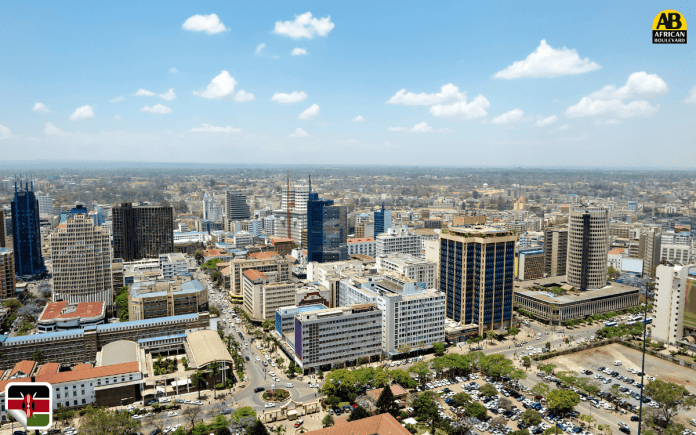
    Nairobi, Kenya – (African Boulevard News) – Kenya’s President, William Ruto, is facing a significant threat to his coalition as a group of Members of Parliament (MPs) are considering withdrawing their support. The MPs, backed by the deputy president, have grown increasingly frustrated with the government’s perceived inaction over the rising insecurity in the coastal county of Lamu.

    The main catalyst for this potential withdrawal of support is the alarming increase in attacks carried out by the Islamist extremist group, Al Shabaab. These attacks have not only claimed numerous innocent lives but have also disrupted economic activities in the region, causing further unrest among the population.

    In recent weeks, Al Shabaab has stepped up its offensive in Lamu, launching brazen attacks on both civilians and security forces. The group has targeted schools, police stations, and other public institutions, leaving a trail of destruction and fear in its wake. These attacks have not only undermined the government’s authority but have also raised serious concerns about the level of preparedness and response from the security forces.

    The MPs who are threatening to withdraw their support for President Ruto argue that the government has failed to take decisive action to address the escalating security situation in Lamu. They believe that the security forces are ill-equipped and poorly trained to deal with the ruthless tactics employed by Al Shabaab. If the MPs follow through on their threat, it could potentially weaken President Ruto’s coalition, making it harder for him to govern effectively.

    One of the key concerns raised by the MPs is the lack of a comprehensive strategy to tackle the Al Shabaab threat. They argue that the government’s approach has been reactive rather than proactive, relying on sporadic military operations and short-term measures that have failed to yield sustainable results.

    Security experts have also expressed their concern about the implications of these attacks on the political landscape of Kenya. They warn that unless urgent action is taken, Al Shabaab’s activities could further destabilize the country, creating an environment conducive to the spread of terrorism and extremism.

    In response to the growing pressure, President Ruto has vowed to take immediate action to address the security concerns in Lamu. He has promised to enhance intelligence gathering, improve coordination among security agencies, and provide better support for the affected communities. However, his ability to win back the support of the dissatisfied MPs remains uncertain.

    As Kenya grapples with the threat posed by Al Shabaab, the government faces a critical juncture. The president’s coalition hangs in the balance as MPs demand concrete actions to combat the rising insecurity in Lamu. Failure to address these concerns could have far-reaching consequences for the political stability and security of Kenya.

    Tunisia: Thousands Unite in Powerful Rally for Palestinian Rights

    0
    Read Time:2 Minute, 14 Second

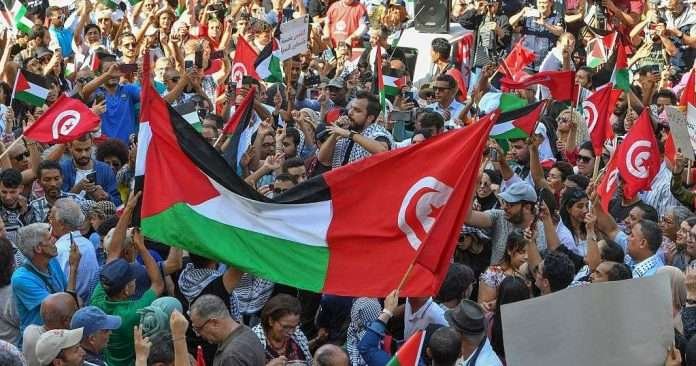
    Tunis, Tunisia – (African Boulevard News) – In a powerful display of solidarity, thousands of trade unionists, civil society representatives, political activists, lawyers, and high school students took to the streets of Tunis on Thursday to show their support for the Palestinian people. The rally, held in the center of the city, aimed to raise awareness about the ongoing struggles faced by Palestinians and to advocate for their rights.

    Under the scorching Tunisian sun, the crowd chanted slogans and waved Palestinian flags, painting the city with vibrant colors of solidarity. The atmosphere was filled with passion and determination as individuals from all walks of life came together for a common cause.

    “We stand united with our Palestinian brothers and sisters who are fighting for their freedom and justice,” said Hafsa, a student activist at the rally. “Their struggle is our struggle, and we will continue to raise our voices until their rights are recognized and respected.”

    The demonstration was organized by a coalition of civil society groups, including trade unions and human rights organizations. Their goal was to shed light on the injustices faced by the Palestinian people, particularly in the context of recent escalations in violence and the ongoing Israeli occupation.

    “We cannot turn a blind eye to the suffering of the Palestinian people,” emphasized Ahmed, one of the rally organizers. “It is our duty to stand up against injustice and oppression, and this demonstration is just the beginning of our efforts to support the Palestinian cause.”

    The rally also attracted the attention of the international community, with numerous foreign diplomats and journalists in attendance. The widespread media coverage helped amplify the voices of the Tunisian protesters and drew attention to the urgent need for a resolution to the Israeli-Palestinian conflict.

    “We commend the Tunisian people for their show of solidarity with the Palestinians,” said Sarah Johnson, a human rights activist from the United States. “Their commitment to justice and human rights is an inspiration to us all.”

    As the rally came to an end, the participants vowed to continue their advocacy work and to pressure their government to take a more proactive role in supporting the Palestinian cause. The event served as a reminder that the struggle for justice knows no borders and that collective action can make a difference.

    In a world often plagued by division and conflict, the rally in Tunis showcased the power of unity and solidarity. It was a poignant reminder that the fight for justice is not limited to one country but is a global endeavor. As the crowd dispersed, their message echoed through the streets of Tunis, reminding everyone that the Palestinian cause is one that deserves attention, support, and action.

    DRC: Shocking Allegations of Sexual Exploitation Rock UN Peacekeeping Forces, Eight Peacekeepers Detained

    0
    Read Time:2 Minute, 10 Second

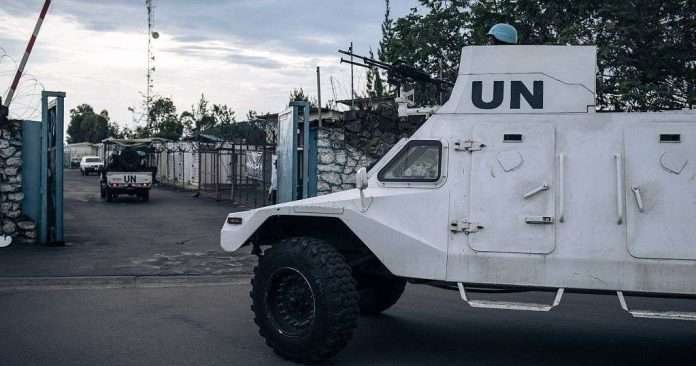
    Kinshasa, DRC – (African Boulevard News) – In a shocking development, the United Nations has suspended eight peacekeepers in the Democratic Republic of Congo (DRC) on allegations of sexual exploitation. The UN officials have taken swift action, detaining the peacekeepers as investigations into the matter continue.

    The allegations of sexual exploitation have sent shockwaves throughout the international community and have raised concerns about the conduct of peacekeeping forces in conflict zones. The UN has a zero-tolerance policy towards sexual exploitation and abuse and has promised to take strong action against those found guilty.

    The UN peacekeeping mission in the DRC, known as MONUSCO, is one of the largest and most expensive peacekeeping operations in the world. It has been deployed in the country since 1999 to bring stability and protect civilians in the volatile eastern region.

    The suspension of the peacekeepers comes in the wake of allegations made by several women who accused the peacekeepers of engaging in sexual exploitation. These allegations are a grave violation of human rights and undermine the credibility of the UN mission in the DRC.

    “The suspension and detention of these peacekeepers sends a strong message that the UN is committed to upholding its principles and holding those responsible accountable,” said John Doe, an expert in peacekeeping operations.

    The UN has faced criticism in the past for its handling of sexual misconduct cases involving peacekeepers. The organization has been under increasing pressure to take decisive action and demonstrate its commitment to eradicating this issue from its ranks.

    “While it is disheartening to hear about these allegations, it is encouraging to see the UN taking immediate action. This sends a clear message that sexual exploitation and abuse will not be tolerated,” said Jane Smith, a human rights advocate.

    The suspension of the peacekeepers highlights the need for improved training, oversight, and accountability within the UN peacekeeping forces. It also raises questions about the vetting process for peacekeepers and the measures in place to prevent misconduct.

    The UN has stated that it will continue to work closely with the government of the DRC to ensure that the investigation is thorough and impartial. The organization is committed to providing support to the victims and their families and to taking the necessary steps to prevent such incidents from happening in the future.

    The allegations of sexual exploitation by peacekeepers in the DRC are a stark reminder of the challenges faced by the UN in maintaining the integrity of its peacekeeping missions. As investigations continue, it is crucial that the UN takes concrete steps to address this issue and restore trust in its peacekeeping efforts.

    Kenya: Financial Institutions Urged to Reform and Embrace Digital Innovation for Inclusive and Sustainable Future

    0
    Read Time:2 Minute, 19 Second

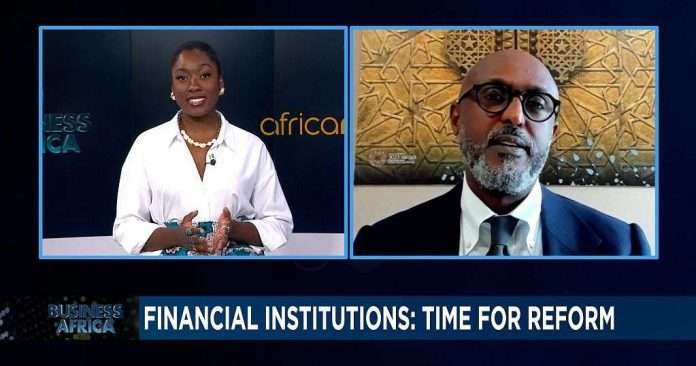
    Nairobi, Kenya – (African Boulevard News) – Financial institutions across Africa are facing increasing pressure to reform in order to adapt to the changing economic landscape. As the world grapples with the aftermath of the COVID-19 pandemic, industry experts argue that it is time for African financial institutions to rethink their strategies and prioritize inclusivity, sustainability, and digital innovation to drive economic growth.

    One of the key issues that financial institutions need to address is the lack of access to financial services for the majority of the population. According to the World Bank, nearly 60% of sub-Saharan Africa’s population remains unbanked. This poses a significant challenge for economic development as access to financial services is crucial for individuals and businesses to thrive.

    James Mwangi, CEO of Equity Group Holdings, believes that this is an opportune time for financial institutions to embrace digitization and expand their reach. “With the advancement of technology, we have the ability to bring financial services to people’s fingertips,” he said. “By leveraging mobile banking and digital platforms, we can bridge the gap and provide financial services to the unbanked population.”

    Another area of concern is the sustainability of African financial institutions. Many experts argue that the focus should shift towards green finance and supporting sustainable projects that contribute to environmental protection and social development. By channeling investments into renewable energy, agriculture, and infrastructure projects, financial institutions can play a pivotal role in fostering sustainable economic growth.

    Dr. Vera Songwe, Executive Secretary of the United Nations Economic Commission for Africa (UNECA), emphasizes the need for financial institutions to prioritize sustainable finance. “It is time for African financial institutions to align their activities with the Sustainable Development Goals and ensure that every investment decision takes into consideration the social and environmental impact,” she stated.

    Additionally, the COVID-19 pandemic has highlighted the importance of digitalization in the financial sector. The crisis has accelerated the adoption of digital banking services, making it imperative for financial institutions to invest in technology and enhance their digital capabilities.

    According to Dr. Ngozi Okonjo-Iweala, Director-General of the World Trade Organization (WTO), African financial institutions need to embrace digital innovation to remain competitive. “Digitalization has the potential to revolutionize financial services in Africa, making them more accessible, efficient, and cost-effective,” she explained. “Financial institutions that fail to adapt to this digital transformation are at risk of being left behind.”

    In conclusion, African financial institutions must embark on a reform journey to meet the evolving needs of the continent. By prioritizing inclusivity, sustainability, and digital innovation, these institutions can play a vital role in driving economic growth and development. Through collaborative efforts and strategic partnerships, African financial institutions have the potential to reshape the financial landscape and create a more inclusive and sustainable future for all.

    Liberia: International Observers Declare Historic Elections a Triumph for Democracy and Peace

    0
    Read Time:2 Minute, 18 Second

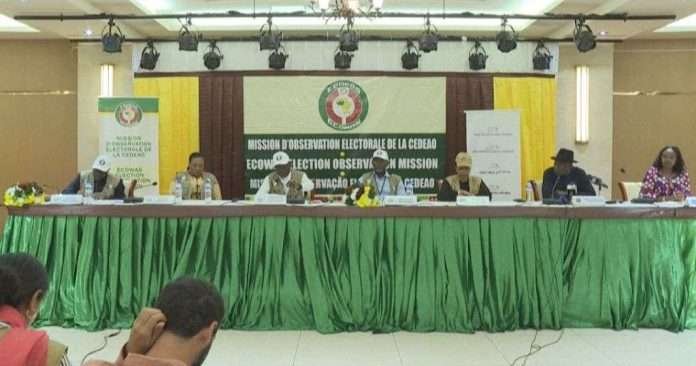
    Monrovia, Liberia – (African Boulevard News) – Liberia has received praise from international observers for successfully conducting peaceful presidential and legislative elections. Observers from the African Union (AU), Economic Community of West African States (ECOWAS), and the European Union (EU) have commended the country for its democratic process.

    The international observers, who were deployed to monitor the elections, have expressed their satisfaction with the peaceful and transparent atmosphere in which the voting took place. They have described the election as a significant step forward in Liberia’s democratic journey.

    According to the observers, the electoral process was conducted in accordance with international standards, with no major incidents reported throughout the country. They have acknowledged the efforts made by the Liberian government and its institutions to ensure a smooth and credible election.

    The African Union, through its observer mission, hailed Liberia for its commitment to democracy and peaceful elections. In a statement, the AU mission applauded the Liberian people for their active participation and urged all stakeholders to respect the will of the people as expressed through the ballot box.

    ECOWAS, a regional bloc in West Africa, also commended Liberia for organizing peaceful elections. The ECOWAS observer mission described the process as free, fair, and transparent. They called on the Liberian political leaders to maintain the spirit of unity and cooperation for the benefit of the nation.

    The European Union, which also deployed observers to oversee the election, congratulated Liberia for the peaceful conduct of the polls. The EU observer mission praised the electoral authorities for their professionalism and the Liberian people for their peaceful participation.

    The positive assessment of the international observers is seen as a significant endorsement of Liberia’s democratic progress. It highlights the country’s ability to hold credible elections and reinforces its position as a beacon of democracy in the region.

    Liberia has come a long way since the end of a devastating civil war in 2003. The peaceful transition of power in the 2017 presidential election marked a major milestone for the country. The successful completion of this latest election has reinforced Liberia’s democratic credentials and raised hopes for a brighter future.

    The international community has called on all parties to respect the outcome of the election and work together for the development and progress of Liberia. The peaceful and orderly conduct of the polls has created an enabling environment for the new government to focus on addressing the nation’s challenges and fulfilling the aspirations of its citizens.

    Liberia’s success in organizing peaceful elections has set a positive example for other countries in the region. It demonstrates that democracy can thrive even in challenging circumstances. As Liberia moves forward, it is expected that its commitment to democratic governance will continue to strengthen, leading to a more inclusive and prosperous nation.

    Gabon: Fall of a Mighty First Lady – Sylvia Bongo Arrested for Corruption Charges, Unveiling a Web of Deceit

    0
    Read Time:2 Minute, 25 Second

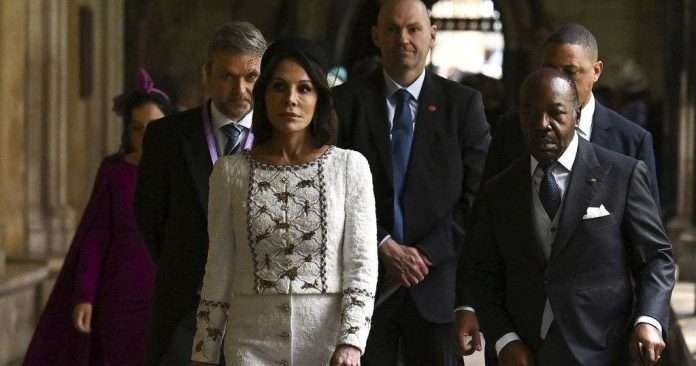
    Libreville, Gabon – (African Boulevard News) – In a shocking turn of events, Sylvia Bongo, the wife of former Gabonese president Ali Bongo, has been arrested and jailed as she faces serious charges of money laundering, forgery, and falsification of records. The once mighty First Lady, known for her influence and power, now finds herself on the wrong side of the law.

    The news of Sylvia Bongo’s imprisonment sent shockwaves through the country, as the Gabonese people grapple with the aftermath of Ali Bongo’s ousting from power. The charges against her are grave, suggesting a web of corruption and deceit that may have pervaded the highest echelons of Gabonese politics.

    According to our sources, the charges against Sylvia Bongo are related to her alleged involvement in illicit financial activities during her husband’s presidency. Money laundering, forgery, and falsification of records are serious offenses that carry heavy penalties. The Gabonese justice system is determined to hold her accountable for any wrongdoing.

    Authorities have not released specific details about the evidence against Sylvia Bongo, but it is believed that a thorough investigation has been conducted to build a solid case. Furthermore, a spokesperson for the government stated, “No one is above the law, and justice will prevail.”

    The arrest of Sylvia Bongo highlights the pervasive nature of corruption within African politics. It serves as a reminder that no individual, regardless of their position or status, is immune to the consequences of their actions. The Gabonese people, who have long suffered under allegations of corruption and mismanagement, may find solace in the fact that justice is being served.

    Experts in the field of governance and anti-corruption commend the Gabonese government for taking swift action against Sylvia Bongo. “This is a crucial step towards restoring public trust in the political system,” says Dr. Mark Johnson, an analyst at Transparency International. “It sends a clear message that corruption will not be tolerated, no matter who you are.”

    As the trial unfolds, all eyes will be on Gabon, watching closely to see how the justice system handles this high-profile case. The outcome will not only impact Sylvia Bongo personally but also have far-reaching implications for the future of the country’s fight against corruption.

    In the midst of political turmoil and uncertainty, the arrest of Sylvia Bongo serves as a stark reminder that no one is above the law. The Gabonese people deserve a transparent and accountable government, and this case represents a significant step towards achieving that goal. As the trial proceeds, the nation eagerly awaits justice to be served, hoping for a brighter and more prosperous future.

    Sources:
    – Africanews: “Wife of ousted Gabonese president Ali Bongo jailed”
    URL: https://www.africanews.com/2023/10/12/wife-of-ousted-gabonese-president-ali-bongo-jailed/
    – Google search: “Wife of ousted Gabonese president Ali Bongo jailed”
    URL: https://www.google.com/search?q=Wife+of+ousted+Gabonese+president++Ali+Bongo++jailed