Monday, April 20, 2026
88.2 F
Lagos
More
    Home Blog Page 493

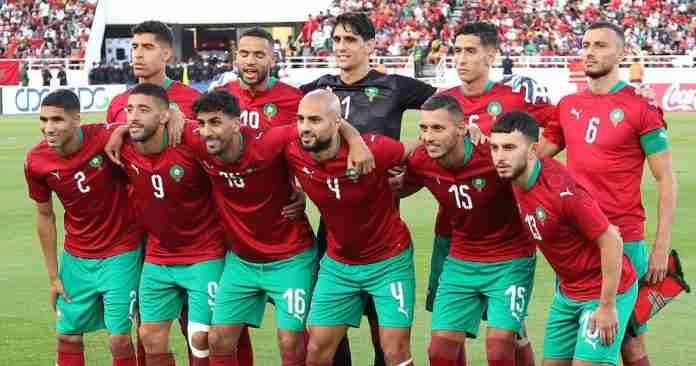
    TotalEnergies AFCON 2023 Qualifiers: Africa’s Football Titans Rise in Thrilling Group Showdowns.

    0
    2 Goals in 2 Minutes Gives Morocco Hard Fought Victory Against Liberia in Africa Cup of Nations Qualifier Read more: https://sportsbrief.com/football/18382-2-goals-2-minutes-give-morocco-hard-fought-victory-against-liberia-africa-cup-nations-qualifier/
    Read Time:3 Minute, 2 Second

    Abidjan, Ivory Coast – (African Boulevard News) The third round of qualification for the 2023 TotalEnergies Africa Cup of Nations (AFCON) concluded on Friday, bringing us closer to the highly anticipated tournament in Côte d’Ivoire. With Morocco already securing their spot in the competition, the remaining teams battled fiercely to claim their place in the biennial showpiece. Here’s a summary of the standings as we head into match day six:

    Group A:
    Guinea Bissau pulled off a surprising 1-0 victory against Nigeria’s Super Eagles, putting them in the lead with seven points. Meanwhile, Sierra Leone and Sao Tome and Principe played to a 2-2 draw, leaving them in third and fourth place, respectively.

    Group B:
    Burkina Faso, enjoying three consecutive wins, tops the group with nine points after a 1-0 triumph over Togo. Cape Verde and eSwatini follow in second and third place, respectively, after a goalless draw.

    Group C:
    Cameroon and Namibia played to a 1-1 draw, leaving the former on top of the three-team group with four points. Namibia sits in second place with two points, while Burundi remains at the bottom with one point.

    Group D:
    Egypt and Guinea share the top spot with six points each, followed by Malawi in third place with three points. Ethiopia sits at the bottom with a single win over Egypt.

    Group E:
    Ghana leads the group with seven points after a late 1-0 win against Angola. Central African Republic sits in second place with four points, following a 3-0 victory over Madagascar.

    Group F:
    Algeria remains unbeaten and leads the group with nine points. Tanzania claims second place with four points after a narrow 1-0 win against Uganda, who sit at the bottom of the group with a single point.

    Group G:
    Mali holds a perfect record with nine points, while South Sudan follows in second place on goal difference, having defeated Congo 2-1. Gambia sits in third place with three points.

    Group H:
    Already-qualified host Ivory Coast leads the group with seven points, followed by Zambia with six points after a 3-1 win over Lesotho. Comoros is third with three points, while Lesotho remains at the bottom.

    Group I:
    Gabon sits at the top of the group with seven points after defeating Sudan 1-0. DR Congo follows in second place with a 3-1 victory over Mauritania, leaving the latter in the third spot.

    Group J:
    Tunisia leads the group with seven points, followed by Equatorial Guinea with six points. Libya and Botswana sit in third and fourth place, respectively.

    Group K:
    Morocco has already qualified, topping the group with six points. South Africa and Liberia played to a 2-2 draw, leaving South Africa in a precarious position with a single point.

    Group L:
    Defending champions Senegal lead the group with nine points after a 5-1 victory over Mozambique. Mozambique sits in second place with four points, while Rwanda and Benin share a point each following a 1-1 draw.


    For all the latest news and updates on the 2023 TotalEnergies AFCON qualifiers, stay tuned to African Boulevard News, your trusted source for African football coverage. We’ll be there every step of the way, bringing you in-depth analysis and highlights from the heart of the action.

    As the road to the 2023 TotalEnergies AFCON continues, the continent’s football powerhouses are battling it out for a chance to showcase their skills and sportsmanship in Côte d’Ivoire. The qualifiers have given fans a taste of the excitement that lies ahead, and anticipation continues to build for the ultimate celebration of African football.
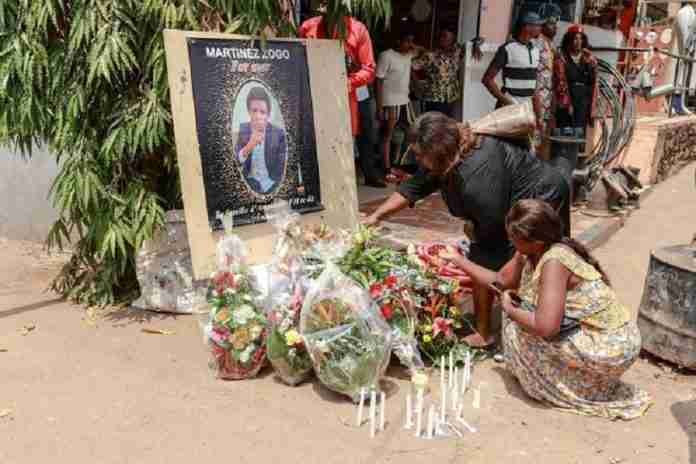
    Diane Zogo, Epouse du journaliste camerounais assassiné signale des menaces de mort de la part des responsables sous enquête.

    0
    Zogo Martinez
    La famille du journaliste camerounais Martinez Zogo, assassiné en janvier dernier, a affirmé avoir reçu des menaces de la part d'officiels soupçonnés d'être impliqués dans sa mort
    Read Time:2 Minute, 2 Second

    Yaoundé, Cameroun – (African Boulevard News) – La mort de Martinez Zogo, journaliste camerounais, continue de faire des vagues. Sa famille a signalé des menaces de la part des responsables présumés impliqués dans sa mort.

    Le 23 janvier 2023, le corps de Martinez Zogo, journaliste camerounais, a été retrouvé à Yaoundé. La police a ouvert une enquête sur sa mort. Cependant, la famille du journaliste prétend qu’elle a été menacée par des responsables présumés impliqués dans sa mort. Les menaces ont été reçues par la compagne de Martinez Zogo, Diane Zogo, qui a déclaré avoir reçu des appels téléphoniques et des messages de personnes qui prétendent être des fonctionnaires du gouvernement. Selon Diane, ces personnes ont averti que sa vie était en danger si elle continuait à pousser pour la vérité sur la mort de Martinez Zogo.

    Les menaces ont été rapportées à la police, qui a promis de prendre des mesures pour protéger la famille du journaliste. Cependant, la famille de Martinez Zogo a déclaré qu’elle craignait pour sa vie et qu’elle avait besoin de protection supplémentaire. La mort de Martinez Zogo a suscité une vague d’indignation dans la communauté journalistique camerounaise, qui a appelé à une enquête approfondie sur sa mort.

    Martinez Zogo était un journaliste très respecté qui avait travaillé pour plusieurs médias camerounais. Il avait également été impliqué dans des enquêtes sur la corruption et les abus de pouvoir dans le pays. Sa mort a été considérée comme un coup dur pour la liberté de la presse au Cameroun.

    Depuis la mort de Martinez Zogo, il y a eu plusieurs manifestations et appels pour que justice soit rendue. Des groupes de défense des droits de l’homme ont également appelé à une enquête approfondie sur sa mort et ont demandé que les responsables soient traduits en justice.

    Le gouvernement camerounais a été critiqué pour son traitement des journalistes et sa restriction de la liberté de la presse. En 2022, le pays a été classé 137ème sur 180 pays dans l’indice de la liberté de la presse établi par Reporters Sans Frontières. La mort de Martinez Zogo a attiré l’attention sur cette question et a suscité des appels pour que le gouvernement fasse plus pour protéger les journalistes et promouvoir la liberté de la presse.

    La mort de Martinez Zogo continue de susciter des réactions et des appels pour que justice soit rendue. Sa famille a signalé des menaces de la part des responsables présumés impliqués

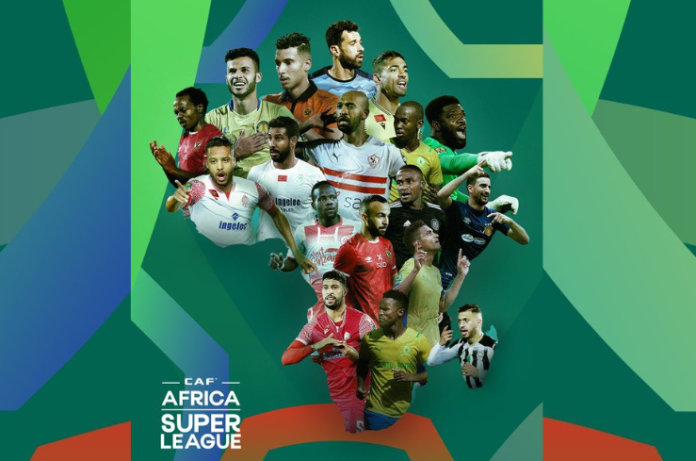
    Africa Super League Set to Revolutionize Soccer on the Continent, kicks off in August 2023.

    0
    Africa Super league
    The league will involve 24 clubs from three regions of Africa
    Read Time:2 Minute, 57 Second

    Cairo, Egypt – (African Boulevard News) – In 2023, the Confederation of African Football (CAF) will proudly unveil the Africa Super League, an exhilarating inter-club tournament that promises to showcase the finest football clubs across the continent. The landmark decision to approve the ASL was made during the 44th General Assembly of the CAF, held in the vibrant city of Arusha, Tanzania in August 2022. The idea, initially conceptualized by FIFA President Gianni Infantino in November 2019, has now become a thrilling reality, poised to elevate African football to new heights and captivate fans around the world.

    The Confederation of African Football (CAF) has announced plans for the much-anticipated Africa Super League (ASL), slated to kick off in August 2023. With the backing of FIFA and the determination of CAF President Patrice Motsepe, the ASL aims to transform soccer on the continent in a groundbreaking move. The league will bring together 24 of Africa’s most valuable football clubs from 16 different countries, creating a competitive platform for showcasing Africa’s rich soccer talent.

    The ASL has been generating significant buzz for its potential to revolutionize African soccer. The league is projected to increase the commercial value of the sport in Africa, boosting revenue for clubs and CAF alike. This influx of funds will be used to invest in infrastructure, youth development, and the overall growth of soccer in Africa. CAF President Patrice Motsepe and FIFA President Gianni Infantino have expressed their shared optimism for the potential of the ASL, highlighting its role in furthering the global reach and impact of African soccer.

    The ASL represents a unique opportunity to nurture and develop African talent, providing a strong platform for players to compete against the best on the continent. The creation of the ASL is expected to increase the number of world-class players emerging from Africa, giving them the chance to test their skills and flourish in a challenging environment.

    One of the key aspects of the ASL is the focus on engaging fans and creating a thrilling atmosphere. The league plans to leverage technology to enhance the fan experience, embracing digital innovations that will connect fans to their favorite teams and players like never before. This approach will not only boost spectator numbers but also create a lasting bond between fans and the sport, fostering a sense of pride and unity across the continent.

    The ASL’s formation has been met with intrigue and excitement from football enthusiasts and industry professionals alike. The league promises to elevate the quality of soccer in Africa, drawing attention from international clubs and scouts searching for the next global superstar. By providing a high-quality, competitive platform for African clubs, the ASL aims to bridge the gap between Africa and the world’s leading soccer leagues.

    The launch of the Africa Super League marks a significant milestone in the evolution of African soccer, with many viewing it as a catalyst for change. The league’s emphasis on youth development, infrastructure investment, and fan engagement has the potential to reshape the soccer landscape on the continent. By establishing a competitive, high-profile league in Africa, CAF is sending a clear message to the world: African soccer is on the rise, and it’s time to take notice.

    As the countdown to the ASL’s debut continues, the sense of anticipation is palpable. The stage is set for the Africa Super League to make its mark on the world stage, and the continent eagerly awaits the moment when the first whistle blows, signaling the beginning of a new era for African soccer.

    US and Africa Unite Against Terrorism: Commandos Train to Bring Hope and Security to the Sahel Region.

    0
    Ghana Special Forces
    The U.S.-led exercise spread troops across sites in Ghana and neighboring Ivory Coast.
    Read Time:3 Minute, 26 Second

    The Sahel region in sub-Saharan Africa has recently become the epicenter of terrorism, according to the 2023 Global Terrorism Index. With terrorist groups moving south through the Sahel, the need for a unified and comprehensive response has never been greater. To address this issue, the Pentagon’s annual Flintlock exercise has been aimed at reinforcing the rule of law in a region plagued by coups and instability.

    Sahel region in sub-Saharan Africa is now epicenter of terrorism,

    The Flintlock exercise has brought together US commandos and African forces to strengthen their ability to battle terrorism by land and sea. In an effort to provide a comprehensive solution to the issue, the US Special Forces have launched counter-terrorism drills with African armies, providing training and resources to these forces.

    This collaborative effort between US and African forces showcases the secret world of US commandos in Africa, as they work tirelessly behind the scenes to bolster the capabilities of African military units. The training exercises aim to improve the skills of African forces, enabling them to better respond to terrorist threats and maintain stability in the region.

    In the past 15 years, terrorism-related deaths in the Sahel region have spiked by a staggering 2,000%. This increase highlights the urgency with which the US and African forces must act to counteract this growing threat. The Flintlock exercise is a significant step towards addressing the issue, as it equips local forces with the necessary skills and resources to combat terrorism in their own backyard.

    Ghanaian military personnel train at a base during the US – Africa annual counter-terrorism program Flintlock

    In addition to the Flintlock exercise, US commandos are working alongside African forces in various other capacities, including intelligence gathering, operational support, and training in counter-terrorism tactics. These efforts have led to an increased focus on community engagement, emphasizing the importance of building trust between local populations and security forces.

    The joint efforts of the US and African forces have already yielded positive results. For example, in 2023, a US-trained Malian counter-terrorism brigade was able to conduct a successful operation against a terrorist group in northern Mali, freeing over 50 hostages. This is just one example of the tangible impact that the Flintlock exercise and other US-Africa partnerships have had in the fight against terrorism in the Sahel.

    However, despite these efforts, the region still faces significant challenges in the fight against terrorism. The porous borders and vast expanse of the Sahel make it difficult to monitor and prevent the movements of terrorist groups. Additionally, poverty and lack of economic opportunities provide fertile ground for extremist recruitment. To truly combat terrorism in the Sahel, a holistic approach is needed, one that addresses not only military tactics but also underlying social and economic issues.

    The US and African forces have taken steps towards a more comprehensive approach, including efforts to promote good governance, strengthen civil society, and encourage economic development. These initiatives aim to address the root causes of terrorism and promote long-term stability in the region.

    As the Sahel continues to grapple with terrorism, the need for collaboration between the US and African forces remains crucial. The Flintlock exercise and other partnerships are vital in building the capacity of local forces and promoting security and stability in the region. However, the fight against terrorism requires more than just military intervention. It requires a concerted effort to address the underlying social and economic issues that fuel extremist ideology.

    In conclusion, the Sahel has become a hotbed of terrorism, with the region accounting for nearly half of the global death toll. In response, the US and African forces have launched a collaborative effort to combat terrorism in the region, including the annual Flintlock exercise and other initiatives aimed at strengthening local forces and addressing root causes of terrorism. While progress has been made, the fight against terrorism in the Sahel is far from over. It requires a comprehensive approach that tackles not only military tactics but also underlying social and economic issues. The future of the Sahel and its people depend on it.

    Protests Engulf Africa: Unrest and Desperation Sweep the Continent.

    0
    Tunisia
    Mass anti-Saied protests take place in capital Tunis
    Read Time:1 Minute, 55 Second

    A Continent in Turmoil

    From the bustling streets of Nairobi to the sprawling cities of Nigeria, the political landscape across Africa is shrouded in chaos and confusion. Protests against government policies have roiled all four corners of the continent, with opposition leaders and ordinary citizens alike taking to the streets to voice their anger and frustration.

    Kenya: A Nation Divided

    In Kenya, opposition leader Raila Odinga, who suffered defeat in the last general elections, has led a series of demonstrations. These protests have only served to deepen the rifts in a country already torn apart by political divisions, with many fearing the potential for violence and bloodshed.

    Nigeria: A Ticking Time Bomb

    Meanwhile, in Nigeria, main opposition party candidates Atiku Abubakar and Peter Obi have spearheaded protests against both the polls and the skyrocketing cost of living in the West African nation of 219 million. These demonstrations have highlighted the growing unrest among Nigeria’s populace, who are grappling with a floundering economy and rampant corruption.

    Tunisia: The Cradle of Discontent

    Thousands of Tunisians have rallied in the streets of the capital, Tunis, in mass protests against President Kais Saied’s perceived autocratic rule. Last July, Saied suspended parliament, sacked the Prime Minister, and further expanded his legislative and executive powers. Tunisia, once heralded as a beacon of democracy following the Arab Spring, now teeters on the brink of chaos, threatening to plunge the nation back into the darkness of tyranny.

    A Dark Shadow Over South Africa

    South Africa has not been spared from the wave of protests sweeping the continent. A national shutdown has been sparked by a combination of factors, including rising unemployment, economic stagnation, and rampant corruption. The nation’s woes have been exacerbated by the government’s inability or unwillingness to address these issues, further stoking the fires of discontent.

    A Continent on the Edge

    As protests against government policies continue to roil across Africa, a sense of despair and disillusionment has settled over the continent. The shared hope for a brighter future that once united the people of Africa now lies in tatters, replaced by a pervasive sense of doom and uncertainty. The fabric of society is fraying, and as the cries for change grow louder, one cannot help but wonder: is there any hope left for the people of Africa?

    Arrest of Political Opponents in America, Anti-black racism in Africa: The world upside down?

    0
    Read Time:3 Minute, 3 Second

    New York City, NY – (African Boulevard News) – In the world today, there is a lot of talk about human rights, democracy, and equality. These are some of the values that we hold dear and are supposed to guide our societies. However, recent events have shown that these values are not always upheld, and the world can be turned upside down in an instant.

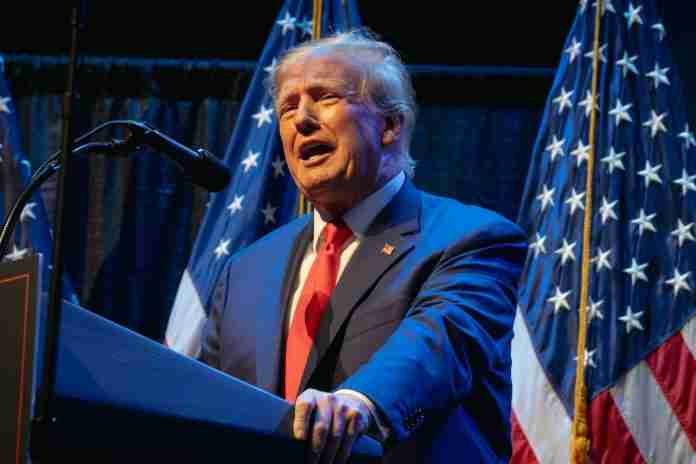
    Former President Donald Trump has recently stated that he expects to be arrested on Tuesday as New York law enforcement prepares for a possible indictment. This article will provide an overview of Trump’s legal troubles, the charges he could face, and the potential impact on his future.

    Background on Trump’s Legal Troubles
    For years, Trump has faced multiple investigations into his business dealings, including potential tax fraud and other financial crimes. The Manhattan District Attorney’s Office and the New York Attorney General’s Office have been leading the charge, seeking to uncover any wrongdoing by the former President and his businesses.

    The Charges Trump Could Face
    While the exact charges have yet to be announced, it’s speculated that Trump could face charges related to The Stormy Daniels case centing on how Mr Trump reimbursed his former lawyer, Michael Cohen, after he paid Ms Daniels $130,000 ahead of the 2016 presidential election. These charges could carry significant fines and potentially result in prison time if he’s found guilty.

    Law Enforcement’s Preparations for Arrest
    New York law enforcement is preparing for the possibility of arresting Trump on Tuesday. This includes coordinating efforts between various agencies, setting up potential arrest locations, and ensuring proper security measures are in place. Authorities are also likely preparing for any potential backlash from Trump’s supporters.

    Potential Impact on Trump’s Future
    If indicted, Trump’s future could be significantly impacted. An indictment could jeopardize his ability to run for office again and tarnish his legacy. It could also have legal ramifications for his businesses, possibly leading to financial instability and the loss of assets.

    As Trump anticipates his arrest on Tuesday, it remains to be seen how the situation will unfold. The outcome of these investigations could have far-reaching implications for the former President’s future, both politically and personally. Stay tuned for more updates as this story continues to develop.

    As if this harassment of political opponents is not enough for world, far away across the ocean, in Africa, we recently witnessed another troubling event: Anti-black Racism!

    Anti-Black racism surfaces in an African country. Critics are blaming the Tunisian president for it

    Anti-black Racism in Africa
    Africa is known for its rich culture, diverse traditions, and beautiful scenery. However, the continent is still grappling with the issue of racism. Anti-black racism is still prevalent in many parts of the continent, and it raises concerns about the direction that the continent is taking.

    In many African countries, as evidenced in Tunisia last month, people of color are discriminated against based on their skin color. They are denied access to education, healthcare, and other basic human rights. This is unacceptable, and it goes against the values that we hold dear as a society.

    The issue of anti-black racism is not something that can be solved overnight. It requires a concerted effort by governments, civil society organizations, and individuals. We need to educate people about the negative effects of racism and promote tolerance and inclusivity.

    These events in America and Africa are raising concerns about the direction that the world is taking. The arrest of political opponents in America and anti-black racism in Africa are not in line with the values that we hold dear as a society. It begs the question: is the world upside down?

    A Troubling Tango: Rwanda Entwines with UK in Heart-Wrenching Deportation Plot.

    0
    End Racism
    Members of the Stand up to Racism protest group outside the Royal Courts of Justice in London.
    Read Time:2 Minute, 14 Second

    The British Home Secretary’s recent visit to Rwanda has thrust the controversial migrant deportation deal into the limelight, sending shockwaves through the international community. The scheme, which was declared lawful by the UK High Court in December 2022, has been met with apprehension and concern by human rights groups.

    In a bid to accelerate the deportation process, the UK Home Secretary arrived in Kigali, Rwanda’s capital, to discuss the details of the agreement with Rwandan officials. The plan, designed to deport migrants who have failed in their asylum bids in the UK, sends them to Rwanda, where they will be processed and have their cases examined.

    Although the UK government views the deal as a necessary measure to control immigration, critics argue that it is a blatant violation of human rights. The scheme raises ethical questions surrounding the treatment of migrants and refugees, many of whom have fled war-torn countries and are seeking refuge in the United Kingdom.

    UK home secretary Suella Braverman was criticised for describing arrival of asylum seekers as invasion

    Sources close to the matter reveal that the British Home Secretary has met with Rwandan officials in an effort to iron out any obstacles that may hinder the rapid implementation of the deportation plan. Both countries are eager to reinforce their partnership and demonstrate their commitment to resolving the migration crisis.

    Human rights organizations and activists have expressed their alarm at the prospect of sending vulnerable individuals to Rwanda, a country still grappling with the aftermath of the 1994 genocide. Detractors of the plan argue that the Rwandan government may not have the capacity to adequately provide for the well-being and safety of the deported migrants.

    Moreover, concerns have been raised over the transparency of the deportation process. Opponents of the scheme question whether the UK government has properly assessed the risks associated with sending migrants to Rwanda, especially considering the country’s complex political landscape and its history of human rights abuses.

    UK Home Secretary visits Rwanda to discuss controversial deportation scheme

    As the British Home Secretary’s visit to Kigali unfolds, it remains to be seen whether the international community will intervene or allow the controversial deportation scheme to proceed. The plan has not only strained relations between the UK and Rwanda, but it has also sparked a contentious debate surrounding the moral responsibilities of nations in dealing with the global migration crisis.

    With emotions running high on both sides of the issue, the UK-Rwanda deportation scheme has ignited a firestorm of controversy. As the world watches with bated breath, it is clear that the impact of this perplexing agreement will reverberate far beyond the borders of the two countries involved.

    FIFA’s Iron Grip on African Football: A Tale of Puppetry and Pretense, claims a former CAF boss.

    0
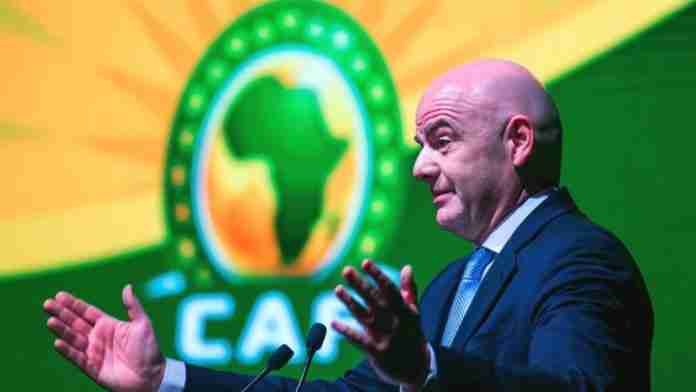
    Gianni Infantino is being accused of controlling Africa by former Fifa vice-president and CAF fpormaer president Ahmad of Madagascar
    Read Time:2 Minute, 22 Second

    Antananarivo, Madagascar – (African Boulevard News) – Oh, what a revelation! As if we couldn’t have guessed, former Confederation of African Football (CAF) boss, Ahmad of Madagascar, has blown the whistle on FIFA’s control over African football. The world’s governing football body, a paragon of virtue and fairness, has been accused of pulling the strings behind the scenes, as if it were some sinister puppet master. It’s hard to imagine that an organization with a pristine past like FIFA could be involved in such dastardly deeds.

    African Congresses: A Showcase of FIFA’s Generosity.

    In a bid to showcase its omnipresence and spread its magnanimous influence, FIFA has graced Africa with its prestigious Congress not once, but twice! The first time in 2005, Morocco had the honor of hosting this grand event. The second time, in 2017, FIFA’s glorious presence descended upon the Ethiopian capital, Addis Ababa. Africa has never been more grateful for these rare opportunities to bask in the glory of FIFA’s benevolence.

    Ethics Committee: A Fine Example of Independence

    Fifa secretary general Fatma Samoura (left) spent time working with Caf and its former president Ahmad (right) to improve governance, with the appointment approved by Fifa president Gianni Infantino (centre)


    But let’s not forget the FIFA Ethics Committee, which is lauded for its independence and impartiality. Like a lighthouse in a sea of murky football politics, the Ethics Committee stands tall, ensuring that the beautiful game remains unsullied by corruption or foul play. This committee, free from the shackles of external influence, serves as a shining example of how international organizations should operate. It’s a wonder how anyone could ever question their independence.

    African Football: Brought to You by FIFA

    So, let’s raise a glass to FIFA, the selfless organization that has single-handedly shaped African football. Their tireless efforts to ensure the game remains untainted by corruption and mismanagement are truly commendable. After all, who else could have done a better job at steering the fate of an entire continent’s footballing dreams? Surely not the African nations themselves. No, no, FIFA knows best, and we can all rest easy knowing that our beloved game is in the hands of such capable and altruistic overseers.

    A Perfect Harmony of Control and Independence

    As we delve deeper into this perplexing tale of control, independence, and ethical fortitude, we must remember to be grateful for FIFA’s unwavering commitment to African football. From the grand spectacle of their Congresses to the steadfast vigilance of the Ethics Committee, FIFA’s presence has been a guiding light in the murky waters of the beautiful game on this continent.

    So, let’s give a round of applause to FIFA, the puppet master that has masterfully crafted a harmony of control and independence that leaves us all in awe. Surely, African football would be lost without their firm yet gentle hand to guide it.

    Struggling to Overcome: Central African Leaders Grapple with Regional Challenges at the 15th CEMAC Heads of State Summit.

    0
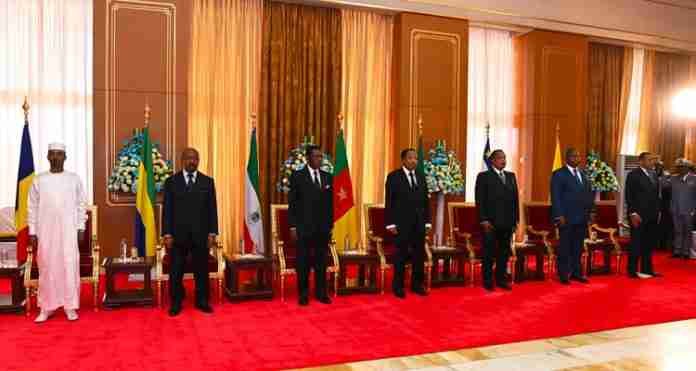
    Leaders of the Central African Economic and Monetary Community (CEMAC) met in Yaounde on 17 March 2023 for the 15th ordinary session of the Conference of Heads of State.
    Read Time:4 Minute, 9 Second

    Yaoundé, Cameroon – (African Boulevard News) – The 15th Ordinary Session of the Conference of Heads of State of the Central African Economic and Monetary Community (CEMAC) took place in Yaoundé, Cameroon on March 16 and 17, 2023. The summit brought together five presidents from the CEMAC member countries, namely Cameroon, Central African Republic, Chad, Republic of Congo, and Gabon. The leaders gathered to discuss regional integration, economic growth, and sustainable development in the Central African region.

    The summit, held at the Yaoundé Conference Centre, focused on the theme “Promoting Economic Integration and Development in Central Africa through Infrastructure and Connectivity.” The discussions revolved around fostering economic growth and resilience, enhancing regional security, and the implementation of the CEMAC integration agenda.

    In his opening speech, the host and President of Cameroon, Paul Biya, emphasized the importance of regional integration and cooperation. He stressed that connectivity and infrastructure development are crucial for economic growth and stability in the region. Furthermore, President Biya called on the member countries to work together to combat cross-border threats such as terrorism, illegal migration, and human trafficking.

    During the summit, the leaders reviewed the progress made in implementing the CEMAC reform program, which was initiated in 2016 to strengthen regional economic integration and boost economic growth. The program aims to enhance the financial sector, improve the business environment, and promote regional integration through infrastructure development.

    One of the key developments discussed at the summit was the progress made in establishing the CEMAC Customs Union, which is expected to facilitate intra-regional trade and investment. The heads of state reiterated their commitment to implementing the necessary reforms to ensure the effective functioning of the Customs Union, including the harmonization of customs regulations and the elimination of non-tariff barriers to trade.

    In addition to the Customs Union, the leaders also discussed the need to improve regional infrastructure, including the construction and rehabilitation of transnational roads, railways, and energy projects. These projects are aimed at enhancing connectivity and facilitating the movement of goods and people within the CEMAC region.

    On the sidelines of the summit, a panel discussion was held at the Institute of Statistics and Applied Economics (ISSEA), featuring Deputy Managing Director of the International Monetary Fund (IMF), Kenji Okamura. The panel focused on the economic outlook for the CEMAC region and the role of international financial institutions in supporting regional integration and development.

    In his opening remarks, Okamura underscored the importance of regional integration in promoting economic growth and resilience. He highlighted the IMF’s commitment to supporting the CEMAC region through technical assistance, policy advice, and financial support. Furthermore, Okamura praised the CEMAC countries for their efforts to implement structural reforms and strengthen macroeconomic stability.

    Despite the progress made in recent years, the CEMAC region still faces significant challenges, including high public debt levels, weak economic diversification, and vulnerability to external shocks. The IMF official urged the CEMAC countries to continue their efforts to address these challenges and create a more conducive environment for private sector investment and inclusive growth.

    As the summit concluded, the leaders adopted a joint declaration outlining their commitment to advancing regional integration and development. They agreed to intensify efforts to implement the CEMAC reform program and reaffirmed their support for the establishment of the Customs Union. Additionally, the leaders pledged to work together to address regional security threats and promote peace and stability in Central Africa.

    In conclusion, the 15th Ordinary Session of the CEMAC Heads of State Summit showcased the determination of the Central African leaders to strengthen regional ties and foster economic growth. The discussions and agreements reached during the summit are expected to pave the way for increased collaboration, improved infrastructure, and enhanced connectivity in the region.

    The success of the summit signifies a renewed commitment among CEMAC member countries to work together to overcome the challenges facing the region. This collaborative spirit is vital in addressing issues such as poverty, inequality, and insecurity, which continue to hinder the region’s progress.

    Moving forward, the CEMAC Heads of State will need to ensure that the agreements reached during the summit translate into tangible results for the people of Central Africa. This will require continuous monitoring and evaluation of the implementation process, as well as strong political will and collaboration among member countries.

    The international community, including organizations such as the IMF, will continue to play a crucial role in supporting the CEMAC region’s development efforts. By providing technical assistance, policy advice, and financial support, these organizations can help the region achieve its goals of economic integration, growth, and sustainable development.

    Ultimately, the 15th Ordinary Session of the CEMAC Heads of State Summit sends a clear message of unity and determination among Central African leaders to promote regional integration and development. As the world continues to face unprecedented challenges, the spirit of cooperation and collaboration displayed at the summit offers a beacon of hope for a more prosperous and stable Central African region.

    By African Boulevard News International Correspondent, in Yaoundé, Cameroon.