
Read Time:7 Second
Guinea – (African Boulevard News) After the creation of the ARSJPA gambling regulatory authority in recent months, the Guinean gaming magnate Mamadou Antonio Souaré is
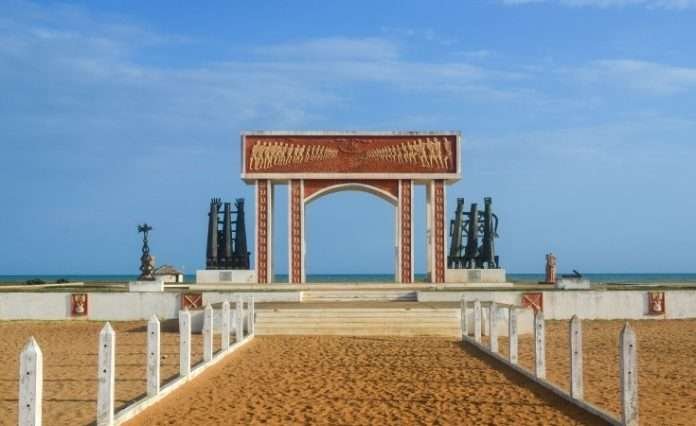
Guinea – (African Boulevard News) After the creation of the ARSJPA gambling regulatory authority in recent months, the Guinean gaming magnate Mamadou Antonio Souaré is
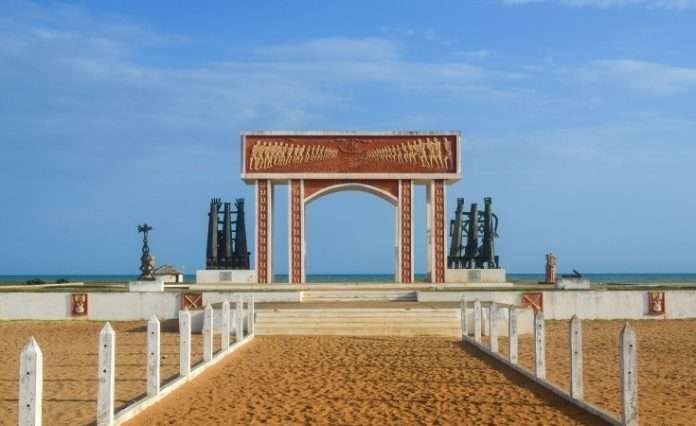
Kenya – (African Boulevard News) At 4.15 pm on 23 January an explosion echoed over Chemase Hills in western Kenya’s Nandi County. The blast collapsed part of Kenya’s most productive goldmine, operated by British firm Karebe
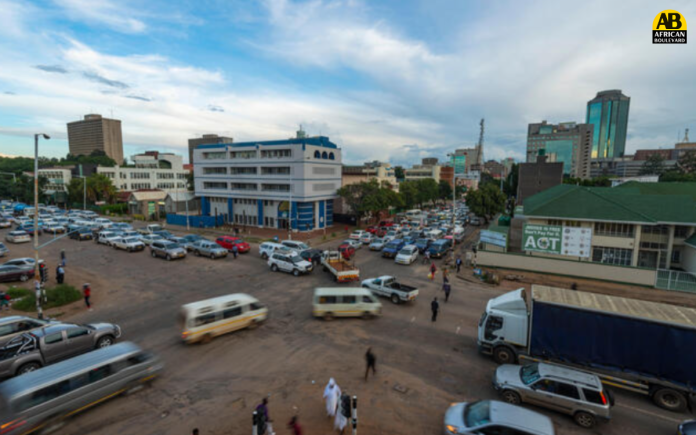
Harare, Zimbabwe- (African Boulevard News) – Zimbabweans around the world are commemorating the 43rd anniversary of their nation’s independence from British colonial rule on April 18th, 1980. However, celebrations have been marred by a rapidly shrinking civic space, which has led to the criminalization of dissent, the targeting of political activists and human rights defenders, and a decline in freedoms.
According to Amnesty International’s Deputy Director for East and Southern Africa, Flavia Mwangovya, “Authorities are yet to guarantee in practice the rights to freedom of expression, association, and peaceful assembly which are increasingly being threatened despite being guaranteed under the constitution and international law.” This year’s anniversary comes at a time when Zimbabwe is approaching elections, and freedom of expression, association, and peaceful assembly have come under increasing attack, with dissenting voices being criminalized, peaceful protesters being arrested and convicted, and unnecessary and excessive force being used to stop protests.
Zimbabwean authorities have refused to give clearance for some of the main opposition party’s rallies, and the right to freedom of peaceful assembly has been continuously violated and undermined. There have been numerous reports of individuals and groups being targeted for politically motivated violence, and some opposition activists have been put in lengthy pre-trial detentions.
Protests have been effectively banned, with 19 students at the University of Zimbabwe arrested in September 2022 after they embarked on peaceful #FeesMustFall demonstrations, while Job Sikhala and Godfrey Sithole were arrested and detained on charges of inciting violence. In addition, Tsitsi Dangarembga and Julie Barnes were convicted following their peaceful protest, and more recently, Fadzayi Mahere was convicted and sentenced for “publishing or communicating falsehoods” based on a law that is no longer existent in Zimbabwe.
“Forty-three years after independence, authorities are yet to guarantee in practice the rights to freedom of expression, association, and peaceful assembly, which are increasingly being threatened despite being guaranteed under the constitution and international law,” said Flavia Mwangovya. As Zimbabwe approaches elections later this year, freedom of expression, association, and peaceful assembly have come under increasing attack, with dissenting voices being criminalized, peaceful protesters being arrested and convicted, and unnecessary and excessive force being used to stop protests.
The opposition must be free to carry out their campaigns, and individuals and groups must be protected from politically motivated violence. Authorities must stop criminalizing dissent and ensure a level playing field as the country approaches the elections.
Zimbabwe gained independence from the British colonial rule on April 18th, 1980, and today marks forty-three years of independence. However, Amnesty International’s 2022/23 annual report highlights a worrying trend toward the closing of civic space in Zimbabwe, with the right to freedom of expression, association, and peaceful assembly being threatened. Members and supporters of the main opposition party have been violently attacked at political rallies.
As the world watches and commemorates with Zimbabweans the 43rd Independence Day Celebration, many are calling on the authorities to respect human rights and uphold the rule of law. Zimbabwe’s citizens deserve to have their voices heard, and their fundamental human rights protected.
In conclusion, Zimbabweans are marking forty-three years of independence from colonial rule amid a rapidly shrinking civic space, including the criminalization of dissent and the targeting of political activists and human rights defenders. Authorities must promote, protect, and uphold the rights to freedom of expression, association, and peaceful assembly, as well as guarantee the socio-economic rights of every Zimbabwean. As Zimbabwe approaches elections later this year, authorities must ensure a level playing field, the opposition must have the freedom to campaign, and individuals and groups must be protected from politically motivated violence. The world watches, and Zimbabweans deserve to have a democratic and prosperous Zimbabwe.

Addis Ababa, Ethiopia- (African Boulevard News) – The first group of Somali nationals who fled the conflict in the Sudanese capital, Khartoum have arrived in Ethiopia, Somali officials said. The group of 27 Somalis, including four women, arrived in Ethiopia after crossing at the border town of Metema on Friday.
Former BBC Somali service journalist, Abdisalam Hereri, was among the group who fled to Ethiopia. Hereri had gone to Khartoum on April 5 to attend a memorial service for the late legendary Somali singer, Mohamed Suleiman Tubeec. On Sunday, he posted on his Facebook page that he had arrived in Hargeisa, Somaliland.
In an interview with VOA Somali, Hereri said that he was among thousands of people, including locals and visitors, who took advantage of the 24-hour cease-fire reached by the warring Sudanese sides on April 19. He, alongside 20 other Somalis, traveled on a bus to the southeastern Sudanese city of Al Qadarif, where they stayed for a night before proceeding to the border town of Gallabat.
Gallabat, a town used by migrants and traffickers who travel through Sudan, is where they encountered a “major problem.” Hereri said that due to the breakdown of law and order, some Sudanese border officials attempted to charge them a huge amount of money to let them exit the country. They asked each person for $500 to obtain an “exit stamp” on their documents. “After strong negotiations, we were charged $50 each,” he said.
When they arrived at the Ethiopian town of Metema, the situation was different. “The atmosphere was very different from the one in Sudan; there was order and respect,” Hereri said. “The soldiers at the checkpoint expressed sympathy to us when we told them we fled. … We were welcomed very much; we have not had any problems, no one asked us [for] money,” he added.
The Somali Embassy in Khartoum confirmed that more Somalis are heading toward the Sudan border with Ethiopia in an attempt to return to Somalia. More than 200 Somalis arrived on Saturday in Al Qadarif, said Somali Ambassador to Sudan Mohamed Sheikh Isak. He added that Somali officials at the Ministry of Foreign Affairs are communicating with their Ethiopian counterparts to facilitate the entry of Somalis into Ethiopia.
Somalis are arranging their travel to flee Khartoum without the embassy or Somali government help; Isak said, “We have not provided them transport.” He added that “they are leaving voluntarily, but we are giving them guidance.” He also advised women not to travel alone to Al Qadarif, and they have been traveling in groups to the town.
The embassy in Khartoum remains open and is working to prepare travel documents for those wanting to leave.”We have issued 120 ‘go-home documents, which will allow travel from Khartoum to Al Qadarif,” he said. Somali students who arrived in Al Qadarif said they are struggling financially. They also said that essentials are expensive, and they cannot find a remittance office in the town to have money transferred from their parents in Somalia.
This group’s arrival in Ethiopia is part of the ongoing conflict in Sudan, which led to the ouster of President Omar al-Bashir by the military in April 2019. Since then, the country has been struggling to transition to democracy. The government and rebel groups have been negotiating for peace in Southern Sudan, with Khartoum being the venue for those talks. However, the recent escalation of conflict in the city has led to the displacement of thousands of people, including Somali nationals.
Khartoum, Sudan.- (African Boulevard News) – The United States evacuated its diplomats and their families from the U.S. Embassy in Khartoum early Sunday, suspending embassy operations due to the escalating violence between the Sudanese Armed Forces and the Rapid Support Forces. The decision was announced by Secretary of State Antony Blinken in a statement late Saturday in Washington.
Statement from Secretary of State
In his statement, Blinken said “the serious and growing security risks created by the conflict” necessitated the temporary closing of the embassy, which has caused a significant number of civilian deaths and injuries. President Joe Biden also issued a statement, confirming that the evacuation was complete and thanking U.S. troops who carried out the mission.
Successful airlift to Ethiopia
About 70 Americans were airlifted from the embassy to an undisclosed location in Ethiopia. Diplomatic colleagues from other embassies were also included in the airlift operation. Sources in the US embassy in Khartoum say that President Biden gave the order after receiving an assessment from national security advisers that the fighting would not subside.
Biden’s gratitude to Ethiopia, Djibouti and Saudi Arabia
Biden thanked Ethiopia, Djibouti, and Saudi Arabia for their roles in evacuating the U.S. embassy staff. The president said that Ethiopia, Djibouti, and Saudi Arabia played a critical role in the success of the operation.
Blinken’s calls for nationwide cease-fire
Blinken has spoken repeatedly to both General Abdel Fattah Burhan, the commander of the Sudanese Armed Forces, and General Mohamed Hamdan Dagalo, the commander of the rival Rapid Support Forces, known as Hemedti. He called on both generals to uphold the nationwide cease-fire through at least the end of the Muslim holiday of Eid al-Fitr on Sunday.
Bitter power struggle between two generals
The two generals are former allies who seized power in a 2021 coup but later fell out in a bitter power struggle. The sudden fighting that broke out one week ago has brought the city of more than 5 million people to the brink of collapse, with residents hunkering down inside their homes with no electricity amid bombardment, and with marauding fighters roaming the streets, looting homes.
Humanitarian crisis and efforts to aid US citizens
The situation in Khartoum is dire, according to experts. Nicole Widdersheim, the deputy Washington director at Human Rights Watch, spoke with VOA via Zoom, saying “we’re also hearing that Sudanese continue to try to flee the bombardment and the aerial strikes, which I understand from our experts who are in direct contact with people in Khartoum, this is getting worse. It’s getting more indiscriminate.” U.S. officials remain in touch with Americans in Sudan, helping them in some instances to make contact with fellow citizens to pool their resources and making sure that Americans who remain in Sudan have up-to-date information about security in the African nation.
International transition and the fall of Omar-al-Bashir
Sudan borders seven countries and sits between Egypt, Saudi Arabia, Ethiopia, and Africa’s volatile Sahel region. The violence broke out as an internationally backed transition plan to form a new civilian government was scheduled to take effect, four years after the fall of Omar-al-Bashir. Both the government and the paramilitary forces accuse each other of thwarting the transition.
Conclusion
The United States’ decision to evacuate its embassy staff highlights the seriousness of the ongoing conflict in Sudan. The evacuation was necessary due to the escalating violence between Sudanese Armed Forces and the Rapid Support Forces. Although the evacuation was successful, the humanitarian crisis in Sudan continues to worsen, with residents trying to flee the bombardment and the aerial strikes. The US government remains in touch with Americans in Sudan to help and provide assistance where needed.
The United States has evacuated its diplomats and their families from the U.S. Embassy in Khartoum amidst political turmoil in Sudan. Secretary of State Antony Blinken announced the temporary suspension of embassy operations in a statement released late Saturday in Washington.
The decision came after weeks of protests against the military takeover in Sudan, which led to the removal of Prime Minister Abdalla Hamdok, his cabinet and the dissolution of parliament. The U.S. has been a longstanding partner of Sudan, playing crucial roles in brokering peace deals and lifting economic sanctions over the years.
The U.S. State Department announced that the evacuated embassy staff and their families were being transferred to safety in neighboring countries. The department did not provide details on the exact number or timeline for their return.
The decision to evacuate embassy staff was made due to a “general decline in the security situation,” according to Blinken’s statement. There have been reports of violence and unrest in Khartoum since the military takeover, with protesters calling for a return to civilian rule.
The U.S. decision to evacuate its embassy staff was met with mixed reactions from officials and experts. While some praised the move as a necessary step to protect American citizens and interests in Sudan, others criticized it as a sign of weakness.
In an interview with VOA, former U.S. Ambassador to Sudan Timothy Carney expressed concern that the evacuation could be perceived as the U.S. abandoning its commitment to democracy and human rights in Sudan. He warned that it could also have negative implications for regional stability and U.S. foreign policy in Africa.
“The United States needs to continue to be engaged in this situation. We need to not only be talking about our commitment to democracy and human rights, but we need to show our commitment,” Carney said.
Meanwhile, Sudan’s military leaders condemned the U.S. decision to evacuate embassy staff as “unnecessary and premature.” In a statement, the army accused the U.S. of overreacting to the situation and warned of “dire consequences” for bilateral relations.
The temporary suspension of embassy operations and evacuation of embassy staff has raised questions about the future of U.S.-Sudan relations. The U.S. has long been a key diplomatic partner for Sudan, and its support has been critical in ending the country’s international isolation and securing debt relief.
However, the recent military takeover has strained relations between the two countries. In late October, the U.S. suspended $700 million in aid to Sudan in response to the coup, calling for the restoration of civilian government.
The U.S. has also imposed sanctions on some military leaders and their family members, freezing their assets and banning them from entering the country.
The evacuation of embassy staff from Khartoum highlights the precarious situation in Sudan following the military takeover. The U.S. has called for an immediate return to civilian rule and the release of all political detainees, and has said that it will continue to monitor the situation closely.
The future of U.S.-Sudan relations remains uncertain, with experts warning that the suspension of aid and evacuation of embassy staff could have negative consequences for regional stability and U.S. foreign policy in Africa. With Sudan’s political landscape in flux, it remains to be seen how the U.S. will navigate these complex diplomatic waters.
A shocking report has revealed that Chinese companies operating in Zimbabwe are allegedly committing rampant abuse of workers. The report, which was revealed in the 2022 Zimbabwe Country Report on Human Rights Practices, reveals that Chinese companies are flouting labor laws and engaging in inhumane treatment of their employees.
The report highlights several instances of abuse by Chinese companies. In one such case, a Chinese granite miner allegedly broke a 17-year-old boy’s arm after administering thorough beatings. This incident is just one of many that highlight the inhumane treatment that workers are allegedly subjected to.
Furthermore, the report also reveals that three work-related deaths have gone uninvestigated almost five years later. This revelation raises serious concerns about the lack of accountability and oversight in the activities of Chinese companies in Zimbabwe.
The report shows that Chinese companies are flouting labor laws, including minimum wage and overtime requirements. Many workers are also forced to work long hours, without breaks, and in dangerous conditions without adequate protective equipment.
One worker, who wished to remain anonymous, recounted his experiences at a Chinese-run mine. He alleges that workers were forced to work long shifts, sometimes exceeding 12 hours, and were not provided with any protective clothing or equipment. This is just one example of the ongoing exploitation and inhumane treatment of workers by Chinese companies.
The report has sparked outrage among labor unions and human rights activists in Zimbabwe. They are calling on the government to take action against Chinese companies that are flouting labor laws and subjecting workers to inhumane treatment.
The Zimbabwean government has yet to respond to the report. However, President Emmerson Mnangagwa has previously expressed his support for Chinese investment in Zimbabwe.
The report raises serious questions about the activities of Chinese companies operating in Zimbabwe. It is unclear whether they will face any consequences for their alleged abuses of workers.
However, the report’s revelations are likely to damage the reputation of Chinese companies, which are already facing scrutiny in other African countries. The revelations could also lead to increased pressure on the Zimbabwean government to take action against those companies that are flouting labor laws and engaging in inhumane treatment of workers.
The revelations of rampant abuse of workers by Chinese companies in Zimbabwe are deeply concerning. The report highlights the urgent need for greater oversight and accountability in the activities of Chinese companies operating in the country.
It is crucial that the Zimbabwean government takes action to protect the rights of workers and hold companies accountable for their alleged abuses. Failure to do so could have serious implications not only for the workers affected but also for Zimbabwe’s reputation as a destination for foreign investment.
Capital city of Sudan, Sudan- (African Boulevard News) – The United States is deploying additional troops to its base in Djibouti as it deliberates whether to evacuate its diplomats from Sudan. The move comes as a result of the ongoing power struggle between two military factions, which has led to days of violence that have claimed over 330 lives.
As the situation in Sudan continues to escalate, the United States is grappling with the possibility of evacuating its diplomats in the region. According to John Kirby, National Security Council coordinator for strategic communications, the US has not yet made a decision to evacuate its diplomats. Instead, it is currently pre-positioning appropriate military capabilities nearby in the region, not in Sudan.
The situation on the ground in Khartoum remains tense, with both sides of the conflict continuing to engage in violent clashes. Despite calls for a ceasefire, the fighting continues to escalate. Kirby has advised American citizens who have not already left Sudan to do so, as the situation remains dangerous and unpredictable.
The US is currently reaching out to various countries in the region to help with the conflict in Sudan. The African Union and the Arab League have been contacted, along with other nations around Sudan. The US has also directly urged both sides of the conflict to end the violence and work towards a sustainable ceasefire. Kirby has made it clear that the US does not want to see the situation in Sudan escalate any further, especially with the threat of involving outside groups such as the Wagner Group.
In other news, President Yoon Suk Yeol of South Korea is set to make a state visit to the United States next week. Kirby has confirmed that the two leaders have a great relationship, and the visit will focus on a range of issues, including high technology, climate change, and threats within the Indo-Pacific region. North Korea will also be on the agenda as well as Ukraine.
With regard to the ongoing conflict in Ukraine, Kirby has reiterated that it is up to individual nations to decide whether or not they will provide support. He also noted that the United States supports Ukraine’s sovereignty and independence. As for whether Ukraine will become a member of NATO, Kirby stated that the focus now is on ensuring that Ukraine can successfully defend itself against Russian aggression.
As the situation in Sudan continues to unfold, the world watches with bated breath to see if the US will evacuate its diplomats. With hundreds of lives lost and no end to the violence in sight, the hope is that a sustainable ceasefire can be put in place sooner rather than later.
Harare, Zimbabwe.- (African Boulevard News) – The Zimbabwe African National Union-Patriotic Front (Zanu-PF) has a long-standing history of denouncing the United States’ role as a superpower that polices the world. However, this is not the entire story.
According to historian Brooks Marmon, who has been researching Zimbabwe’s liberation struggle, the 21st-century hostility between the two countries obscures a nuanced historical relationship between the US and Zanu-PF. Marmon’s forthcoming book focuses on the formative stages of Mugabe’s political career, which were in the late 1950s and early 1960s when the US got more involved in the politics of what was then Rhodesia, a British colony.
Zanu-PF has exploited its anti-American rhetoric to its advantage, especially since the US and the European Union imposed sanctions on Zimbabwe in 2001. Zanu-PF has pointed to United Nations reporting that notes that the sanctions have weakened the country’s economy and impeded national development. Yet, Zanu-PF has a history of close ties with the US.
At first, the fledgling liberation movement, Zanu-PF, highly valued American support. In August 1963, Zanu-PF broke away from the Soviet-aligned Zimbabwe African People’s Union (Zapu) and originally pursued US aid through lobbying efforts.
Zanu-PF’s relations with the US strengthened during the early years of the Reagan administration. Harare was one of the top three African recipients of US aid in the early 1980s. US vice-president George H.W. Bush travelled to Harare in 1982, and first lady Hillary Clinton made a goodwill visit to Zimbabwe in 1997.
Historian Timothy Scarnecchia has also documented the ties Zanu-PF forged with American officials over 60 years ago. The organisation’s core leaders in temporary exile in Dar es Salaam, Tanzania (then Tanganyika), regularly consulted with US embassy officials in that country. Its leading representatives, including Mugabe, lobbied the US government for funding.
Zanu-PF’s first president, Ndabaningi Sithole, received theological education in the US in the late 1950s. Archival records show that on the eve of Zanu’s formation, he met with State Department officials in Washington DC who connected him to private American funders.
Fast-forward to the present day, since 2019, the Southern African Development Community and the African Union have observed 25 October as “Anti-Sanctions Day” in solidarity with the Zanu-PF leadership, further highlighting their anti-American rhetoric.
Emmerson Mnangagwa, previously Mugabe’s deputy, came to power in a factional coup in late 2017. He has since successfully mobilised pan-African support against sanctions, and Zanu-PF’s anti-American rhetoric is not only deployed to win friends abroad but also as a prominent campaign tactic at home.
As Zimbabwe’s general elections approach, Zanu-PF is following this strategy again, discrediting its leading opponent, Nelson Chamisa of the Citizens Coalition for Change, as a “US pawn.” Zimbabwe’s partisan state media routinely referred to Chamisa and his party as “puppets,” “pawns,” and “lackeys” to convince Zimbabwean voters that Chamisa would prioritise foreign interests.
Marmon argues that although it has not been well documented, the US provided critical support during Zanu’s founding in 1963. It also helped the party consolidate its authority following independence in 1980. Since the US government imposed sanctions on Zimbabwe in 2001, these ties have been overshadowed.
In recent years, Zanu-PF’s selective and inconsistent approach to US-Zimbabwe relations has gone unchallenged. While decrying American imperialism, the party has ignored its own links to the US and the historical context of these relationships.
Zanu-PF’s assaults on Chamisa and his party’s supposed US connections is a repackaging of the very attacks Mnangagwa’s party faced from Zapu when it was formed 60 years ago.
As Zimbabwe approaches its general elections, the role of the US looms large. Zanu-PF overlooks historical aspects of its relationships with the US as it seeks to undermine its domestic opposition and appeal to continental allies.
In conclusion, Zimbabwe’s ruling Zanu-PF party has a history of denouncing the US while maintaining strong ties with the country. Its anti-American rhetoric today is a repackaging of the same attacks Zapu launched against the fledgling Zanu-PF party 60 years ago. As Zimbabwe approaches its general election, it remains to be seen how much Zanu-PF’s selective and inconsistent approach to US-Zimbabwe relations will influence the outcome.
Harsh allegations have surfaced against Chinese companies operating in Zimbabwe, with reports of “rampant abuse” of workers. According to the 2022 Zimbabwe Country Report on Human Rights Practices by the United States Department of State, workers have been subject to physical, sexual, and emotional abuse, as well as unsafe working conditions, underpayment, unfair dismissals and firings without notice, and failure to abide by collective bargaining agreements.
One shocking allegation highlights a Chinese granite miner who allegedly broke a 17-year-old boy’s arm after administering beatings for arriving late to work. This report comes amid revelations that three work-related deaths have gone uninvestigated almost five years later. The report raises concerns about China’s investments in Africa and whether the country is indeed the “all-weather friend” it claims to be.
The report also highlighted a May 2022 publication alleging that the deaths of three miners at the Kunyu Mine in Banze in 2020 were the result of unsafe working conditions. Representatives from the Progressive Mining and Allied Industries Workers Union of Zimbabwe alleged that the incident was never investigated due to close ties between Chinese enterprises and Zimbabwean authorities. These allegations are troubling as they indicate that justice is not being served for workers in Zimbabwe.
In February 2022, PRC-owned Freestone Mines had to close a quarry after investigative journalists documented labor rights abuses and attempts to bypass environmental laws in companies owned by PRC parastatals and private PRC citizens. The mining industry is known for its negative impact on the environment, and it’s important that companies operating in Zimbabwe follow environmental laws and regulations to protect the country’s natural resources.
These allegations of worker abuse in China-owned companies operating in Zimbabwe are appalling and unacceptable. The government must investigate these allegations and take action against those found guilty of mistreating workers. Local worker unions and civil society organizations should also play a role in advocating for fair and just working conditions.
Zimbabweans deserve to work in safe and fair conditions, and companies operating in Zimbabwe must respect the country’s laws and regulations. The allegations of abuse in Chinese-owned companies in Zimbabwe are troubling and deserve immediate attention from the government and relevant stakeholders. It is crucial that all companies operating in the country prioritize the safety and well-being of their workers.
© African Boulevard. All rights reserved.
AfricanBoulevard.com (Africa news boulevard) is your go-to crossroad and boulevard of africa news & information from Africa. Experience diverse insights, accurate reporting, and in-depth analysis on politics, culture, sports, business & more.
Join us as we amplify African voices and navigate the continent's unique landscape. Welcome to African Boulevard News, the boulevard of africa news.