Thursday, April 23, 2026
81.2 F
Lagos
More
    Home Blog Page 432

    Ethiopia Contemplates Pardoning Former Somali Regional President Accused of Human Rights Abuses and Corruption, Sparks Controversy Among Ethiopians and International Community

    0
    Read Time:2 Minute, 6 Second

    Addis Ababa, Ethiopia – (African Boulevard News) – The Prime Minister of Ethiopia, Abiy Ahmed, has been reported to be considering a pardon for former Somali regional president, Abdi Ilay, who is currently on trial for alleged human rights abuses and corruption.

    Ilay was arrested in August 2018 following a standoff between his security forces and the Ethiopian army, which led to his eventual surrender. He is accused of attempting to lead an armed rebellion against the central government and is currently facing multiple charges, including human rights abuses and corruption.

    The move to pardon Ilay, however, has caused controversy, with some stakeholders questioning the message such a decision would send to other regional leaders who may have committed similar offenses.

    According to a report by Africa Intelligence, the prime minister’s decision was motivated by the need to establish peace and stability in the Somali region, which has been plagued by ethnic tensions and a history of political violence.

    Abiy’s government has made several efforts to restore peace and stability in the region since coming to power in 2018. In 2019, the government brokered a deal between rival factions, which resulted in the disarmament of more than 2,000 fighters.

    The move to pardon Ilay is seen as another step towards achieving lasting peace in the region. However, critics have argued that such a decision would undermine the government’s efforts to fight corruption and uphold the rule of law.

    According to Ahmed Soliman, a researcher at Chatham House’s Africa Programme, “Pardoning Ilay sends a signal to other regional leaders that they can get away with similar behavior.” He further stated that “the prime minister should not let political considerations get in the way of upholding the rule of law.”

    The decision to pardon Ilay is yet to be confirmed by the government, but it has already sparked debate among Ethiopians and the international community. Some are calling for a transparent and fair trial for Ilay, while others argue that a pardon would be the best way to move forward and ensure peace in the region.

    In conclusion, the decision to pardon Abdi Ilay, the former Somali regional president, is a controversial one that has sparked debate among Ethiopians and the international community. While some argue that it would be a step towards achieving peace and stability in the region, others believe that it undermines the government’s efforts to fight corruption and uphold the rule of law. The government must weigh its options carefully before making any decision that could have far-reaching consequences.
    Burkina Faso’s Skygold Resources faces regulatory hurdles in takeover bid for lucrative Taparko mine

    0
    Read Time:1 Minute, 47 Second

    Ouagadougou, Burkina Faso – (African Boulevard News) – The takeover of Taparko mine by Skygold Resources, a Bamako-registered limited company, is still uncertain despite the acceptance of its offer by Russian company Nordgold. The deal still has to go through several regulatory approvals, including those from Burkina Faso and Mali.

    The acquisition of Taparko mine, located in the north of Burkina Faso, has been in the works for a while. Skygold Resources submitted a bid for the mine in 2021, which was later accepted by Nordgold. However, the takeover still has not been completed, dampening the company’s prospects.

    Skygold’s proposed acquisition of Taparko mine is contingent upon receiving regulatory approval from the governments of Burkina Faso and Mali, which have jurisdiction over the mine. The process of obtaining regulatory approval can be lengthy and precarious as it requires a thorough evaluation of the proposed acquisition’s effects on local communities and the environment.

    In addition to regulatory approval, Skygold must also obtain the consent of the mine’s other stakeholders, including the local community, employees, suppliers, and lenders. This is often a difficult process, especially in the mining industry, which is often fraught with challenges such as corruption, environmental damage, and human rights abuses.

    Industry experts and analysts have been following the developments around the Taparko mine takeover closely. They say that acquiring the mine would be a significant boost for Skygold Resources, which is seeking to expand its footprint in West Africa’s mining industry.

    “Taparko mine is a very lucrative asset for Skygold. However, the regulatory hurdles seem to be slowing down the process. Yet, once completed, this acquisition could catapult Skygold into a leading gold mining company in the region,” said a mining industry expert who preferred to remain anonymous.

    The uncertainty surrounding the takeover of Taparko mine by Skygold Resources continues to be an interesting subject in the African mining industry. The success of the takeover could have significant implications for the global mining industry. Nonetheless, it is imperative that Skygold Resources and Nordgold continue to work with relevant stakeholders and authorities in Burkina Faso and Mali to ensure the successful completion of the takeover process.

    Cameroon: Congolese First Lady to Host Grand 80th Birthday Bash, with Over 1,000 Guests Expected to Attend

    0
    Read Time:1 Minute, 59 Second

    Yaounde, Cameroon – (African Boulevard News) – The Congolese First Lady, Antoinette Sassou Nguesso, is set to celebrate her 80th birthday this weekend in the capital city, Brazzaville. The high-profile event is expected to draw more than a thousand guests, including some of the most prominent figures from various sectors of society.

    According to reports, preparations for the birthday bash have been underway for weeks, and the First Lady’s close entourage has been heavily involved in the planning process. Among the attendees expected to grace the occasion are members of the government, diplomatic corps, business elites, and senior officials from various sectors of the society.

    The event will be held at the newly constructed Kongou Convention Centre, a state-of-the-art, modern facility that can accommodate up to 5,000 guests. The venue has been specially decorated for the occasion, with floral arrangements, lighting, and other decorations creating an inviting ambiance.

    President Denis Sassou Nguesso is reportedly keen on making the birthday celebration a grand affair to honor his wife. The president has been known to be a doting husband who loves to shower his wife with affection. Many political analysts have noted that the celebration comes at a time when the president is seeking to strengthen his grip on power, with the country scheduled to hold presidential elections in 2022.

    The birthday celebration has been the talk of the town, with many people expressing excitement about the event. According to one local resident, “This is a special day for the First Lady, and we are all excited to be part of it. It is an opportunity to show our love and respect for her for all the good things she has done for us.”

    The event is expected to be a grand affair, with music, dance, and fireworks among the attractions lined up to entertain guests. It is an opportunity for the First Lady to showcase her social standing and influence in society. It is also a chance for guests to network, cement relationships, and seek favors from those in power.

    In conclusion, the 80th birthday celebration of the Congolese First Lady is one of the most anticipated events in the country this year. With over a thousand guests expected to attend, the event is a grand affair that is set to showcase the power, influence, and social standing of the First Lady in Congolese society.

    Chad seeks French help to prevent armed groups from Sudanese border

    0
    Read Time:1 Minute, 44 Second

    N’Djamena, Chad – (African Boulevard News) – Chadian President Mahamat Idriss Déby has called on France to conduct reconnaissance flights along the Sudanese border due to fears of rearmament and the organization of armed groups hostile to the government from Darfur.

    President Déby’s call to the French government comes amid growing concerns of increased insecurity along Chad’s eastern border with Sudan. This move is seen as a preemptive measure to curb any potential threats arising from the neighboring conflict.

    The French-led Operation Barkhane has deployed a significant number of troops to Chad and neighboring countries to combat terrorism and instability since 2014. However, President Déby’s request for reconnaissance flights could signal a need for additional resources to protect Chad’s eastern border.

    According to local sources, the Chadian military has already increased its presence along the border to counter any potential threat. In addition, the Chadian government has been actively engaging with its Sudanese counterpart to address cross-border security challenges.

    Chad has a long history of conflict with neighboring Sudan, where Darfur’s ongoing conflict has fueled several rebel groups seeking to topple the government. The Chadian government has previously accused Sudan of providing support to these groups.

    The Chadian president’s call for action comes at a time when the region is facing significant security challenges, with recent reports of rebel incursions in eastern Chad. In addition, the ongoing conflict in neighboring Libya has further exacerbated the security situation in the region.

    International stakeholders have expressed their support for President Déby’s call to address security threats in the region. This move is seen as an essential step towards creating a secure and stable environment for economic development and investments in Chad and the neighboring countries.

    In conclusion, Chad’s call for French reconnaissance flights along the Sudanese border is a necessary measure to curb potential threats arising from the ongoing conflict in Darfur. The move is seen as a proactive step towards addressing security challenges in the region and ensuring stability and economic development. Chad’s government is committed to working with international partners to create a peaceful environment in the region.

    Algeria’s dependence on French wheat threatens its food security amid Ukraine war and drought

    0
    Read Time:1 Minute, 59 Second

    Algiers, Algeria – (African Boulevard News) – Algeria is facing a challenging time as the Ukraine war and drought have forced its hand to rely more on French wheat imports. The recent debates in France on an insecticide ban that would have prevented it from importing French wheat, have caused apprehension in Algiers since it has become more dependent on the imports since the war in Ukraine began.

    According to a report by Africa Intelligence, Algeria’s wheat imports from France have increased significantly over the last five years, from 3.2 million tonnes in 2016 to 7.7 million tonnes in 2021, making France the country’s main supplier of wheat.

    The Ukraine war and drought have impacted global wheat supplies, pushing prices higher and reducing Algeria’s options for wheat imports. The situation has left Algiers with no alternative but to rely heavily on French wheat imports, which remains a critical source of food for its population.

    The Algerian government is now calling on France to ensure that there will be no disruptions to its wheat supply because of the insecticide ban. Some experts suggest that this scenario could trigger a trade dispute and undermine bilateral ties between the two countries.

    Despite the concerns, some experts argue that the insecticide ban would not affect the quality of French wheat, and that Algeria could consider other wheat suppliers in the future. “There are other alternatives to French wheat, and the Algerian government should not put all its eggs in one basket,” said a grain trader based in Algiers.

    However, the majority of Algerians remain skeptical about the idea of sourcing wheat from other countries. “We are used to the taste of French bread, and the wheat from other countries may not be as good,” said Fatima, an Algiers resident.

    In conclusion, Algeria is facing a difficult situation brought about by the Ukraine war and the drought, which have forced the country to rely on French wheat imports. The recent debates in France on an insecticide ban have added to the worries of Algerians who depend on French wheat for their daily bread. The Algerian government is calling on France to ensure a continuous supply of wheat, while experts suggest that the country should consider other wheat suppliers to mitigate any future risks. However, for the time being, it appears that French wheat will remain as the staple diet of Algerians.

    Madagascar’s State Coffers Empty Ahead of Presidential Election, Raising Concerns for Economy and Stability

    0
    Read Time:2 Minute, 0 Second

    Antananarivo, Madagascar – (African Boulevard News) – With the presidential election just around the corner, Madagascar’s state coffers are running on empty, casting a shadow over the country’s economic stability. According to a leaked confidential meeting with business leaders, Andry Rajoelina, the current president, admitted that he would be unable to finance a number of public subsidies or to settle state arrears before June.

    The revelation that the state is short on funds comes as a potential destabilizing factor in the upcoming presidential election. The lack of funds could see delays in payment of government subsidies to the people, which could pose a threat to the incumbent politician’s popularity. It could also lead to an economic slowdown, a situation that could worsen an already fragile economic situation in the country.

    Madagascar is still recovering from a recent drought and Cyclone Enawo that caused severe damage to the country’s infrastructure. The country’s economy is highly reliant on agriculture, making it especially vulnerable to the effects of climate change. The country’s current political climate is also not helping matters, with months of unrest and protests.

    The news of the empty state coffers is likely to become a central issue in the country’s election campaigns, with opposition politicians eager to take advantage of the situation and voters looking for candidates who can find solutions to the crisis. In response, the current president pledged to look for ways to increase revenue streams without raising taxes.

    Meanwhile, some analysts believe that the situation in Madagascar could have implications for the wider region. Madagascar is a significant trading partner with other African countries, and if the economic crisis continues, it could have a knock-on effect on these partnerships.

    “The current state of Madagascar’s economy is not good news for the country’s political stability, nor is it good news for the wider African region,” said an expert in African politics. “The situation requires proactive measures to prevent a complete economic meltdown. The government should put in place measures to stimulate economic growth, attract investment, and create jobs.”

    In conclusion, the lack of funds in Madagascar’s state coffers is a cause for concern, as it could have serious implications for the country’s economy, political stability, and regional relationships. The situation requires urgent attention from the government, business leaders, and other stakeholders to find solutions that can help stabilize the country’s economy and provide a better future for citizens.

    Sudan dispatches emissaries on a diplomatic tour to avoid foreign military intervention amidst tension with Egypt

    0
    Read Time:1 Minute, 46 Second

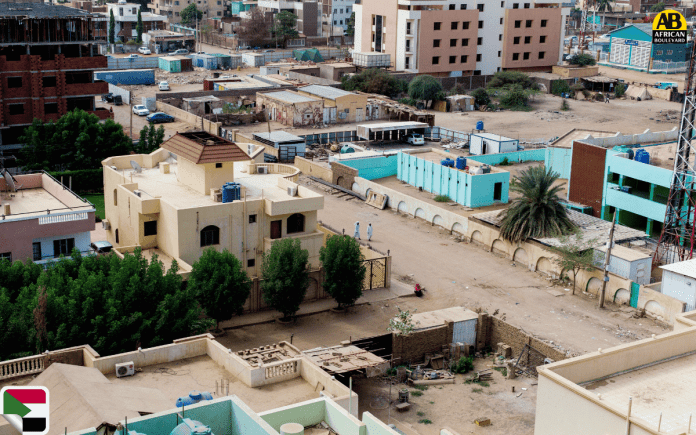
    Khartoum, Sudan – (African Boulevard News) – General Abdel Fattah al-Burhan, commander of the Sudanese army, has dispatched his emissaries on a regional diplomatic tour, sending the undersecretary for foreign affairs to plead his cause in various African capitals, according to sources. The general’s priority during this tour is to avoid any foreign military intervention.

    Al-Burhan is no stranger to public service, having served as the chairperson of the Sovereign Council of Sudan, the country’s transitional government, since August 2019. During his tenure, Sudan has been focused on bringing peace to the country after years of civil unrest and conflict. Al-Burhan has been at the forefront of the peace talks and has shown remarkable leadership skills that have garnered praise from the international community.

    “General al-Burhan’s approach to diplomacy is commendable,” said a political analyst. “He understands the importance of building relations with neighboring countries to ensure peace and stability in the region.”

    According to sources, the general’s decision to dispatch his emissaries on a diplomatic tour is a strategic move that aims to build relationships with neighboring countries and avoid any foreign military intervention. The tour comes amid heightened tensions between Sudan and Egypt over the Grand Ethiopian Renaissance Dam project, which Egypt fears will limit its access to water from the Nile River.

    “General al-Burhan’s tour is a clear indication that he is focused on finding peaceful solutions to regional conflicts,” said an expert on regional diplomacy.

    During the tour, the Sudanese delegation is expected to visit several African countries, including Ethiopia, South Sudan, and Kenya, to discuss regional security and stability. The delegation will also seek to build relationships with their counterparts in these countries and to explore opportunities for cooperation.

    “Given Sudan’s strategic location and resources, building relationships with neighboring countries is crucial for its long-term stability and economic growth,” said an international relations expert.

    In conclusion, General al-Burhan’s diplomatic tour is a clear indication of Sudan’s commitment to regional peace and stability. By building relationships with neighboring countries and avoiding foreign military intervention, Sudan is positioning itself as a key player in regional diplomacy.

    Egypt’s Sovereign Fund Attracts International Investors in Fight Against Debt Crisis with New Gulf Strategy

    0
    Read Time:1 Minute, 50 Second

    Cairo, Egypt – (African Boulevard News) – Ayman Soliman and Mohamed Amin have become the masterminds behind the Sovereign Fund of Egypt’s Gulf strategy. The fund aims to attract international investors to the country to combat its crippling debt crisis.

    The Sovereign Fund of Egypt is playing an active role in drawing investors to the North African nation. The fund is currently struggling with Egypt’s debt crisis, which has been ongoing for years. President Abdel-Fattah el-Sisi’s office is keeping a close eye on the fund as it works to improve the country’s economy.

    In a recent report, Ayman Soliman and Mohamed Amin were credited with the Sovereign Fund of Egypt’s Gulf strategy. The report highlighted their ability to attract international investors to the oil-rich region.

    The report also noted that the Gulf Cooperation Council (GCC) is a natural partner for Egypt’s fund, given the economic ties between the two regions. The report pointed out that the GCC is the top trading partner for Egypt, with over $26 billion worth of trade between the two regions in 2020.

    The Sovereign Fund of Egypt will use the proceeds from the investments to develop various projects in the country. These include the development of Egypt’s infrastructure, healthcare, and education sectors.

    The report also noted that the fund is looking to tap into the growing interest in environmentally friendly investments. Ayman Soliman, the Sovereign Fund of Egypt’s CEO, said that the fund is looking to invest in green energy projects in the country.

    “We want to attract investors who are interested in green energy projects and other environmentally friendly investments,” Soliman said.

    The fund has already made several high-profile investments in the country, including the acquisition of a 25% stake in Taqa Arabia, one of the country’s leading energy companies.

    In conclusion, the Sovereign Fund of Egypt is playing a crucial role in attracting international investors to the country as it grapples with its debt crisis. Ayman Soliman and Mohamed Amin’s Gulf strategy is helping the fund tap into the GCC’s economic ties with Egypt. The fund’s investments will help develop the country’s infrastructure, healthcare, and education sectors while also tapping into the growing interest in environmentally friendly investments.

    Senegal’s Gendarmerie on High Alert as Opposition Leader’s Defamation Appeal Nears

    0
    Read Time:1 Minute, 43 Second

    Dakar, Senegal – (African Boulevard News) – As Senegalese opposition leader Ousmane Sonko’s appeal hearing approaches, the gendarmerie has taken a stand to avoid any untoward incidents. The security forces have instructed their officers to keep their distance from reserve units enlisted by the presidential camp. The Gendarmerie hopes to avoid any conflicts, repeating the violence that occurred during the recent presidential election.

    The decision to distance the gendarmerie from other units was taken after reports emerged, which suggested that reserve officers had been recruited under dubious circumstances by the presidential camp. The gendarmerie said it was not comfortable with the recruitment of such reserve units, which could result in a backlash from opposition supporters.

    According to local sources, the gendarmerie has instructed its commanders to ensure the security of all citizens and take all necessary measures to prevent any conflict from arising. They have also urged the other army units to act responsibly and avoid any provocation or violence that could lead to a destabilization of the country.

    One of the gendarmerie’s senior officials stated that their main goal was to ensure that the appeal hearing concluded peacefully, and no one should attempt to disturb the proceedings of the court. As a professional force, he added, the gendarmerie had a responsibility to maintain law and order, and they would do everything in their power to ensure that the country remained stable and peaceful.

    Meanwhile, Ousmane Sonko’s supporters have expressed their concern that the government may try to influence the outcome of the appeal hearing. They have urged the international community to monitor the hearing more closely, to ensure that justice is served.

    In conclusion, the Senegalese gendarmerie is determined to avoid any clashes or violence during Ousmane Sonko’s appeal hearing. They have instructed their officers to keep their distance from reserve units enlisted by the presidential camp. Their main aim is to ensure the security of the citizens and prevent any disruption of the country’s peace and stability. The international community is watching closely as the proceedings unfold to ensure justice is served transparently.

    Angola’s Second Wave of Privatization Raises Concerns Over Corruption and Fairness

    0
    Read Time:1 Minute, 36 Second

    Luanda, Angola – (African Boulevard News) – In Angola, the government’s decision to privatize the state’s assets has been a contentious issue, with some government officials accused of favoring their family and friends. In the first wave of state privatizations, several firms led by allies of both the current and former Angolan presidents won tender calls. Now, as the government prepares for its second round of privatizations, critics are questioning whether the process will be any fairer.

    According to a recent report by African Intelligence, several companies owned by allies of President João Lourenço and his predecessor, José Eduardo dos Santos, won tenders in the first wave of privatizations. The report alleges that these companies may have benefited from insider information and that the deals may not have been transparent.

    The government has denied these allegations, stating that the tenders were open and transparent and that the winning companies were selected based on their proposals. However, some critics remain skeptical.

    “They were not transparent, and they were not competitive,” says Rafael Marques, a journalist and anti-corruption campaigner. “What we saw was a transfer of wealth from the state to a few individuals.”

    Despite these concerns, the government is moving forward with its second round of privatizations. The state will sell stakes in 195 companies across a range of sectors, including mining, agriculture, and telecommunications.

    Proponents of the privatization plan argue that it will encourage economic growth by attracting foreign investment and creating new jobs. However, critics worry that the process will once again be marred by corruption and favoritism.

    “We need transparency, we need good governance, we need accountability,” says Marques. “Otherwise, this process will only benefit a few individuals and not the whole population.”

    As Angola moves forward with its privatization plan, it will be crucial for the government to ensure that the process is fair and transparent. Otherwise, the country risks losing public trust and faith in its institutions.