Friday, April 24, 2026
80.1 F
Lagos
More
    Home Blog Page 419

    Burundi and Rwanda to Boost Economic Ties With $119.5m Cross-Border Road Project

    0
    Read Time:2 Minute, 2 Second

    Bujumbura, Burundi – (African Boulevard News) – In a bid to improve cross-border infrastructure and bolster economic ties between Burundi and Rwanda, the African Development Bank (AfDB) has allocated funds for a new road project connecting the two countries.

    With the reopening of the border last September after a six-year closure, there is a need for better connectivity to foster trade, movement of people and goods, and regional integration. The project will involve the renovation of the Rukomo-Kayonza-Kananga road, a crucial link that connects the two nations. The upgrade will enable seamless cross-border trade and support the growth of the agriculture and tourism sectors.

    According to AfDB’s Director General for East Africa, Nnena Nwabufo, the project is a significant part of the bank’s strategy to enhance regional integration and stimulate economic growth across Africa. “This project has the potential to unlock significant economic benefits and promote social development in the region,” she said.

    The African Development Bank will provide US $119.5 million to finance the project, with €6.6 million from the African Development Fund. The funds will be used to rehabilitate the Rukomo-Kayonza-Kananga road, extending about 54 kilometers, and construct a new cross-border market infrastructure, sanitation facilities, and border crossing infrastructure.

    The project is set to begin in 2023 and will be implemented in phases. The first phase will involve the rehabilitation of 12 kilometers of roads, the construction of two markets, and the establishment of sanitation facilities in Kayonza and Rukomo. The second phase will cover 23 kilometers of road construction and the establishment of border crossing infrastructure. The final phase will involve the construction of 19 kilometers of the road to Kananga.

    The initiative has been applauded by various stakeholders, including government officials, business leaders, and development partners. They laud the AfDB for its efforts to support African countries and boost regional economic growth.

    This cross-border road project aligns with the AfDB’s goal to promote inclusive growth and regional integration in Africa. It will help bridge the development gap between Rwanda and Burundi and provide an avenue for economic growth and social transformation in the region.

    The project is set to create job opportunities and boost trade between the two countries, unlocking the potential for more extensive regional economic integration in Central Africa. As such, the African Development Bank’s achievement will have far-reaching impacts on the region, unlocking opportunities for growth and development.

    Algeria Appoints New Foreign Minister as Country Faces Growing International Pressure

    0
    Read Time:1 Minute, 34 Second

    Algiers, Algeria – (African Boulevard News) – Almost two months after Ramtane Lamamra stepped down as Algeria’s foreign minister, President Abdelmadjid Tebboune has appointed a new foreign minister, Ahmed Attaf, and is rejigging the foreign ministry. Attaf is a former Ambassador to Spain and was previously a Secretary General at the Ministry of Foreign Affairs.

    Many news outlets in Algeria have reported on the changes at the foreign ministry, which come at a time when the country is facing some significant foreign policy challenges. Algeria’s relationship with France has been strained recently, and the country is also facing growing pressure from the United States and Europe to enforce human rights and democratic principles.

    The appointment of Ahmed Attaf has been welcomed by many in Algeria, who see him as a capable and experienced diplomat who can manage the country’s foreign policy challenges. In a statement, Tebboune said that Attaf will work to protect Algeria’s interests and ensure that the country is respected on the international stage.

    “Ahmed Attaf is an experienced diplomat who has served Algeria well in the past,” said Tebboune. “I am confident that he will be able to manage our foreign policy challenges and ensure that Algeria’s interests are protected.”

    The appointment of Attaf comes after several other changes at the foreign ministry in recent weeks. Tebboune has appointed new ambassadors to several key countries, including France and the United States. Many in Algeria see these changes as part of a broader effort by Tebboune to reshape the country’s foreign policy and assert Algeria’s independence.

    Overall, the changes at the foreign ministry represent an important shift in Algeria’s foreign policy. With growing pressure from the international community, it will be important for Algeria to have an experienced and capable foreign minister who can navigate these challenges and protect Algeria’s interests. The appointment of Ahmed Attaf is an important step in that direction.

    Mauritania enters fierce competition with Tunisia and Jordan to lead Union for the Mediterranean in 2024

    0
    Read Time:1 Minute, 49 Second

    Nouakchott, Mauritania – (African Boulevard News) – The race for the Union for the Mediterranean (UfM) secretary general seat in 2024 is heating up, with Jordan entering the competition alongside Tunisia and Mauritania, which have already submitted candidates. The position is currently held by a Jordanian diplomat, Nasser Kamel, whose term is set to end in 2024.

    The UfM was established in 2008 as an intergovernmental organization to enhance regional cooperation, integration, and stability between European and Mediterranean countries. The secretary general is responsible for implementing the organization’s strategy, managing its budget, and promoting its objectives.

    Jordan’s decision to enter the race for the UfM secretary general seat has been met with mixed reactions. Some have welcomed the move, seeing it as an opportunity to strengthen Jordan’s role in regional affairs and showcase its democratic progress and economic development. Others, however, have raised concerns about the country’s political and human rights record, as well as its ability to manage the organization effectively.

    In an interview with African Boulevard News, a Jordanian official defended the country’s candidacy, saying Jordan “is committed to the UfM’s vision of a more prosperous, peaceful, and integrated Mediterranean region.” He added that “Jordan has a rich history of cooperation and partnership with its Mediterranean neighbors and is well-positioned to contribute to the UfM’s mission.”

    Tunisia and Mauritania have also expressed their ambitions to lead the UfM. Tunisia’s candidate, Kamel Morjane, is a former Minister of Defense and Foreign Affairs, and Ambassador to France. Mauritania’s candidate, Ahmedou Ould Abdallah, is a former United Nations Special Representative for Somalia and former Minister of Foreign Affairs.

    The UfM secretary general race is expected to be closely watched by European and Mediterranean countries, which have a vested interest in the organization’s success. The UfM has played a vital role in promoting economic growth, social development, and cultural exchange in the region, and its next leader will have a significant impact on its future direction.

    As the competition for the UfM secretary general seat intensifies, it remains to be seen who will emerge as the frontrunner. With Jordan, Tunisia, and Mauritania all vying for the position, the race is sure to be a closely contested affair.

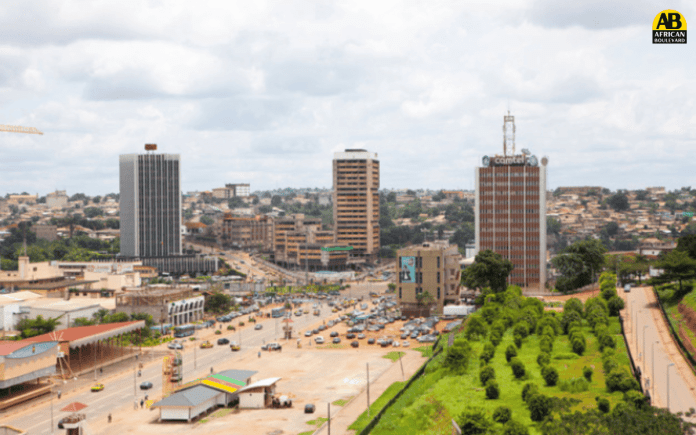
    Cameroon’s New Minister of Hydrocarbons Implements Ambitious Plans to Revamp and Relocate Ministry, Boosting Economic Growth

    0
    Read Time:2 Minute, 0 Second

    Yaounde, Cameroon – (African Boulevard News) – Bruno Jean-Richard Itoua, the new Minister of Hydrocarbons has been making waves since he took over the ministry in May 2021, with various ambitious plans to improve the department. The latest on his agenda is the reorganisation and the move of the Ministry of Hydrocarbons in Congo.

    The move has been a long time coming, and it seems Itoua is eager to bring a new wave of change to the ministry. According to sources, the reorientation of the Ministry of Hydrocarbons will provide new momentum for the development of the oil and gas sector, which is crucial to the country’s economic growth.

    The Ministry of Hydrocarbons will be moving to a new building, which is currently under construction. Itoua has stated that the new location will be more spacious and equipped with the necessary infrastructure for the ministry to fulfill its mandate adequately.

    The move to a new building is not the only change that Itoua is implementing. He is also undertaking a comprehensive reorganisation of the department, with a focus on improving the efficiency and effectiveness of the ministry’s operations. Itoua’s goal is to build a more transparent, accountable and results-oriented ministry, which will help to attract more investment and create more jobs in the sector.

    The move and reorganisation of the Ministry of Hydrocarbons have been lauded by industry experts and stakeholders. According to a report by Africa Intelligence, the reorganisation of the department is expected to bring significant benefits to the oil and gas sector in Congo, including increased production and revenue.

    “The move and reorganisation of the Ministry of Hydrocarbons are necessary steps that will help to create a more efficient and effective ministry, which is critical to the development of the oil and gas sector. It’s a move in the right direction towards growing the sector and improving the lives of the Congolese people,” said a top industry expert.

    In conclusion, Bruno Jean-Richard Itoua’s plans to reorganise and move the Ministry of Hydrocarbons in Congo are a sign of his commitment to the development of the oil and gas sector in the country. The move will bring much-needed change to the ministry and improve its operations, ultimately leading to increased production and revenue. With the support of industry experts and stakeholders, Itoua is set to achieve his goals and create a more prosperous future for Congo.

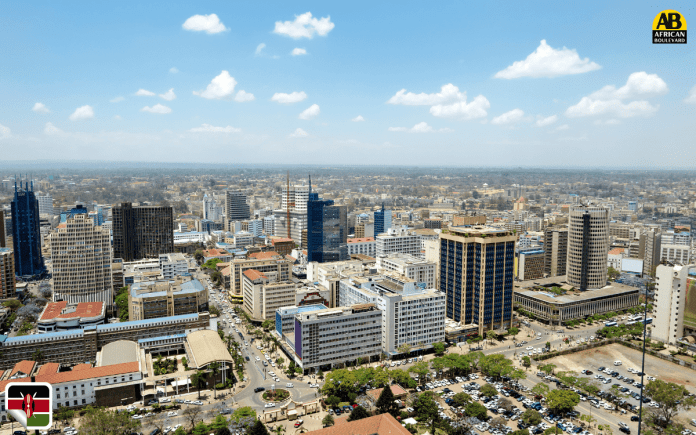
    Kenya seeks to reduce dependence on China with plans to forge economic partnerships with other South East Asian nations

    0
    Read Time:1 Minute, 51 Second

    Nairobi, Kenya – (African Boulevard News) – The Kenyan government, led by President Ruto, is looking into alternative economic partnerships with other South East Asian nations to reduce its dependence on China. This comes amidst concerns over China’s making of Kenya as one of its debt traps, that could lead to the country’s economic downfall.

    Sources suggest that Kenya is actively looking at other South East Asian powers to establish economic partnerships, which could reduce the role of China in Kenya’s economy. Kenyan officials believe that these new partnerships could boost their economy, and at the same time, provide them with more favorable debt terms.

    According to a high-ranking official within President Ruto’s administration, “We are reaching out to other South East Asian countries like Japan, Singapore, and South Korea, to encourage private investment, venture capital, and trade deals. The objective is to advance economic partnerships that would reduce Kenya’s reliance on China for debt and funding.”

    African financial analysts have also affirmed that Kenya is making efforts to improve its economic ties with other international powers. This move is part of the Kenyan strategy to diversify its funding sources and reduce its debt-to-GDP ratio, which currently stands at approximately 65%. They believe that it is a wise decision to avoid potential economic crises that could result from excessive Chinese debt.

    Analysts predict that private investment and trade deals with other South East Asian countries could significantly bolster Kenya’s economy. Japan, South Korea, and Singapore are some of the world’s most prosperous and dynamic economies, meaning that Kenya could benefit substantially from such partnerships.

    Kenya’s potential partnerships with South East Asian countries could also potentially improve the country’s infrastructure and boost investment in high-growth sectors like technology, agriculture, and renewable energy. Beyond that, the new partnerships would enable Kenya to take full advantage of favorable trade deals, while also improving its overall economic diversification.

    In conclusion, Kenya’s efforts to reduce its dependence on China is a wise move to avoid potential economic trouble. Opening up to other economically prosperous countries like South Korea, Singapore, and Japan would offer Kenya a chance to level up its economic prospects, reduce its debt burden, and secure a brighter economic future.

    Angola Takes Bold Step to Build Stronger Relationships with International Partners with Key Appointments

    0
    Read Time:1 Minute, 53 Second

    Luanda, Angola – (African Boulevard News) – The Minister of External Relations of Angola, Tete António, has recently appointed key staff to his administration, filling vacancies created by new ambassador postings abroad. This move comes as a positive step towards the country’s foreign policy objectives.

    António, who took office in April 2021, has been working towards building a strong and capable team to help him achieve his goals. With this recent appointment, António hopes to bring in fresh perspectives and ideas to help Angola build stronger relationships with its international partners.

    “I am pleased to announce the appointment of these key staff members to my administration. They are all highly qualified and experienced individuals who will bring valuable insight and expertise to our work,” said António.

    Among the new appointments is Carlos Alberto Fonseca, who has been named as the new Director of Diplomatic Protocol. Fonseca is a seasoned diplomat, having served as Angola’s ambassador to France and UNESCO. He is also expected to play a key role in organizing high-level visits from foreign dignitaries.

    Other key appointments include Amélia de Jesus, who will serve as the new Director for Economic Diplomacy and Cooperation. Jesus has extensive experience in financial institutions such as the IMF and the World Bank. She is expected to help Angola attract more foreign investment and strengthen relationships with its economic partners.

    The appointment of these key staff members is a critical step for Angola’s foreign policy agenda. As it seeks to diversify its economy and attract more foreign investment, Angola must build stronger relationships with its international partners. These new appointments bring a fresh perspective and expertise to António’s administration.

    However, there is still a long way to go. Angola’s foreign policy is facing a number of challenges, including the ongoing COVID-19 pandemic and a volatile international landscape. It will require a great deal of effort, resources and diplomacy to navigate these challenges and build stronger relationships with the international community.

    In conclusion, António’s appointment of key staff members to his administration represents a positive move towards Angola’s foreign policy objectives. It is now up to his team to put these appointments to good use and work towards building stronger relationships with the country’s international partners.

    Nigeria: Protesters Demand Justice as Legal Challenge Opens against Presidential Election Result

    0
    Read Time:1 Minute, 50 Second

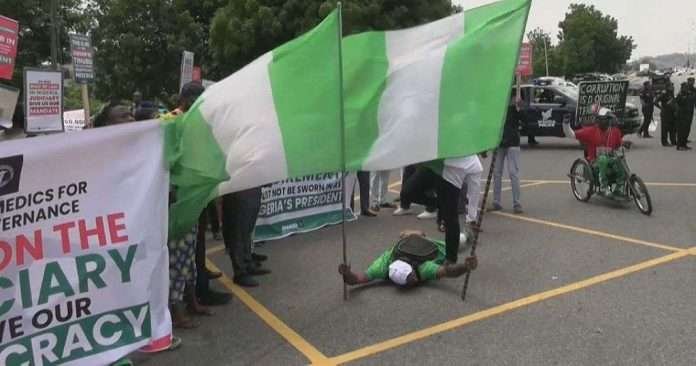
    Abuja, Nigeria – (African Boulevard News) – A group of protesters on Monday stormed the court in Abuja as the legal challenge opened against Nigeria’s presidential election result. The Independent National Electoral Commission (INEC) declared incumbent President Bola Ahmed Tinubu the winner of the election held in February, but the opposition party has challenged the victory on the grounds of irregularities and vote rigging.

    The protesters, led by civil society organizations, carried placards and chanted slogans, demanding justice and calling for the judiciary to be independent. “We are here calling on the judiciary to give Nigerians justice. The judiciary should look at the merit of the cases presented before them, following the Nigerian constitution and the electoral act,” a protester said.

    The legal challenge is being heard by a panel of judges at the Presidential Election Petitions Tribunal, which was set up to adjudicate complaints about the conduct of the election. The opposition party is alleging that the election was marred by widespread irregularities and vote rigging, including the use of violence to intimidate voters and electoral officials.

    The protest reflects the deep divisions and tensions in Nigeria following the election, which was characterized by allegations of vote buying, ballot stuffing, and voter suppression. The opposition party has refused to accept the result, and has called for fresh elections to be held.

    The legal challenge is expected to be keenly contested, with both sides presenting their evidence and arguments before the tribunal. The case is being closely watched by Nigerians and the international community, who are concerned about the implications for democracy and stability in Africa’s most populous country.

    Political analysts say the outcome of the case could have serious implications for Nigeria’s political future, as well as for the democratic process in Africa. They warn that if the election is nullified, it could trigger a constitutional crisis and lead to violence and instability in the country.

    As the tribunal begins its proceedings, Nigerians anxiously wait to see whether justice will be done, and whether the court will uphold the rule of law and the will of the people. The stakes are high, and the outcome of the case will have profound implications for Nigeria’s political and economic future.

    Burkina Faso: Coach Reveals Recipe for Defeating Nigeria’s Golden Eaglets in U-17 AFCON Clash

    0
    Read Time:1 Minute, 35 Second

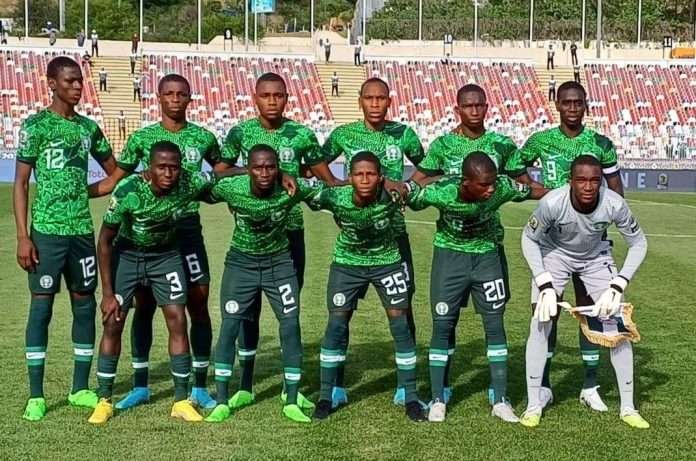
    Ouagadougou, Burkina Faso – (African Boulevard News) – The U-17 AFCON is underway, and the teams are gearing up for the much-anticipated games. Burkina Faso coach, Brahima Traore, has revealed the recipe for defeating Nigeria’s Golden Eaglets.

    With the U-17 AFCON underway, the Burkina Faso team is preparing for their upcoming game against Nigeria’s Golden Eaglets. Speaking with reporters, Coach Traore shared insight into his team’s game strategy. He said, “We will take our chances well. We will be patient with the ball, and we will defend well as a team.”

    The coach emphasized that his team would train vigorously to maintain a good shape throughout the game. He added that they would pay close attention to Nigeria’s strengths and weaknesses and devise a game plan accordingly.

    The Burkina Faso team has a challenging task ahead of them as they face one of the most successful U-17 teams in Africa. The Golden Eaglets have won the title five times in the past and are looking to add another trophy to their shelf this year. However, Coach Traore remains optimistic, saying that his team would give their best to secure a win. He said, “We have prepared well for the match, and we are confident that we can beat Nigeria. It will be a difficult game, but we are ready for the challenge.”

    In conclusion, the upcoming game between Burkina Faso and Nigeria’s Golden Eaglets promises to be an exciting encounter. Burkina Faso coach, Brahima Traore, has revealed his team’s strategy to defeat the reigning champions. With the passion and determination displayed by the coach and his team, one can expect a thrilling game. It will be interesting to see if Burkina Faso can pull off an upset and secure a win against Nigeria’s Golden Eaglets. Football fans across Africa are excited to see these two teams meet on the field.

    Latest news from African countries: Sudan crisis deepens, floods in Congo, economic challenges in Kenya and South Africa, and more.

    0
    Read Time:4 Minute, 37 Second

    Sudan Deepens Crisis in Africa as UN Sees 5 Million More Needing Aid

    The United Nations has warned that the crisis in Sudan has deepened, and an additional 5 million people will need humanitarian aid. This addition will bring the total number of people requiring aid to 15 million, half of Sudan’s population. The situation is proving challenging for the aid agencies, as donor support is dropping. Fighting continues to escalate in the region, and security forces are still persecuting civilians. The international community has called for a comprehensive political agreement between the warring parties to solve the crisis.

    Congo Floods Leave over 5,500 Still Missing

    The recent floods in eastern Congo have left over 5,500 people missing, according to local officials. Rescue workers are struggling to keep up with the search for missing people, and the death toll has risen to 400. Continuous heavy rains have caused flooding and landslides, putting millions of people at risk. Aid organizations have urged the government to take immediate steps to address the situation and provide aid to affected regions.

    Kenyan Shilling Pressured by Energy Sector FX Demand

    Kenya’s shilling has been hit by the demand for foreign currency in the energy sector. The demand for import payments from the sector has weighed heavily on the currency, which has recently plunged against other major currencies. This situation is expected to continue unless the government finds immediate measures to intervene.

    Sibanye Stillwater Q1 PGM Output Down 10% Due to Power Cuts, US Disruptions

    Sibanye Stillwater, one of South Africa’s leading mining companies, reported a 10% decline in their platinum group metal (PGM) output during the first quarter. The company said power cuts in South Africa and operational disruptions in the United States were to blame for the decline. Sibanye Stillwater has also been hit by the plunge in platinum prices, which has further hurt the mining industry in the region.

    Over 700,000 People Displaced within Sudan due to Violence

    The number of people internally displaced within Sudan has more than doubled to over 700,000 people due to the violence and instability in the country. The International Organization for Migration (IOM) has warned that the number of people continuing to flee could increase amid the ongoing crisis. The majority of those displaced are women and children, who face a lack of access to basic necessities, including food, shelter, and healthcare.

    IMF and Niger Reach Staff Agreement on New $133 Million Financing

    The International Monetary Fund (IMF) has reached staff agreement with Niger on new financing of $133 million to support the government’s economic reform program. The agreement is part of the IMF’s Extended Credit Facility and Extended Fund Facility and is subject to approval by the IMF’s Executive Board. This agreement is expected to help Niger’s economic recovery by addressing the country’s fiscal challenges and promoting growth.

    MSCI Gives Egypt “Special Treatment” in Equity Indexes over FX Concerns

    Global index provider MSCI has given Egypt “special treatment” by excluding the country from its emerging market currency indexes due to concerns about its foreign exchange market. The move is aimed at protecting investors’ portfolios from volatility and ensuring the smooth functioning of the index. Egypt’s foreign exchange controls have been the focus of the country’s economic challenges, leading to a decline in foreign investment.

    South African Logistics Property Firm Equites Exploring Sale of UK Business

    South Africa’s specialist logistics property group Equites is reportedly considering the sale of its logistics business in the United Kingdom to unlock value amid rising interest rates and asset valuation challenges. The company has been affected by challenges in the UK market, including regulatory hurdles and the ongoing Brexit uncertainties. The sale would allow the company to focus on its core operations in South Africa.

    South African Rand Steady as Markets Cautious Ahead of US CPI Print

    The South African rand has remained steady as markets continue to be cautious ahead of the release of the US Consumer Price Index (CPI) data. The data is expected to provide insight into the direction of the US interest rates, which could impact the global financial markets. The rand has also been affected by the ongoing issues in the mining sector and the government’s challenges in addressing the country’s economic downturn.

    Nigeria: 40 Worshippers Abducted from Church

    In northern Nigeria, gunmen have abducted 40 worshippers from a church in a remote village. The attack is the latest in a series of attacks targeting worshippers in the region and has raised concerns about the increasing security risks in the area. The government has been criticized for not doing enough to address the escalating security challenges in northern Nigeria.

    Zimbabwe Prize-Winning Novelist Acquitted Over Anti-Government Protest

    Zimbabwean novelist and filmmaker Tsitsi Dangarembga has been acquitted after being charged with participating in an anti-government protest in 2020. Dangarembga’s arrest had raised concerns about freedom of expression and political dissent in Zimbabwe. The novelist is a prominent critic of the Zimbabwean government and has gained international recognition for her literary works.

    Nigeria Presidential Election Result Challenged

    In Nigeria, the presidential election result is being challenged after the opposition leader’s bid for presidency was ruled ineligible by an appeal court. The ruling has raised concerns about the fairness of the electoral process and the government’s commitment to democratic principles. The country has been plagued by political instability and security challenges and has been struggling to address the issues facing the country.
    African Boulevard News – (2023-05-09)

    Nigeria: CSOs and the Media Battle Against Funding Shortages and Harassment in Quest for Democracy and Justice

    0
    Read Time:2 Minute, 13 Second

    Abuja, Nigeria – (African Boulevard News) – The role of civil society organizations (CSOs) and the media in promoting democracy and good governance in Nigeria cannot be overemphasized. These two entities have been instrumental in the fight against corruption, injustice, and abuse of power in the country. In this sixth part of our discussion on the topic, we will delve into the challenges facing CSOs and the media in their quest for a better Nigeria.

    Challenges Facing CSOs

    CSOs play a crucial role in promoting democracy and good governance in Nigeria. They serve as watchdogs, holding government officials accountable for their actions or inactions. However, they face numerous challenges, including inadequate funding, lack of access to information, and government hostility.

    According to a report by the Nigerian Network of NGOs (NNNGO), many CSOs struggle to secure funding for their activities. This limits their ability to carry out projects that could benefit the community. Additionally, the Nigerian government has passed several laws that restrict the operations of CSOs, making it difficult for them to function effectively.

    Speaking on the issue, Mr. Johnson Oluwole, the Executive Director of the Centre for Democracy and Development (CDD), said, “The government sees CSOs as a threat to their power, hence the various attempts to stifle their operations. This is unfortunate since CSOs play a vital role in shaping public opinion and holding government officials accountable.”

    Challenges Facing the Media

    The media is often referred to as the fourth estate of the realm, and rightly so. They have the power to shape public opinion, hold public officials accountable, and promote transparency and accountability in government. However, the media faces several challenges, including censorship, harassment, and intimidation.

    In Nigeria, journalists face constant threats to their safety and freedom. They are often subjected to harassment and arrest by security agents for carrying out their duties. The government also uses censorship as a tool to control the media, limiting their ability to report on sensitive subjects.

    Commenting on the issue, Mr. Austin Tam-George, a former Commissioner for Information in Rivers State, said, “The government sees the media as a threat to their power, and they will do anything to silence them. This is a dangerous trend that must be addressed if we want to promote democracy and good governance in Nigeria.”

    Conclusion

    CSOs and the media are crucial partners in the fight for a better Nigeria. However, they face numerous challenges in their quest for transparency, accountability, and justice. It is crucial that the government recognizes their contributions to society and creates an enabling environment for them to operate freely. Only then can we hope for a Nigeria that is truly democratic and prosperous.