Saturday, May 2, 2026
80.4 F
Lagos
More
    Home Blog Page 351

    Africa: Kylian Mbappe Commits to PSG, Puts End to Rumors of Departure.

    0
    Read Time:2 Minute, 9 Second

    Diaspora, Africa – (African Boulevard News) – Kylian Mbappe, the 22-year-old French striker and captain of the national team, has made headlines recently by announcing that he will remain with Paris Saint-Germain (PSG) for the time being. Mbappe had confirmed that he would not be extending his contract with the club beyond June 2024; this led many to speculate that he would be exploring his options for a future club. However, Mbappe’s latest decision has put an end to rumors that he would be leaving the French club any time soon.

    Mbappe’s time with PSG has been filled with impressive performances and awards. He has scored an incredible 120 goals in 160 appearances for the club, including 42 last season alone. The striker also helped the club reach the Champions League final in 2020, and he has won several domestic trophies during his time in Paris.

    Despite his incredible success with PSG, many experts believe that Mbappe is destined for even greater accomplishments in the future. The young star has been linked with moves to clubs such as Real Madrid, with many speculating that he could be the next big star to make a move to La Liga.

    However, Mbappe’s latest announcement has put an end to the rumors for the time being. Speaking about his decision to remain with PSG, Mbappe stated: “This is my home. I have grown up here, and I feel that I still have so much to achieve with this club. I am committed to giving my absolute best every time I step onto the pitch, and I hope that we can continue to win more trophies together.”

    Mbappe’s decision has been met with a mixed response from fans and experts alike. While some are thrilled that he will be remaining with PSG, others believe that the striker may be missing out on opportunities to reach new heights in his career. However, for the time being, it seems that Mbappe is content to remain with his current club and continue to bring success to Paris.

    In conclusion, Mbappe’s decision to stay with PSG for the time being has put an end to rumors that he would be leaving the club any time soon. While some fans and experts may be disappointed, Mbappe’s decision shows his commitment to his current club and his desire to bring even more success to PSG. Only time will tell what the future holds for this young star, but for now, he is content to remain where he is and continue to work towards his goals with his current team.
    Algeria: New Russia-Algeria Agreements offer a lifeline amidst a ruptured relationship with the West.

    0
    Read Time:2 Minute, 14 Second

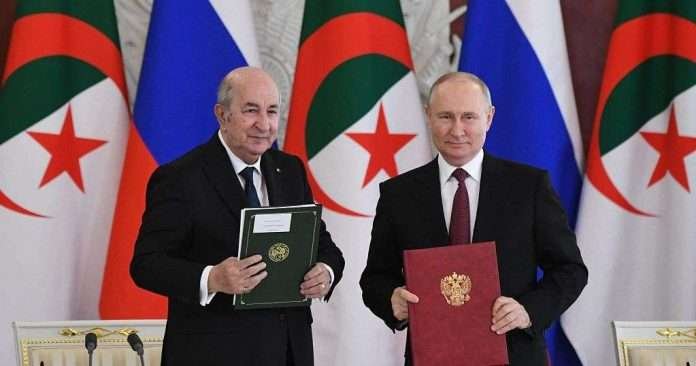
    Algiers, Algeria – (African Boulevard News) – Russian President Vladimir Putin has been working to strengthen relationships with African, Asian, and Middle Eastern countries in the wake of deteriorating ties with the West. Recently, Algeria’s President Abdelmadjid Tebboune met with his Russian counterpart in Moscow to discuss ways to strengthen ties between the two nations. The talks were aimed at boosting bilateral cooperation, signing new agreements, and deepening strategic relationships.

    The meeting was productive, and both leaders expressed satisfaction with the outcome. “Our relations with Russia are of strategic importance to Algeria,” said Tebboune. “We want to increase cooperation with Russia in a wide range of areas, including trade, energy, and security.”

    One of the significant agreements signed between Russia and Algeria is the expansion of cooperation in the military sphere. The two countries have worked on close military ties, and the new agreement would expand on this cooperation. Algeria is Russia’s second-largest arms buyer after India, and the new agreement would provide Russian arms companies with more business opportunities.

    In addition to military cooperation, the two countries also agreed to increase cooperation in the energy sector. Russia is one of the world’s largest oil and gas producers, while Algeria has significant oil and gas reserves. The two countries have agreed to explore ways of expanding cooperation in the energy sector, including joint ventures in exploration and production.

    Furthermore, the two countries agreed to deepen cooperation in the field of healthcare and education. Russian educational institutions are well-respected, and Algeria is interested in increasing cooperation in the field of medical research and education. The agreement is expected to lead to the establishment of joint research programs and exchanges of scholars and experts in the field of healthcare.

    The meeting between the two leaders is a significant step towards strengthening Russia’s relations with Africa; it reinforces Russia’s commitment to building partnerships with countries that share its values and interests. In addition, analysts believe that the meeting is a strategic move by Russia to extend its sphere of influence in Africa.

    According to experts, “Russia is looking for new partners in Africa as it seeks to expand its global influence. Algeria is an essential partner for Russia in North Africa; it has a strategic position and access to the Mediterranean, making it an essential partner for Russia.”

    In conclusion, the meeting between Putin and Tebboune solidifies the strong ties between Russia and Algeria. The agreements signed will provide new opportunities for cooperation in various fields, including energy, healthcare, and military cooperation. The meeting is a clear indication of Russia’s commitment to building strategic partnerships in Africa, which will undoubtedly benefit both Russia and its African partners in the long term.

    Zimbabwe: Record-Breaking Tobacco Sales Bring Much-Needed Boost to Economy Amidst Health Concerns

    0
    Read Time:1 Minute, 54 Second

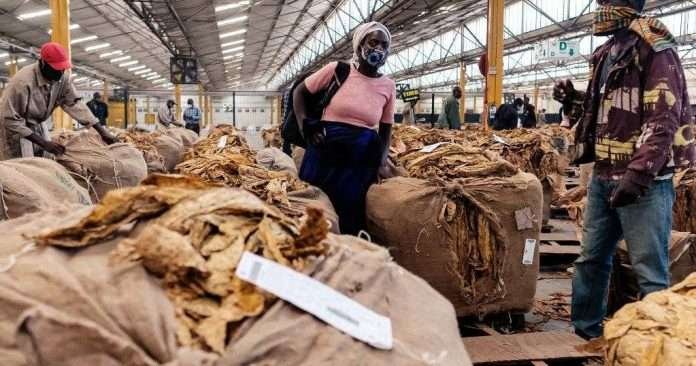
    Harare, Zimbabwe – (African Boulevard News) – Zimbabwe, one of the world’s top ten tobacco producers, has reported record-breaking tobacco sales this season. According to the Zimbabwean government, the country has sold over 261 million kilograms of tobacco since the tobacco selling season commenced.

    The Tobacco Industry and Marketing Board (TIMB) revealed that this is the highest record of tobacco sales since Zimbabwe began commercial tobacco farming 100 years ago. The average price per kilogram sold is US$3,39, which is 6.6% higher than the US$3,18 recorded during the previous season.

    “The increase in tobacco sales is commendable, and we are pleased with the progress made so far. The tobacco industry is a vital contributor to our economy, and we will continue to support and promote tobacco farming to ensure we maintain our position as one of the world’s leading tobacco producers,” said Zimbabwe’s Minister of Agriculture, Perrance Shiri.

    The TIMB attributed the record-breaking sales to increased demand from China and the United Arab Emirates, which accounted for 72% of the sales. The TIMB also stated that the tobacco sector employed over 170,000 workers and was critical to the country’s foreign currency earnings, with tobacco exports generating over US$1,1 billion annually.

    Industry experts have lauded the tobacco selling season as a significant boost for the country’s economy. Economist, Dr. Gift Mugano, noted that the tobacco sector’s success would positively impact Zimbabwe’s Gross Domestic Product (GDP) and ease the country’s foreign currency shortages.

    “Zimbabwe’s economy has been suffering from a shortage of foreign currency, and the tobacco industry’s success will significantly improve the economy’s position. We hope this momentum continues and propels other sectors for the continued growth and development of Zimbabwe’s economy,” said Mugano.

    However, some health experts have raised concerns over the potential health impacts of tobacco production, highlighting the negative effects of tobacco use on human health.

    Tobacco farming has been a significant contributor to Zimbabwe’s economy, and with the success of this selling season, the tobacco sector will continue to play a vital role in the country’s economic growth. The Zimbabwean government has expressed its commitment to promote responsible tobacco farming practices to ensure the positive impact of tobacco production on the country’s economy and the tobacco farmers who rely on it.

    Ethiopia: Outcry as Investigations Reveal Aid Diversion by Government Officials and Aid Organizations in Tigray

    0
    Read Time:2 Minute, 23 Second

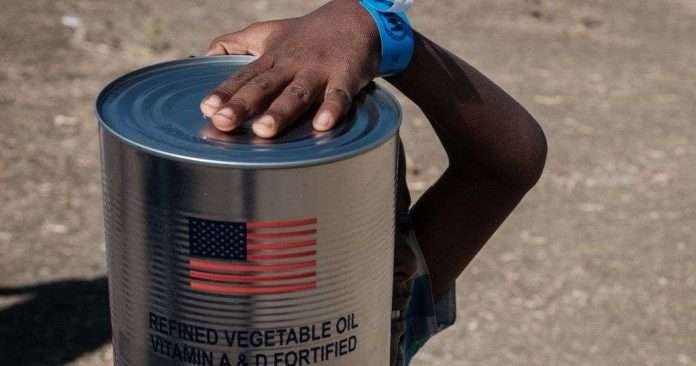
    Addis Ababa, Ethiopia – (African Boulevard News) – After investigations to uncover the diversion of food aid in Tigray, authorities have identified 186 suspects, including members of government and aid organizations. The revelations have caused outrage in the country as the situation in Tigray continues to be dire.

    Authorities in Tigray have been leading an investigation into the embezzlement of aid since reports surfaced of food and medical supplies being taken by government officials and fighters. The humanitarian crisis in Tigray has been ongoing since late 2019, with an estimated 5.2 million people in need of humanitarian assistance.

    The investigation has led to the identification of 186 suspects, including government officials and members of aid organizations. The suspects are believed to have diverted aid meant for the people of Tigray for their own personal gain.

    According to a statement from the interim regional authorities, “the alleged stealing of aid meant for the people of Tigray is unacceptable and those responsible will be held accountable for their actions.”

    The revelations have caused outrage and condemnation from Ethiopians, who have expressed their disappointment in the government’s handling of the crisis in Tigray. Many people have taken to social media to voice their opinions, with some calling for the immediate resignation of officials involved in the embezzlement.

    The crisis in Tigray has been ongoing, with reports of human rights violations and atrocities committed against civilians by government forces and fighters. The aid diversion has only compounded the situation, leaving millions of people without access to essential supplies.

    The investigation has been welcomed by aid organizations, who have been calling for greater accountability and transparency in the distribution of aid in Tigray. The World Food Programme (WFP) has been working to provide food assistance to over 4 million people in Tigray, but the aid diversion has hindered their efforts.

    “We have been working tirelessly to provide food assistance to the people of Tigray, but the embezzlement of aid has made it incredibly difficult. We welcome the investigation and hope it will lead to greater accountability and transparency in aid distribution,” said Steven Were Omamo, WFP’s Country Director for Ethiopia.

    The investigation is ongoing, and the authorities have stated that those found to be responsible for the embezzlement of aid will be held accountable. It remains to be seen how justice will be served and whether aid distribution in Tigray can be improved.

    The people of Tigray continue to suffer, and it is imperative that the government and aid organizations work together to provide essential supplies and assistance to those in need.

    In conclusion, the embezzlement of aid meant for the people of Tigray is a despicable act that must be condemned. The investigation into the aid diversion is a step towards greater accountability and transparency in aid distribution, but more needs to be done to address the ongoing humanitarian crisis in Tigray.

    DRC: Residents Desperate for Peace as EAC Force Fails to Expel Rebels

    0
    Read Time:2 Minute, 13 Second

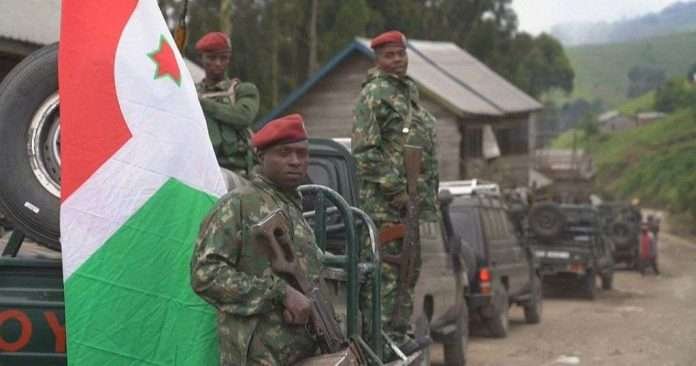
    Kinshasa, DRC – (African Boulevard News) – Despite claims of progress, residents in eastern DRC claim that the East African Community (EAC) force is yet to expel rebels, namely the M23 movement, that captured large areas in North Kivu province. Reports show that the EAC force, also known as the Force Intervention Brigade, has lived up to some expectations, but much still needs to be done.

    The EAC force is a military operation that comprises soldiers from Tanzania, South Africa, and Malawi. They were deployed to the DRC in 2013 and were tasked with the responsibility to combat the rebels and bring peace to the region. At the time, the M23 movement had taken control of large areas in North Kivu province and displaced hundreds of thousands of people.

    The EAC force, backed by the United Nations, was expected to bring an end to the conflict, but their progress has been slow. Residents in the affected areas claim that despite the presence of the EAC force, the rebels are still active and continue to disrupt their daily lives.

    “Fighting and killings are still happening here. We don’t know if the EAC force is affected by corruption or what the issue is, but they are not doing enough,” said a resident in North Kivu province.

    While the EAC mission commander, Major General James Aloizi Mwakibolwa, reported that they have made progress in the region, stating that “The population, especially women and children, are now feeling safe, security has improved, and economic activities have resumed,” residents claim that they are yet to experience such changes.

    The EAC force has faced a lot of criticism due to their inability to bring peace to the region. Many people blame the slow progress on corrupt officials who allegedly collaborate with the rebels. Observers point out that the EAC force has also been hindered by the difficult terrain and a lack of intelligence reports.

    Despite the challenges, the EAC force has vowed to continue their efforts in bringing peace to the region. In a recent statement, the mission commander stated that, “We will continue to work with other military and civil components of the United Nations Mission for the Stabilization of Congo to bring an end to the conflict.”

    The EAC force has also received support from the international community, and a coalition of NGOs has urged governments to provide more resources to the EAC force.

    The situation in eastern DRC remains tense, and while the EAC force has made progress, the region is far from achieving lasting peace. The EAC force faces an uphill battle, but they have vowed to continue their efforts and bring an end to the conflict.

    Zimbabwe: Government’s Excessive Hike in Fees for Presidential Candidates Sparks Outrage and Fears Over Democracy

    0
    Read Time:1 Minute, 58 Second

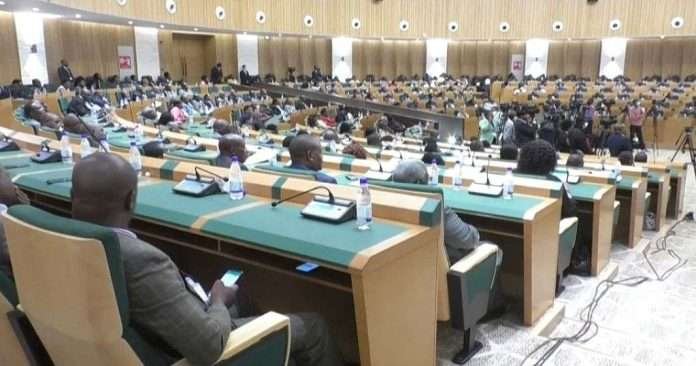
    Harare, Zimbabwe – (African Boulevard News) – The Zimbabwean government has increased the fees to run for political offices, with presidential candidates now required to pay $20,000 instead of $1,000. This decision has been viewed as discriminatory by the opposition, who are already grappling with the country’s failing economy.

    According to a statement from the Zimbabwe Electoral Commission (ZEC), the changes in fees are due to “costs associated with running elections, including the printing of ballot papers and hiring of polling officers.” The fees are also expected to deter “frivolous candidates who have no serious intention of running for office.”

    The opposition, however, has raised concerns over the new fees, stating that the move is intended to stifle dissenting voices and limit political competition. Opposition leader Tendai Biti accused the government of seeking to “exclude poor but serious citizens from contesting for public office.”

    The move comes just one year after Zimbabwe held its first post-Mugabe elections, which were marred by allegations of vote rigging and violence. The government had promised to reform the electoral system, but critics say these recent changes will only serve to deepen political divisions and foster an environment of fear and intimidation.

    The new fees are also expected to have a significant impact on smaller political parties, who may struggle to raise the required funds. This could result in a reduction in the number of parties contesting, thereby limiting choice for voters.

    Political analysts have also raised concerns over the timing of the announcement, as Zimbabwe heads towards the 2023 presidential elections. Many fear that the move will further erode the country’s fragile democracy and could result in widespread civil unrest.

    “The timing of this decision is suspect, and it raises serious questions about the government’s commitment to free and fair elections,” said political analyst Brian Raftopoulos.

    It remains to be seen how the opposition and civil society will respond to the new fees. However, many are calling for the government to reconsider the move and to engage in meaningful dialogue with all stakeholders to ensure that the electoral system is inclusive and fair.

    In conclusion, Zimbabwe’s government increase in fees for political offices has faced wide criticism from opposition leaders, political analysts, and civil society. The shift in fees could limit political competition, foster an environment of fear, and further erode the country’s fragile democracy.

    Mali: People to Vote on New Constitution Amidst Debate on Presidential Powers and Religion

    0
    Read Time:1 Minute, 59 Second

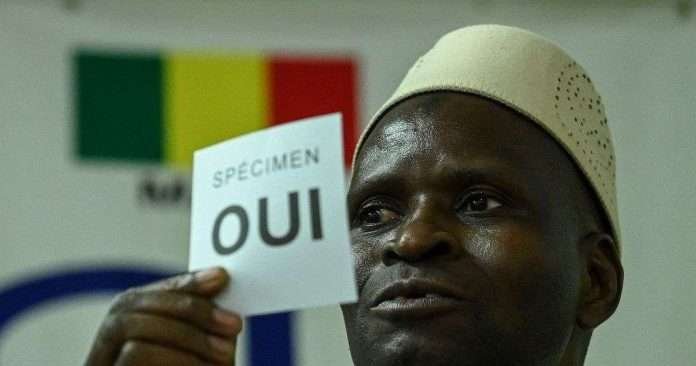
    Bamako, Mali – (African Boulevard News) – Mali is preparing for a referendum to be held on Sunday, which will decide whether the country should adopt a new constitution. The proposed changes to the constitution include measures to strengthen the presidential powers and affirmation of secularism. Ahead of the referendum, Malians have been debating the implications of the proposed changes.

    The new constitution contains several significant changes to the existing one. One of the most notable changes is the strengthening of the President’s powers. The President will be able to dissolve the National Assembly and will have the power to appoint the Prime Minister, who will no longer be elected by the Assembly.

    Another key change is the affirmation of secularism in Mali. The new constitution recognizes Mali as a secular state, and the practice of any religion will not be allowed to interfere with the public sphere. This provision aims to ensure the protection of the rights of the Malian people, regardless of their religion.

    “The new constitution will strengthen our democracy and provide stability to the country,” said Oumar Mariko, a former MP in Mali. “It will also ensure that the President has the necessary powers to implement the policies that he or she has been elected to carry out.”

    However, some experts argue that the proposed changes to the constitution could have negative consequences. “The President’s increased powers could lead to authoritarianism, and the affirmation of secularism could be seen as an attack on Islamic culture,” said Amadou Toure, a political analyst.

    The referendum has also been criticized for not being inclusive enough. Some opposition groups have accused the junta of excluding them from the process and not allowing enough time for the public to debate the proposed changes.

    “The referendum is being rushed, and people haven’t had enough time to understand the implications of the proposed changes,” said Mohamed Ould Cheikh, a political activist. “We need more time for debate and discussion.”

    Despite the criticism, many Malians see the referendum as an opportunity for change and progress. “We need a new constitution that reflects the aspirations of the Malian people,” said Fatoumata Traore, a student. “This is a chance for us to move forward and build a better future for our country.”

    The referendum is set to take place on Sunday, and the Malian people will have the opportunity to decide the future of their country.

    Nigeria: Central Bank’s Bold Move to Determine Naira Exchange Rate Leads to Record Low and High Emotions

    0
    Read Time:2 Minute, 28 Second

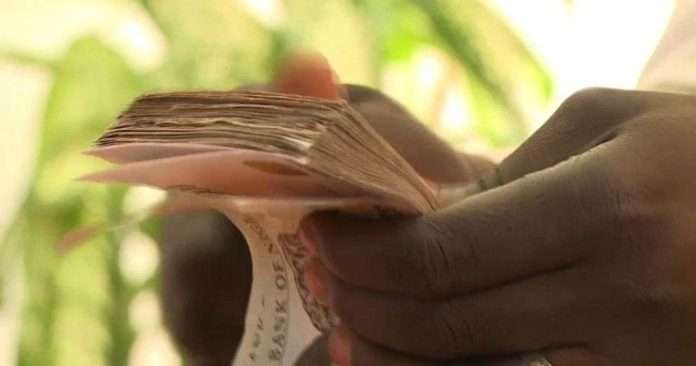
    Abuja, Nigeria – (African Boulevard News) – In a bid to stabilize its economy, the Central Bank of Nigeria (CBN) has allowed market forces to determine the exchange rate of the naira currency. Following the announcement, the value of the naira plummeted to a record low of 755 Naira per 1 U.S. dollar on Wednesday, but has since bounced back.

    The move by the CBN is aimed at gradually unifying the multiple exchange rates and ensuring a more efficient allocation of foreign exchange resources. The new policy puts an end to the official exchange rate of 410 naira per dollar, which had been used by the government to subsidize certain imports.

    According to the CBN governor, Godwin Emefiele, the decision was taken in response to the impact of the COVID-19 pandemic on the economy and the need to eliminate the distortions in the foreign exchange market. He stated that the move would improve liquidity in the foreign exchange market and attract more foreign investment into the country.

    “This will improve confidence and attract capital inflows into the country, creating more opportunities for Nigerians,” Emefiele said.

    However, some economists have expressed concerns that the new policy could lead to higher inflation and hurt the purchasing power of Nigerian consumers. They argue that the devaluation of the naira will make imports more expensive, leading to higher costs of goods and services.

    “The policy shift may lead to inflationary pressures on the economy, particularly in the short term. The prices of imported goods, including petroleum products, will rise, which will ultimately lead to higher domestic prices,” says Professor Ndubuisi Nwokoma, an economist at the University of Lagos.

    Despite the concerns, some experts say the move was a bold step towards reviving Nigeria’s economy, which has been struggling due to low oil prices and the impact of the pandemic. The country’s economy last year contracted by 1.92%, the worst recession in decades.

    “The CBN has done the right thing by allowing market forces to determine the exchange rate. This will attract more foreign investment and improve the country’s economic outlook,” says Bismarck Rewane, an economist and CEO of Financial Derivatives Company.

    As Nigeria seeks to attract more foreign investment, the new policy could be a game-changer for the country’s economy. However, it remains to be seen how the market will respond to the new policy and the impact it will have on the purchasing power of Nigerian consumers.

    In conclusion, the Central Bank of Nigeria’s decision to let market forces determine the exchange rate of the naira currency is a bold step towards reviving the country’s economy. Although concerns have been raised about the potential impact on inflation and the cost of goods and services, some experts say the move could attract more foreign investment and improve the country’s economic outlook. As Nigeria navigates the challenges of the COVID-19 pandemic and low oil prices, the new policy could be a game-changer for the country’s economy.

    Namibia: Government to Sell 40 Crocodiles Following Rise in Deadly Human Attacks

    0
    Read Time:2 Minute, 3 Second

    Windhoek, Namibia – (African Boulevard News) – The Namibian government has decided to put 40 crocodiles up for sale as it aims to address the issue of rising incidents of crocodile attacks on human beings. The stunning decision was made following several reports of human encounters with the reptiles, which led to injuries and fatalities in some cases.

    Namibia is home to a significant population of Nile crocodiles, which are known to be among the world’s most dangerous reptiles. The government has issued more permits to kill the crocodiles, while also making efforts to relocate the reptiles to better habitats. The decision to sell the crocodiles comes as part of a broader strategy to protect the lives of people living in the affected areas.

    According to the country’s Ministry of Environment and Tourism, the crocodiles will be sold to farmers and wildlife conservations, who will be responsible for ensuring the safety of the animals and the environment. The ministry has assured that the sale of the crocodiles will be done in a controlled and sustainable manner and will adhere to strict animal welfare standards.

    “This is a difficult decision, but we believe it is necessary to keep our communities safe. The crocodiles are a crucial part of the ecosystem, and we must ensure their survival while also protecting our people,” said Pohamba Shifeta, the Minister of Environment and Tourism.

    The decision to sell the crocodiles has sparked mixed reactions from different stakeholders. Some conservationists have raised concerns about the welfare of the crocodiles and their potential use for commercial purposes. They warn that the move could backfire and lead to more conflict between humans and crocodiles.

    However, the government insists that the decision is in the best interests of both humans and animals. The ministry has assured that the sale of the crocodiles will be done in a transparent and responsible manner, and all measures will be taken to ensure the welfare of the animals and their safety.

    In conclusion, the Namibian government’s decision to sell 40 crocodiles comes as a shock, albeit necessary, to most stakeholders. The move to sell the reptiles is part of a broader strategy to reduce the risks of crocodile attacks on human beings. The government has assured that the sale will be done transparently and sustainably and will adhere to strict animal welfare standards. It remains to be seen how the move will impact the debate around wildlife conservation, human-wildlife conflicts, and animal welfare in Namibia.

    Senegal: Opposition leader convicted of rape allowed to remain free, sparks controversy and protests

    0
    Read Time:1 Minute, 45 Second

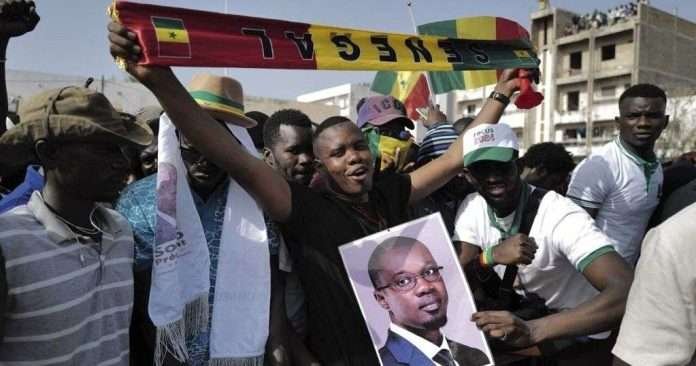
    Dakar, Senegal – (African Boulevard News) – The Senegalese government has defended its decision to allow opposition leader Ousmane Sonko to remain at liberty after his conviction for rape.

    The government has faced criticism for not arresting Mr. Sonko, who was found guilty of rape and sentenced to five years in prison.

    Many Senegalese, particularly Sonko’s supporters, believe that the decision to let him remain free was politically motivated. However, the government has said that it was following due legal process.

    According to a government spokesperson, “The decision must be available. When the decision is available, he must be notified. Once he is notified of the decision, – second phase – himself, the convicted, can turn himself in, or else, the government will have to execute the decision.”

    The spokesperson added that the government would “do everything in its power to ensure that justice is done in a fair and impartial manner.”

    Mr. Sonko, who is seen by many as the main opposition figure in Senegal, has denied the rape allegations against him, claiming that they are politically motivated.

    The trial had been seen as a test of the country’s democratic credentials. Supporters of Mr. Sonko had held protests across the country, calling for his release.

    “The decision to allow Ousmane Sonko to remain free after his conviction is a victory for democracy,” said one political analyst. “It shows that the rule of law is being respected, and that the government is committed to upholding the rights of all citizens.”

    However, the decision has also sparked criticism from some quarters. Some Senegalese believe that the government should have arrested Mr. Sonko immediately, to avoid any risk of him fleeing the country.

    Despite the controversy, Mr. Sonko remains a popular figure in Senegal, particularly among young people. His supporters have promised to continue their protests until he is released.

    The fate of Mr. Sonko is likely to have a significant impact on the political landscape in Senegal in the coming months and years. The government will need to balance the need to maintain law and order with the need to respect the rights of all citizens.