Monday, April 20, 2026
79.2 F
Lagos
More
    Home Blog Page 16

    Tunisia Fights for Justice: Exposing Corruption and Demanding Accountability in Ben Ali-era Banking Scandal

    0
    Read Time:2 Minute, 25 Second

    Tunis, Tunisia – (African Boulevard News) – In a landmark case, a Tunisian court is set to revisit the banking practices of the Ben Ali era. This week, two former managers of the country’s central bank will testify about the banking irregularities that favored the family of the former president.

    The trial comes as Tunisia continues to grapple with the legacy of the Ben Ali regime, which was characterized by corruption and nepotism. The banking sector, in particular, was heavily influenced by the former president and his inner circle.

    The court proceedings will shed light on the extent of the irregularities and the impact they had on the country’s economy. Experts believe that these practices contributed to widening the wealth gap and stifling economic growth.

    “The Ben Ali era was marked by a lack of transparency and accountability in the banking sector,” said financial analyst, Ahmed Khalef. “The former president and his family were able to use their influence to secure lucrative deals and siphon off funds for personal gain.”

    One of the key focuses of the trial will be the involvement of the central bank in these irregularities. The two former managers will be questioned about their role in facilitating the questionable transactions that benefited the Ben Ali family.

    “The central bank should have been the guardian of the country’s financial system, ensuring fair and transparent practices,” said legal expert, Fatima Zahra. “Instead, it became a tool for enriching the ruling elite at the expense of the Tunisian people.”

    The trial is expected to reignite public anger over the corruption that was endemic during the Ben Ali regime. Tunisians took to the streets in 2010 and 2011 to protest against the government’s corrupt practices, ultimately leading to the ousting of Ben Ali.

    Since then, Tunisia has made efforts to address the issues of corruption and nepotism. However, progress has been slow, with many feeling that those responsible for past wrongdoings have not been held accountable.

    “The trial is a step in the right direction towards achieving justice for the Tunisian people,” said human rights activist, Leila Abdallah. “It is important that those who abused their power and stole from the country’s coffers are held accountable.”

    As the court revisits the banking practices of the Ben Ali era, Tunisians hope for a fair and transparent trial that will shed light on the extent of the corruption and bring about justice for the victims. This trial is seen as a crucial step in the country’s ongoing efforts to build a more accountable and transparent financial sector.

    With the testimonies of the former central bank managers, the court will have the opportunity to uncover the truth behind the irregularities and send a strong message that corruption will not be tolerated in Tunisia’s banking system. The outcome of the trial will undoubtedly have far-reaching implications for the country’s future and its pursuit of economic stability and prosperity.

    Ethiopia’s Prime Minister Assembles “Dream Team” of Professionals for Historic Stock Exchange Launch

    0
    Read Time:2 Minute, 25 Second

    Addis Ababa, Ethiopia – (African Boulevard News) – In a bid to attract investor support and bolster Ethiopia’s economic growth, Prime Minister Abiy Ahmed has assembled a “dream team” of professionals from the Ethiopian diaspora to prepare for the launch of the country’s first-ever stock exchange.

    The Ethiopian Securities Exchange, which is seen by Prime Minister Abiy as a key reform measure, aims to attract both domestic and foreign investors, spurring economic development and job creation in the country. The prime minister believes that opening up Ethiopia’s capital market will provide new opportunities for businesses and individuals alike.

    To ensure the success of this ambitious venture, Prime Minister Abiy has tapped into the expertise and experience of professionals from the Ethiopian diaspora. These individuals bring with them a wealth of knowledge and international networks, which will be instrumental in establishing a transparent and efficient stock exchange.

    The establishment of the Ethiopian Securities Exchange is part of Prime Minister Abiy’s broader economic reform agenda, which includes liberalizing key sectors and attracting private investment. The prime minister envisions a thriving capital market that will contribute to Ethiopia’s overall economic growth and reduce its reliance on foreign aid.

    Ethiopia has long been regarded as one of Africa’s fastest-growing economies, with a population of over 100 million people and a Gross Domestic Product (GDP) growth rate of nearly 10% in recent years. By launching a stock exchange, the country aims to tap into its immense potential and provide investors with new opportunities in a dynamic and rapidly expanding market.

    Industry experts and stakeholders have expressed optimism about Ethiopia’s stock exchange initiative. Dr. Alemayehu Geda, a renowned economist and professor at Addis Ababa University, believes that the launch of the exchange will attract significant foreign direct investment and promote financial inclusivity.

    “The Ethiopian Securities Exchange will serve as a platform for both local and foreign investors to participate in the growth of Ethiopia’s economy,” Dr. Geda said. “It will provide an opportunity for small and medium-sized enterprises to access capital and expand their operations, leading to job creation and economic development.”

    While the exact timeline for the launch of the Ethiopian Securities Exchange is yet to be determined, the preparations are well underway. Prime Minister Abiy’s dream team is working diligently to ensure that the stock exchange is established on a strong foundation, with the necessary regulatory framework and infrastructure in place.

    With the upcoming launch of the Ethiopian Securities Exchange, Ethiopia is poised to make significant strides towards becoming a regional financial hub and attracting more foreign investment. The country’s commitment to economic reform and the Prime Minister’s ambitious vision of a thriving capital market have generated excitement and anticipation among investors and stakeholders alike.

    As Ethiopia prepares to enter a new era of economic growth and development, the launch of the stock exchange is a milestone that holds great promise for the country and its people.

    Ivory Coast in Turmoil: Secret Phone Tap Threatens Political Stability and Tidjane Thiam’s Ambitions

    0
    Read Time:2 Minute, 7 Second

    Yamoussoukro, Ivory Coast – (African Boulevard News) – Tidjane Thiam, the prominent Franco-Ivorian banker, has found himself entangled in a political controversy as a secret phone tap resurfaces within President Alassane Ouattara’s inner circle. The revelation comes as Thiam sets his sights on the leadership of the PDCI opposition party, throwing the already tumultuous political landscape in Ivory Coast into further chaos.

    The phone tap, reportedly made by Ivorian intelligence in 2020, has caused a stir among President Ouattara’s closest advisors and supporters. The recording, whose contents have not been made public, has been described as potentially damaging and threatening to destabilize the ruling party.

    Thiam’s foray into politics has been met with mixed reactions, with some viewing his entrance as a breath of fresh air, while others see it as a calculated move to further his own ambitions. As a respected figure in the banking industry, Thiam brings with him a reputation for competence and integrity. However, his political aspirations have raised eyebrows and fueled speculation about his true motives.

    The resurfacing of the secret phone tap has added fuel to the fire, intensifying the already tense political climate. The contents of the recording are rumored to contain sensitive information regarding high-level discussions and strategic political maneuvers. This has raised concerns about potential manipulation and political sabotage within the ruling party.

    Observers and analysts fear that the revelation of the secret phone tap could have far-reaching implications, not only for Thiam’s political aspirations but also for the stability of Ivory Coast. With presidential elections on the horizon, this controversy could undermine public trust in the ruling party and further polarize an already divided electorate.

    In response to the allegations, Thiam has remained tight-lipped. His silence has deepened suspicions and led to intensified speculation about his involvement in the controversy. Political opponents have seized the opportunity to question his transparency and integrity, further complicating his already delicate political journey.

    As the investigation into the secret phone tap unfolds, the Ivorian public anxiously awaits further revelations. The outcome of this controversy, and Thiam’s subsequent actions, could shape the future of both the PDCI opposition party and Ivory Coast as a whole.

    In conclusion, Tidjane Thiam’s pursuit of political leadership in Ivory Coast has been met with controversy and uncertainty. The resurfacing of a secret phone tap has agitated President Ouattara’s inner circle, causing further turmoil in an already politically charged environment. As the investigation continues, the ramifications of this controversy could have far-reaching effects on the stability and future of Ivory Coast.

    Burundi: Former Prime Minister Faces Life in Prison for Plotting President’s Assassination

    0
    Read Time:2 Minute, 25 Second

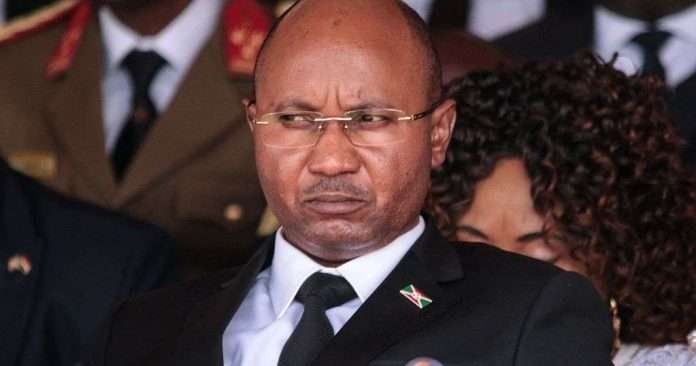
    Bujumbura, Burundi – (African Boulevard News) – In a shocking turn of events, Burundi prosecutors have called for life imprisonment for the former Prime Minister, Alain-Guillaume Bunyoni. The prominent politician is facing a series of serious charges, including threatening the life of the country’s president. If convicted, this would mark a major blow to Burundi’s political landscape.

    The charges against Bunyoni are a grave matter, as they involve a direct threat to the highest office in the country. The former Prime Minister stands accused of planning the assassination of President Évariste Ndayishimiye. These allegations have sent shockwaves throughout the nation, leaving many wondering about the motives behind such a sinister plot.

    Prosecutor General Sylvestre Nyandwi, who has been leading the investigation, has emphasized the severity of the charges. “We have gathered substantial evidence that points to Alain-Guillaume Bunyoni’s involvement in this dangerous conspiracy. It is our duty to ensure justice is served, and we are seeking life imprisonment for these heinous crimes,” Nyandwi stated.

    The trial, which has attracted widespread attention, is expected to be closely followed by both national and international observers. Many political analysts view it as a significant test of the country’s commitment to upholding the rule of law and ensuring a fair judicial process.

    Critics argue that the charges against Bunyoni are politically motivated, aimed at sidelining an influential figure who has been critical of the ruling party. They highlight that Bunyoni, a member of the National Council for the Defense of Democracy-Forces for the Defense of Democracy (CNDD-FDD), has been a prominent voice within the opposition, holding various high-ranking positions throughout his career.

    Supporters of Bunyoni, on the other hand, express their disbelief at the allegations, stating that he has always been a strong advocate for democracy and peace in Burundi. They argue that his arrest is an attempt to suppress opposition voices and maintain one-party dominance.

    As the trial unfolds, it is crucial for the judiciary to ensure a fair and transparent process. International human rights organizations have been closely monitoring the situation, calling on Burundi to respect the rights of the accused and uphold the principles of due process.

    The case of Alain-Guillaume Bunyoni has captivated the nation, revealing deep political divisions within Burundi. The outcome of this trial will undoubtedly shape the country’s political landscape for years to come, impacting not only the individuals involved but also the future of democracy in Burundi.

    In the quest for justice, Burundi finds itself at a crossroads. It is a time for the nation to reflect on its commitment to the rule of law and the principles upon which its democracy is built. The eyes of the world are upon Burundi as it navigates this critical moment in its history.

    URLs:
    1. Africanews – Burundi prosecutors call for life imprisonment for former prime minister
    2. Google Search – Burundi prosecutors call for life imprisonment for former prime minister

    Kenya: President Ruto Defends Controversial Economic Measures Amidst Mounting Public Outrage – Will Suffering Lead to Salvation?

    0
    Read Time:2 Minute, 1 Second

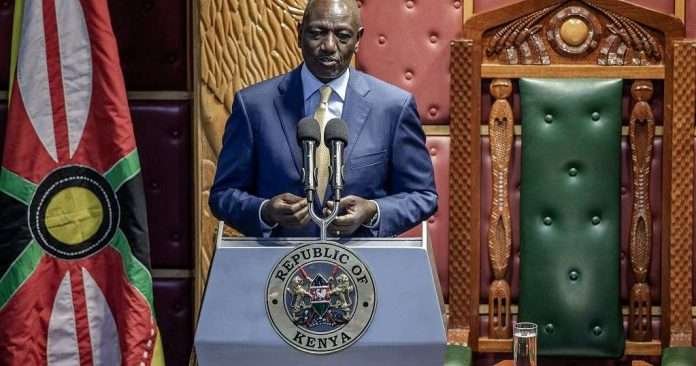
    Nairobi, Kenya – (African Boulevard News) – Kenyan President William Ruto has stood firm in defending his government’s tough economic measures, as public anger continues to grow. Despite widespread criticism and protests, President Ruto stated that these measures were necessary to bring the country back on track.

    In recent months, Kenya has faced significant economic challenges, including high inflation rates, a weakening currency, and a rising national debt. In response, the government implemented a series of tough measures, including austerity measures, tax hikes, and spending cuts, which have been met with public outcry.

    “We understand that these measures might be difficult for some citizens, but they are necessary to stabilize our economy and ensure a sustainable future for all Kenyans,” President Ruto asserted during a recent press conference.

    The government’s stance has faced backlash from various sectors of society, with many arguing that the burden of these measures falls disproportionately on ordinary Kenyans. Critics argue that the government should instead focus on addressing corruption and mismanagement, which they believe to be the root causes of the country’s economic woes.

    However, President Ruto defended his government’s decisions, emphasizing that tough choices had to be made to avoid further deterioration of the economy. “We cannot continue on the path of unsustainable spending and borrowing. We must take these measures now to secure a better future for our country,” he said.

    Economic experts have mixed views on the government’s approach. Some support the tough measures, arguing that they are essential to restore investor confidence and stabilize the economy. Others, however, raise concerns about the potential negative impact on already struggling Kenyans.

    Dr. Jane Kamau, an economist at the University of Nairobi, said, “While these measures might be necessary in the short term, there is a need for the government to ensure that the burden is shared fairly and that ordinary Kenyans are not disproportionately affected.”

    Despite the criticism, President Ruto expressed confidence in the government’s ability to navigate through these challenging times. He highlighted ongoing efforts to address corruption and improve governance, stating that these reforms would have a positive impact on the economy in the long run.

    As Kenyans continue to voice their concerns and frustrations, it remains to be seen whether the government’s tough economic measures will yield the desired outcomes. In the meantime, the nation waits with bated breath to see if these sacrifices will bear fruit and usher in a brighter economic future for all Kenyans.

    Mali: Survivors of Daesh Violence Show Unbreakable Spirit in Rebuilding Lives Amidst Tragedy

    0
    Read Time:2 Minute, 18 Second

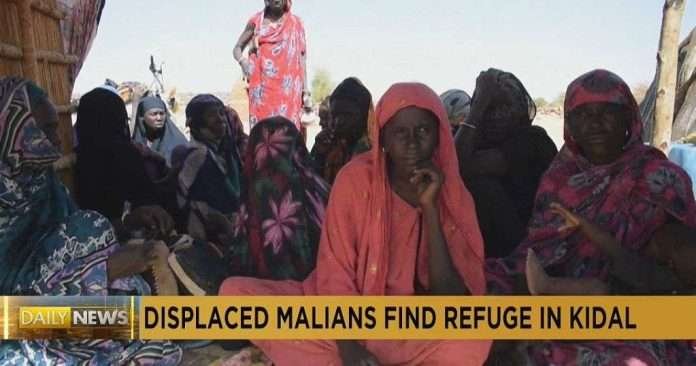
    Bamako, Mali – (African Boulevard News) – Daesh, the extremist group that has wreaked havoc in various parts of Africa, has left a trail of devastation in Mali. Displaced Malians, who have fled their homes due to the group’s ruthless attacks, have found refuge in the town of Kidal. Their harrowing stories shed light on the resilience and determination of communities striving to rebuild their lives in the face of unimaginable hardship.

    For years, Daesh has terrorized Mali, destabilizing the country and causing thousands of people to flee their homes. The displaced individuals have endured unimaginable suffering, witnessing the destruction of their communities and the loss of loved ones. As one survivor puts it, “Daesh broke us.”

    In Kidal, a town in northeastern Mali, makeshift camps have been set up to accommodate the influx of displaced individuals. These camps provide some semblance of safety and a chance for the survivors to begin rebuilding their lives. However, the conditions in the camps are far from ideal, with overcrowding and limited access to basic necessities.

    Despite the challenges they face, the displaced Malians are determined to rebuild their lives and restore their communities. They are supported by organizations such as the United Nations High Commissioner for Refugees (UNHCR), which is working tirelessly to provide them with essential aid and support. The UNHCR is also helping to facilitate the return of the displaced individuals to their homes once it is safe to do so.

    One of the key challenges that the displaced individuals face is the psychological trauma caused by the violence they have witnessed. Many are haunted by the memories of the attacks and struggle to cope with the loss and destruction they have experienced. The UNHCR and other humanitarian organizations are providing mental health support to help them heal and rebuild their lives.

    The plight of the displaced Malians highlights the urgent need for international assistance and support. The international community must step up its efforts to address the root causes of extremism and provide assistance to those affected by violence. In addition, there is a need for long-term solutions that address the underlying issues of poverty and inequality, which make communities vulnerable to extremist ideologies.

    As the displaced individuals grapple with the consequences of Daesh’s violence, their stories highlight the resilience and determination of communities striving to rebuild their lives in the face of unimaginable adversity. Their strength and courage serve as a reminder of the human spirit’s capacity to overcome even the most challenging circumstances.

    In a world plagued by violence and conflict, it is essential that we stand in solidarity with the displaced Malians and support them in their journey towards recovery and peace. Together, we can help them rebuild their lives and ensure a brighter future for all.

    Somalia: Devastating Floods Leave Communities Displaced, Homes Destroyed, Lives in Turmoil

    0
    Read Time:2 Minute, 24 Second

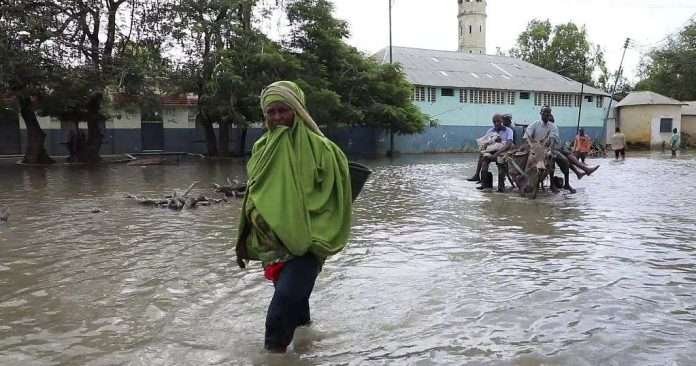
    Mogadishu, Somalia – (African Boulevard News) – Somalia, a country already reeling from the worst drought in 40 years, is now facing a new calamity as devastating floods wreak havoc in the south-west region. The dire situation has left communities displaced, homes destroyed, and lives in turmoil.

    The floods, which have been triggered by heavy rainfall in recent weeks, have particularly impacted the south-western parts of Somalia. Rivers have burst their banks, inundating villages and farmlands, and forcing people to flee their homes in search of higher ground.

    “The situation is dire. Thousands of people have been displaced, and we urgently need assistance to provide them with shelter, food, and clean water,” said Ahmed Abdi, a local aid worker.

    The floods have destroyed vital infrastructure, including roads and bridges, making it even more challenging for humanitarian organizations to reach those affected. This has hampered rescue operations and the delivery of essential aid to the most vulnerable communities.

    “Access to affected areas is a significant challenge for us. The destruction caused by the floods has rendered many roads impassable, hindering our efforts to reach those in need,” said Fatima Ali, a representative from an international aid organization.

    In addition to displacing communities and damaging infrastructure, the floods have also devastated farmlands, which are the lifeline of many households in Somalia. Crops have been washed away, leaving farmers without a source of income and exacerbating the already dire food security situation in the country.

    “The floods have destroyed our crops, and we don’t know how we will feed our families now. We rely on the harvest to survive, but everything has been washed away,” lamented Hussein Omar, a local farmer.

    The floods in Somalia are a stark reminder of the vulnerability of this war-torn nation. The country has been grappling with the effects of climate change for years, experiencing both severe droughts and devastating floods. These extreme weather events have pushed communities to the brink, exacerbating poverty, food insecurity, and displacement.

    The international community, humanitarian organizations, and the Somali government must come together to provide immediate relief to those affected by the floods. Emergency aid, including food, water, and medical supplies, must be swiftly mobilized to prevent further suffering and loss of life.

    Furthermore, long-term strategies and investments are needed to build the resilience of communities in Somalia. This includes improving infrastructure, such as strengthening riverbanks and constructing flood-resistant housing, as well as investing in sustainable agriculture practices that can withstand the vagaries of climate change.

    Somalia’s resilience against such crises depends on global solidarity and concerted efforts to address the underlying causes of vulnerability. Failure to act now will only deepen the suffering of the Somali people and perpetuate a cycle of disaster and despair. It is time to take action and ensure that Somalia receives the support it desperately needs to recover and build a more resilient future.

    Africa: Uncertain Future for AGOA Sparks Urgent Push for 10-Year Extension and Trade Revitalization

    0
    Read Time:2 Minute, 31 Second

    Diaspora, Africa – (African Boulevard News) – As the African Growth and Opportunity Act (AGOA) nears expiration, African nations are pushing for a 10-year extension amid changing trade dynamics and the future of U.S.-Africa relations. AGOA, which was enacted in 2000, provides duty-free access to the U.S. market for eligible African countries. Over the past two decades, AGOA has played a crucial role in promoting trade and investment between the United States and Africa. However, the future of AGOA remains uncertain, with challenges and promising alternatives emerging.

    One of the main challenges facing AGOA is the impending expiration of the legislation. AGOA is set to expire in 2025, and there is a growing concern among African nations about the future of the trade agreement. As a result, African countries are calling for a 10-year extension to provide stability and certainty for businesses and investors.

    Another challenge lies in the changing dynamics of global trade. The rise of regional trade blocs, such as the African Continental Free Trade Area (AfCFTA), presents both opportunities and challenges for AGOA. While AfCFTA aims to promote intra-African trade, it also raises questions about the relevance and effectiveness of AGOA. African countries are now exploring ways to align AGOA with AfCFTA to ensure seamless trade integration.

    Despite these challenges, there are promising alternatives that can complement or replace AGOA. One such alternative is the creation of bilateral trade agreements between individual African countries and the United States. By negotiating specific trade terms, African nations can tailor agreements to their specific needs and priorities.

    Another alternative lies in diversifying trade partners beyond the United States. Africa has been exploring opportunities in other regions, such as Europe, Asia, and the Middle East, to reduce reliance on AGOA. This approach not only expands market access but also fosters competition, innovation, and economic growth.

    According to industry experts, the future of U.S.-Africa relations remains crucial in determining the fate of AGOA. The Biden administration’s commitment to strengthening ties with Africa presents an opportunity to renew and revitalize AGOA. By leveraging the potential of AGOA, African nations can attract foreign direct investment, promote job creation, and address pressing socio-economic challenges.

    In conclusion, the future of AGOA is at a crossroads. African countries are advocating for a 10-year extension to provide stability and certainty for businesses. In addition, they are exploring alternative trade agreements and diversifying trade partners. The future of U.S.-Africa relations holds the key to the future of AGOA. With renewed commitment and strategic partnerships, AGOA can continue to play a significant role in fostering trade and economic growth between the United States and Africa.

    Sources:
    – Africanews. (2023). AGOA’s Future: Challenges and Promising Alternatives {Business Africa}. Retrieved from https://www.africanews.com/2023/11/09/agoas-future-challenges-and-promising-alternatives-business-africa/
    – Google search. (n.d.). AGOA’s Future: Challenges and Promising Alternatives {Business Africa}. Retrieved from https://www.google.com/search?q=AGOA+s+Future++Challenges+and+Promising+Alternatives++Business+Africa+

    Africa: Brie Larson’s Epic Return as Captain Marvel Divides Fans and Critics in Highly-Anticipated Sequel

    0
    Read Time:2 Minute, 19 Second

    Diaspora, Africa – (African Boulevard News) – Brie Larson returns to the big screen to save the universe once again, as she reprises her role as Captain Marvel in the highly anticipated sequel, “The Marvels.” However, the film has received mixed reviews from critics and fans alike.

    In “The Marvels,” Larson’s character joins forces with other iconic superheroes to face a formidable new enemy. The film serves as a continuation of the 2019 blockbuster hit, “Captain Marvel,” which introduced Larson as one of Marvel’s most powerful heroes. Fans were eager to see her return to the screen with even more thrilling action and a captivating storyline.

    Since its release, opinions on “The Marvels” have been divided. While some praised the film for its spectacular visual effects and thrilling action sequences, others felt that it fell short in terms of character development and storytelling.

    Renowned film critic, Mark Reynolds, from African News, commented, “The Marvels’ biggest strength lies in its stunning visual effects and breathtaking action scenes. However, the narrative feels rushed and fails to fully explore the potential of these beloved characters.”

    Despite the mixed reviews, “The Marvels” is expected to be a box office hit, drawing audiences with its impressive ensemble cast, including Larson, alongside stars such as Teyonah Parris, Iman Vellani, and Zawe Ashton. Marvel fans are eagerly anticipating the introduction of Kamala Khan, played by Vellani, who will take on her superhero mantle as Ms. Marvel.

    The Marvel Cinematic Universe (MCU) has become a cultural phenomenon, attracting a massive following worldwide. The franchise has consistently delivered blockbuster hits, captivating audiences with its intricate universe and engaging storylines. However, with such high expectations and a loyal fanbase, it becomes challenging to please everyone.

    “The Marvels” marks a significant moment for diversity in the MCU, as it showcases powerful women and people of color in lead roles. This representation has been both celebrated and criticized by fans and critics alike, highlighting the ongoing conversation surrounding diversity and inclusivity in the film industry.

    While “The Marvels” may not have received universal acclaim, it serves as another step forward in the evolution of the MCU, expanding its universe and introducing new and diverse characters. As with any highly anticipated release, opinions will continue to vary, but the film’s impact on pop culture and representation in superhero movies should not be underestimated.

    As the saga of Captain Marvel and her fellow superheroes continues, fans can expect more thrilling adventures, exciting crossovers, and new additions to the ever-expanding MCU. The mixed reviews surrounding “The Marvels” only further fuel the anticipation for what lies ahead in this cinematic universe.

    Diaspora, Africa – (African Boulevard News) – Brie Larson returns to save the universe, reprising her role as Captain Marvel in this sequel to the 2019 film of the same name.

    South Africa: Army Deployed to Crush Illegal Mining, Protect Lives, and Salvage Economy

    0
    Read Time:2 Minute, 15 Second

    Pretoria, South Africa – (African Boulevard News) – In a bid to tackle the rampant issue of illegal mining in South Africa, President Cyril Ramaphosa has deployed the army to help crack down on this illicit activity. This move is reminiscent of a similar deployment in 2019 when the military was called in to combat gang violence in the Western Cape province.

    Illegal mining has been a persistent problem in South Africa, with criminal syndicates exploiting the country’s rich mineral resources for their own gain. These activities not only pose a threat to the economy but also endanger the lives of miners and damage the environment.

    The president’s decision to deploy the army highlights the seriousness with which the government is addressing this issue. By using the military’s expertise and resources, South Africa hopes to dismantle illegal mining operations and bring the perpetrators to justice.

    This operation is part of a broader strategy to combat organized crime and uphold the rule of law in the country. President Ramaphosa has previously expressed his commitment to tackling corruption and criminality, and the deployment of the army to address illegal mining aligns with this goal.

    Commenting on the deployment, a spokesperson for the presidency emphasized the importance of eradicating illegal mining, stating that “it undermines the country’s economy and hampers efforts to create a safe and conducive environment for legitimate mining operations.”

    The involvement of the military is expected to enhance the government’s ability to detect, disrupt, and dismantle illegal mining networks. With their training and equipment, the army is well-equipped to confront the sophisticated criminal syndicates that perpetuate these illegal activities.

    Industry experts have welcomed the government’s decisive action, recognizing the need for a coordinated and robust response to combat the scourge of illegal mining. They believe that the deployment of the army will significantly deter illegal miners and send a strong message that such activities will not be tolerated.

    However, experts also caution that the battle against illegal mining is complex and requires a multifaceted approach. This includes addressing the underlying socio-economic factors that drive individuals into the illegal mining sector, as well as improving regulation, law enforcement, and collaboration between various stakeholders.

    With the deployment of the army, South Africa is taking a bold step towards curbing illegal mining and protecting its valuable natural resources. By sending a clear message to criminal syndicates, the government hopes to safeguard the country’s economy and create a safer environment for legitimate mining operations to flourish.

    As the army gets to work, the nation waits with bated breath to see the impact of this operation and whether it will succeed in dismantling illegal mining networks and bringing an end to this pervasive issue.