Thursday, April 30, 2026
88.4 F
Lagos
More
    Home Blog Page 390

    Guinea: Junta Threatens Anti-Terrorism Laws and Commandeers Army to Quell Ongoing Opposition Protests – Democracy and Human Rights Hang in the Balance

    0
    Read Time:2 Minute, 3 Second

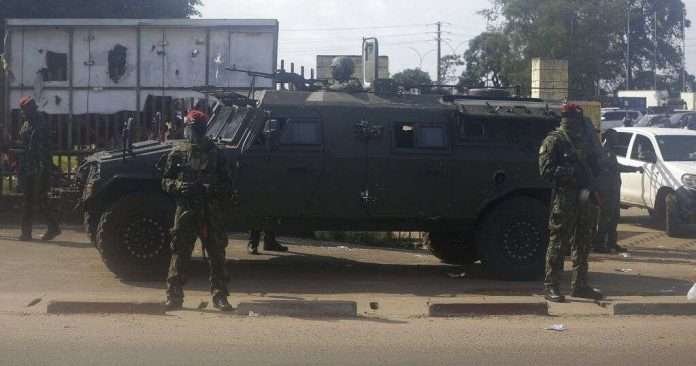
    Conakry, Guinea – (African Boulevard News) – The situation in Guinea, West Africa, continues to remain tense as the ruling junta requisitioned the army on Wednesday to quell the fresh opposition protests. The demonstrations were held to denounce the junta and demand the reinstatement of the ousted president, Alpha Conde.

    According to reports, the junta warned that it could apply anti-terrorism laws, which provide for up to life imprisonment, against those who incite violence and cause public disorder. This move could further stifle the already limited freedom of expression in Guinea.

    The opposition groups have been protesting the military takeover since September 2021, and the situation is spiraling out of control. The junta has been accused of numerous human rights violations, including arbitrary arrests, torture, and extrajudicial killings.

    The African Union (AU) has suspended Guinea’s membership following the coup, and the international community has urged the junta to restore democratic rule in the country. However, the junta has time and again rejected these calls and maintained its grip on power.

    “The military junta’s decision to requisition the army is a clear sign that they will go to any length to retain their power, even at the cost of human lives,” said an expert on African politics. “The junta’s threat to apply anti-terrorism laws against protesters is concerning, as it could lead to a further crackdown on civil liberties and freedom of expression.”

    The situation in Guinea has destabilized the entire region, and there are fears that the country could slip into chaos, leading to a humanitarian crisis. The economic prospects of Guinea are also at risk, as the international community has imposed sanctions on the country, leading to a decline in trade and investment.

    The junta must realize that the only way out of this crisis is to engage in dialogue with the opposition groups and restore democratic rule in the country. The international community must also put pressure on the junta to step down and pave the way for free and fair elections.

    In conclusion, the situation in Guinea remains critical, and the junta’s decision to requisition the army and threaten the use of anti-terrorism laws against protesters is concerning. The only way forward is for the junta to engage in dialogue with the opposition groups and restore democracy in the country. The international community must also do its part and put pressure on the junta to step down and pave the way for free and fair elections.
    Comoros: Operation Wuambushu Sparks Controversy and Exposes Inequalities

    0
    Read Time:2 Minute, 0 Second

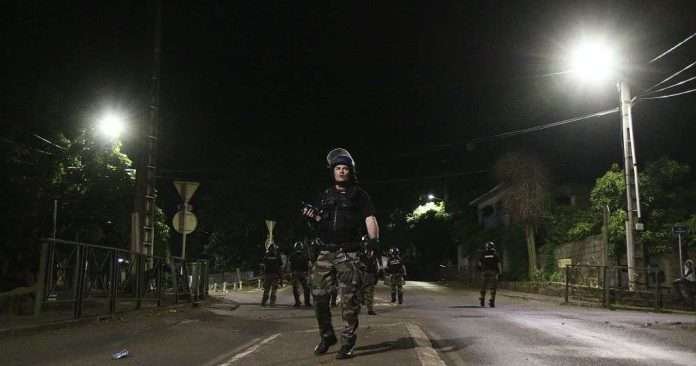
    Moroni, Comoros – (African Boulevard News) – The recent ‘Operation Wuambushu’ in Mayotte has sparked a wave of controversy and exposed the severe inequalities that exist between the residents and immigrants. The operation, aimed to curb illegal immigration from neighboring Union of the Comoros, has become bogged down and raised concerns of abuse, further aggravating tensions between the two communities.

    The operation, launched by the French authorities, has been ongoing for two weeks and has resulted in the interception of several boats carrying illegal immigrants. However, the deployment of the military and police forces has led to accusations of abuse and the use of excessive force. Residents of the island have taken to social media to express their concerns and have shared videos of police brutality towards the immigrants.

    The operation has also highlighted the socio-economic inequalities between the residents of Mayotte, who are French citizens, and the immigrants from Comoros who are not. Those living in Mayotte enjoy access to a high standard of living, including quality healthcare and education, while those in the Comoros are struggling to make ends meet.

    The operation has prompted a response from various stakeholders including human rights groups, who have called for greater respect of human rights and the rule of law. The French authorities have defended the operation, stating that it is essential to maintain law and order in the region.

    Speaking on the matter, a representative from Amnesty International said, “The French authorities must ensure that the operation is conducted within the framework of international human rights law and that the rights of all individuals are respected, regardless of their status.”

    The operation has also sparked a diplomatic row between France and Comoros, with the latter accusing France of “savage and brutal repression” of its citizens. Comoros’ Foreign Affairs Minister, Souef Mohamed El Amine, has called for an investigation into the abuses and has urged France to respect the rights of immigrants.

    In conclusion, the ‘Operation Wuambushu’ in Mayotte has exposed the deep-rooted inequalities between the residents and immigrants, while also stirring tensions and raising concerns of abuse. While the French authorities maintain that the operation is necessary to maintain law and order, human rights groups have called for greater respect of the rule of law and the rights of all individuals. The situation remains tense, and it is crucial that all parties involved come together to find a peaceful and just resolution.

    Ghana: IMF Approves $3 Billion Loan to Rescue Country in the Midst of Economic Crisis

    0
    Read Time:1 Minute, 59 Second

    Accra, Ghana – (African Boulevard News) – The International Monetary Fund (IMF) has announced the approval of a $3 billion loan for Ghana to help the country out of its economic crisis. The loan comes at a critical time, as the country battles with high debt, rising inflation, and dwindling foreign reserves.

    According to the IMF, the first immediate disbursement of around $1 billion will be made to Ghana to support the country’s economic recovery efforts. The remaining funds will be disbursed over the next three years, subject to the fulfillment of certain economic reforms and targets set by the IMF.

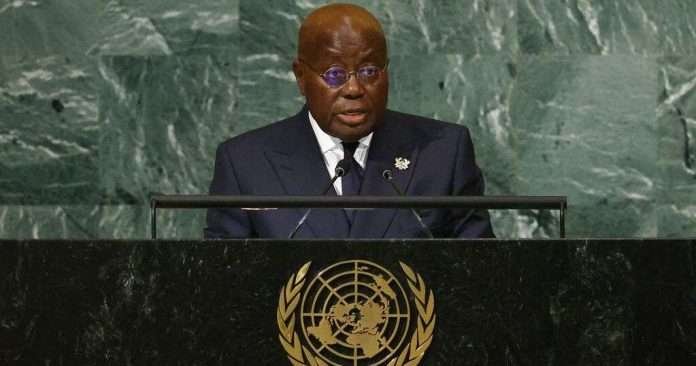
    This loan is expected to help stabilize Ghana’s economy and provide the necessary funding for its development. It will be used to support priority areas such as health, education, and infrastructure projects. Ghana’s President, Nana Akufo-Addo, has expressed his gratitude to the IMF for its support during this challenging period.

    “This loan will go a long way to support our efforts to rebuild and transform our economy. We are committed to implementing the necessary reforms to bring back economic stability and growth,” he said.

    Ghana’s economic crisis has been attributed to several factors, including high debt levels, budget deficits, and a decline in global commodity prices. The country’s central bank has been forced to raise interest rates to stabilize the currency, which has led to higher inflation and a slowdown in economic growth.

    The IMF’s approval of the loan comes as a relief to many Ghanaians, who have been struggling to make ends meet due to the economic crisis. The loan is expected to provide support for the country’s social safety net programs, which help cushion the impact of economic shocks on vulnerable populations.

    “This loan will help us to provide support for our social safety net programs, which are vital in ensuring the well-being of our people. We are grateful to the IMF for their support during this difficult period,” said Ghana’s Minister of Finance, Ken Ofori-Atta.

    In conclusion, the IMF’s approval of the $3 billion loan to Ghana is a significant step towards stabilizing the country’s economy. The loan is expected to provide much-needed funding for Ghana’s development priorities and support its social safety net programs. The success of this loan will depend on the country’s ability to implement the necessary economic reforms and meet the targets set by the IMF.

    Tanzania: Traders ignite a strike due to new taxes that could cripple their businesses and harm low-income earners.

    0
    Read Time:2 Minute, 3 Second

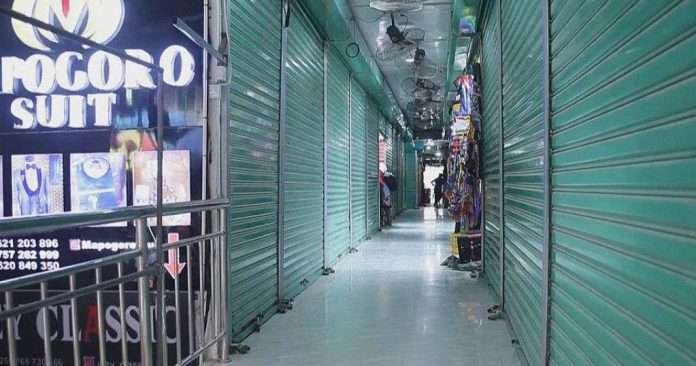
    Dodoma, Tanzania – (African Boulevard News) – Traders at Tanzania’s largest market, Kariakoo, have gone on strike over new taxes imposed by the government. The traders closed their shops and gathered to protest the new tax, which they say will cripple their businesses, as well as affect their customers.

    “The main reason for our strike is that we are against the new taxes. As a business owner, I am sure this new tax will harm our business but also our customers, that is why we decided to come together,” said one of the traders, who wished to remain anonymous.

    The traders are protesting against the Value Added Tax (VAT) on goods sold within the market. The Tanzanian government has imposed a 18 percent VAT on all goods sold, including foodstuff, clothes, and even medicine. The traders, who have been providing affordable goods to the country’s low-income earners, believe that the new tax will make it impossible for them to continue doing so.

    “We believe that this tax is not only regressive but also counterproductive. It will end up increasing the prices of goods sold within the market, which will hurt the very people we are trying to serve,” said another trader.

    The strike has brought the market to a standstill, with traders refusing to open their shops until the government reverses the decision. The government, however, has refused to back down, arguing that the tax is necessary to boost revenue collection.

    “We understand the concerns of the traders, but we need to collect taxes to fund important public services such as healthcare, education, and infrastructure development,” said a government official.

    The strike has sparked widespread condemnation, with many experts warning that it could have far-reaching economic implications for the country. In a statement, the Tanzania Private Sector Foundation (TPSF), a leading business organization, expressed solidarity with the traders, urging the government to engage in dialogue to resolve the issue.

    “The strike by the Kariakoo traders is a clear indication of the negative impact of high taxes on businesses. We urge the government to reconsider this decision and engage in dialogue with the traders to find a solution that works for everyone,” said the TPSF.

    The Kariakoo market is a vital economic hub in the country, employing thousands of people and providing affordable goods to millions. Many fear that if the strike persists, it could lead to widespread shortages of essential goods, as well as cause a slump in the country’s economy.

    Mali: French army’s failed attempt to track jihadist leader leads to journalist’s kidnapping and safety concerns

    0
    Read Time:2 Minute, 14 Second

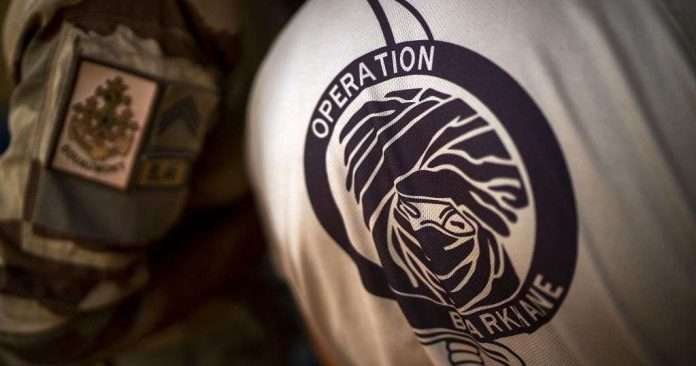
    Bamako, Mali – (African Boulevard News) – The French army is facing scrutiny following the abduction of a journalist in northern Mali earlier this year. According to French media, the army attempted to use the journalist’s visit to the region to track a jihadist leader. However, their plan backfired as the reporter was kidnapped, raising questions about the French army’s tactics and the safety of journalists reporting in conflict zones.

    The incident occurred in May 2021 when Olivier Dubois, a journalist with France’s Le Point magazine, traveled to the northern region of Gao to interview a known jihadist leader. The French army learned of Dubois’ visit and attempted to use his presence to track the leader’s whereabouts. However, their efforts were in vain as the journalist was kidnapped by an unknown group shortly after arriving in the area.

    The French government immediately launched a search and rescue operation, but Dubois remains missing to this day. The incident has raised questions about the safety of journalists in conflict zones and the methods used by militaries to track and neutralize extremist threats.

    Reporters Without Borders, a non-profit organization that promotes freedom of the press, expressed concern over the incident. In a statement, they said, “We call on the French authorities to do everything in their power to secure the release of Olivier Dubois. The safety and security of journalists must be a top priority for all parties involved in conflict zones.”

    The French army has defended their actions, saying they did everything possible to ensure the journalist’s safety. However, critics argue that their attempt to use Dubois as bait to track a jihadist leader was reckless and put the reporter’s life in danger.

    This incident is not the first time a journalist has been kidnapped in northern Mali. In 2013, two French journalists were abducted and held for over a year before being released. The region has been plagued by conflict and violence since 2012 when Islamist militants seized control of the area.

    The kidnapping of Olivier Dubois highlights the dangers faced by journalists reporting in conflict zones. It also raises questions about the methods used by militaries to combat extremist threats. As the search for Dubois continues, the French army and other military forces must take measures to ensure the safety and security of journalists working in dangerous environments.

    In conclusion, journalists play a vital role in informing the public about conflicts and crises around the world. It is essential that they are allowed to do their job without fear of persecution or abduction. The incident involving Olivier Dubois serves as a stark reminder of the risks these brave individuals take every day to bring us the news.

    Sudan: Pro-Army Supporters Demand UN Envoy Leave as Half the Nation Needs Aid

    0
    Read Time:1 Minute, 40 Second

    Khartoum, Sudan – (African Boulevard News) – The United Nations envoy to Sudan is facing calls to leave the country as pro-army supporters took to the streets yesterday to demand her ousting. Demands for the UN envoy’s removal coincided with a troubling pronouncement from the UN that over half of the nation’s population was in dire need of humanitarian aid.

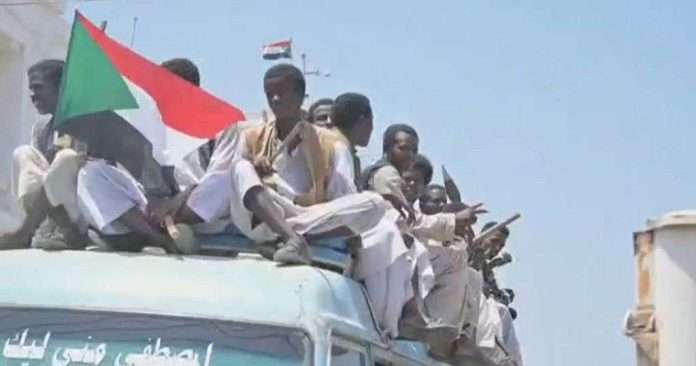
    The hundreds of protesters marched through the streets of Khartoum, calling for an end to foreign interference in Sudan’s affairs. This follows a recent spat between Sudanese officials and the UN envoy over the latter’s criticism of the government’s handling of the ongoing crisis in the country.

    Speaking to African Boulevard News, a spokesperson for the pro-army groups explained their position: “We are tired of the West meddling in our affairs. We have our own problems, and we can solve them ourselves. The UN envoy’s comments were unhelpful and only made the situation worse. She needs to leave now.”

    The UN has been monitoring Sudan’s crisis for years, and the country remains a hotbed of conflict and instability. Civilian protests in 2018 brought down long-time dictator Omar al-Bashir, leading to a political transition that has yet to yield stability. Recently, the country’s economic woes have deepened, with inflation skyrocketing and basic goods becoming scarce.

    Despite the gravity of the situation, the Sudanese government has been reluctant to accept foreign aid, instead preferring to handle the crisis itself. The UN envoy has been vocal in her criticisms of this approach, arguing that the government lacks the capacity to deal with the crisis alone.

    “More than half of the Sudanese population is in need of humanitarian aid,” the UN said in a statement. “We urge the government to accept international assistance to alleviate the suffering of the people.”

    The situation in Sudan remains precarious, and any further escalation of tensions could have disastrous consequences for the country and its people. As the international community watches and waits, the people of Sudan continue to suffer.

    Nigeria: Another Farmer-Herder Conflict Kills 30, Demands Decisive Action and Unity

    0
    Read Time:2 Minute, 5 Second

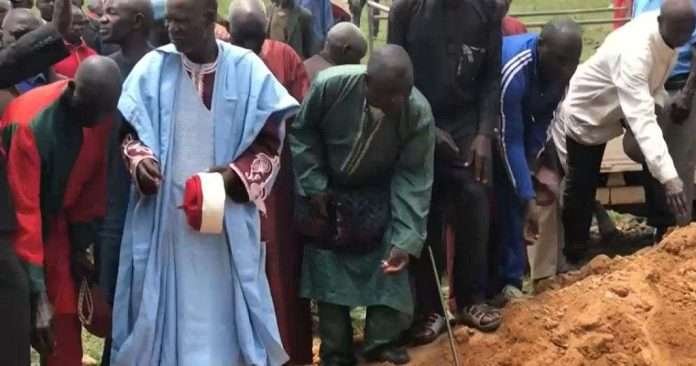
    Abuja, Nigeria – (African Boulevard News) – Nigeria has yet again experienced another farmer-herder conflict, with reports stating that at least thirty people have been killed in Plateau State. The conflict occurred in Mangu district, which is located in the north-central part of the country, and the victims were given a proper burial by their loved ones.

    According to eyewitnesses, the conflict between the farmers and herders arose due to land disputes and grazing rights. This is not the first time that such a conflict has occurred in Nigeria as there have been numerous clashes between farmers and herders in different parts of the country. The incidents have become a major concern for the government and the citizens alike.

    The conflict has been ongoing in Nigeria for quite some time, with tensions mounting in recent years. Many experts believe that climate change is a major contributor to the crisis, as changing weather patterns have led to the destruction of crops and grazing lands. This has led to a competition for resources between farmers and herders, often resulting in violence.

    The Nigerian government has been trying to find solutions to the conflict, but progress has been slow. Security forces have been deployed to the affected areas, but they have had limited success in preventing the occurrences of such clashes. This has led to some citizens taking matters into their own hands.

    One of the major challenges has been the lack of trust between the different communities. This has led to a situation where some citizens feel that they must protect their own interests, even if it means resorting to violence. It is crucial for leaders to work towards building trust between the different communities, so that they can work together to find solutions to the crisis.

    The situation in Nigeria is complex, with different factors contributing to the conflict. However, the government must take decisive action to find solutions to the problem. As citizens, we must also play our part in promoting peace and harmony between the different communities. It is only then that we can hope to bring an end to the farmer-herder conflict that continues to claim innocent lives.

    In conclusion, the situation in Nigeria calls for urgent action and collaboration between the government, citizens, and other stakeholders. We cannot afford to let the conflict continue to escalate, as it will only lead to more loss of lives and destruction. It is time for us to come together to find lasting solutions to the crisis.

    “South Africa power crisis, Sudan heavy fighting, Ghana IMF loan, Ukraine fires & Chad refugee crisis: African news recap on May 18, 2023.”

    0
    Read Time:1 Minute, 43 Second

    African Boulevard News – Daily News Recap (May 18, 2023)

    Sudan: Heavy Fighting in Khartoum

    Heavy fighting continues to rage in Khartoum, the capital of Sudan, as civilians are seeking shelter from air strikes and sporadic clashes between rival military factions. The United Nations reported that more than half of Sudan’s population now needs aid and protection.

    South Africa: Power Crisis Deepens

    South Africa’s power crisis persists as Eskom, the nation’s power utility company, warns of longer power cuts this winter. The company said the country could face further reductions because of an increase in power outages and a decrease in available supply. South Africa is now circling back to shale gas as a potential solution to address the energy crisis. The country’s Investec Property Fund also reported a 2.8% drop in income due to rising global interest rates.

    Ghana: IMF Approves $3 Billion Loan

    Ghana secured approval from the International Monetary Fund (IMF) for a $3 billion loan, with an immediate payout of $600 million. The relief will help Ghana with external debt-service payments from 2023 to 2026.

    Ukraine: Falling Debris Causes Fires in Kyiv

    Debris caused by overnight Russian attacks fell in Kyiv, causing fires in two locations, according to Ukrainian officials. Meanwhile, Ethiopia’s Oromiya rebels accused the government of launching a military offensive against them after a first round of peace talks ended without a deal.

    Chad: Second Exile for Sudanese Refugees

    Sudanese refugees are facing a second exile, fleeing to destitute Chad amid continued conflict in their home country. Meanwhile, Tunisia pledges safety for Jewish citizens following a synagogue attack, and almost 250,000 people in Somalia have fled their homes due to severe flooding, adding to the country’s existing drought crisis.

    Market Watch: Rand Extends Losses

    The South African rand weakened further against the dollar, reflecting uncertainty over debt-ceiling talks. The World Bank recently suspended $1 billion worth of project funding in Congo, citing concerns over the country’s governance.

    That’s all for today’s news in Africa. Stay tuned for more updates tomorrow.

    African Boulevard News – (2023-05-18)

    Algeria: CAF Equips Physical Trainers with New Skills to Enhance Young Footballers Development

    0
    Read Time:2 Minute, 1 Second

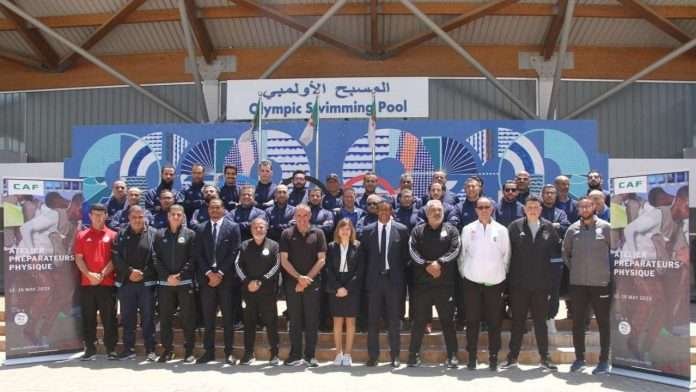
    Algiers, Algeria – (African Boulevard News) – The Confederation of African Football (CAF) has concluded a five-day workshop for physical trainers in Algiers, Algeria. This workshop was held on the sidelines of the TotalEnergies U-17 Africa Cup of Nations (AFCON) 2023, and was attended by 28 physical trainers from Algeria.

    The workshop was organized with the aim of equipping physical trainers in Algeria with the necessary skills and knowledge to effectively train young footballers. The participants were taken through various training modules, which included topics such as match analysis, injury prevention, and nutrition.

    Speaking on the importance of the workshop, Dr. Yacine Zerguini, CAF’s Director of Medical and Anti-Doping, said: “The physical preparation of young footballers is a critical aspect of their development. As such, it is crucial that physical trainers have the necessary skills and knowledge to provide effective training.”

    He added: “Through this workshop, we aim to equip physical trainers in Algeria with the tools they need to help their young players reach their full potential.”

    The workshop was facilitated by experienced physical trainers and medical experts, who shared their knowledge and expertise with the participants. The physical trainers were also given the opportunity to engage in practical training sessions, where they were able to put their newly acquired skills into practice.

    Commenting on the impact of the workshop, one of the participants, Mohamed Boultif, said: “This has been an eye-opening experience for me. I have learned a lot about injury prevention and nutrition, which I know will be invaluable in my work with young footballers.”

    He added: “The practical training sessions were also very useful, as they gave me the opportunity to apply what I had learned in a real-world setting.”

    The TotalEnergies U-17 Africa Cup of Nations 2023 is set to take place in Algeria, and will feature 12 teams from across the continent. The tournament provides a platform for young footballers to showcase their skills and talent, and is a key part of CAF’s efforts to develop football on the continent.

    In conclusion, the five-day workshop for physical trainers in Algeria was a success, with the participants receiving valuable training and knowledge that will help them in their work with young footballers. The workshop is a testament to CAF’s commitment to developing football on the continent, and its efforts to equip key stakeholders with the necessary skills and knowledge to drive this development forward.

    Ivory Coast: KS Bloom’s gospel rap brings hope, faith and inspiration

    0
    Read Time:2 Minute, 6 Second

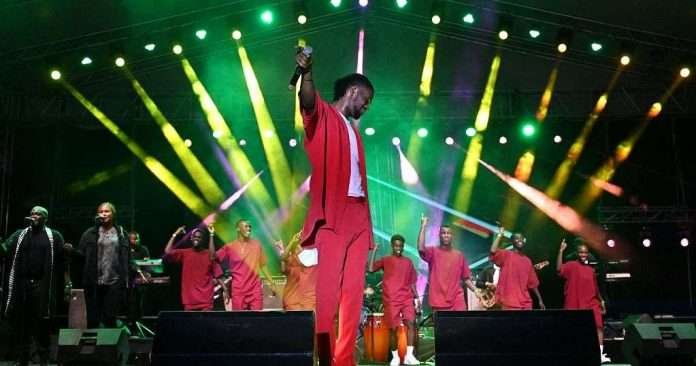
    Yamoussoukro, Ivory Coast – (African Boulevard News) – KS Bloom, a 26-year-old Ivorian rapper, has been making waves in Ivory Coast’s music industry with his unique blend of gospel rap and afrobeat. The young artist’s exceptional talent and clean lifestyle have earned him a massive fan base across the country.

    Born and raised in Ivory Coast, KS Bloom discovered his love for music at a very young age and has been pursuing it ever since. His music reflects his passion for gospel, hip hop, and R&B, and his lyrics are a reflection of his personal values.

    KS Bloom’s music sends a message of hope, love, and faith to his listeners. His positive message has been greatly welcomed in Ivory Coast, where the youth are searching for a voice of inspiration in their music.

    “KS Bloom is an exceptional artist who is changing the face of gospel music in Ivory Coast,” said Mr. Adom, a music industry expert. “His clean lifestyle and positive message in his lyrics are what sets him apart from other artists in the industry.”

    KS Bloom’s music has also caught the attention of music giants outside the Ivory Coast. He has been featured on prominent music streaming platforms such as Apple Music and Spotify. His songs are being listened to across the globe.

    “I think KS Bloom is the new face of gospel rap music in Africa,” said Mr. Njie, a music critic, “His music is a perfect blend of gospel, R&B, and hip-hop, and he delivers his message with a unique style.”

    KS Bloom has inspired many young people in Ivory Coast to pursue their dreams and to live a life that is pleasing to God. His passion for music, love for people, and his faith are what make him an exceptional artist.

    “I believe my music is meant to inspire and encourage people to live a life that is pleasing to God,” KS Bloom said. “I want my music to touch the hearts of people and leave a positive impact.”

    In conclusion, KS Bloom’s exceptional talent and positive message make him one of the most sought-after artists in Ivory Coast’s music industry. His unique blend of gospel rap and afrobeat has earned him a global following, and his message of hope and faith has inspired many young people in Ivory Coast. KS Bloom is a true inspiration to the youth of Africa, and his music is proof that there is a place for clean, positive, and faith-based music in the industry.