Thursday, April 30, 2026
78.4 F
Lagos
More
    Home Blog Page 382

    “South Africa: Police officers demand drinks from motorists, raising concerns of corruption and abuse of power”

    0
    Read Time:1 Minute, 52 Second

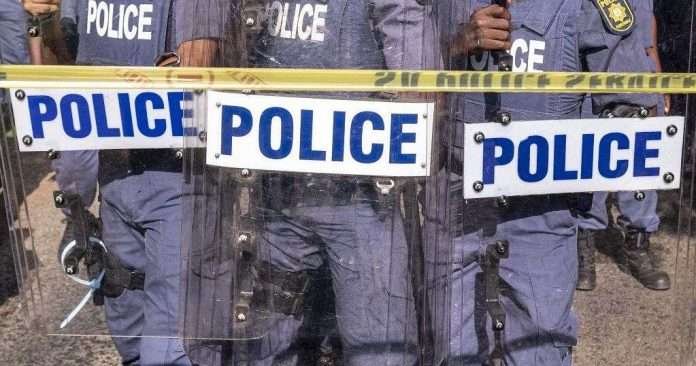
    Pretoria, South Africa – (African Boulevard News) – A disturbing trend is emerging in South Africa where some police officers are demanding cold drinks from unsuspecting motorists during regular police checks. This demand is causing concern among motorists and civil society activists who worry that it could lead to corruption.

    “I need a cold drink,” says the policeman to the driver, nonchalantly leaning against the lowered window. The sun is beating down on the windscreen of the car that has been stopped for a while on the side of the road.

    This demand for a cold drink is increasingly becoming common among police officers during routine stops. It is not unusual for police officers to stop motorists for various reasons during their patrols. However, the recent trend of demanding drinks from motorists is raising suspicion among some drivers.

    Some motorists have had to succumb to this demand by officers, forcing them to buy cold drinks from nearby stores. Others have simply refused to comply, causing confrontations between the police and the motorists.

    Civil society groups and activists have raised concerns that the trend could lead to corruption and abuse of power. Police officers are expected to maintain their professionalism and not engage in unethical conduct that could jeopardize their integrity and reputation.

    “We cannot have a situation where police officers are demanding cold drinks from innocent motorists. This is not only unprofessional but could lead to corruption,” said a spokesperson for the South African Human Rights Commission.

    South Africa has been grappling with corruption and police brutality for years. The government has been trying to address these issues by implementing reforms and measures to ensure that police officers adhere to the highest ethical standards. However, incidents like these could undermine these efforts and erode public trust in law enforcement agencies.

    In conclusion, civil society groups and activists are urging the government to take action against police officers who engage in this unethical behavior. Police officers need to be reminded of their duty to uphold the law and respect the rights of motorists. It is essential to address the issue of police officers demanding drinks from motorists to avoid any possible corruption. A police service must win trust, respect, and support from communities to be successful.
    Tunisia: Journalists Protest Against Government’s Clampdown on Press Freedom and Harassment of Reporters

    0
    Read Time:1 Minute, 55 Second

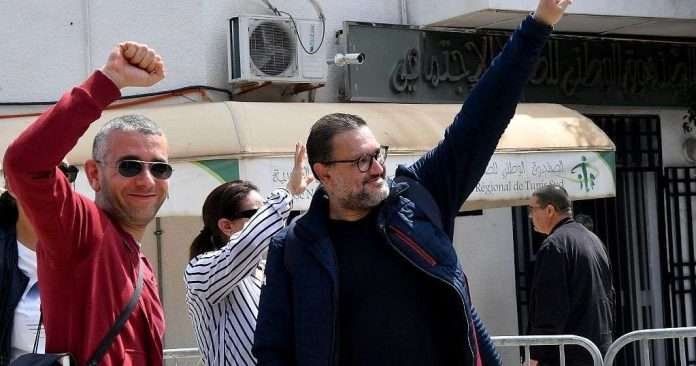
    Tunis, Tunisia – (African Boulevard News) – Tunisian journalists took to the streets of the capital, Tunis, on Monday, protesting against their government’s clampdown on press freedom. The demonstration was held outside the offices of the Tunisian Journalists’ Union, where journalists gathered to voice their concerns.

    Chanting slogans such as “Press freedom is not a crime” and “Journalism is not terrorism,” the protesters were demanding an end to the harassment and intimidation of reporters in the country. The rally was attended by over 200 journalists who marched through the streets carrying banners and posters, calling for the release of their colleagues who have been jailed under the current regime.

    “We are here because we are being reproached. We will explain to the authorities that we are journalists. And as such, we have the right to criticize. As such, we criticize in a constructive spirit,” said one of the journalists at the rally.

    The protest comes after a number of journalists were arrested and charged with spreading false news and insulting the president. The Committee to Protect Journalists (CPJ) has called on the Tunisian authorities to release all journalists who are being held in detention for doing their job.

    “The Tunisian government must stop using the pretext of national security to silence critical voices in the press,” said CPJ Middle East and North Africa Program Coordinator Sherif Mansour. “Journalists have the right to report on issues of public interest without fear of reprisal or harassment.”

    Tunisia has historically been viewed as a leader in press freedom in the region, but the recent crackdown on journalists highlights growing concerns about freedom of expression in the country. The government has been accused of targeting journalists who have reported on corruption and human rights abuses.

    The Tunisian Journalists’ Union has called for changes to the current media law, which many journalists believe is outdated and does not adequately protect their rights. The union has suggested that a new law should be drafted that takes into account the changes in the media landscape over the past decade.

    The government has yet to respond to the journalists’ demands, but the rally is seen as a significant step in the fight for press freedom in Tunisia. Many hope that the demonstration will raise awareness of the issue both within the country and abroad.

    Kenya: Farmers Using Bees to Protect Crops from Rampaging Elephants

    0
    Read Time:1 Minute, 58 Second

    Nairobi, Kenya – (African Boulevard News) – Kenya, as one of the world’s most biodiverse countries, boasts a diverse range of wildlife that includes elephants, which are a key tourist attraction. However, as delightful as they may be, the gentle giants are also a significant threat to the livelihoods of farmers who plant crops in their habitats. Despite the Kenyan government’s effort to resolve the dispute between the two, the farmers have had to devise innovative ways to protect their crops, which have now drawn global attention.

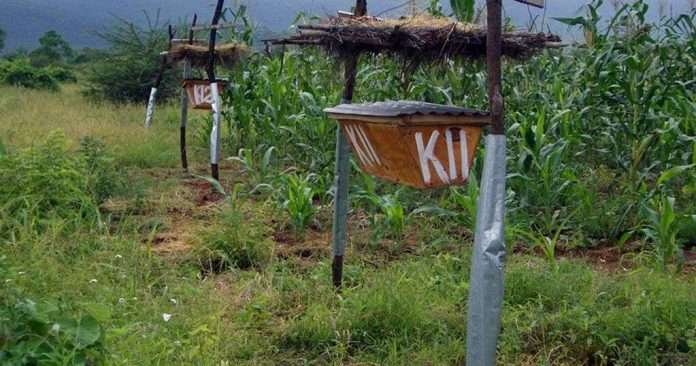
    Farmers in the country have come up with a clever way of deterring these behemoths from spoiling their yields by using bees. The initiative, called “bees for elephants,” uses honey bees as a natural barrier to prevent elephants from raiding crops and causing billions of shillings in damage each year.

    The project, funded by the British Government’s Darwin Initiative and the Rufford Foundation, offers training and hives to farmers living near national parks to keep bees, with the aim of creating a network of beehive fences around farms. When elephants approach the crops, they disturb the hives, and the agitated bees then swarm and sting the elephants, deterring them from further destruction.

    The “bees for elephants” program aims to promote non-violent approaches to managing human-elephant conflicts and increase the income of farmers through the sale of honey and beeswax. The scheme has already been implemented in Tsavo National Park, where farmers have reported a reduction in elephant crop damage from 80% to less than 10%.

    One farmer, Esther Nthiga, said, “We used to have a lot of conflict with elephants. They would destroy our crops, and we would be unable to sell anything. Since we introduced the bees, the elephants come and then go away immediately. The bees keep them away.”

    Critics argue that the initiative is not a long-term solution and that it remains unclear how the project will be sustained beyond the initial grant funding period. However, farmers have praised the initiative for offering a simple and effective intervention that improves their livelihoods.

    The “bees for elephants” program is an exceptional example of how innovative solutions can promote conservation, alleviate human-wildlife conflict, and boost local economies simultaneously. The implementation of similar initiatives in other parts of the continent could significantly reduce the conflict between humans and wildlife, promoting peaceful co-existence between the two.

    DRC: Catholic Bishops Accuse Politicians of Instrumentalizing Conflict and Causing Loss of Innocent Lives

    0
    Read Time:1 Minute, 51 Second

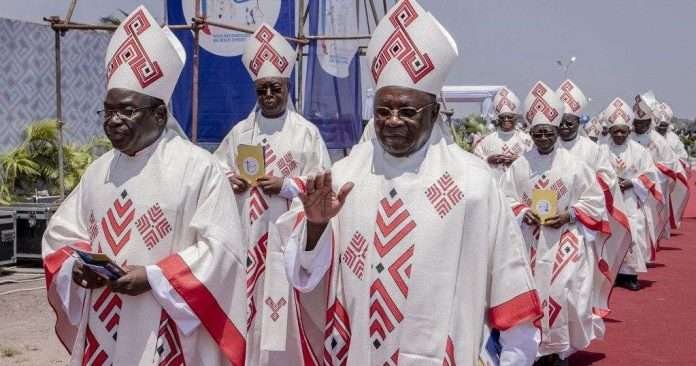
    Kinshasa, DRC – (African Boulevard News) – The Catholic bishops of the Democratic Republic of Congo (DRC) have accused political leaders of using a community conflict to bolster their own political careers. The conflict in question has claimed the lives of hundreds of people in the west of the country.

    The bishops have claimed that politicians are deliberately inflaming tensions between the Luba and Kuba communities in order to advance their own political agendas. The two groups have been engaged in a long-running dispute over land and resources in the region.

    In a recent statement, the bishops said: “The politicians are using the conflict for their own political gains, to the detriment of the people. They are inciting violence and promoting hatred between the two communities, which is resulting in the loss of innocent lives.”

    The bishops have called on political leaders to put an end to the violence and to work towards a peaceful resolution of the conflict. They have also urged the government to provide better protection to the affected communities, and to hold those responsible for the violence to account.

    The conflict in question is just one of many that have plagued the DRC in recent years. The country has long been beset by violence and instability, with armed groups and militias carrying out attacks on civilians and security forces.

    In response to the crisis, the government has launched a number of military operations in the affected regions. However, these have been criticized by human rights groups for their heavy-handed approach and for their failure to address the root causes of the conflict.

    The bishops have called for a more holistic approach to resolving the conflict, one that takes into account the underlying political and economic issues that are driving the violence. They have also called for greater respect for human rights and for the rule of law.

    The conflict in the DRC is a stark reminder of the challenges facing many African countries today. It is a complex issue that requires a nuanced and multifaceted response. As the bishops have rightly pointed out, political leaders have a key role to play in resolving the conflict and bringing about lasting peace and stability to the region.

    South Africa: Cholera Outbreak Kills 10, Leaves 37 Critically Ill in Gauteng Province, Prompting Urgent Sanitation Reforms

    0
    Read Time:1 Minute, 57 Second

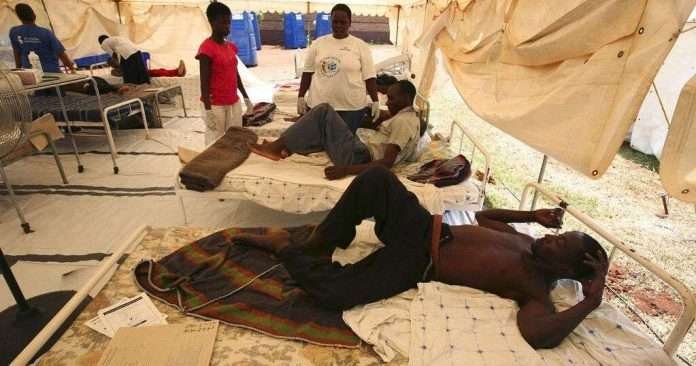
    Pretoria, South Africa – (African Boulevard News) – At least ten people have lost their lives, and 37 are critically ill due to a cholera outbreak in Gauteng, South Africa. The outbreak is especially alarming given that Gauteng is the country’s most populous province and home to its capital city, Johannesburg.

    The outbreak was first reported on Tuesday, and the authorities acted immediately to contain it. The spread of the disease has been attributed to poor sanitation, and the Department of Health has issued a warning to residents to take extra precautions and practice good hygiene.

    In a statement, the department disclosed that the outbreak has so far affected people in crowded and informal settlements where there is limited access to safe drinking water and sanitation.

    “The Department of Health is doing everything possible to control the outbreak and prevent further spread of the disease. We have deployed health workers to affected areas, and we are providing clean water and medical supplies to those affected,” the statement read.

    The department has also set up a task force to investigate the outbreak and determine its origin. The task force will work with local communities to identify any contamination sources and implement measures to control the outbreak.

    The outbreak has generated wide concern, and health experts have warned of the risks posed by the country’s poor sanitation system. In recent months, the government has come under criticism for its failure to provide basic health services to residents in informal settlements, where the majority of the population lives.

    According to Moroka Mokgathi, an epidemiologist at the University of Witwatersrand, the outbreak serves as a reminder of the urgent need to invest in sanitation infrastructure. “We cannot continue to ignore the problem of poor sanitation, especially in informal settlements. We need a comprehensive approach to address the root causes of these outbreaks,” Mokgathi said.

    Cholera is a water-borne disease caused by a bacterium that leads to severe diarrhea, dehydration, and death if untreated. Inadequate access to safe drinking water and sanitation facilities is the primary cause of the disease’s spread.

    The authorities are urging the public to maintain good hygiene practices and report any symptoms immediately to prevent further spread of the disease. Meanwhile, the affected areas are receiving medical supplies and clean water as the government and public health professionals work to contain the outbreak.

    Nigeria: Surfing Against the Odds in Lagos’ Tarkwa Bay

    0
    Read Time:1 Minute, 57 Second

    Abuja, Nigeria – (African Boulevard News) – Nigeria played host to its National Surfing Festival over the weekend from May 19th to the 21st in Tarkwa Bay, Lagos. Those who are familiar with the city know that Lagos is not exactly the first place that comes to mind when one thinks of surfing. However, the event organizers proved that the state has excellent surf spots that are ideal for surfing competitions.

    The National Surfing Festival is a yearly event that brings together surfers from across Nigeria to compete and celebrate the sport. The Festival’s host, Tarkwa Bay, is a small beach community on the Lagos Island, and it’s a popular spot for surfers because of its lush waves, continuous swells, and gentle tide.

    The three-day event consisted of different surfing categories, including longboarding, shortboarding, and bodyboarding. In addition, there was a range of age categories from juniors to seniors. Spectators were treated to an exciting display of talent and skill from both male and female surfers.

    “I’m thrilled to see how this competition has grown over the years. Surfing is a relatively new sport in Nigeria, and it’s nice to see how it’s developing, ” said the event’s organizer, Mr. Tony Gray.

    The event garnered a lot of attention and support from the Lagos community and surf enthusiasts across the country. Attendees praised the organizers and participants for putting on a fantastic display of Nigeria’s surfing culture and talent.

    “I think it’s fantastic that this event is held in Tarkwa Bay. It brings together the community, and it’s a great way to promote the sport,” said one of the attendees.

    Surfing is not a widely recognized sport in Nigeria, but events like the National Surfing Festival are helping to raise awareness and build the surfing culture. The sport is becoming increasingly popular in the country, and it’s only a matter of time before more surfers from Nigeria start to make waves on the international scene.

    In conclusion, Nigeria’s National Surfing Festival held in Tarkwa Bay, Lagos, was a great success and shows that the country has excellent surf spots and talented surfers. The event has helped to raise awareness of the sport in Nigeria and promote the country’s surfing culture. It’s a great platform for surf enthusiasts to meet and showcase their skills, and it’s sure to grow in popularity in the coming years.

    Africa: UK to Ban Foreign Students from Bringing Their Families, Sparks Concerns Over Higher Education Impact

    0
    Read Time:1 Minute, 57 Second

    Diaspora, Africa – (African Boulevard News) – The United Kingdom government is set to introduce new rules that will prevent foreign students from bringing their loved ones along when they come to study in the country. While this news has been met with mixed reactions, it is hoped that the move will help to reduce the number of illegal immigrants in the country.

    The new rules will mean that foreign students studying in the UK will not be allowed to bring their partners or children with them. This is expected to come as a blow to many foreign students who had hoped to be reunited with their families in the UK. The restrictions are also expected to have a significant impact on the UK’s higher education sector, which has long relied on international students to boost enrollment numbers.

    According to a recent report by The Guardian, the UK government is expected to introduce the new rules later this week as part of a broader overhaul of the country’s immigration policies. The move is part of the government’s efforts to reduce the number of illegal immigrants in the country. The government believes that many foreign students use their status as students to bring their families to the country, only to stay on illegally after their studies have ended.

    While the news has been met with mixed reactions, some experts believe that the move is a necessary one. Jean-Claude Broussard, an immigration lawyer based in London, said: “From an immigration law perspective, the move makes sense. Many foreign students abuse their student visa status to bring their families to the UK, which only adds to the country’s immigration problems.”

    However, critics argue that the move could have serious consequences for the UK’s higher education sector. They say that the new rules could deter many foreign students from studying in the UK, which would not only impact enrollment numbers but also damage the country’s reputation as a top study destination.

    Despite the concerns, it seems that the UK government is determined to press ahead with the new rules. For foreign students who had hoped to bring their loved ones to the UK, this news is sure to come as a disappointment. However, it remains to be seen whether the move will have the desired effect of reducing the number of illegal immigrants in the country.

    Africa: Three years after George Floyd’s murder, has anything changed in the fight for racial justice?

    0
    Read Time:2 Minute, 14 Second

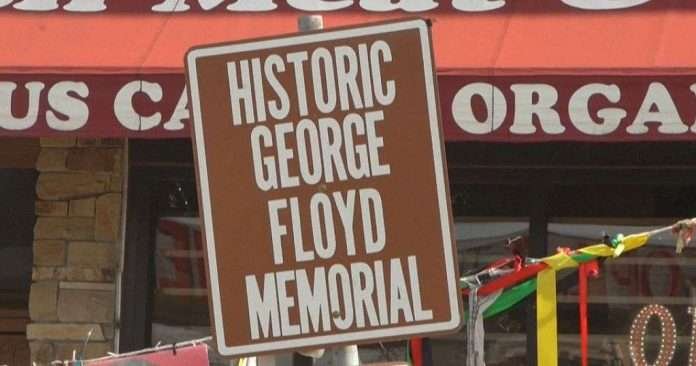
    Diaspora, Africa – (African Boulevard News) – Three years ago, on May 25th, 2020, the world witnessed the devastating and tragic killing of George Floyd, a 46-year-old African-American man who died at the hands of former Minneapolis police officer Derek Chauvin. The incident sparked a wave of protests both nationally and internationally and reignited the debate around the systemic racism and police brutality faced by Black people.

    As we mark the three-year anniversary of George Floyd’s death, the question remains: has anything changed? While there have been some steps taken towards police reform and addressing racial inequality, the reality is that much still needs to be done.

    One of the positive outcomes of George Floyd’s death has been the resurgence of the Black Lives Matter movement. Millions of people around the world have taken to the streets to demand change and call for justice. The global attention on these issues has forced governments and institutions to address racial disparities and discrimination in ways they would not have done before.

    However, despite the progress made, there is still a long way to go. According to a recent study, police killings of Black Americans continue to occur at a disproportionate rate, and accountability for these actions is still lacking. There is also a lack of diversity in police forces, and implicit bias training has not been implemented widely enough.

    As activist and founder of the Equal Justice Initiative Bryan Stevenson said, “20 years from now, 50 years from now, 100 years from now, the goal is not to hold a sign that says ‘Black Lives Matter.’ The goal is not to hold the sign.” The goal is to create real, meaningful change in our society.

    There have been some positive steps taken towards this goal. For example, Minnesota recently passed a new police reform bill that bans chokeholds, mandates officers to intervene when they see their colleagues use excessive force, and allows civilian oversight of police departments. Other states have implemented similar measures.

    However, as journalist and human rights advocate Shaun King points out, these changes are not enough. “I do not believe that America, as a nation, has yet decided that it truly wants to end police brutality,” he writes. “There is a difference between wanting change and being willing to fight for it.”

    As we reflect on the three-year anniversary of George Floyd’s death, it is important to remember that the fight for racial justice and equality is far from over. While we have made progress, there is still much work to be done. It is up to all of us to continue the fight and push for real change in our society.

    Africa: Real Madrid footballer Vinicius Jr. condemns La Liga and calls for action against racism

    0
    Read Time:1 Minute, 39 Second

    Diaspora, Africa – (African Boulevard News) – Vinicius Jr., a young Brazilian footballer playing for Real Madrid, has recently taken to social media to express his disappointment with La Liga and its president, Javier Tebas. The player faced racist abuse and was shown a red card during Sunday’s 1-0 defeat at Valencia.

    After the game, Vinicius Jr. posted a message on his Instagram stories, stating, “More important than the defeat was the racism I suffered from their fans. I hope that those in charge can do something to fix it. Thank you for all the support.”

    Unfortunately, this is not the first time that the 21-year-old footballer has been subjected to racial abuse. In February, he was also racially abused during a game against Barcelona.

    Vinicius Jr.’s comments have sparked a new debate on racism in football and the need to do more to tackle it. Many industry experts have come forward to praise Vinicius Jr. for speaking out and highlighting the issue.

    Former Arsenal and France striker, Thierry Henry, tweeted his support, saying, “Vinicius Jr. is 21 years old and already two instances of abuse…it’s unacceptable. More needs to be done to protect players and stop this nonsense.”

    Meanwhile, La Liga issued a statement condemning the abuse, stating, “La Liga strongly condemns racism in any form and will be working with Valencia CF to identify those responsible and take appropriate action.”

    However, Vinicius Jr. remains unconvinced and is calling on La Liga to do more. In an interview with ESPN Brazil, he criticised La Liga’s response, saying, “It’s easy to make a statement, but what are they doing in practice? They need to start taking real action against racism.”

    Vinicius Jr.’s comments have shone a light on the ongoing problem of racism in football and the need for more to be done to tackle it. Hopefully, his message will be heard and meaningful action will be taken to address this issue once and for all.

    Senegal: Youngest Director at Cannes Challenges Conventional Narratives in Debut Film “Banel & Adama”

    0
    Read Time:2 Minute, 24 Second

    Dakar, Senegal – (African Boulevard News) – Ramata-Toulaye Sy, a young Senegalese filmmaker, is making waves at the Cannes Film Festival. At just 24-years-old, she is the youngest director to ever be featured at the prestigious film festival. Sy’s feature film debut, “Banel & Adama,” has been generating buzz, breaking down walls and challenging preconceptions about the African continent.

    “Today, you know me”, Sy said at the press conference for her film, expressing her excitement for being at the festival. “Banel & Adama” follows the journey of a young woman named Banel, who travels from the countryside to the city of Dakar to pursue her dreams of becoming a singer. However, life in the city is not as glamorous as Banel had hoped it would be, and she is faced with numerous challenges.

    Through Banel’s journey, Sy aims to shine a light on the realities of life in Africa, breaking away from the conventional narratives often depicted in Western media. “I wanted to deconstruct this vision of Africa as a continent of poverty and disease,” Sy explained. “I wanted to show a realistic picture of life in Africa, the good, the bad, and the ugly.”

    Sy’s film has received critical acclaim, with many praising her for bringing a fresh perspective to the screen. Her work has also served as a source of inspiration for other young Africans trying to break into the film industry.

    “Ramata-Toulaye Sy’s contribution to African cinema cannot be overstated,” said Amadou Ndiaye, a film critic and professor of cinema studies. “Her work is a breath of fresh air for a continent that has long been underrepresented in global cinema. She is proving that there is a wealth of talent and creativity in Africa, and we can only hope that her success will inspire more young people to follow in her footsteps.”

    Sy’s journey to Cannes has not been an easy one. She faced numerous obstacles, including funding issues and lack of support from her own community. However, she persevered and remained steadfast in her vision, and her hard work has paid off.

    “Banel & Adama” is just the beginning for Sy, who has already started working on her next project. She hopes that her success will open doors for other young filmmakers in Africa and inspire them to tell their own stories.

    “I want to tell stories that are authentic and true to our experiences as Africans,” Sy said. “There is so much richness and diversity in our cultures, and I want to showcase that to the world. I hope that my success will encourage others to do the same.”

    In conclusion, Ramata-Toulaye Sy is a trailblazer, breaking barriers and challenging preconceptions about Africa. Her work is a testament to the talent and creativity that exists in the continent, and she is paving the way for a new generation of African filmmakers.