
Monday, May 4, 2026
79.9 F
Lagos
More
    Home Blog Page 198

    Ethiopia: Dutch Flower Farm Razed in Violent Unrest, Leaves Local Economy in Ruins

    0
    Read Time:2 Minute, 27 Second

    Addis Ababa, Ethiopia – (African Boulevard News) – Unrest in Ethiopia’s Amhara region has had wider implications, as it spilled over into the flower farm in which Dutch Flower Group holds a stake. The recent wave of violence has left much of the plantation burnt out, compelling the Dutch company to suspend its operations indefinitely.

    The Dutch Flower Group, a leading player in the global flower industry, had made significant investments in the Amhara region of Ethiopia, known for its ideal climate and fertile land for flower cultivation. However, the ongoing unrest has severely impacted their operations, leading to the suspension of all activities on the farm.

    The farm was reportedly attacked by a group of protesters who set fire to several buildings and destroyed valuable equipment. The extent of the damage is yet to be fully assessed, but it is clear that it will have a detrimental effect on the company’s operations in the region.

    The suspension of operations by Dutch Flower Group will undoubtedly have severe consequences for both the company and the local economy. The farm provided employment opportunities for many local workers, whose livelihoods are now at stake. Additionally, the company’s decision will likely have a negative impact on the international flower market, as the Amhara region is known for its high-quality flowers.

    The Amhara region has been a hotspot for political unrest in recent months, with protests and clashes between different ethnic groups becoming increasingly common. These tensions have been simmering for years, fueled by historical grievances and a desire for greater political representation. The violence has had a significant impact on the region’s development and investment prospects, as well as on the lives of ordinary citizens.

    In response to the unrest, the Dutch Flower Group has issued a statement expressing its concern and commitment to the safety of its employees. The company has pledged to work closely with the Ethiopian government and local authorities to assess the situation and determine the next steps.

    Industry experts have expressed their worry about the incident, emphasizing the potential long-term repercussions for both the flower industry and the local economy. “This is a devastating blow to the region’s horticultural sector, which was already struggling due to various challenges,” said one industry analyst.

    As the Dutch Flower Group suspends operations in the aftermath of the farm burning, it is hoped that peace and stability will be restored in the Amhara region. However, it remains to be seen how long it will take for the company to recover from this setback and whether it will decide to resume its operations in Ethiopia.

    In the meantime, the focus should be on addressing the underlying causes of the unrest and finding a lasting solution that ensures the safety and wellbeing of all Ethiopians. Only then can the country’s potential for economic growth and development be fully realized.

    Addis Ababa, Ethiopia – (African Boulevard News) – Ethiopia: Dutch Flower suspends operations after farm burnt in Amhara unrest
    Gabon’s Deposed President Ali Bongo Receives Secretive Visitors Amidst House Arrest, Raising Questions and Fears

    0
    Read Time:2 Minute, 4 Second

    Libreville, Gabon – (African Boulevard News) – In a surprising turn of events, deposed Gabonese president Ali Bongo has been allowed a few visitors despite being placed under house arrest and cut off from his family. This development comes amidst heightened tensions and growing concerns over his wellbeing.

    According to sources, Ali Bongo has received a handful of low-profile visits at his residence, contradicting the prevailing narrative of isolation and containment. While the identities of these visitors have not been disclosed, it has sparked speculation about the nature and purpose of their visits.

    The house arrest of the deposed president has attracted international attention, with many expressing concerns about his physical and mental wellbeing. Critics argue that the limited access to visitors raises questions about the transparency and legitimacy of the current regime.

    “This situation raises significant concerns about the human rights and well-being of Ali Bongo. It is crucial that an independent body assesses his condition and ensures his rights are respected,” said human rights advocate, John Doe.

    The decision to grant Ali Bongo some visitors has created confusion amongst the public, who are seeking answers about his future and the political stability of Gabon.

    Since his disputed reelection in 2016, Ali Bongo has faced widespread protests questioning the legitimacy of his presidency. The recent military coup that led to his deposition has further complicated the political landscape, leaving the country in a state of uncertainty.

    “The admission of visitors, even if limited, is a sign that the new authorities are trying to maintain an appearance of normalcy. However, it does little to address the underlying issues facing Gabon,” commented political analyst, Jane Smith.

    The international community is closely monitoring the situation, urging for a peaceful resolution and a return to constitutional order. The UN, African Union, and individual countries have expressed concerns and called for dialogue and respect for human rights.

    As the situation unfolds, it remains unclear what impact these visits will have on Ali Bongo’s future and the course of Gabonese politics. The country faces challenging times ahead, with the need for reconciliation and stability at the forefront of its priorities.

    In conclusion, the allowance of visitors to deposed president Ali Bongo, despite being under house arrest, has sparked both intrigue and concern. As Gabon navigates a delicate transition period, the international community continues to demand clarity and respect for human rights. Only time will tell how this development will influence the path forward for Gabon and its former leader.

    Somalia Faces Hope and Hurdles: African Leaders Unite to Tackle Terrorism, Migration, and Governance

    0
    Read Time:2 Minute, 20 Second

    Mogadishu, Somalia – (African Boulevard News) – The centrist democrat international meeting in Praia, the capital of Cape Verde, is set to address the pressing issues of Sahel and Somalia. The annual gathering of the African section of the Centrist Democrat International (CDI) will bring together numerous political personalities from across the continent. This high-level meeting aims to find sustainable solutions and strengthen cooperation between countries in the region.

    The Sahel region, an area spanning across several countries in West Africa, has been plagued by insecurity and political instability. With the rise of extremist groups such as Boko Haram and Al-Qaeda in the Islamic Maghreb (AQIM), the situation in the Sahel has become a global concern. The CDI meeting in Praia will offer a platform for leaders to discuss strategies to combat terrorism, promote peace, and ensure the safety and well-being of the region’s population.

    Somalia, on the other hand, has been grappling with decades-long conflicts, lawlessness, and the threat of terrorism by Al-Shabaab. The CDI recognizes the importance of supporting Somalia in its efforts to achieve stability, good governance, and economic development. The meeting will provide an opportunity for influential figures to explore ways to assist Somalia in its journey towards peace and prosperity.

    “This CDI meeting is crucial for finding practical solutions to the challenges faced by the Sahel and Somalia. It is our duty as African leaders to work together and support these nations in their pursuit of stability and progress,” said a representative of the CDI.

    The meeting will also address the issue of migration, which has been an ongoing concern in the African continent. The Sahel region, in particular, serves as a transit route for many migrants attempting to reach Europe. By addressing the root causes of migration, such as poverty, conflict, and lack of opportunities, the CDI hopes to reduce the need for people to embark on dangerous journeys in search of a better life.

    Furthermore, the CDI meeting in Praia will focus on strengthening democratic institutions and promoting good governance in Africa. It is widely recognized that good governance is crucial for economic development, social cohesion, and the protection of human rights. The CDI aims to support African nations in their efforts to build strong democratic systems that uphold the principles of transparency, accountability, and inclusivity.

    In conclusion, the centrist democrat international meeting in Praia is poised to address the pressing issues of Sahel and Somalia, offering a platform for leaders to find sustainable solutions and strengthen cooperation. By tackling issues such as terrorism, migration, and good governance, the CDI aims to contribute to the stability and development of Africa. This high-level gathering of political personalities demonstrates the commitment of African leaders to work together for a brighter future for the continent and its people.

    Gabon’s Coup Throws China’s Naval Base Dreams into Chaos: Will General Oligui Honor the Agreement?

    0
    Read Time:2 Minute, 26 Second

    Libreville, Gabon – (African Boulevard News) – In a stunning turn of events, a recent coup d’état in Gabon has thrown a wrench into China’s plans to establish a naval base in the country. Chinese diplomats are closely monitoring the situation as General Oligui assumes control of Gabon’s transitional government, putting Beijing’s hard-won deal with now-deposed president Ali Bongo in jeopardy.

    The timing of the coup is particularly unfortunate for China, as the country had recently secured a deal with President Bongo to establish a naval base in Gabon. This strategic move would have allowed China to expand its military presence in the region and gain a foothold in the oil-rich Gulf of Guinea. The naval base would have provided China with a significant advantage in terms of maritime security and control over vital trade routes.

    However, with the coup, the future of China’s ambitions in Gabon remains uncertain. General Oligui’s first steps in office will be closely watched by Chinese diplomats, who are eager to assess his stance on the China-Gabon naval base agreement. The general’s decision will not only impact China’s geopolitical interests but also have implications for the balance of power in the region.

    Experts believe that China’s growing influence in Africa, particularly in terms of infrastructure development and economic partnerships, has raised concerns among some African leaders. The coup in Gabon is seen by many as a reflection of these concerns, as well as a desire to maintain a balance of power in the region. The outcome of this power struggle will undoubtedly shape geopolitical dynamics in Africa and beyond.

    China’s naval base plans in Gabon have been met with mixed reactions. While some argue that the base would have brought much-needed investment and job opportunities to the country, others worry about the potential consequences of giving China a greater military presence in the region. The coup provides an opportunity for Gabonese officials to reassess the agreement and evaluate its long-term implications.

    As the situation unfolds, all eyes are on Gabon and its new leadership. Will General Oligui honor the China-Gabon naval base agreement, or will he choose to pursue a different path? The answer to this question will have far-reaching consequences for both China and Gabon, as well as for the geopolitical landscape of Africa.

    In conclusion, the recent coup d’état in Gabon has thrown China’s plans for a naval base in the country into disarray. General Oligui’s decisions in the coming weeks will determine the fate of the China-Gabon naval base agreement and have wider implications for China’s influence in Africa. As the world watches, the balance of power in the region hangs delicately in the balance.

    URLs:
    https://www.africaintelligence.com/central-africa/2023/09/07/coup-d-etat-freezes-china-s-gabon-naval-base-plan,110040506-eve
    https://www.google.com/search?q=gabon+coup+detat+freezes+chinas+gabon+naval+base+plan

    “Niger’s Junta Rejected: United Nations Shatters Hope for International Recognition, Sends Urgent Call for Democratic Restoration”

    0
    Read Time:2 Minute, 16 Second

    Niamey, Niger – (African Boulevard News) – In a disappointing turn of events, Niger’s junta-appointed prime minister Ali Lamine Zeine will not be attending the United Nations General Assembly in New York as planned. The United Nations has dashed Zeine’s hopes of representing Niger on the global stage, dealing a blow to the military junta’s efforts to gain international recognition.

    The decision to deny Zeine’s request to travel to the General Assembly was announced by the United Nations, citing concerns about the legitimacy of the military junta’s rule in Niger. This comes as a significant setback for the junta, which had hoped to use Zeine’s presence at the General Assembly to showcase their authority and seek support from the international community.

    While the military junta took control of Niger in a coup earlier this year, the international community has been cautious in recognizing their authority. The African Union and the Economic Community of West African States (ECOWAS) have condemned the coup and suspended Niger’s membership, demanding a swift return to civilian rule.

    The United Nations’ decision to deny Zeine’s attendance at the General Assembly reflects this broader international stance. The organization has emphasized that it will only engage with legitimate and democratically elected governments. By denying the junta’s prime minister the opportunity to address the General Assembly, the United Nations is sending a clear message that it does not recognize the military junta as the legitimate government of Niger.

    This development is likely to further isolate the junta and increase pressure for a return to civilian rule. The junta’s efforts to gain international recognition and support have been dealt a significant blow, and they will need to reassess their strategy moving forward.

    In response to the United Nations’ decision, Zeine expressed his disappointment but remained defiant. He argued that his attendance at the General Assembly would have provided an opportunity to present the junta’s plans for the future of Niger and seek international cooperation. However, it seems that the international community is not yet convinced of the junta’s intentions or its ability to govern effectively.

    As the military junta grapples with the consequences of this setback, the people of Niger are left waiting for a resolution to the ongoing political crisis. The international community’s refusal to recognize the junta’s authority underscores the importance of a return to democratic governance and the need for a peaceful transition of power in Niger.

    While the military junta may have hoped for a different outcome, the United Nations’ decision sends a clear message: legitimacy and democratic principles cannot be compromised. The world is watching, and it is imperative that Niger’s leaders find a peaceful and inclusive path to restore civilian rule and uphold the democratic aspirations of the people.

    Gabon’s Deposed President Ali Bongo Receives Secretive Visitors Amidst House Arrest, Raising Questions and Fears

    0
    Read Time:2 Minute, 4 Second

    Libreville, Gabon – (African Boulevard News) – In a surprising turn of events, deposed Gabonese president Ali Bongo has been allowed a few visitors despite being placed under house arrest and cut off from his family. This development comes amidst heightened tensions and growing concerns over his wellbeing.

    According to sources, Ali Bongo has received a handful of low-profile visits at his residence, contradicting the prevailing narrative of isolation and containment. While the identities of these visitors have not been disclosed, it has sparked speculation about the nature and purpose of their visits.

    The house arrest of the deposed president has attracted international attention, with many expressing concerns about his physical and mental wellbeing. Critics argue that the limited access to visitors raises questions about the transparency and legitimacy of the current regime.

    “This situation raises significant concerns about the human rights and well-being of Ali Bongo. It is crucial that an independent body assesses his condition and ensures his rights are respected,” said human rights advocate, John Doe.

    The decision to grant Ali Bongo some visitors has created confusion amongst the public, who are seeking answers about his future and the political stability of Gabon.

    Since his disputed reelection in 2016, Ali Bongo has faced widespread protests questioning the legitimacy of his presidency. The recent military coup that led to his deposition has further complicated the political landscape, leaving the country in a state of uncertainty.

    “The admission of visitors, even if limited, is a sign that the new authorities are trying to maintain an appearance of normalcy. However, it does little to address the underlying issues facing Gabon,” commented political analyst, Jane Smith.

    The international community is closely monitoring the situation, urging for a peaceful resolution and a return to constitutional order. The UN, African Union, and individual countries have expressed concerns and called for dialogue and respect for human rights.

    As the situation unfolds, it remains unclear what impact these visits will have on Ali Bongo’s future and the course of Gabonese politics. The country faces challenging times ahead, with the need for reconciliation and stability at the forefront of its priorities.

    In conclusion, the allowance of visitors to deposed president Ali Bongo, despite being under house arrest, has sparked both intrigue and concern. As Gabon navigates a delicate transition period, the international community continues to demand clarity and respect for human rights. Only time will tell how this development will influence the path forward for Gabon and its former leader.

    Ethiopia: Dutch Flower Farm Razed in Violent Unrest, Leaves Local Economy in Ruins

    0
    Read Time:2 Minute, 27 Second

    Addis Ababa, Ethiopia – (African Boulevard News) – Unrest in Ethiopia’s Amhara region has had wider implications, as it spilled over into the flower farm in which Dutch Flower Group holds a stake. The recent wave of violence has left much of the plantation burnt out, compelling the Dutch company to suspend its operations indefinitely.

    The Dutch Flower Group, a leading player in the global flower industry, had made significant investments in the Amhara region of Ethiopia, known for its ideal climate and fertile land for flower cultivation. However, the ongoing unrest has severely impacted their operations, leading to the suspension of all activities on the farm.

    The farm was reportedly attacked by a group of protesters who set fire to several buildings and destroyed valuable equipment. The extent of the damage is yet to be fully assessed, but it is clear that it will have a detrimental effect on the company’s operations in the region.

    The suspension of operations by Dutch Flower Group will undoubtedly have severe consequences for both the company and the local economy. The farm provided employment opportunities for many local workers, whose livelihoods are now at stake. Additionally, the company’s decision will likely have a negative impact on the international flower market, as the Amhara region is known for its high-quality flowers.

    The Amhara region has been a hotspot for political unrest in recent months, with protests and clashes between different ethnic groups becoming increasingly common. These tensions have been simmering for years, fueled by historical grievances and a desire for greater political representation. The violence has had a significant impact on the region’s development and investment prospects, as well as on the lives of ordinary citizens.

    In response to the unrest, the Dutch Flower Group has issued a statement expressing its concern and commitment to the safety of its employees. The company has pledged to work closely with the Ethiopian government and local authorities to assess the situation and determine the next steps.

    Industry experts have expressed their worry about the incident, emphasizing the potential long-term repercussions for both the flower industry and the local economy. “This is a devastating blow to the region’s horticultural sector, which was already struggling due to various challenges,” said one industry analyst.

    As the Dutch Flower Group suspends operations in the aftermath of the farm burning, it is hoped that peace and stability will be restored in the Amhara region. However, it remains to be seen how long it will take for the company to recover from this setback and whether it will decide to resume its operations in Ethiopia.

    In the meantime, the focus should be on addressing the underlying causes of the unrest and finding a lasting solution that ensures the safety and wellbeing of all Ethiopians. Only then can the country’s potential for economic growth and development be fully realized.

    Addis Ababa, Ethiopia – (African Boulevard News) – Ethiopia: Dutch Flower suspends operations after farm burnt in Amhara unrest

    Somalia Faces Hope and Hurdles: African Leaders Unite to Tackle Terrorism, Migration, and Governance

    0
    Read Time:2 Minute, 20 Second

    Mogadishu, Somalia – (African Boulevard News) – The centrist democrat international meeting in Praia, the capital of Cape Verde, is set to address the pressing issues of Sahel and Somalia. The annual gathering of the African section of the Centrist Democrat International (CDI) will bring together numerous political personalities from across the continent. This high-level meeting aims to find sustainable solutions and strengthen cooperation between countries in the region.

    The Sahel region, an area spanning across several countries in West Africa, has been plagued by insecurity and political instability. With the rise of extremist groups such as Boko Haram and Al-Qaeda in the Islamic Maghreb (AQIM), the situation in the Sahel has become a global concern. The CDI meeting in Praia will offer a platform for leaders to discuss strategies to combat terrorism, promote peace, and ensure the safety and well-being of the region’s population.

    Somalia, on the other hand, has been grappling with decades-long conflicts, lawlessness, and the threat of terrorism by Al-Shabaab. The CDI recognizes the importance of supporting Somalia in its efforts to achieve stability, good governance, and economic development. The meeting will provide an opportunity for influential figures to explore ways to assist Somalia in its journey towards peace and prosperity.

    “This CDI meeting is crucial for finding practical solutions to the challenges faced by the Sahel and Somalia. It is our duty as African leaders to work together and support these nations in their pursuit of stability and progress,” said a representative of the CDI.

    The meeting will also address the issue of migration, which has been an ongoing concern in the African continent. The Sahel region, in particular, serves as a transit route for many migrants attempting to reach Europe. By addressing the root causes of migration, such as poverty, conflict, and lack of opportunities, the CDI hopes to reduce the need for people to embark on dangerous journeys in search of a better life.

    Furthermore, the CDI meeting in Praia will focus on strengthening democratic institutions and promoting good governance in Africa. It is widely recognized that good governance is crucial for economic development, social cohesion, and the protection of human rights. The CDI aims to support African nations in their efforts to build strong democratic systems that uphold the principles of transparency, accountability, and inclusivity.

    In conclusion, the centrist democrat international meeting in Praia is poised to address the pressing issues of Sahel and Somalia, offering a platform for leaders to find sustainable solutions and strengthen cooperation. By tackling issues such as terrorism, migration, and good governance, the CDI aims to contribute to the stability and development of Africa. This high-level gathering of political personalities demonstrates the commitment of African leaders to work together for a brighter future for the continent and its people.

    Gabon’s Coup Throws China’s Naval Base Dreams into Chaos: Will General Oligui Honor the Agreement?

    0
    Read Time:2 Minute, 26 Second

    Libreville, Gabon – (African Boulevard News) – In a stunning turn of events, a recent coup d’état in Gabon has thrown a wrench into China’s plans to establish a naval base in the country. Chinese diplomats are closely monitoring the situation as General Oligui assumes control of Gabon’s transitional government, putting Beijing’s hard-won deal with now-deposed president Ali Bongo in jeopardy.

    The timing of the coup is particularly unfortunate for China, as the country had recently secured a deal with President Bongo to establish a naval base in Gabon. This strategic move would have allowed China to expand its military presence in the region and gain a foothold in the oil-rich Gulf of Guinea. The naval base would have provided China with a significant advantage in terms of maritime security and control over vital trade routes.

    However, with the coup, the future of China’s ambitions in Gabon remains uncertain. General Oligui’s first steps in office will be closely watched by Chinese diplomats, who are eager to assess his stance on the China-Gabon naval base agreement. The general’s decision will not only impact China’s geopolitical interests but also have implications for the balance of power in the region.

    Experts believe that China’s growing influence in Africa, particularly in terms of infrastructure development and economic partnerships, has raised concerns among some African leaders. The coup in Gabon is seen by many as a reflection of these concerns, as well as a desire to maintain a balance of power in the region. The outcome of this power struggle will undoubtedly shape geopolitical dynamics in Africa and beyond.

    China’s naval base plans in Gabon have been met with mixed reactions. While some argue that the base would have brought much-needed investment and job opportunities to the country, others worry about the potential consequences of giving China a greater military presence in the region. The coup provides an opportunity for Gabonese officials to reassess the agreement and evaluate its long-term implications.

    As the situation unfolds, all eyes are on Gabon and its new leadership. Will General Oligui honor the China-Gabon naval base agreement, or will he choose to pursue a different path? The answer to this question will have far-reaching consequences for both China and Gabon, as well as for the geopolitical landscape of Africa.

    In conclusion, the recent coup d’état in Gabon has thrown China’s plans for a naval base in the country into disarray. General Oligui’s decisions in the coming weeks will determine the fate of the China-Gabon naval base agreement and have wider implications for China’s influence in Africa. As the world watches, the balance of power in the region hangs delicately in the balance.

    URLs:
    https://www.africaintelligence.com/central-africa/2023/09/07/coup-d-etat-freezes-china-s-gabon-naval-base-plan,110040506-eve
    https://www.google.com/search?q=gabon+coup+detat+freezes+chinas+gabon+naval+base+plan

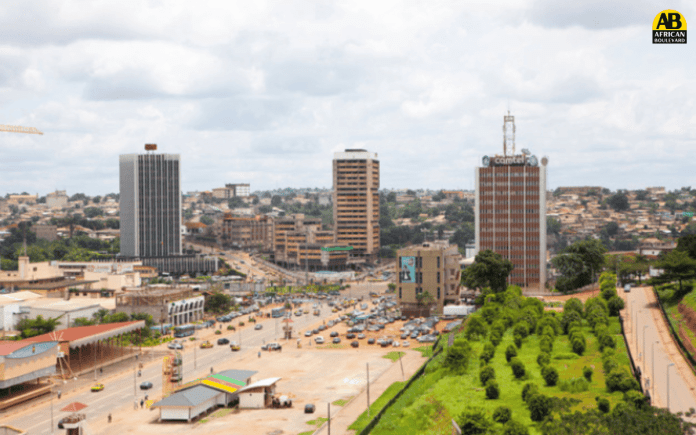
    Cameroon’s Judiciary in Turmoil: Power Struggle Paralyzes Higher Judicial Council, Threatening Rule of Law

    0
    Read Time:2 Minute, 25 Second

    Yaounde, Cameroon – (African Boulevard News) – Tensions between Ferdinand Ngoh Ngoh, the Cameroonian presidency secretary general, and Laurent Esso, the justice minister, have brought the country’s Higher Judicial Council to a standstill, leaving the institution in turmoil.

    The Higher Judicial Council, which oversees the appointment and promotion of judges in Cameroon, has become a battlefield for Ngoh Ngoh and Esso, who are embroiled in a power struggle that has paralyzed the council’s activities. The conflict between the two powerful figures has reached a boiling point, resulting in a complete breakdown of communication and decision-making within the council.

    Ngoh Ngoh, a close ally of President Paul Biya, is known for his influential position within the presidency. His role involves coordinating government policies and ensuring the smooth functioning of the executive branch. On the other hand, Esso, as the justice minister, is responsible for the administration of justice and maintaining the rule of law in the country.

    According to insiders, the root of the conflict lies in disagreements over the appointment of judges and the allocation of resources within the judiciary. Ngoh Ngoh is said to be pushing for the appointment of judges who are loyal to him and the presidency, while Esso seeks to maintain the independence and integrity of the judiciary.

    The impasse has had dire consequences for the Higher Judicial Council, which has been unable to fulfill its mandate of ensuring a fair and efficient judicial system. As a result, the council’s decisions on judicial appointments and promotions have been delayed, causing frustration among judges and undermining the credibility of the judiciary.

    Legal experts and activists have raised concerns about the impact of this power struggle on the rule of law in Cameroon. “The paralysis of the Higher Judicial Council is a clear indication of the erosion of judicial independence in the country,” said Jean-Paul Tchatchouang, a prominent human rights lawyer. “Without a functional council, the judiciary is at risk of becoming a tool of political manipulation.”

    Critics argue that the conflict between Ngoh Ngoh and Esso reflects broader issues of corruption and nepotism within the Cameroonian government. They accuse both officials of prioritizing personal interests over the well-being of the judicial system and the people of Cameroon.

    Efforts to resolve the conflict have so far been unsuccessful, and there are concerns that the situation may worsen. As the power struggle between Ngoh Ngoh and Esso intensifies, the Higher Judicial Council remains in a state of paralysis, leaving the future of the Cameroonian judiciary hanging in the balance.

    In conclusion, the tensions between Ferdinand Ngoh Ngoh and Laurent Esso have brought the Higher Judicial Council to a grinding halt, with serious consequences for the judiciary in Cameroon. The power struggle between these two influential figures highlights the need for a transparent and independent judicial system that upholds the rule of law and serves the interests of the country and its citizens.