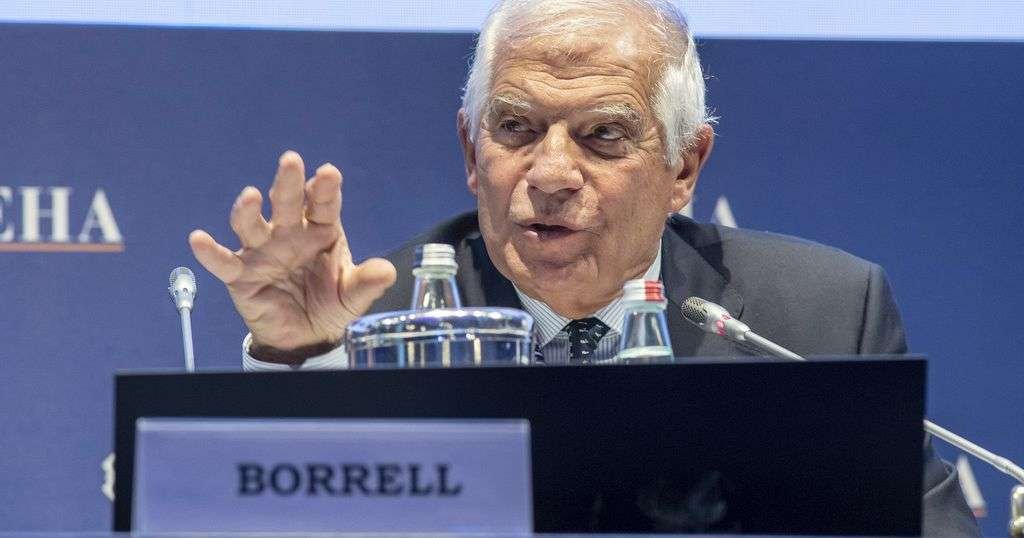
Niamey, Niger – (African Boulevard News) – The European Union’s (EU) efforts to strengthen democracy in the Sahel have fallen short, according to Josep Borrell, the head of EU diplomacy. Despite investing millions of euros in the region, the EU has failed to achieve its goal of advancing democracy in the Sahel.
Borrell made this admission during a gathering of EU foreign ministers in Brussels on Tuesday. He acknowledged that the Sahel region, which has been plagued by numerous challenges, including terrorism, poverty, and instability, has not witnessed significant improvements in terms of democratic governance.
“The EU has dedicated substantial resources to the Sahel, but unfortunately, we have not succeeded in significantly strengthening democracy in the region,” Borrell stated. “Democracy is essential for stability and development, and it is crucial that we redouble our efforts to support democratic processes in the Sahel.”
The Sahel region, which stretches across countries such as Niger, Mali, Burkina Faso, and Chad, has been grappling with various security threats, including the presence of extremist groups affiliated with Al-Qaeda and ISIS. These groups have taken advantage of weak governance structures and lack of economic opportunities to gain influence and control in the region.
Despite the EU’s efforts to enhance security and development in the Sahel, Borrell acknowledged that democratic progress has been limited. He emphasized the need for a comprehensive approach that addresses the root causes of instability and supports democratic institutions and processes.
Experts and analysts have expressed concerns about the EU’s failure to strengthen democracy in the Sahel. They argue that without a solid democratic foundation, it is challenging to achieve long-term stability and address the region’s security challenges effectively.
According to Mamadou Diouf, a Senegalese political analyst, “Democracy is not just about holding elections; it requires building strong institutions, promoting the rule of law, and ensuring the participation of all citizens in decision-making processes. The EU must work closely with local governments and civil society organizations to foster genuine democratic progress in the Sahel.”
Moving forward, Borrell and the EU are expected to reassess their approach to democracy-building in the Sahel. They aim to develop more comprehensive strategies that focus on strengthening institutions, empowering vulnerable populations, and addressing the underlying causes of extremism and conflict.
As the EU acknowledges its past shortcomings, it is hoped that renewed efforts to support democracy in the Sahel will yield positive results. With the region facing numerous challenges, including security threats and economic instability, a strong democratic foundation is crucial for long-term peace, development, and stability in the Sahel.